As I mentioned previously, I was cleaning when a pile of my old journals fell on me. As I’ve been working on memoir, it seems that my journals were screaming, open me, open me! I thought – yes, there’s probably plenty of hidden stories just waiting for me to bring the to life again.
Yet, I haven’t opened one.
There’s a lot of pain between the lines of those journals. It’s hidden now, stored away, somewhere deep inside of me and inside of a box at the bottom of the closet – lest they jump out and attempt to injure me again.
I still think there’s a reason that they fell on me that day. It was, perhaps, a message, a sign for me to open and suck out the pain of the past, use it for my stories, for my memoirs.
I’ve written a number of short memoir pieces and they’ve been published nearly immediately. Good, short memoir, I suppose, it difficult to find for literary journals.
Memoir is important as it is healing – I’ve written about that point a lot; however, it is not only healing to the author, but to the reader. A memoir helps the reader understand they are not alone in their pain and that someone out there survived and thrived.
So – yes – I know, I have to go back into those books. I have to push myself to open them. I have to make sense of them now, as an adult, or even some years away from whatever I might read, and perhaps I can heal little pieces of my chipped soul. And others may understand that they are not alone.
Recently, at a writer’s conference, I came across a number of authors writing about healing. One wrote about healing from long term illness. Another wrote about healing from life’s torments.
Previously, when attending writers’ conferences, I had not come across one person or one workshop about healing through writing.
I find it, not ironic, but apropos that so many writers focus on healing. I have written a number of entries about healing through writing.
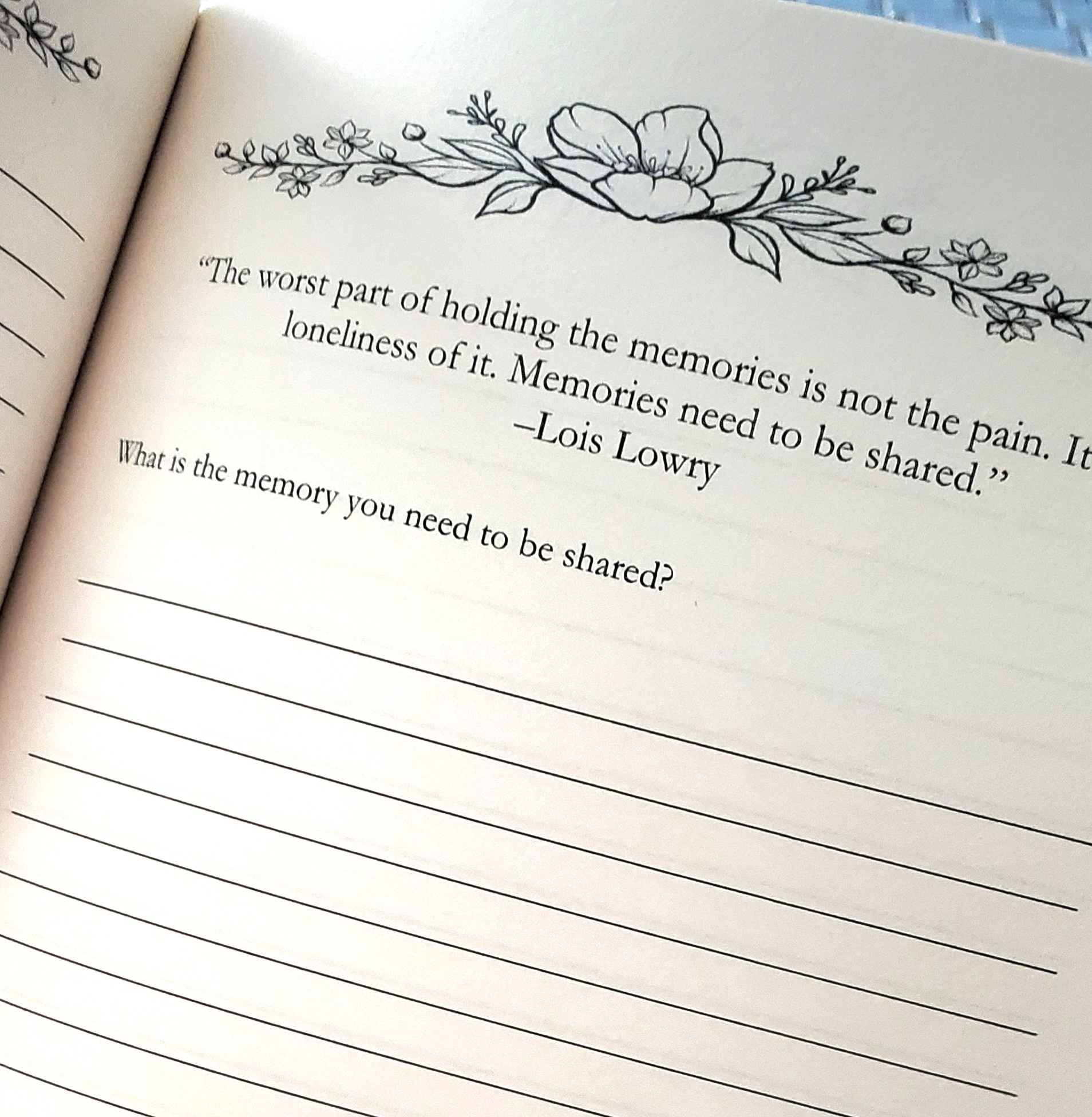
I appreciate that more people are talking about it, creating safe spaces, and sharing prompts.
Growing up, the tortured artist effect became popular. In order to be a successful creative, one had to suffer. I wrote once that life offers – insists – upon torment. Many of us face so many challenges throughout our lifetimes, it seems insane to go looking for more. But some believed they had to suffer in order to inspire creation and earn success.
But maybe, today, we can focus on healing from life’s challenges and use that to inspire creation and earn success.
I met an award winning author recently who offered me a review of my memoir in progress. While she had many good things to say, she had much advice to offer. It was logical, solid, understandable advice.
Which made me rethink the whole memoir and wonder if I should even be writing it. That’s okay, doubt is natural.
The following day I met another award winning author who offered me advice on the same work in progress. While she too had many good things to say, she had advice to offer as well. She had well thought out, strong ideas.
Which were completely opposite of what the first one said.
This made me rethink the nature of advice and writing. (not my memoir!)
One must seek advice and sometimes take advice to improve and grow. Seeking advice is natural for us. Giving advice when asked (or for some unasked) is natural.
Advice usually comes from someone who has experience in the field, sometimes they are not an expert but speaking from their own experience. It’s not invalid advice. It’s not necessarily bad or wrong.
HOWEVER, when writing, you must follow your heart, your passion, you must get it all out, lay it all down, before someone even begins to tell you what to do with this or what to do about that.
This is the unnatural part of advice and advising. Giving advice without understanding the end goal is presumptive and could be incorrect. Taking advice at face value without seeking other input could be a mistake.
Advice must be taken with a grain of salt. It should be backed up by others (or research). And must be evaluated with your own common sense.
My memoir is still a work in progress. Telling me now how it should be formatted or must be framed only interrupts the flow of writing.
There is also more than one method for memoir. Memoirs are personal experiences and must reflect the person and their experience.
A friend once said to me – they stole the life you were supposed to have! I was surprised by her angered response about something from my past. I’d never considered that anything had been stolen from me, taken from me, or that I missed out on anything in particular having not had the perfect childhood. See, I don’t believe there is a perfect childhood.
I remember a young woman saying, “my life would have been so much better if I’d had a father.” She was bemoaning the fact that she was raised by a single mother. And I said, “What if you had a father that beat you and your mother? What if he drank? What if you had a father that stayed out all night or didn’t work for a living?” She fumed – how can you say that?
People have this image in their heads of how things are supposed to be and they lament what they believe they do not have or what they’ve lost. They believe their lives might have been magically transformed had that …. blah.. blah.. blah… been different or perfect. I consider – it could have been worse!
I’ve just always taken the experience at face value. My parents made mistakes. Everyone’s parents make mistakes. But you get what you get and you make the best of it.
In watching the Arnold Schwarzenegger documentary, he said his tyrant of a father motivated him to do more, to do better; he says, if it wasn’t for his father, he would have never left his small town.
YES! Had it not been for the childhood I experienced, I may not have been so incredibly motivated to escape, to do better, to strive for more.
The truth is – like Schwarzenegger’s brother – some people don’t get out. They stay stuck. That was my worse nightmare.
My experiences of lack have informed my writing, have inspired me to strive for more, have helped me develop empathy and compassion. My shitty childhood motivated me to do more, want more, be more.
When I write about the past, I am not wailing about it. I’m praising the resilience I gained to overcome life’s challenges!
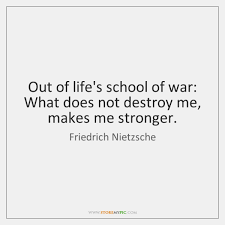
Nietzsche’s whole quote: “Out of life’s school of war: what does not destroy me, makes me stronger.
It’s a much abused and misquoted line. Maybe even I am oversimplifying it.
It’s a choice. You can choose to let the school of hard knocks keep you down, or you can choose to get back up. It’s hard sometimes to keep fighting – and you have to refine your technique. But you can win. And it’s not by looking back and wishing for what might have been, but by looking and moving forward.
We’d just left Collinwood in our rear view for a better neighborhood. No gang fights at this school. No bars at the end of every block. No kids sniffing glue in the churchyard.
Back then, Shaker was far away from the gritty streets of the city. The blocks wound around in curved patterns, trees and bushes, grass and squirrels surrounded us. The main street consisted of two lanes and a transit to bring riders to the square which housed an art gallery, upscale shops, and restaurants.
The neighbor next door brought over cookies. My mother grew strawberries in the yard. And for a brief shining moment, we had a life that seemed pretty normal, like what other families might have.
On Sunday mornings, my father would call upstairs – who’s coming? And some of us or all of us would race downstairs and hop into the car. My father was taking us to the McDonald’s All-You-Can-Eat-Pancake-Breakfast.
“For ten bucks,” my father said, “I can feed the whole family. Eat your fill!”
We’d eat pancakes, talk and laugh, and eat more pancakes. He’d raise the paper in front of his face and allow us to sit longer, talk about hair and make up and boys. Or maybe we talked about the music on the brand-spanking-new MTV.
For me, it wasn’t the All-You-Could-Eat, and it wasn’t the pancakes. We’d never really done this before. We hadn’t gone out as a family. We would order pizza. We would occasionally be treated to McDonald’s or Red Barn, but we never went out to sit down and eat. Part of it was money. Eating out takes money and we didn’t have any. This was evidenced when my mother pawned her wedding ring for bread and baloney, milk and cereal to get us through the week.
As a roofer, my father worked from sun up to sun down, especially in the summer. In the winter, he’d be laid off and laid up, not in the mood for much.
This summer was different. We were happy.
Maybe it was because we were growing up. Maybe my father had decided to work just a little less that summer. Maybe it was the new place, the new neighborhood, and a new lease on life for all of us.
It didn’t last. But the memories survive. And, in a body full of bad memories, we have to hold on to those handful of good ones.
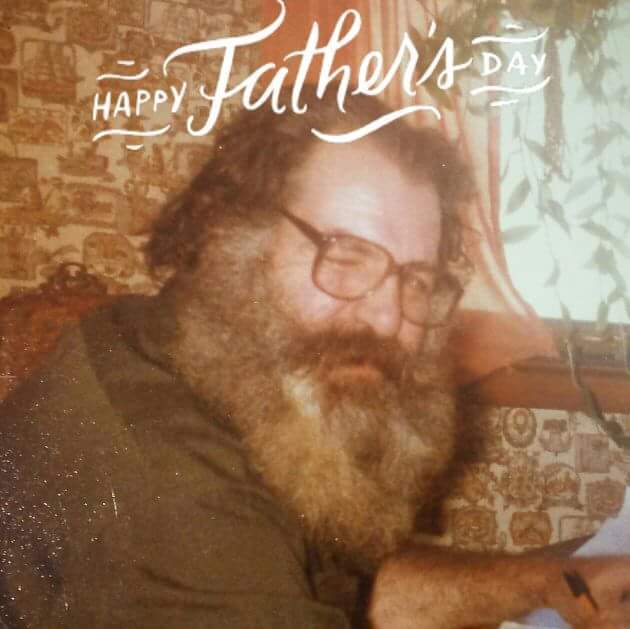
Before my father passed, but long after I’d moved away, I sent him a Father’s Day Card: “That summer we went to McDonald’s for that All-You-Can-Eat-Pancake-Breakfast nearly every Sunday was the best. I loved it! I Love You!”
I needed him to know that I remembered some good things.
This week, I made pancakes thinking of him. He always liked my cooking. He’d say, “there’s only one thing wrong with your cooking – you don’t make enough.”
I made enough this time – they’re sitting on the counter. Maybe I’ll wake in the morning, like a kid on Christmas, and they’ll be gone – for old time’s sake.
What do Marie Curie, Albert Einstein, Jennifer Aniston, Matthew McConaughey, and Warren Buffet have in common?
Did you guess journaling? I mean – since it’s the title of the piece. But, yes, they all kept journals, along with Oprah, Darwin, Khalo – and so many more.
Oprah uses it to outline goals. Buffet uses much of his journaling as inspiration for his business – “Writing will make you a better investor.” Jennifer Aniston says she uses it to keep control of her emotions (me, too, girlie!).
Journaling also helps me work out things that are vexing me. It helps me think more critically by getting the emotional stuff out of the way.
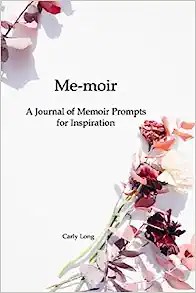
Carly Long has journaled her whole life. She credits it with getting her out of bad circumstances and growing as a person. “You know what’s funny about journaling? Sometimes I go back and read things. And it’s obvious I was upset with someone and wondering what I should do next. I didn’t write the name down, but I wrote down what I could do. I remember doing those things and I continue to do them – but I can’t remember for the life of me who I was upset with!”
I’ve written about the healing power of writing, but haven’t mentioned it in the same sentence with journaling. Any type of writing will help, bullet points, brainstorming, I most often start with freewriting as that is what works best for me.
Freewriting is the act of writing without stopping. Many people begin with a set time, like 5 minutes, and they’ll write whatever comes to mind. If you’re unpracticed in journaling or freewriting, this might work if it seems starting might seem overwhelming.
Some people see journals as a way of recording the day’s events, certain thoughts or feelings, or even keeping track of accomplishments and to-do lists. It can be all or any of these things.
It used to be I’d read Sylvia Plath’s journals or Anais Nin’s diary excerpts and be intimidated – how did they create such lovely and thoughtful prose in their journals when what I scribble appears more like word vomit, thoughts and emotions all over the place in no particular order? and there certainly isn’t much poetry within it!
But then a friend pointed out a few things. First: some people keep a writer’s journal (as opposed to or in addition to a personal journal). This may be what I’ve been exposed to within the realm of famous author’s private thoughts. Second: These published journals have probably been edited, redacted, and only the best parts saw the light of day.
The Diary of Anne Frank, most people are unaware, was edited. Large parts of the original text were blacked out by her father who thought some entries to be inappropriate.
Hey – all the best journals have inappropriate thoughts! That’s why they are there in the secrecy of our journals.
But journals serve a number important purposes: Journal writing relieves us of our anxiety by releasing any thoughts and feelings that have been unexpressed or need to be re-expressed. Writing things down is a way to get them out of us, to say them aloud, and begins a process of working out the challenges we face.
Some writers do morning pages. Some people journal nightly. The best time is the time that suits you.
The fine art of journaling lies in putting the pen to the paper and doing what feels best for you without worrying what others will think. It is just for you. And we all need that – to do things for ourselves.
Memoir is hard. Reliving the past, reasoning with it, acknowledging truths, and attempting to put events into words is challenging, upsetting even.
Speculative memoir is not a subversion of the truth, but an aid in voicing our deepest pain.
Speculative memoir uses supernatural elements, ghosts, fairies; it uses metaphors, imaginative scenarios – whatever it takes to further the truth.
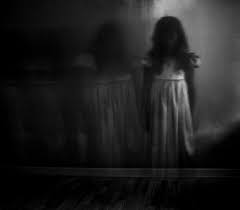
When I wrote Ghost in her Room (printed below) it felt right, good. It said what I needed it to say. But was it memoir? Uncertain how to label it, I sent it out with explanations. Explanations which were not needed as it was accepted immediately.
THE GHOST IN HER ROOM – Noreen Lace
I stand in the hall at midnight. The oak floor is cold, even through my socked feet. The night light from the bathroom filters the darkness as I glance toward the pale pink haze at the other end of the corridor. I hear the small creaks on the floor, feel something just on the other side of that door. It’s menacing, waiting, daring me to enter. Tonight, though, I decline. I’m not strong enough. I’m tired, and I’m chilled.
It’s been raining for days. The house shivers in anger, the wood popping and cracking in the shadows behind me. It’s shrinking. We all are. I turn and go to bed, shutter the passage to whatever lies outside my room.
I lie there drifting between alpha and theta; rainbows swirl inside my closed eyes before a child calls my name right next to my bed, next to my ear, and then giggles. I spring awake but remain still. There is no child, so I don’t search. If there’s anything in here, it’s a ghost and looking won’t help me see.
Years ago, I heard footsteps on the cheap linoleum of the kitchen. I wrote it off to an old house groaning with age in a succession of weakening boards under the plinth. That stopped when I had the floors redone; ceramic doesn’t cede. That was long before I was alone here in the house.
In the bright light of day, I sense nothing behind that door. It’s quiet, empty, needs to be cleaned. I have my coffee, toast, and go on.
Sometimes I find myself home in the middle of the day. I’ve forgotten something or took a wrong turn and ended up in my own driveway; I go in. There’s a light on in the kitchen. A picture’s fallen from the wall. A forgotten towel slung aside the wooden chair. “Is someone here?” There’s no answer, not even my echo calling back to me.
In the shadowed hall, I stare at the pale pink gate. Pause. I will it to chirr or clack, shimmy slightly in the weight of my presence. The light from the window seeps around the threshold and stretches past strands of dust toward my shoes, but the door doesn’t give.
I don’t know if there is magic in this world. I don’t know if people can see things or if they know things. I used to think I would know if she was in trouble.
Some days I ignore the door completely, disregard the space, discount the whirrs or whines.
I’m sitting at the dining table. Haven’t passed or gone in for some time. My house has one less room. But then, suddenly, the hall creaks, a shadow moves; someone, something is standing there watching me, waiting for me, challenging me to look up.
I turn and it’s gone.
Later, I glance at the door, not quite closed, an inch or so ajar. Inside I click the switch. The light is hazy; a bulb burns out.
I stand, fists to my hips, in the center of the room. “Move one thing,” I tell myself. “Just pick up one thing and fold it or move it or throw it away.” But I back out. There’s no menacing figure now, just overwhelming emptiness.
I consider nailing it shut. Losing it. There’s nothing I need, not the four corners of square footage, not the admonition of what is not there, and not that ghost reminding me of all I don’t have.
Before bed, I stand in the hall; that dark presence has grown and I feel it breathing just beyond her door. A not so gentle sweep of chilled air in, warm air out, hanging on to the sound of my footsteps, egging me on. I back down. Turn to my own sallow room.
When I fall into a deep sleep, my father puts his hands on my shoulders. I haven’t seen him in ten years, but he looks good. “You’ve got to let it go,” he implores. It’s the nicest thing he’s ever said to me. But not today.
The ghost in her room was once small and indelible. It grows greater every day. It fills the gloom, spills into the corners, and bends back upon itself, towering over the entryway. If I challenge it, maybe it’ll shrink, fade into nothingness. But, at night, as I hear it mooring toward my room, the creak in the floor, a rap on the wall, the quiet whisper at my door, maybe that’s enough to get me through another day.
It’s exciting, invigorating, curative even; however, it’s not – as some people believe – revenge.
Just as forgiveness is more about us than those we forgive, memoir is the same. It’s about the author, the writer stating their peace. While some memoirs may read like revenge, they are more about sharing, maybe even confessing.
While Anne Sexton wrote confessional poetry better than anyone else I can name, confessional memoir comes in different flavors.
When I think of confessional memoir, I used to consider Life on the Edge or Wishful Drinking by Carrie Fisher. Some people would think of Spare by Prince Harry – but these are celebrity memoirs which carry a very different weight in the market.
Confessional memoirs will offer insight, a new way of looking at life and understanding people. Consider Dirty River by Leah Lakshmi Piepzna-Samarsinna who writes about being a disabled queer woman and survivor of abuse. Not the only example – Lit by Mary Karr, Unspeakable by Meghan Daum will offer more mainstream insights into death, illness, alcoholism, recovery. But we will come away with empathy for the human condition as lived through these authors.
These stories that will hurt your heart instead of shock your eyes.
While I’m working on a few pieces of memoir right now, they may not shock your eyes but some parts may hurt your heart. Certain pieces will speak to some people and not to others. Some readers will wonder, others may doubt. A person or two may become upset – upset with me – but confessional or not – it’s personal, it’s mine. And their upset will be their problem.
Writing memoir is not for the faint of heart. It’s not for the shy or the scared – and maybe it’s not even for the “brave” – it’s for those who need to speak, who need to heal, who might be heard, and for those very souls who need to hear it.
Allowing ourselves to recover, the body to heal itself, takes time and work. Sometimes we long for an instant cure, instant pain relief. But the pain is still there after the potion wears off.
If we don’t deal with our emotional suffering, it will work our way into our muscles, tendons, bones and cripple us.
Nothing worth having comes easy. And that includes healing.
In grief, we are told that talking about the person we lost helps with our healing. In abuse, we are also told voicing our experiences helps.
In short, Memoirs are healing.
Airing our difficulties, putting our secrets out there for the world to see may seem daunting.
Reading about challenges others have faced helps us – and writing back to the book, to the experience, to the author, in a private journal never to be seen by anyone but us – can still help us heal.
Your experience may help another; therefore, if you decide to publish it, it does not need to carry your name.
I met a published author who was writing a book about her son’s addiction, how it took years of her life as well as his life. She used a pseudonym for a few reasons. She wanted to protect her son’s identity. As well, her usual genre was not memoir. To publish a series of let’s say detective fiction, and then to publish memoir might confuse or dismay her readers. (Publishers rarely like genre switching anyway).
She felt, rightly so, that many people could identify with and be helped by her personal challenges. She found herself at book signings and conferences with reader after reader coming up to her thanking her for the book. They’d felt completely alone until they read her book, finally understanding others had similar experiences.









 Noreen Lace
You must be logged in to post a comment.