The Unnatural Nature of Advice

I met an award winning author recently who offered me a review of my memoir in progress. While she had many good things to say, she had much advice to offer. It was logical, solid, understandable advice.

Which made me rethink the whole memoir and wonder if I should even be writing it. That’s okay, doubt is natural.

The following day I met another award winning author who offered me advice on the same work in progress. While she too had many good things to say, she had advice to offer as well. She had well thought out, strong ideas.

Which were completely opposite of what the first one said.

This made me rethink the nature of advice and writing. (not my memoir!)

One must seek advice and sometimes take advice to improve and grow. Seeking advice is natural for us. Giving advice when asked (or for some unasked) is natural.

Advice usually comes from someone who has experience in the field, sometimes they are not an expert but speaking from their own experience. It’s not invalid advice. It’s not necessarily bad or wrong.

HOWEVER, when writing, you must follow your heart, your passion, you must get it all out, lay it all down, before someone even begins to tell you what to do with this or what to do about that.

This is the unnatural part of advice and advising. Giving advice without understanding the end goal is presumptive and could be incorrect. Taking advice at face value without seeking other input could be a mistake.

Advice must be taken with a grain of salt. It should be backed up by others (or research). And must be evaluated with your own common sense.

My memoir is still a work in progress. Telling me now how it should be formatted or must be framed only interrupts the flow of writing.

There is also more than one method for memoir. Memoirs are personal experiences and must reflect the person and their experience.

Out of Life’s School of War…

A friend once said to me – they stole the life you were supposed to have! I was surprised by her angered response about something from my past. I’d never considered that anything had been stolen from me, taken from me, or that I missed out on anything in particular having not had the perfect childhood. See, I don’t believe there is a perfect childhood.

I remember a young woman saying, “my life would have been so much better if I’d had a father.” She was bemoaning the fact that she was raised by a single mother. And I said, “What if you had a father that beat you and your mother? What if he drank? What if you had a father that stayed out all night or didn’t work for a living?” She fumed – how can you say that?

People have this image in their heads of how things are supposed to be and they lament what they believe they do not have or what they’ve lost. They believe their lives might have been magically transformed had that …. blah.. blah.. blah… been different or perfect. I consider – it could have been worse!

I’ve just always taken the experience at face value. My parents made mistakes. Everyone’s parents make mistakes. But you get what you get and you make the best of it.

In watching the Arnold Schwarzenegger documentary, he said his tyrant of a father motivated him to do more, to do better; he says, if it wasn’t for his father, he would have never left his small town.

YES! Had it not been for the childhood I experienced, I may not have been so incredibly motivated to escape, to do better, to strive for more.

The truth is – like Schwarzenegger’s brother – some people don’t get out. They stay stuck. That was my worse nightmare.

My experiences of lack have informed my writing, have inspired me to strive for more, have helped me develop empathy and compassion. My shitty childhood motivated me to do more, want more, be more.

When I write about the past, I am not wailing about it. I’m praising the resilience I gained to overcome life’s challenges!

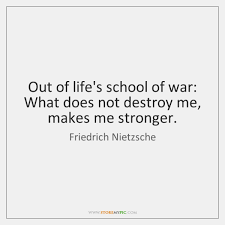
Nietzsche’s whole quote: “Out of life’s school of war: what does not destroy me, makes me stronger.

It’s a much abused and misquoted line. Maybe even I am oversimplifying it.

It’s a choice. You can choose to let the school of hard knocks keep you down, or you can choose to get back up. It’s hard sometimes to keep fighting – and you have to refine your technique. But you can win. And it’s not by looking back and wishing for what might have been, but by looking and moving forward.

Create the life you want.

Dad’s Pancake Breakfast

We’d just left Collinwood in our rear view for a better neighborhood. No gang fights at this school. No bars at the end of every block. No kids sniffing glue in the churchyard.

Back then, Shaker was far away from the gritty streets of the city. The blocks wound around in curved patterns, trees and bushes, grass and squirrels surrounded us. The main street consisted of two lanes and a transit to bring riders to the square which housed an art gallery, upscale shops, and restaurants.

The neighbor next door brought over cookies. My mother grew strawberries in the yard. And for a brief shining moment, we had a life that seemed pretty normal, like what other families might have.

On Sunday mornings, my father would call upstairs – who’s coming? And some of us or all of us would race downstairs and hop into the car. My father was taking us to the McDonald’s All-You-Can-Eat-Pancake-Breakfast.

“For ten bucks,” my father said, “I can feed the whole family. Eat your fill!”

We’d eat pancakes, talk and laugh, and eat more pancakes. He’d raise the paper in front of his face and allow us to sit longer, talk about hair and make up and boys. Or maybe we talked about the music on the brand-spanking-new MTV.

For me, it wasn’t the All-You-Could-Eat, and it wasn’t the pancakes. We’d never really done this before. We hadn’t gone out as a family. We would order pizza. We would occasionally be treated to McDonald’s or Red Barn, but we never went out to sit down and eat. Part of it was money. Eating out takes money and we didn’t have any. This was evidenced when my mother pawned her wedding ring for bread and baloney, milk and cereal to get us through the week.

As a roofer, my father worked from sun up to sun down, especially in the summer. In the winter, he’d be laid off and laid up, not in the mood for much.

This summer was different. We were happy.

Maybe it was because we were growing up. Maybe my father had decided to work just a little less that summer. Maybe it was the new place, the new neighborhood, and a new lease on life for all of us.

It didn’t last. But the memories survive. And, in a body full of bad memories, we have to hold on to those handful of good ones.

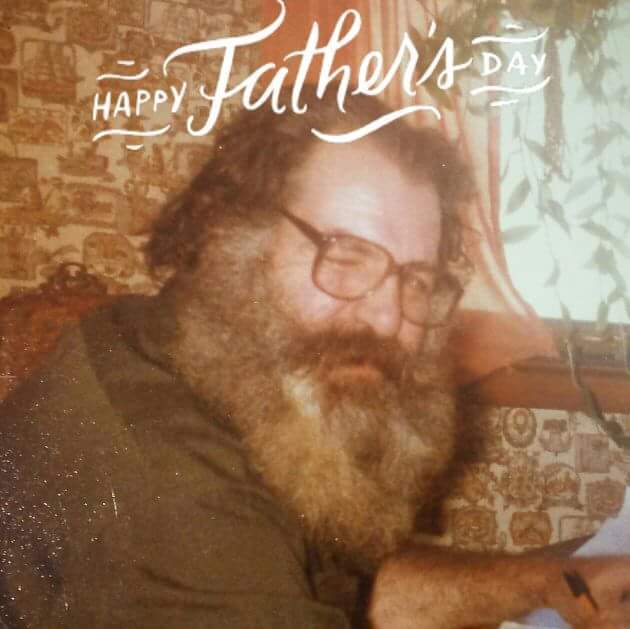
Before my father passed, but long after I’d moved away, I sent him a Father’s Day Card: “That summer we went to McDonald’s for that All-You-Can-Eat-Pancake-Breakfast nearly every Sunday was the best. I loved it! I Love You!”

I needed him to know that I remembered some good things.

This week, I made pancakes thinking of him. He always liked my cooking. He’d say, “there’s only one thing wrong with your cooking – you don’t make enough.”

I made enough this time – they’re sitting on the counter. Maybe I’ll wake in the morning, like a kid on Christmas, and they’ll be gone – for old time’s sake.
Journals and Journaling

What do Marie Curie, Albert Einstein, Jennifer Aniston, Matthew McConaughey, and Warren Buffet have in common?

Did you guess journaling? I mean – since it’s the title of the piece. But, yes, they all kept journals, along with Oprah, Darwin, Khalo – and so many more.

Oprah uses it to outline goals. Buffet uses much of his journaling as inspiration for his business – “Writing will make you a better investor.” Jennifer Aniston says she uses it to keep control of her emotions (me, too, girlie!).

Journaling also helps me work out things that are vexing me. It helps me think more critically by getting the emotional stuff out of the way.

Carly Long has journaled her whole life. She credits it with getting her out of bad circumstances and growing as a person. “You know what’s funny about journaling? Sometimes I go back and read things. And it’s obvious I was upset with someone and wondering what I should do next. I didn’t write the name down, but I wrote down what I could do. I remember doing those things and I continue to do them – but I can’t remember for the life of me who I was upset with!”

The healing process became part of her being!

I love this!

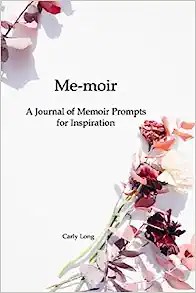
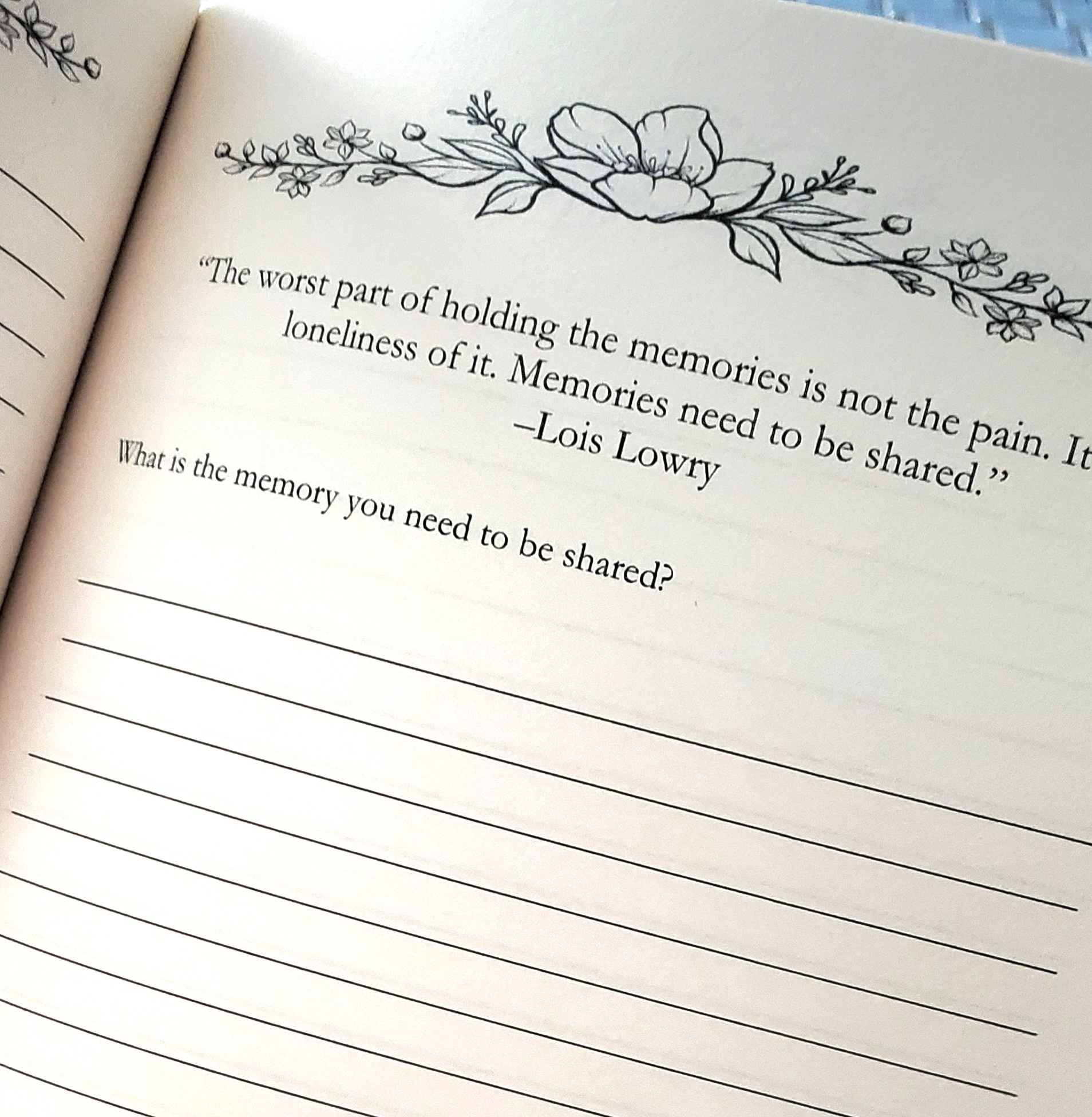
Carly has taken her digital media, writing, and healing skills and brought them together to begin creating beautiful journals. A few of them are available on Amazon. She’s giving away, Me-moir: A Journal of Memoir Prompts for Inspiration. (Inspired by one of my blogs!) to one of her followers on July 1st. To be eligible – follow her on IG. July 1st, she’ll chose a name live! You’ll receive a free copy! Follow Carly Long at 2carly4u for a chance to win a free journal!

Grandma’s Tour

Published a few months after my grandmother passed. Enjoy.

Where the Poet Roams

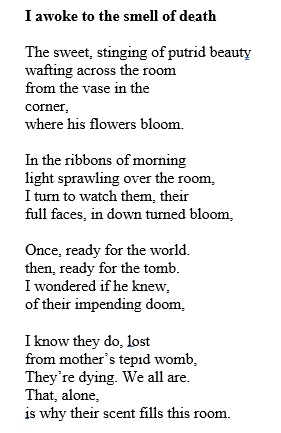
My first published poem, many years ago.

Fall in Love with Poetry

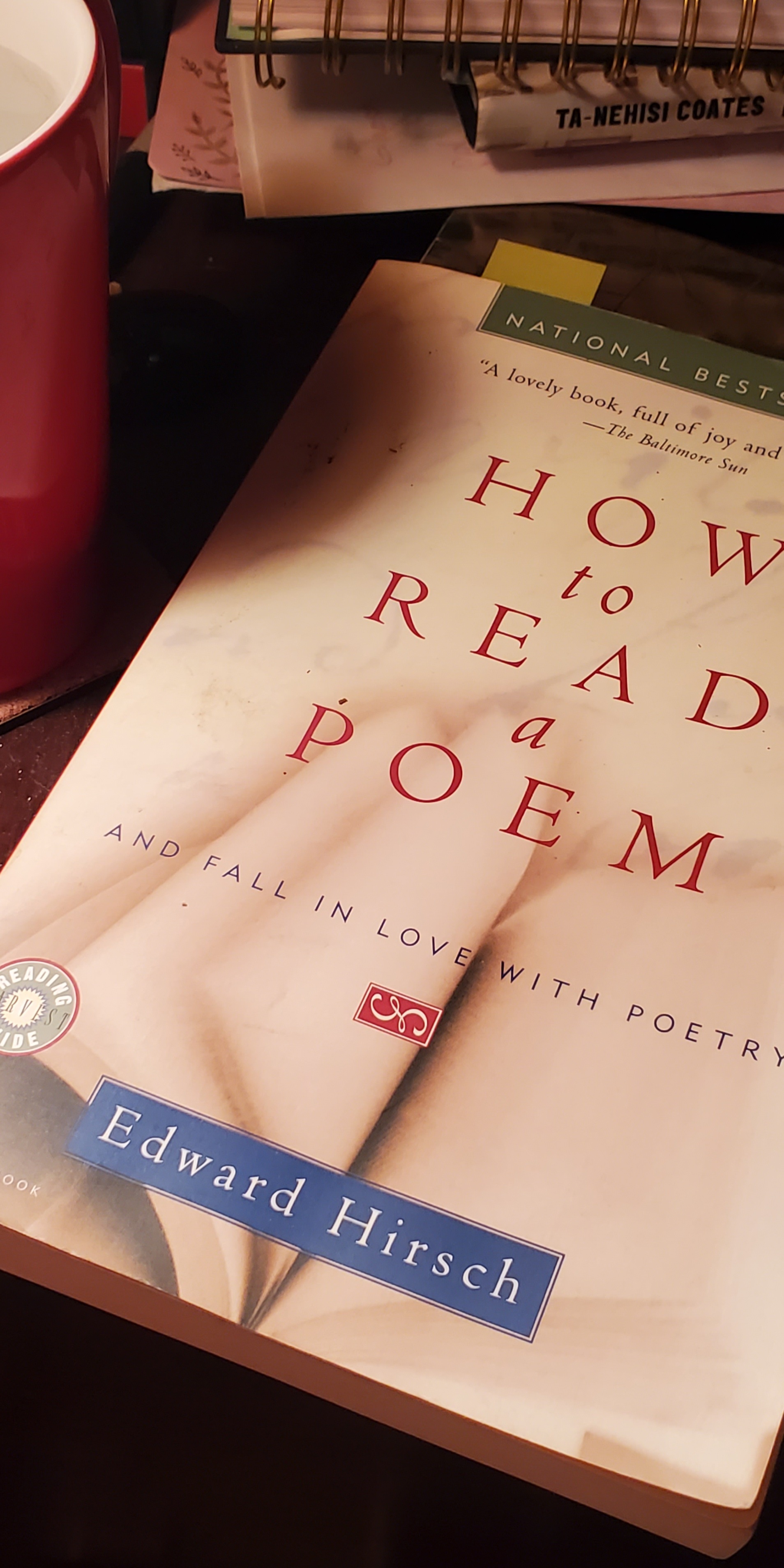
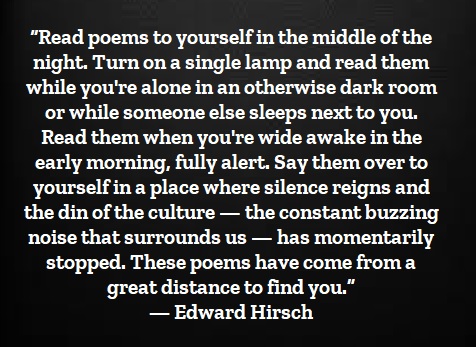
How to Read a Poem and Fall in Love with Poetry by Edward Hirsch is the most passionate, love filled book about the writing of poetry. It changed how I read and wrote poetry. It changed the way I taught!

This book isn’t prescriptive. No hard and fast rules here.

This is written by a person who loves poetry and wants readers to love it as well. I took this philosophy into my teaching of literature. I want my students to find things they enjoy reading – which I hope will encourage them to read more. We don’t spend hours analyzing poetry only to be told we’re wrong (how many of us have those high school memories?!).

Reading poetry should be like taking a warm bath, sinking into the steamy water, enjoying the bubbles against your skin, the scent wafting over you.

As for writing poetry, it seems there are no rights or wrongs. He suggests you give colors sounds, sounds feelings, etc. My writing grew more descriptive, creative, beautiful. I took chances and created new meaning in the relationship between words and ideas. I stretched my poetry muscles and it has paid off. This month, I plan to share some of my poetry with you.

It was the most illuminating, freeing book I’ve read throughout my academic and writing career.

The Fine Art of Journaling

I’ve written about the healing power of writing, but haven’t mentioned it in the same sentence with journaling. Any type of writing will help, bullet points, brainstorming, I most often start with freewriting as that is what works best for me.

Freewriting is the act of writing without stopping. Many people begin with a set time, like 5 minutes, and they’ll write whatever comes to mind. If you’re unpracticed in journaling or freewriting, this might work if it seems starting might seem overwhelming.

Some people see journals as a way of recording the day’s events, certain thoughts or feelings, or even keeping track of accomplishments and to-do lists. It can be all or any of these things.

It used to be I’d read Sylvia Plath’s journals or Anais Nin’s diary excerpts and be intimidated – how did they create such lovely and thoughtful prose in their journals when what I scribble appears more like word vomit, thoughts and emotions all over the place in no particular order? and there certainly isn’t much poetry within it!

But then a friend pointed out a few things. First: some people keep a writer’s journal (as opposed to or in addition to a personal journal). This may be what I’ve been exposed to within the realm of famous author’s private thoughts. Second: These published journals have probably been edited, redacted, and only the best parts saw the light of day.

The Diary of Anne Frank, most people are unaware, was edited. Large parts of the original text were blacked out by her father who thought some entries to be inappropriate.

Hey – all the best journals have inappropriate thoughts! That’s why they are there in the secrecy of our journals.

But journals serve a number important purposes: Journal writing relieves us of our anxiety by releasing any thoughts and feelings that have been unexpressed or need to be re-expressed. Writing things down is a way to get them out of us, to say them aloud, and begins a process of working out the challenges we face.

Writing regularly helps with mental well-being, feeling more positive and hopeful. Journaling can help us heal.

Some writers do morning pages. Some people journal nightly. The best time is the time that suits you.

The fine art of journaling lies in putting the pen to the paper and doing what feels best for you without worrying what others will think. It is just for you. And we all need that – to do things for ourselves.