The Scent of Poetry
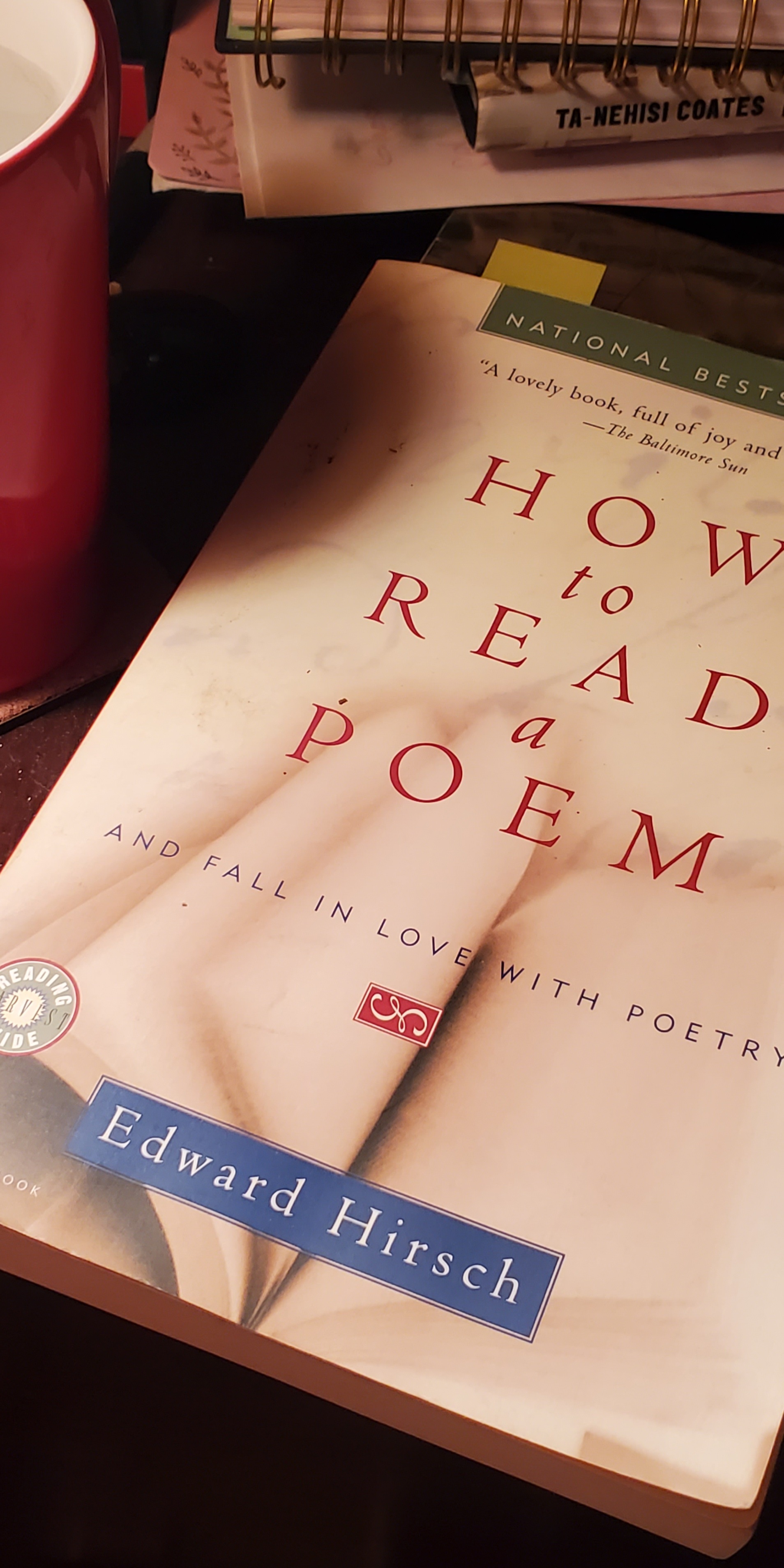
How to Read a Poem and Fall in Love with Poetry by Edward Hirsch is the most passionate, love filled book about the writing of poetry. It changed how I read and wrote poetry. It changed the way I taught!
This book isn’t prescriptive. No hard and fast rules here.
This is written by a person who loves poetry and wants readers to love it as well. I took this philosophy into my teaching of literature. I want my students to find things they enjoy reading – which I hope will encourage them to read more. We don’t spend hours analyzing poetry only to be told we’re wrong (how many of us have those high school memories?!).
Reading poetry should be like taking a warm bath, sinking into the steamy water, enjoying the bubbles against your skin, the scent wafting over you.
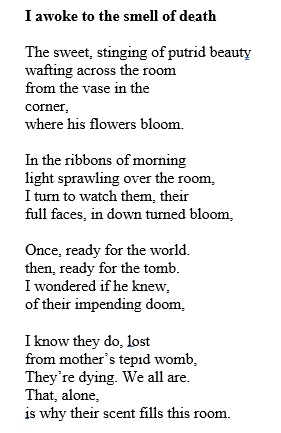
As for writing poetry, it seems there are no rights or wrongs. He suggests you give colors sounds, sounds feelings, etc. My writing grew more descriptive, creative, beautiful. I took chances and created new meaning in the relationship between words and ideas. I stretched my poetry muscles and it has paid off. This month, I plan to share some of my poetry with you.
It was the most illuminating, freeing book I’ve read throughout my academic and writing career.
Memoir is hard. Reliving the past, reasoning with it, acknowledging truths, and attempting to put events into words is challenging, upsetting even.
Speculative memoir is not a subversion of the truth, but an aid in voicing our deepest pain.
Speculative memoir uses supernatural elements, ghosts, fairies; it uses metaphors, imaginative scenarios – whatever it takes to further the truth.
When I wrote Ghost in her Room (printed below) it felt right, good. It said what I needed it to say. But was it memoir? Uncertain how to label it, I sent it out with explanations. Explanations which were not needed as it was accepted immediately.
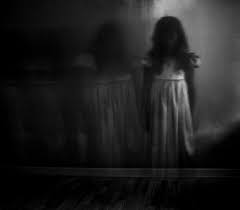
THE GHOST IN HER ROOM – Noreen Lace
I stand in the hall at midnight. The oak floor is cold, even through my socked feet. The night light from the bathroom filters the darkness as I glance toward the pale pink haze at the other end of the corridor. I hear the small creaks on the floor, feel something just on the other side of that door. It’s menacing, waiting, daring me to enter. Tonight, though, I decline. I’m not strong enough. I’m tired, and I’m chilled.
It’s been raining for days. The house shivers in anger, the wood popping and cracking in the shadows behind me. It’s shrinking. We all are. I turn and go to bed, shutter the passage to whatever lies outside my room.
I lie there drifting between alpha and theta; rainbows swirl inside my closed eyes before a child calls my name right next to my bed, next to my ear, and then giggles. I spring awake but remain still. There is no child, so I don’t search. If there’s anything in here, it’s a ghost and looking won’t help me see.
Years ago, I heard footsteps on the cheap linoleum of the kitchen. I wrote it off to an old house groaning with age in a succession of weakening boards under the plinth. That stopped when I had the floors redone; ceramic doesn’t cede. That was long before I was alone here in the house.
In the bright light of day, I sense nothing behind that door. It’s quiet, empty, needs to be cleaned. I have my coffee, toast, and go on.
Sometimes I find myself home in the middle of the day. I’ve forgotten something or took a wrong turn and ended up in my own driveway; I go in. There’s a light on in the kitchen. A picture’s fallen from the wall. A forgotten towel slung aside the wooden chair. “Is someone here?” There’s no answer, not even my echo calling back to me.
In the shadowed hall, I stare at the pale pink gate. Pause. I will it to chirr or clack, shimmy slightly in the weight of my presence. The light from the window seeps around the threshold and stretches past strands of dust toward my shoes, but the door doesn’t give.
I don’t know if there is magic in this world. I don’t know if people can see things or if they know things. I used to think I would know if she was in trouble.
Some days I ignore the door completely, disregard the space, discount the whirrs or whines.
I’m sitting at the dining table. Haven’t passed or gone in for some time. My house has one less room. But then, suddenly, the hall creaks, a shadow moves; someone, something is standing there watching me, waiting for me, challenging me to look up.
I turn and it’s gone.
Later, I glance at the door, not quite closed, an inch or so ajar. Inside I click the switch. The light is hazy; a bulb burns out.
I stand, fists to my hips, in the center of the room. “Move one thing,” I tell myself. “Just pick up one thing and fold it or move it or throw it away.” But I back out. There’s no menacing figure now, just overwhelming emptiness.
I consider nailing it shut. Losing it. There’s nothing I need, not the four corners of square footage, not the admonition of what is not there, and not that ghost reminding me of all I don’t have.
Before bed, I stand in the hall; that dark presence has grown and I feel it breathing just beyond her door. A not so gentle sweep of chilled air in, warm air out, hanging on to the sound of my footsteps, egging me on. I back down. Turn to my own sallow room.
When I fall into a deep sleep, my father puts his hands on my shoulders. I haven’t seen him in ten years, but he looks good. “You’ve got to let it go,” he implores. It’s the nicest thing he’s ever said to me. But not today.
The ghost in her room was once small and indelible. It grows greater every day. It fills the gloom, spills into the corners, and bends back upon itself, towering over the entryway. If I challenge it, maybe it’ll shrink, fade into nothingness. But, at night, as I hear it mooring toward my room, the creak in the floor, a rap on the wall, the quiet whisper at my door, maybe that’s enough to get me through another day.
Obviously, my mind has been on memoir.
It’s exciting, invigorating, curative even; however, it’s not – as some people believe – revenge.
Just as forgiveness is more about us than those we forgive, memoir is the same. It’s about the author, the writer stating their peace. While some memoirs may read like revenge, they are more about sharing, maybe even confessing.
While Anne Sexton wrote confessional poetry better than anyone else I can name, confessional memoir comes in different flavors.
When I think of confessional memoir, I used to consider Life on the Edge or Wishful Drinking by Carrie Fisher. Some people would think of Spare by Prince Harry – but these are celebrity memoirs which carry a very different weight in the market.
Confessional memoirs will offer insight, a new way of looking at life and understanding people. Consider Dirty River by Leah Lakshmi Piepzna-Samarsinna who writes about being a disabled queer woman and survivor of abuse. Not the only example – Lit by Mary Karr, Unspeakable by Meghan Daum will offer more mainstream insights into death, illness, alcoholism, recovery. But we will come away with empathy for the human condition as lived through these authors.
These stories that will hurt your heart instead of shock your eyes.
While I’m working on a few pieces of memoir right now, they may not shock your eyes but some parts may hurt your heart. Certain pieces will speak to some people and not to others. Some readers will wonder, others may doubt. A person or two may become upset – upset with me – but confessional or not – it’s personal, it’s mine. And their upset will be their problem.
Writing memoir is not for the faint of heart. It’s not for the shy or the scared – and maybe it’s not even for the “brave” – it’s for those who need to speak, who need to heal, who might be heard, and for those very souls who need to hear it.
The fundamental element of any memoir is authenticity.
This doesn’t necessarily mean every word needs to be absolutely correct. We all know our memory plays tricks on us, so we’re not going to remember every word that might have been said years ago under stress or in a moment of excitement.
This authenticity includes a relationship between the author’s character and an honest portrayal of an original truth through the reproduction of the essential elements of the event or topic. This truth must also extend beyond the author into a universal theme that speaks to reader’s hearts.
Let’s break down this breathy statement:
Author’s Character: their moral compass, not the protagonist or antagonist of the story.
Honest Portrayal/reproduction of the essential elements: Not a word by word or play by play re-enactment of the time, but gist of what was happening, the emotions, the actions, the staging of the scene for a reader’s understanding.
Original Truth: The tipping point, the learning moment, the meaning and or purpose of this piece.
Universal Theme: How the reader is going to connect and/or relate to the story, author, or event.
Authenticity in memoir is crucial to a successful connection to the reader. It is the element that makes memoir worth writing and worthy of reading.
Someone asked me today if I ever ask people if I can write about them. I told the person, it never occurred to me to ask.
I rarely write about a person as a whole person. I take a little bit of this and a little bit of that and I create a whole new character.
But even if I used the majority of the personality traits and quirks and characteristics, there’s little danger of them recognizing themselves.
The truth is people rarely see themselves as others see them.
So – when I have written about that rare person – name changed – they never even suspected.
And, if I’m not slandering, endangering their job, family, or life, or using their real name, and they can barely recognize themselves as I or others see them, there is little to no chance of getting sued.
The sad fact is that I’ve created characters who some people identified with and had the mistaken impression that it was a reflection of them. It wasn’t.
Creating characters and writing about people is art.
Understanding who you are and how others see you as opposed how you see yourself takes a lifetime of understanding misunderstandings.
Someone recently allude to the reason they haven’t been writing is they felt their work wasn’t important.
But – is that why we do this? Out of some idea of importance to the world or to ourselves?
Are we not just driven to create because we are creators? Or does it lose meaning when we think our creations are not important?
As a young person, I wrote. I wrote with no thought of audience or publisher or awards. It was a drive within me, for as long as I can remember, to just write. Get it all out. Put it down on paper.
The idea of importance to the world didn’t come until later – college, in fact, when one professor said – but what is the deeper meaning?
And a student answered – maybe it was just for fun?
And she, slitting her eyes, growled, “We don’t do that.”
My writer friend always got stuck on audience. She’d start on a piece, but then she’d become stalled, staring at it for hours and rereading it and attempting to answer the question – Who is the Audience?
All these expectations stifle the creative spirit. Maybe these questions need to be answered, but I believe the answer must come after the creation.
Perhaps that is the true spirit of creation. Create first, ask questions later.
The spirit of commercialism to which we are all pulled, drawn, or lead is in opposition with the authentic need to create. For the product, we must ask the questions and then create something tailor made.
I don’t want to make products. I suck at sales. I just want to write. The writing is important to who I am as a human. Writing makes me a better human. Isn’t that important?
In dusty, breezy classrooms I stand for eight, sometimes ten hours a day, depending on the day. I’m one of the fortunate ones. I don’t have a single classroom, or even a single location. I move from city to city, even on a single day, from school to school, walking across hot blacktop and behind dusty construction. All for the beautiful souls.
I love students, young people, for all their awkward, wonderful, perfect imperfections.
There’s the brave souls who seem to know themselves and push forward in original dress or make up, the shy ones who cower at the back of the class, the jocks, the nerds, the quiet and boisterous, the bright, bouncy, round, and rolling. The variety is marvelous to experience.
There’s the one who know what they want to do every day for the next thirty or forty years of their lives, and the ones who wander lost, stumbling through their education, and the one who thinks they know their sexual power, and the other who hides behind their hair.
They’re all so amazingly beautiful – without really knowing it.
Beauty lies in their movements, in their anxious thoughts, their mistakes and missteps and goals and exceptional struggle to achieve.
Many people are concerned that our future, the future of our planet or mankind is in trouble; but there is hope.
In their clean, fresh faced, pimpled, freckled beautiful souls – earth’s only fountain of youth is our youth.
I sometimes believe I became a teacher by chance, but maybe it was always my fate. In either case, I’m fortunate. One of my professor’s suggested I join the TA program. I didn’t know if I had the time, could afford the low pay. I was certain I’d flubbed the interview. I walked away believing that I would never hear from them. But I did.
And even now, all these years later, I get to stand in front of the class and watch these young people grow and flourish before my eyes. I watch them struggle and see their eyes brighten when they’ve met the challenge. It’s a gift.
I occasionally complain, shake my head. The pandemic and now post pandemic has not been easy. The lack of appreciation. But – the students.
They are not perfect, they are not fully formed, but they are lovely humans just trying to adjust to life. There’s a lot on their shoulders, and they’ve seen so much darkness. Let’s teach them kindness, let’s encourage their open minds and praise their open hearts.
Imperfection, struggle, growth, change, and challenges met create the beautiful souls – and I get to witness that miracle!
I like sentences. Big, beautiful sentences so long and thick you can wrap them around yourself and keep yourself warm in the winter. Yeah, those. But I like words too. They go together, you know, words and sentences. I like to make them move with rhythm, sing and dance in a way that you fall into them as if you’re hypnotized by them and you never want to leave them, you just want to sway back and forth and keep reading until you slip off of your seat.
It takes time to create those. They start small, like these. Then you have to let them sit, like yeasty bread, and let them rise. You leave, come back, lift the towel, pinch and poke at them, and leave them again thinking, “I know it can be better than that.”
Then you have to sit down with them, you have to get to know them, talk to them, talk through them, try them on, and break them then mend them, try this and try that. It’s frustrating too, I know. You fight with them, want to give up on them, want to trash the whole thing and sometimes you might leave in tears with hopelessness tearing at your soul, but then you come back on another day, maybe an overcast day that holds the threat of rain, and you sit down and talk it all out once again. Maybe this time, this time, it works. Someday it will.
Then you’ll move on to the next sentence.
This is writing. It hurts. It cuts giant gashes filled with jagged edges through you. It scars. It gives you nightmares and makes you curl up in a ball and rock not so gently back and forth.
But it’s also the only thing that pushes you forward, fills the empty spaces, gives you purpose. It keeps the dark shadows at bay and protects you from the harsh world.


 Noreen Lace
You must be logged in to post a comment.