The Unnatural Nature of Advice

I met an award winning author recently who offered me a review of my memoir in progress. While she had many good things to say, she had much advice to offer. It was logical, solid, understandable advice.

Which made me rethink the whole memoir and wonder if I should even be writing it. That’s okay, doubt is natural.

The following day I met another award winning author who offered me advice on the same work in progress. While she too had many good things to say, she had advice to offer as well. She had well thought out, strong ideas.

Which were completely opposite of what the first one said.

This made me rethink the nature of advice and writing. (not my memoir!)

One must seek advice and sometimes take advice to improve and grow. Seeking advice is natural for us. Giving advice when asked (or for some unasked) is natural.

Advice usually comes from someone who has experience in the field, sometimes they are not an expert but speaking from their own experience. It’s not invalid advice. It’s not necessarily bad or wrong.

HOWEVER, when writing, you must follow your heart, your passion, you must get it all out, lay it all down, before someone even begins to tell you what to do with this or what to do about that.

This is the unnatural part of advice and advising. Giving advice without understanding the end goal is presumptive and could be incorrect. Taking advice at face value without seeking other input could be a mistake.

Advice must be taken with a grain of salt. It should be backed up by others (or research). And must be evaluated with your own common sense.

My memoir is still a work in progress. Telling me now how it should be formatted or must be framed only interrupts the flow of writing.

There is also more than one method for memoir. Memoirs are personal experiences and must reflect the person and their experience.

Out of Life’s School of War…

A friend once said to me – they stole the life you were supposed to have! I was surprised by her angered response about something from my past. I’d never considered that anything had been stolen from me, taken from me, or that I missed out on anything in particular having not had the perfect childhood. See, I don’t believe there is a perfect childhood.

I remember a young woman saying, “my life would have been so much better if I’d had a father.” She was bemoaning the fact that she was raised by a single mother. And I said, “What if you had a father that beat you and your mother? What if he drank? What if you had a father that stayed out all night or didn’t work for a living?” She fumed – how can you say that?

People have this image in their heads of how things are supposed to be and they lament what they believe they do not have or what they’ve lost. They believe their lives might have been magically transformed had that …. blah.. blah.. blah… been different or perfect. I consider – it could have been worse!

I’ve just always taken the experience at face value. My parents made mistakes. Everyone’s parents make mistakes. But you get what you get and you make the best of it.

In watching the Arnold Schwarzenegger documentary, he said his tyrant of a father motivated him to do more, to do better; he says, if it wasn’t for his father, he would have never left his small town.

YES! Had it not been for the childhood I experienced, I may not have been so incredibly motivated to escape, to do better, to strive for more.

The truth is – like Schwarzenegger’s brother – some people don’t get out. They stay stuck. That was my worse nightmare.

My experiences of lack have informed my writing, have inspired me to strive for more, have helped me develop empathy and compassion. My shitty childhood motivated me to do more, want more, be more.

When I write about the past, I am not wailing about it. I’m praising the resilience I gained to overcome life’s challenges!

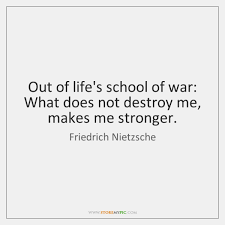
Nietzsche’s whole quote: “Out of life’s school of war: what does not destroy me, makes me stronger.

It’s a much abused and misquoted line. Maybe even I am oversimplifying it.

It’s a choice. You can choose to let the school of hard knocks keep you down, or you can choose to get back up. It’s hard sometimes to keep fighting – and you have to refine your technique. But you can win. And it’s not by looking back and wishing for what might have been, but by looking and moving forward.

Create the life you want.

Dad’s Pancake Breakfast

We’d just left Collinwood in our rear view for a better neighborhood. No gang fights at this school. No bars at the end of every block. No kids sniffing glue in the churchyard.

Back then, Shaker was far away from the gritty streets of the city. The blocks wound around in curved patterns, trees and bushes, grass and squirrels surrounded us. The main street consisted of two lanes and a transit to bring riders to the square which housed an art gallery, upscale shops, and restaurants.

The neighbor next door brought over cookies. My mother grew strawberries in the yard. And for a brief shining moment, we had a life that seemed pretty normal, like what other families might have.

On Sunday mornings, my father would call upstairs – who’s coming? And some of us or all of us would race downstairs and hop into the car. My father was taking us to the McDonald’s All-You-Can-Eat-Pancake-Breakfast.

“For ten bucks,” my father said, “I can feed the whole family. Eat your fill!”

We’d eat pancakes, talk and laugh, and eat more pancakes. He’d raise the paper in front of his face and allow us to sit longer, talk about hair and make up and boys. Or maybe we talked about the music on the brand-spanking-new MTV.

For me, it wasn’t the All-You-Could-Eat, and it wasn’t the pancakes. We’d never really done this before. We hadn’t gone out as a family. We would order pizza. We would occasionally be treated to McDonald’s or Red Barn, but we never went out to sit down and eat. Part of it was money. Eating out takes money and we didn’t have any. This was evidenced when my mother pawned her wedding ring for bread and baloney, milk and cereal to get us through the week.

As a roofer, my father worked from sun up to sun down, especially in the summer. In the winter, he’d be laid off and laid up, not in the mood for much.

This summer was different. We were happy.

Maybe it was because we were growing up. Maybe my father had decided to work just a little less that summer. Maybe it was the new place, the new neighborhood, and a new lease on life for all of us.

It didn’t last. But the memories survive. And, in a body full of bad memories, we have to hold on to those handful of good ones.

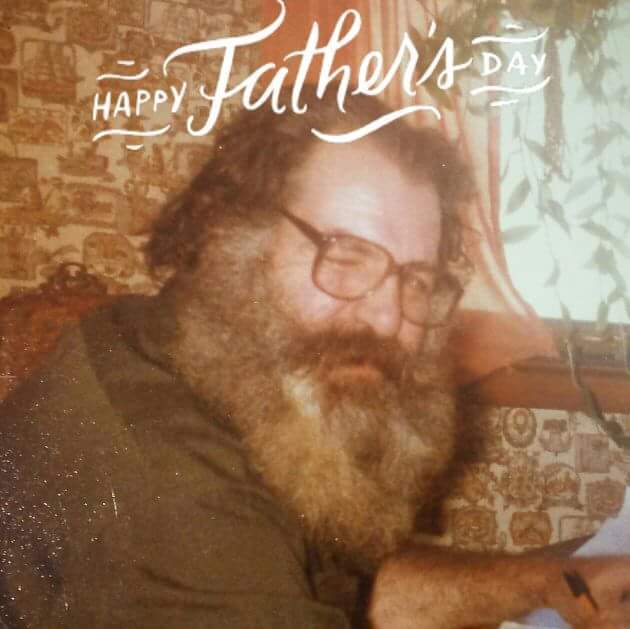
Before my father passed, but long after I’d moved away, I sent him a Father’s Day Card: “That summer we went to McDonald’s for that All-You-Can-Eat-Pancake-Breakfast nearly every Sunday was the best. I loved it! I Love You!”

I needed him to know that I remembered some good things.

This week, I made pancakes thinking of him. He always liked my cooking. He’d say, “there’s only one thing wrong with your cooking – you don’t make enough.”

I made enough this time – they’re sitting on the counter. Maybe I’ll wake in the morning, like a kid on Christmas, and they’ll be gone – for old time’s sake.

Journals and Journaling

What do Marie Curie, Albert Einstein, Jennifer Aniston, Matthew McConaughey, and Warren Buffet have in common?

Did you guess journaling? I mean – since it’s the title of the piece. But, yes, they all kept journals, along with Oprah, Darwin, Khalo – and so many more.

Oprah uses it to outline goals. Buffet uses much of his journaling as inspiration for his business – “Writing will make you a better investor.” Jennifer Aniston says she uses it to keep control of her emotions (me, too, girlie!).

Journaling also helps me work out things that are vexing me. It helps me think more critically by getting the emotional stuff out of the way.

Carly Long has journaled her whole life. She credits it with getting her out of bad circumstances and growing as a person. “You know what’s funny about journaling? Sometimes I go back and read things. And it’s obvious I was upset with someone and wondering what I should do next. I didn’t write the name down, but I wrote down what I could do. I remember doing those things and I continue to do them – but I can’t remember for the life of me who I was upset with!”

The healing process became part of her being!

I love this!

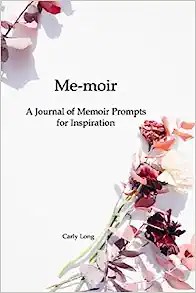
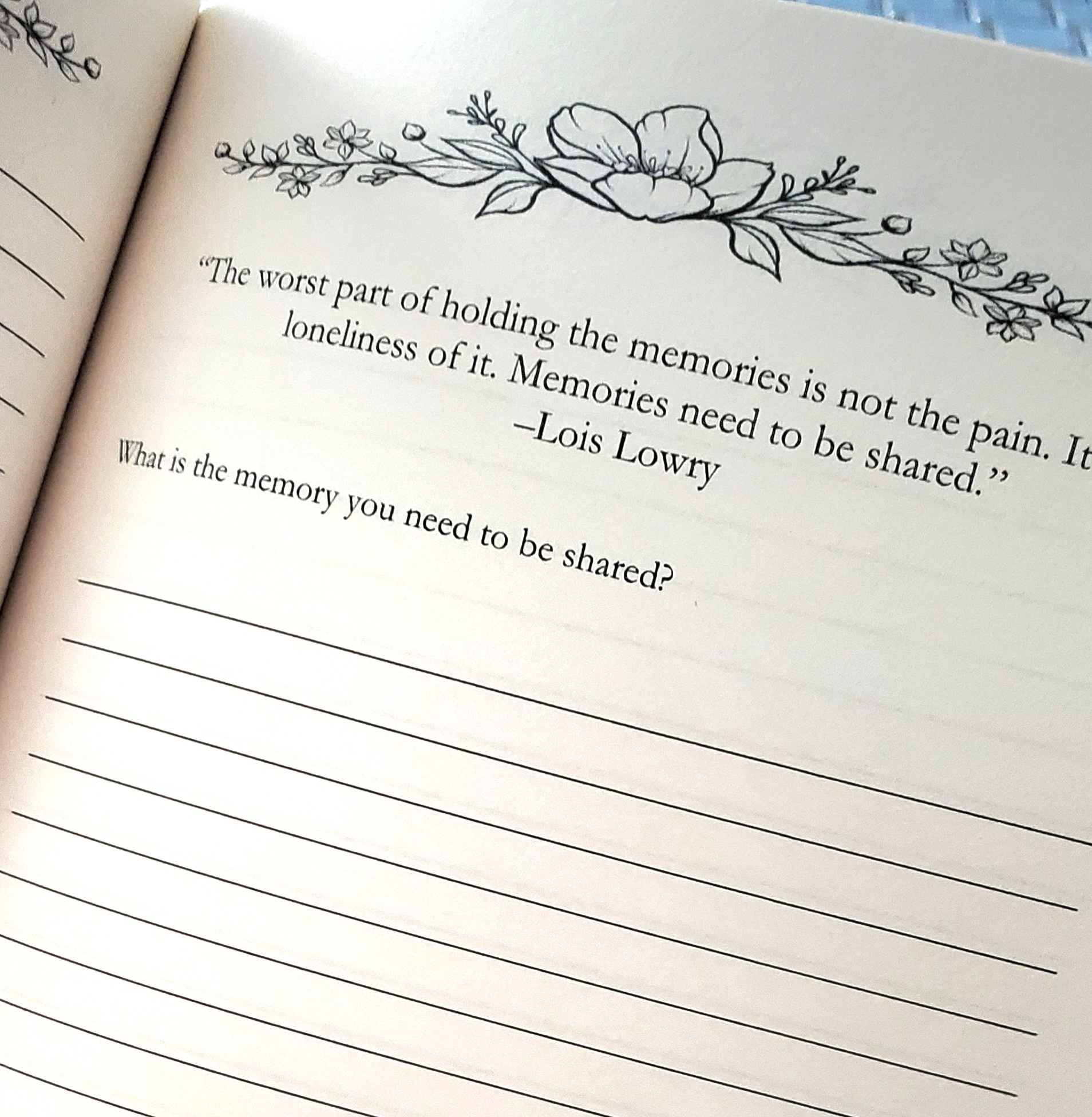
Carly has taken her digital media, writing, and healing skills and brought them together to begin creating beautiful journals. A few of them are available on Amazon. She’s giving away, Me-moir: A Journal of Memoir Prompts for Inspiration. (Inspired by one of my blogs!) to one of her followers on July 1st. To be eligible – follow her on IG. July 1st, she’ll chose a name live! You’ll receive a free copy! Follow Carly Long at 2carly4u for a chance to win a free journal!

Grandma’s Tour

Published a few months after my grandmother passed. Enjoy.

Mem-oir / Re-Mem-ber Me

I’ve been fascinated with memoir of late. I’ve written and published a number of short pieces and am working on a longer text now.

What separates memoir from autobiography is usually the length, the sharper focus on an event, situation, time period or even a person, and the creative lens through which it is expressed.

A few of my memoirs have featured spirits. It has some readers believing I am haunted; however, living with ghosts is not what any of the stories are about.

Long ago, I heard another writer describe memoir as revenge literature, But that’s not it at all.

Memoir is about remembering, reclaiming, clarifying, and having something to say about an event or situation that carries a universal message so others can identify with it.

Memoir for me – is about remembering me – reclaiming me – and renewing myself. It’s about reconciling and separating myself from the past and moving forward.

When you escape your roots, those roots, the evil, the hardship, the habits, and the others still attached to those roots try to drag you back, bring you down, and won’t let you go.

It has been years since I lived within those roots – since I’ve looked back – but sometimes I can feel those creepers winding their way around my shoulders reaching for my throat – they’re trying to drag me back. They’re angry because they have never even looked for an escape route. They have only ever lived that life and they’re crazy mad because I got out and never looked back.

I don’t give them energy. My energy is laying the past on paper as I see fit and moving forward.

Memoir is healing.

Writing with My Eyes Closed

Emerging from clouds between theta and delta rises the envisage, the essential nature, our souls. Words and ideas and dreams become stories in the writer’s mind.

Lying there, just a little longer, stories grow and take on life.

Horizontal in a chilled room before the first brushes of daylight: creation.

Before the eyes open, before the needs of the day press on, before the lists and media and people of the world take away the single small moments where stories spark –

I wish so much to remain there, just a little longer, in the moments just before wakefulness, eyes still closed, brain sparking connections, tiny fissures of light like small static flares against the blankets, feeling the contented pressure under my spine, the warmth of the down in the darkness, life all around is comforted and quiet.

I occasionally envy those who don’t need sleep, the man who gets only 15 minutes, the man who never rests, but that is some strange day-time illusion of getting more done, being more, having more, more more more. Their lives are shortened, their victories less sweet somehow, as if this time here in the bed in the darkness of deep night for reflection and creation are robbed from them.

This here, the first creation of life, happens in the dark, just before the light,

And, if I could write with my eyes closed, somehow pick up the pen or click the computer keyboard with my eyes closed, I would.

The vestiges of day – light and sound – are thieves making away with quiet thoughts that would have become life – story.

Just a moment longer here, then I’ll be there, with you.

The Course of Gratitude

On Thanksgiving, I was invited to dinner an hour or more from my house. There would be family and friends and I was excited about going.

Already stressed from running late, I ticked off my checklist of things as I tossed them into the car, hopped in, turned the key, and …. click.. click…click.

Uhm. No. I must have been hallucinating. I didn’t depress the gas. I didn’t turn the key completely. Confidently, I tried again. Click, click, click my car responded to each and every try. Not one hint of the engine igniting.

I called my daughter who had arrived ahead of me – stress and disappointment overwhelming me. She said it was probably just the battery and she arranged for someone to jump my car.

They arrived, hooked up the cables, and said – turn the key. Click… click… click. Okay, wait a few minutes and try again. But with each and every try the click, click, click even seemed to get weaker.

Not only was I missing the dinner that I was already late for, but my baby – my car – my very dependable, has never let me down was ailing. I assumed since the battery couldn’t be jumped, there was something very wrong with her. I imagined the costs, the time, began to wonder how I would get to work.

Too late for dinner. Too late to make alternative plans. I donned my big sunglasses to hide my tear swollen eyes and took my dogs for a walk. I returned home, ate a bowl of fruit (I hadn’t shopped for heaven’s sake, I was going elsewhere for dinner!) and cleaned out my closet. What else might one have done?

As I thought of the dinner conversation missed, what are you grateful for? I had to consider what I was and am grateful for. Of course, I am blessed.

As with the immediate circumstances, the car with the suddenly dead battery, spending Thanksgiving with my dogs instead of a table filled with food – I was still grateful.

I’m grateful the car didn’t die anywhere else! It died here, in my own driveway, leaving me safe at home and not on the freeway or the supermarket or an hour away from my house on a chilly holiday night.

I’m grateful for the amazing family I have. I may not spend every holiday with them because they have a father, in laws, friends, but I see them all the time. As I walked the dogs around the neighborhood, I saw my neighbors enjoying their family – some of whom only visit on holidays. I am bless to have family who want to hang out with me, want to be here with me, and don’t just come on holidays.

I’m grateful for the beautiful souls I’m fortunate enough to call friends. In the last some years, I’ve attempted to align myself only with those who glow with positivity. They are people who I can count on, people who care about me and I care about. I probably could have even called them on Thanksgiving for a ride, but I didn’t want to disturb their holidays.

I was fortunate enough to have my daughters recreate Thanksgiving on Saturday – which, somehow, was better than the original could have been.

Morphing Memory

Psychologists believe that memory is fallible. We don’t really remember everything correctly. Every time we take out a memory, we add to it, subtract from it, try to reason with it – which, essentially, changes the memory.

People are highly suggestible. Their memories can suffer from suggestions from others, from pop culture, from their own emotional instability.

We all have those stories when we’re wrapped around the holiday table reminiscing and someone misremembers something – or remembers it differently than others. They swear they are right and the other is wrong.

Remember that scene in Scrooged with Bill Murry when he’s in the taxi and he’s recalling a memory: “I was running down a hill, and there was this beautiful girl in pigtails.” The taxi driver grumbles – “That was Little House on the Prairie!”

I used to know someone like that. Her misremembering took on a life of its own. It’s a wonder she’s not the fiction writer.

I find memoir exciting. Not because of the fictional aspects of the things we fill in. I completely accept that memory, and thereby memoir, is corrupt, but the exploration is enlightening. In memoir, we discover who we are. In my search for my sacred parts, in the healing of my broken parts, I strive for authenticity.

“Days of Remembrance” is an effort for me to come to terms with my brother’s passing. I didn’t get to say goodbye, so this is my goodbye to him. I think he’d appreciate it in the same way he appreciated when others reached out of their comfort zone, as he was trying to do in his last year or so of life.

“Days of Remembrance” was published in MemoryHouse Press. A lovely little journal of which I am proud to be included.

What is Creativity?

My friend believes creativity is a gift direct from the powers that be.

I believe everyone is creative in different ways.

My friend feels when she is ill, she is unable to write. The body, she says, is recreating itself, creating health from illness.

I think of the great minds in our society – Mozart’s last work, although incomplete was powerful, was written on his deathbed. Einstein was working on his next great theorem as he lay dying. Howard Hughes, burned and bleeding, after a plane crash left him near dead, redesigned the bed he lay in, redesigned the plane in which he crashed.

My friend is not completely wrong. When I’m not well, the last thing I’m thinking about is how my character will move forward.

But maybe that’s exactly what we need when our body is focused on healing, that our mind needs to be occupied with our passion in life. Maybe there is something to the creation – the connection between healing and writing – that makes magic.

We know that, already, don’t we? We heal though creativity. We are fully present when involved in our purpose.

I wrote the first draft of Our Gentle Sins during a stressful time. It came out fast and easy. The flow was beautiful and powerful and made me feel better, more in control, and hopeful.

When I think of the book now, the characters hold a special place in my heart. Jack and Valerina are the epitome of hope