Writing and Critique Groups

Many years ago, I belonged to my first writing/critique group. In the beginning, it was great to get together, talk about writing, and read each other’s work. We were all novice writers.

There was a session when one member, the most critical of all of us, spent the whole time helping a single writer with the few pages she submitted. We didn’t get to the rest. None of us were too worried about it. The point was to help one another. The following session, however, the same member looked at my pages and threw up her hands, “I don’t even know what to do with this.” And she offered nothing. The rest of the group was as surprised as I was.

I don’t know what about those pages ticked her off that she wouldn’t respond to them but driving home that day I realized I was not in the right group. I didn’t attend again, and the group disbanded soon after.

Finding the right group has to be one of the hardest tasks a writer faces. Of course, we want writers equal to or better so the feedback is helpful. Personalities matter as well. If there is someone who waxes too critical without being helpful or another who is overly helpful and won’t be critical – neither is furthering the work.

Some writers might have different values.

One writing group was run by a well known editor. She had a certain way of doing things and everyone needed to do it her way. I respected her opinion. We got on well, even if sometimes we disagreed. One woman quit after a month. She didn’t see how all of our very different work and styles benefited from sounding all the same.

I stayed with that group a little longer, valuing the feedback I received. But then it was time to move on.

My writing and critique partner who lasted the longest offered me the greatest feedback. The more we read each other’s work, the more we talked about our goals for each individual piece, the better partners we became. And, we became lifelong friends along the way. Her work is sensitive, detailed, almost understated. And even though our writing was different, we understood each other’s voice and values. We were able to give each other helpful feedback on a regular basis. Her infirmities have left her without a creative streak. And as she tries to heal, I cannot ask her to read my work.

The few writer’s conferences I’ve attended have drawn people to me – but they are looking for a teacher, a mentor, and I can’t mentor all of them and still have time to write.

There were a few authors I would like to remain in contact with, but they have their own critique groups and want to charge outsiders for their services.

Critique services are good for editing, perhaps some are good for storylines. But trusting someone who doesn’t know you or your goals often ends with needs unmet and the critique unsatisfying.

Maybe a writer doesn’t need a writing group or critique group after a certain point. But writing is so solitary,it helps to surround oneself with like minded individuals.


The Stationary State of Distraction

When people say they are distracted, there’s an image of flurried movement from one thing to another; however, for me, it’s a fixed state of forfeiture. As if I’ve lost something, given something up.

It’s a vexing feeling of loss and sorrow. Sometimes, I feel I’m unable to change the course of distraction.

It seems, in attempting to change the course of distraction, we become more distracted. We try different things, move to different locales, tell ourselves we need to take a vacation, or maybe try meditation, or even – yes – make a schedule!

But they’re all just distractions that stop us from doing what we need to be doing. For me, this is writing!

At this very moment, I’m listening to an exercise to help me keep focus while making tea, waiting for a phone call, and writing this blog! Multi-tasking is the inroad to distraction!

What’s worse – I suck at sales – and I’m told I need to make videos to market myself and my books. Yes, that’s exactly what I need to do. Distract myself some more figuring out how to make videos to upload to social media.

I rolled out of bed a few hours ago. I’ve been sitting here, off and on, trying to write. I have not even brushed my hair. If I were to put this blog in video format, I would want to brush my hair, brush my teeth, clean the house or at least the background, put on some make up, wear something other than my favorite t-shirt… more time, more distractions to keep me from what I need to be doing, which is writing.

I totally get some of you are doing this. Congrats, friends. I need your secrets!

I suppose many people call this monkey mind (I hate that term), but it’s accurate. Moving from one thing to another – mentally – even if I’m sitting in one place. There seems like I have so much to do.

The truth is – I’ve done this before. I’ve been in the stationary state of distraction and moved not so smoothly to the state of active focus on my writing. I need two things to make this happen. The first: I really need to shut down all the things I need to do. They can be done later without resulting injury or death. Second: focus on something I want to write.

Instead of all the have-to’s and should’s, I just need to enjoy writing again. That usually begins with loving the characters, interested in the storyline. Maybe even start something new and exciting instead of trying to rework something that doesn’t seem to be working. When focus is achieved and I feel that other work that needs more work is worth my time, then I can move back to it.

Aaaahhhh…. now I feel better.

The Writer’s Brain – Handle with Care

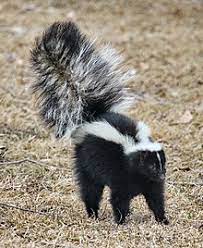
I’ve had skunks on my mind, mostly because they’re in my yard, successfully being trapped by a professional who seems to have gotten skunked recently. Beyond that actual getting caught in the crossfire of a skunk’s ire and ass, I think the odor is akin to smoking; after awhile the scent adheres to the clothes, hair, skin and, even though every one else can tell, the smoker or in this case the skunker can no longer detect the scent that has seeped into their being.

Therefore, my dreams of becoming a skunk skank, earning $$$ for hauling away critters who are relatively harmless other than their last method of defense which renders the person if not friendless then at the very least dateless, have been set aside.

However, I wonder about the skunkers and their lives. Do they have dates? Do their spouses get used to the smell? I read something recently that said we are attracted to people with similar scents. Are there skunkettes? Ladies who have taken to catching and releasing the cute little critters with the stinkpot defense? Or are there people who prefer the rough and rugged smell of burning brimstone and smoldering sulfur?

I’m more of a lavender and eucalyptus person myself.

The skunk and skunker smell lingered so long and loud in my yard and on my front patio, that I worried that it’d adhered itself to more than just the fine hairs of my nostrils, so I asked a mere stranger at the shop if I smelled like skunk. He laughed and said, “no or else I would have put on my mask to be polite.”

When a writer’s brain starts asking questions – handle with care – whatever happens next can spark, igniting a blaze of ideas.

Later that night, I was walking in the cool breeze with my dogs pondering the skunker’s plight. I returned and stood in the shade of a big sycamore tree when a homeless man approached my trash cans that lie in wait of the garbage truck. The recycling had been collected, so most of those persons who collect the recycling had come and gone. This man, however, reached into the black can, the real trash of old food and cat litter, picked up a bag, and carried it over to the emptied recycling can and upturned it. I stepped forward and said, “don’t do that,” to which he responded by grumbling incoherently before launching into a low growl similar to that of the Howler Monkey, then he rambled off to the neighbor’s trash and did the same thing.

Click, click, boom, boom – something sparked in my brain and a story began to form. 

More tidbits – the neighbor appeared; sticks – a cat curved around the corner; leaves – a car backfires somewhere in the distance; fuel for the fire. My mind has been set ablaze.

I love when that shit happens. 

The Ghost….

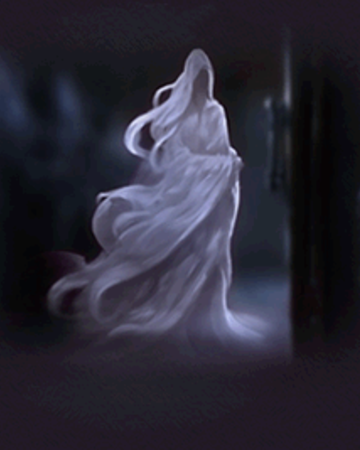
My short story, The Ghost in Her Room, has been published by Dreamers Writing.

The editors were very sweet. Kat mentioned in an email how much the story touched her.

Working with Dreamers Creative Writing has been an extremely pleasant experience.

Thank you!

Can we be real honest here for a moment?

2020 was traumatizing, yes.

Then the spring culling of faculty was horrifying.

The death of friends and family,

then continued torment by people who are unhappy and unhealthy.

The past 17 months have been horrendous.

We’ve all been in some type of survival mode. We’ve all been hurt and scared and scarred. We haven’t reached out enough or we reached out and didn’t received a response.

We’ve been told over and over, this is the new normal, this is normal, now we’re getting back to normal.

The world is an angry place. Karens rule. Mass shootings. Building collapse.

Nothing is right. Nothing is normal. And it’s okay to be upset, to feel dismayed, confused, unsettled. Nothing about the last year and a half has been comforting.

And you’re not alone.

But

hang in there

we

will

all

be

okay.

Found Objects

I walk a lot. On these walks, I happen upon things lost or left.

I’ve found many feathers. Owls. Parrots. Crows. and once a hawk feather.

My friends remind me feathers are signs and have meanings. A black feather is protection. A white feather means an angel is watching over you.

The hawk’s feather represents clear vision.

When I found this hawk’s father, I was ecstatic. Such a wonderful and rare find! I immediately shared the news.

One person questioned how it’d come to be there on the sidewalk in the middle of the day.

I assumed a hawk lost it as he flew overhead or stopped for rest on a nearby tree. I guess he could have swooped down for a mid-day snack and the feather fluttered to the ground.

Yet – this person seemed convinced the feather it belonged to someone else. Does a child live at a nearby house? I considered it. Actually, no. Could it have belonged to a neighborhood child walking by? And she went on. Had they bought it somewhere and then dropped it? She seemed set on believing that it had been lost by a person and it belonged, not to me, but to someone else.

Did I need to explain there were hawks in the neighborhood? Did I need to say, there’s a nearby tree where I’d seen ravens and the occasional hawk? I didn’t want to explain or analyze or concern myself with such things.

I believed a hawk had molted it. And it was meant for me.

Maybe it’s like believing there’s a little magic and mystery left in the adult world.

Maybe that person had no more magic.

Of all things in life, I choose to indulge in the ever small myths and mysteries of found objects.