The fundamental element of any memoir is authenticity.
This doesn’t necessarily mean every word needs to be absolutely correct. We all know our memory plays tricks on us, so we’re not going to remember every word that might have been said years ago under stress or in a moment of excitement.
This authenticity includes a relationship between the author’s character and an honest portrayal of an original truth through the reproduction of the essential elements of the event or topic. This truth must also extend beyond the author into a universal theme that speaks to reader’s hearts.
Let’s break down this breathy statement:
Author’s Character: their moral compass, not the protagonist or antagonist of the story.
Honest Portrayal/reproduction of the essential elements: Not a word by word or play by play re-enactment of the time, but gist of what was happening, the emotions, the actions, the staging of the scene for a reader’s understanding.
Original Truth: The tipping point, the learning moment, the meaning and or purpose of this piece.
Universal Theme: How the reader is going to connect and/or relate to the story, author, or event.
Authenticity in memoir is crucial to a successful connection to the reader. It is the element that makes memoir worth writing and worthy of reading.
Someone asked me today if I ever ask people if I can write about them. I told the person, it never occurred to me to ask.
I rarely write about a person as a whole person. I take a little bit of this and a little bit of that and I create a whole new character.
But even if I used the majority of the personality traits and quirks and characteristics, there’s little danger of them recognizing themselves.
The truth is people rarely see themselves as others see them.
So – when I have written about that rare person – name changed – they never even suspected.
And, if I’m not slandering, endangering their job, family, or life, or using their real name, and they can barely recognize themselves as I or others see them, there is little to no chance of getting sued.
The sad fact is that I’ve created characters who some people identified with and had the mistaken impression that it was a reflection of them. It wasn’t.
Creating characters and writing about people is art.
Understanding who you are and how others see you as opposed how you see yourself takes a lifetime of understanding misunderstandings.
Many people confuse autobiography and memoir. The terms are sometimes used interchangeably; however, there are differences between them.
Although it is written from the author’s perspective, as in memoir, an autobiography usually spans a person’s whole life. Examples of autobiography include Ghandi’s The Story of My Experiments with Truth and I Am Malala by Malala Yousafzai.
Memoirs, written usually in first person and from the author’s perspective, focus on an event or pivotal period in their lives. It contains in some instances, more narrative, more storytelling features including thoughts and emotions. Most importantly, the author writes it using their memory of the event, usually toward a certain end or point.
The Glass Castle is a memoir; while it does not cover Jeanette Walls whole life, it focuses on a significant period of her youth and upbringing.
Memoir is more intimate. Consider Memoirs of a Geisha compared to Long Walk to Freedom by Nelson Mandela: Whereas an autobiography contains more facts, dates, and times, memoir paints a picture, drawing the reader into an emotional narrative.
Memoir was thought to have been invented in 397 A.D. with St. Augustine. Although his book spanned his whole life, the portions therein where written in a memoir fashion with pivotal events filled with emotional detail and his own point of view.
Memoir has evolved over time.
As a child, I remember reading autobiographies. I would sit enraptured in the corner of the library, reading chapters from presidents, actresses, and others. The librarians would point me over to the easy readers, but I wanted to read something real, something intimate and beautiful. I found a lot of dry stories that included people’s names and dates and facts, but I still found it interesting. I tried to go for the more intimate portraits of life that the librarians definitely guided me away from.
Later, I would steal my mother’s True Story magazines. Far too mature for my young eyes but, apart from the sex scenes, the secrets and innermost thoughts and feelings of the author and the actions of his or her friends or partners captured my consideration.
Ron Terranova’s The Red Wing Chronicles deserve a shoutout for mixing the two genre’s. It’s an impassioned look at scenes from his life, spanning most of his life.
I’ve been fascinated with memoir of late. I’ve written and published a number of short pieces and am working on a longer text now.
What separates memoir from autobiography is usually the length, the sharper focus on an event, situation, time period or even a person, and the creative lens through which it is expressed.
A few of my memoirs have featured spirits. It has some readers believing I am haunted; however, living with ghosts is not what any of the stories are about.
Long ago, I heard another writer describe memoir as revenge literature, But that’s not it at all.
Memoir is about remembering, reclaiming, clarifying, and having something to say about an event or situation that carries a universal message so others can identify with it.
Memoir for me – is about remembering me – reclaiming me – and renewing myself. It’s about reconciling and separating myself from the past and moving forward.
When you escape your roots, those roots, the evil, the hardship, the habits, and the others still attached to those roots try to drag you back, bring you down, and won’t let you go.
It has been years since I lived within those roots – since I’ve looked back – but sometimes I can feel those creepers winding their way around my shoulders reaching for my throat – they’re trying to drag me back. They’re angry because they have never even looked for an escape route. They have only ever lived that life and they’re crazy mad because I got out and never looked back.
I don’t give them energy. My energy is laying the past on paper as I see fit and moving forward.
Psychologists believe that memory is fallible. We don’t really remember everything correctly. Every time we take out a memory, we add to it, subtract from it, try to reason with it – which, essentially, changes the memory.
People are highly suggestible. Their memories can suffer from suggestions from others, from pop culture, from their own emotional instability.
We all have those stories when we’re wrapped around the holiday table reminiscing and someone misremembers something – or remembers it differently than others. They swear they are right and the other is wrong.
Remember that scene in Scrooged with Bill Murry when he’s in the taxi and he’s recalling a memory: “I was running down a hill, and there was this beautiful girl in pigtails.” The taxi driver grumbles – “That was Little House on the Prairie!”
I used to know someone like that. Her misremembering took on a life of its own. It’s a wonder she’s not the fiction writer.
I find memoir exciting. Not because of the fictional aspects of the things we fill in. I completely accept that memory, and thereby memoir, is corrupt, but the exploration is enlightening. In memoir, we discover who we are. In my search for my sacred parts, in the healing of my broken parts, I strive for authenticity.
“Days of Remembrance” is an effort for me to come to terms with my brother’s passing. I didn’t get to say goodbye, so this is my goodbye to him. I think he’d appreciate it in the same way he appreciated when others reached out of their comfort zone, as he was trying to do in his last year or so of life.
“Days of Remembrance” was published in MemoryHouse Press. A lovely little journal of which I am proud to be included.
I handle grief by writing. I handle stress by writing. I handle many things by laying a line on paper and allowing the dark moments to flow out. Image and rhyme and memory and magic blooms and appears sometimes in chaos, other times in patterns however rarely symmetrical.
People all handle grief differently and all the ways are valid. Many people don’t understand those who don’t bawl and post and praise. Other people don’t understand the public display.
After my brother passed last year, my mother followed him in a matter of days. It took me a bit, but I wrote. While I’m working on a longer piece about my mother, I’m proud to say Memory House Magazine out of Chicago accepted the piece about my brother.
“Days of Remembrance” is a mystical memoir of my brother’s passing, more specifically the days following his death. The print version will be out soon. They’ve invited us to read their digital version at https://chicagomemoryhouse.wordpress.com/
Think of a memory from childhood. What images do you remember? What stories do you tell?
When you take out a memory – do you or can you connect it to something more current? Why are you thinking about that? What brought it up? What did you learn from that memory? Or why do you enjoy it?
When you just take out a memory out and connect it to something present – you played with it, worked with it, in some way, possibly made it mean more or less, you colored it in, or made it pale in comparison.
Many Psychiatrists say every time we take a memory out – we change it, we try to make sense of it, we add details may have come from somewhere else. Many, many experts believe we have no pure memories. That they are all, in some way, corrupt.
According to Dr. Elizabeth Loftus, Professor at UCI who has published twenty-four books and more than six hundred papers, believes memories are reconstructed, not replayed. “Our representation of the past takes on a living, shifting reality,”… “It is not fixed and immutable, not a place way back there that is preserved in stone, but a living thing that changes shape, expands, shrinks, and expands again, an amoeba-like creature.”
How many of us know someone who remembers something different that we do? My sisters and I used to walk in the cool night air; one night, the middle sister saw a jaguar – the car, not the cat – and pulled the little ornament off. We started to walk away, and she instantly felt bad, so she turned back and placed it on the car near the windshield hoping the owner would see it and be able to repair it. Hey – we were teenagers – don’t hate us.
Now, when my sisters and I get together, my youngest sister remembers it differently, she remembers jumping up on the car and ripping it off and bringing it home. She laments losing it and wonders where it went. My middle sister and I just look at one another because that does not match up with our memory.
When writing we can change little things, play with the memories. But how much of the changing and playing with can we do to memories or memoir before we need to change the label from memoir to inspired by actual events?
And… I think the answer to that is – how much have you changed? Who is reading it? And are you going to get sued?
I have a piece coming out that I originally labeled as memoir – but I fought with myself about that label because it’s about my dead brother. In this memoir, I’m talking to him. Obviously, I’m playing with memories of our conversations, of who he is and what types of things he said. I had a conversation with the editor about this who said – do you want to make it clearer you’re talking to a ghost?
My brother, sadly, can’t sue me – he’s passed. No one can sue you from beyond the grave, but their families can sue if the memoir defames any of the family. This piece does not defame my brother, but is it memoir? Or is it “inspired by an actual event”?
The memoirist’s first line of defense is: The first amendment of our us constitution guarantees us the right to free speech –
EXCEPT – there are some exceptions like you can’t yell fire in a crowded movie theater, you can’t say bomb at the airport… and you can’t say Johnny Depp abused you without valid, verifiable evidence.
The first amendment does guarantee that we have the right to our opinion, so when we’re writing a memoir, mostly, that is what it is – our opinion of events as they happened. Therefore, in most cases, memoirists are safe from prosecution.
The two biggest issues writers of memoirs face are defamation and right to privacy lawsuits.
Say you’re writing a memoir about your experience. You and your friend had a wild night of partying, you’re say 17, did somethings that you didn’t even put in your diary for fear someone would find out – but you’ve decided to write about that night – for whatever reason, you learned a lesson from that experience, it’s passed the statute of limitations for prosecution – ideally, yes, that is your story and you can write about it – but, wait, your friend swore you to secrecy. You guys had a pact. If you write a memoir or personal narrative or op-ed with a character that has your friend’s name, some variation of that name, character traits, walks like or dresses like your friend, was in the same place as you and that person can be identified, you can be sued.
If you want to write that story, change the names, change the locations, change your friend’s character traits, age, or leave your friend out completely.
Or – get your friend’s permission – IN WRITING!
Augustun Bourroughs, author of Running with Scissors, wrote a memoir about growing up – he changed the names, but the family brought a lawsuit against him and the publisher alleging defamation and invasion of privacy. The author maintains that it was and is his opinion and he kept journals throughout his childhood, and even some public facts supported some of the author’s claims, but the family alleged that events were changed to make them more dramatic – the lawsuit was settled out of court for an undisclosed sum. The publisher had to change the label from memoir to book. And the author had to add a note – stating that he hadn’t meant harm and that the family’s memories are different than his own.
If you look at the Glass Castle by Jeanette Walls the youngest sister Maureen has the least written about her. She was at a friend’s house for most of the West Virginia portion – there is some verifiable facts of her time in New York – she tried to stab her mother, she was institutionalized, and then she’s off to California, and in the book, nothing else is stated about her. She had her right to privacy. So whether the author didn’t get permission or she was being respectful or her sister threatened to sue her – who knows. You can find information about the sister if you google – I did, but there seems to be limited information about her.
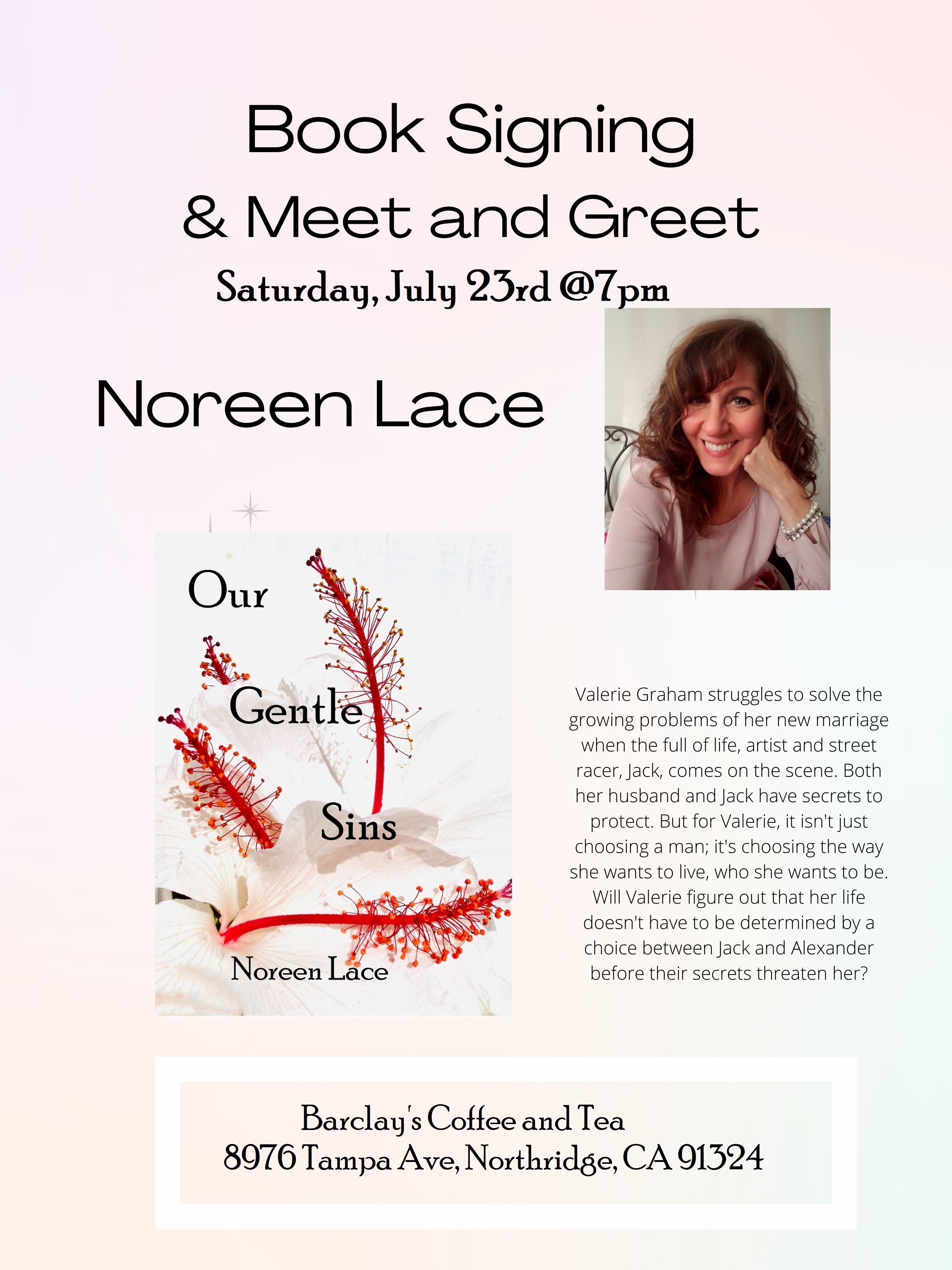
Our Gentle Sins has a character who is a recovering drug addict – I know a few. One of my friends asked me if he was the inspiration for the character of Jack. It’s actually fiction, but it is inspired by experiences of many people I’ve known or talked too. I felt it was an important story, but I would never use someone’s personal story who dealt with such personal struggles.
Drug addiction is a serious issue. Recovery is very personal. I admire those who are successfully maintaining their recovery. Jack is my tribute to them.
If you’re local – stop by and talk with me! Enjoy Our Gentle Sins – a fictional novel with inspiring characters recovering from whatever life has thrown at them!
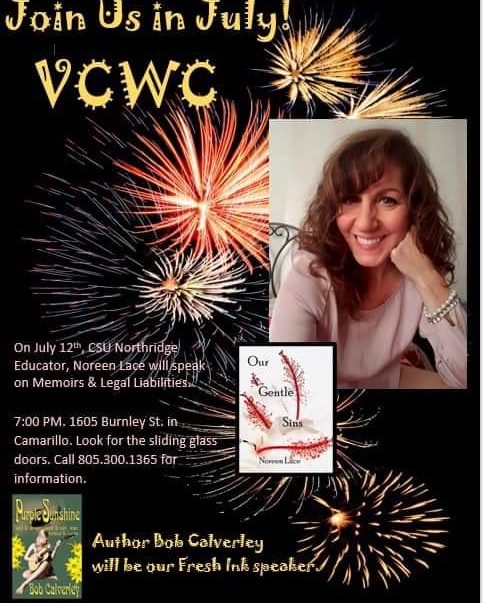
While Our Gentle Sins is fiction, a number of my publications have been memoir. Ventura Country Writer’s Club asked me to come and speak on the topic. I’m excited to share what I’ve learned and lead a writing workshop. If you’re nearby, stop by!
Billy Collins – famous poet – says he published everywhere. Any literary journal that accepted his work, big or small, he was honored.
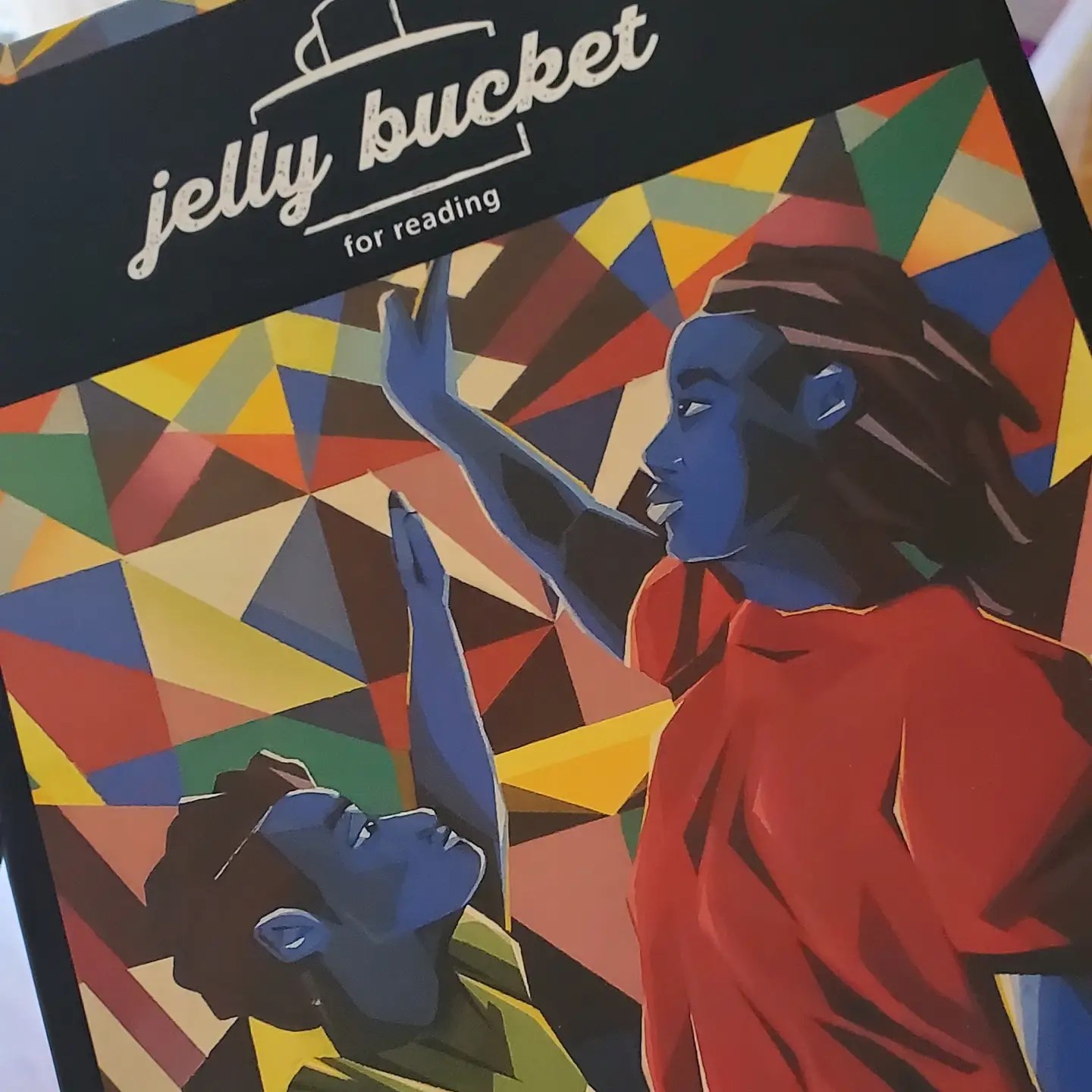
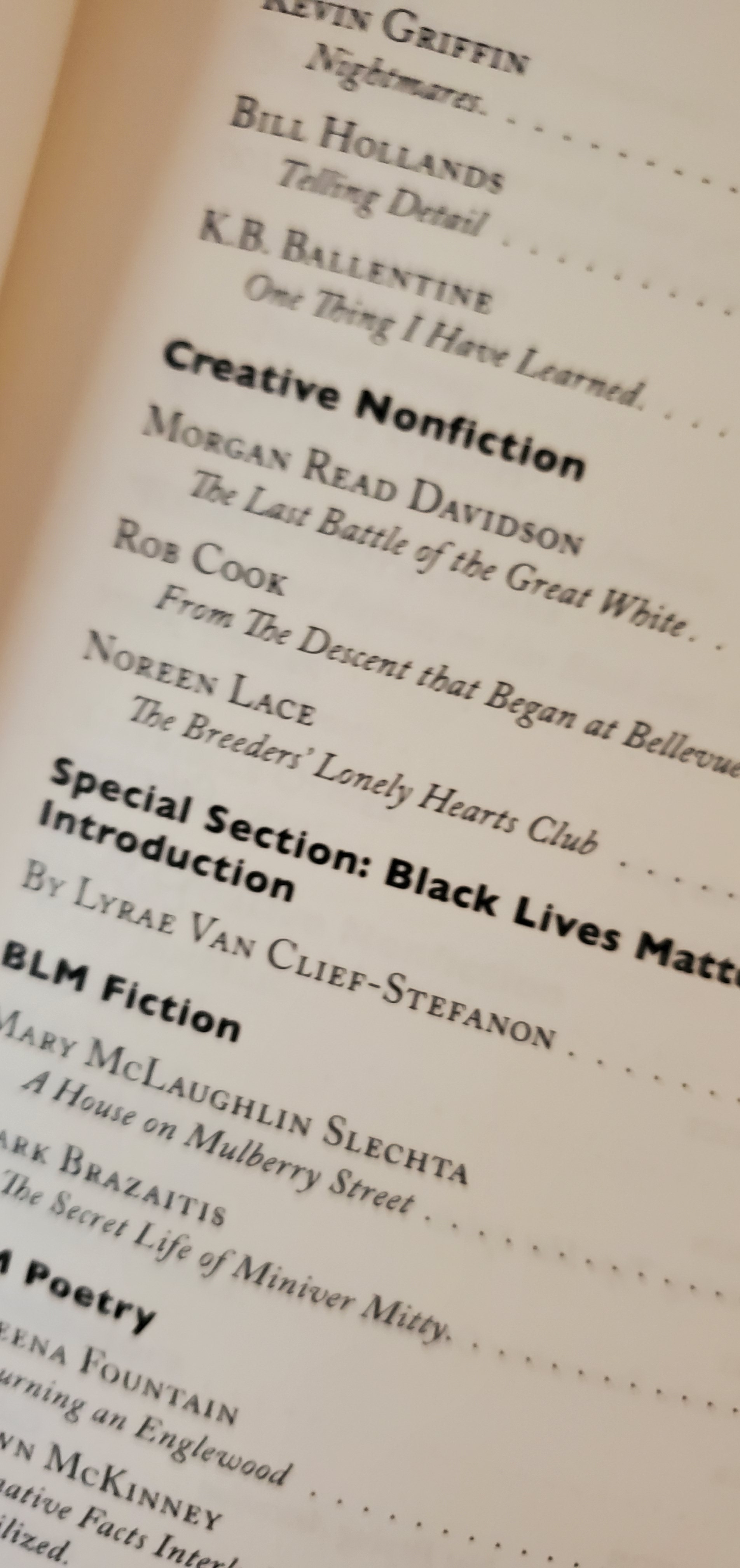
It’s wonderful to have your hard work recognized. My gratitude for all the literary journals which have published my work. And today – thanks to Jelly Bucket!








 Noreen Lace
You must be logged in to post a comment.