October

Is one of my favorite months!

We have Halloween. Libras. And, this year, the 168th anniversary of Poe’s death. This is not necessarily a good reason to like October, but it is part of what makes October so memorable.

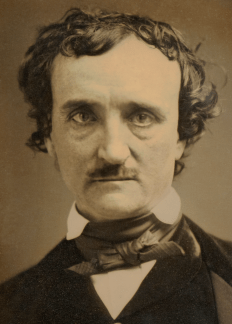
Edgar_Allan_Poe_daguerreotype_cropSo… 168 years ago, Edgar Allan Poe visited some friends at a pub, saw a doctor who suggested he not travel, then boarded a train, forgetting his trunk, mistakenly with the Doctor’s cane, to pick up his “dear Mother,” Maria Clemm. She was to come and live with him and his new fiance, Elmira Royster Shelton.

The rest, we know, is surrounded in mystery. I was interviewed in June regarding my thoughts of what happened. Thank you to the members of Super News Live.


Another reason to be excited about October – REaDLips has released a short story of mine. $1.00 Stories. They called it a “chilling” story. Well, you’ll have to be the judge of that.1story

Available on e-book:    

Or soft cover:

Cris is an author who’s lost his magic touch. He meets a homeless man who might have the inspiration he needs.

But what happens is anything but magic or inspirational.

What Do Published Authors Know?

Recently, I read a mini article posted on a blog of sorts, wherein the writer called out Stephen King’s book On Writing, concluding that “famous writers don’t know Jack.”

king1

WOW! Really?


I was shocked and offended. And I assume that is the reaction she wanted to elicit in order to bring traffic to her article or her own website.

Let me clarify that I am not an avid Stephen King reader. I’m not much into science fiction, but I have been reintroduced to his work upon reading Doctor Sleep, the continuation, in some sense, of The Shining. I have read On Writing some years ago. I’m pretty certain it’s still on my bookshelf as it’s required reading for anyone who wants to write – whether you like it or not. And my favorite essay of his, which I sometimes share with students is “Why We Crave Horror Movies.”

Therefore, I’m not defending a writer I love with a passion but an author I admire with sincerity. And I am taking issue with the blogger’s lack of professionalism in her disrespectful and disingenuous response to a successful and prolific author.

Stephen King

In Academia, occasionally members of the community in praising literary fiction take issue with popular literature. In one such class, when someone asked about King, the instructor responded – “In 100 years, no one will remember him.”

Yeah, I’m guessing someone who has written over 50 novels as well as over 200 short stories, among others projects will be remembered.

Again, my issues with her article is that she comes across as disingenuous. I don’t believe she really believes King is wrong, I think she wants to make a name for herself and create a controversial reaction and bring traffic to her website, so she can look at the numbers and get a little thrill when it pops up instead of actually presenting sound and original ideas. I say this because she didn’t actually say much of value.

This blogger’s premise is that writing is a gift and it is done intuitively, so authors don’t necessarily know how to explain writing. Understood. As well, she takes issues with some basic rules that I’ve learned since third grade. She says, “we’d all end up sounding like Stephen King.” Not necessarily so.

king2

Her final claim: “You can do anything, provided that you can pull it off.”


Well, duh! You can break every damn rule of writing if you’ve got a story so great that Hollywood will buy it and the publishers are going to make bank from it.  Dare I talk about The Hunger Games?  As an English teacher, it hurt my eyes to read the numerous punctuation errors. But, as one of my editors said, Story is King. It’s the story that matters, not the comma splices that most non academics won’t even notice.

However, every good writer should know the “rules.” And I’m using that term loosely here. A writer should be familiar with what has come before, what others are doing, as well and what others believe the rules should be.  How many people have commented on Picasso’s blue period, ignorant of his background, and said “I could do that!” Picasso learned and practiced the rules. Then he chose to break them. When I break a rule of writing, I ask myself: “Is it for effect, and is it resulting in the desired effect?

I say: “Break that damn rule if you want. Just know why you’re doing it and if it’s working.” If Stephen King breaks a rule, even his “own” rule, I imagine he knows it and knows why he’s doing it. I don’t think On Writing is prescriptive; I believe it’s meant to be descriptive.

So, I suppose I don’t even have that much issue with what she said, but it’s how she said it. Stephen King is an award winning, multi-best-selling author, show some respect. That’s called Professionalism. You can disagree with someone, you just want to do it respectfully.  She says she leaves the “writing instruction” to the “less qualified people -“.

king3.gifREALLY?  The author of over 200 short stories is less qualified than who – YOU?  How many books have you published?  I looked her up. A few “middle grade readers,” a nonfiction book, a few short stories. She says she prefers to tell people how to get published.

I go back to her line, “famous writers don’t know Jack.” How unprofessional can you be?

I teach a business writing class (among others); I run the class like a course in professionalism. And this is something I would say is an absolute NO! We can disagree with anyone – I tell my students – but we should know how to respectfully disagree.

As a writer, I see a lot of unprofessional behavior. (I in no way claim to be perfect myself).  I belong to writers’ groups and read (more than I post) in these online writers’ groups. And it can be things like this – open to the public – that can get a person in trouble. You never know who you are dealing with on the other end of that computer. Random arguments, stupid comments, and radical, unqualified statements can hinder one’s success.

I was asked recently by a publishing company for my CV. This is not a problem; I sent it right over. Why would I not?  I posted asking for advice about the CV, for future reference. Some people seemed beside themselves, as if a publishing company asking for my CV was out of line. The publishing company is my potential employer. They are entitled to my CV and, as a professional writer, I want to show it to them!

Now, what if I had written a blog such as that – disrespectfully and disingenuously criticizing one of their best authors? It might cause the publishing company to think twice about even looking at my work, let alone looking at my CV. The cold, hard fact in this world is most companies are not going to hire or work with people who are unprofessional. While they may want people to speak their minds, they don’t want people publicly running off at the mouth. Charlie Sheen and any number of actors learned this the hard way.

king4

I am not at all saying that we shouldn’t voice our opinions! If you disagree with anyone, you should be able to, and have the absolute right to speak your opinion. I’m suggesting it be done with polite professionalism.

Who is this author of a few middle-grade books to be criticizing King? She is never going to convince ME or many writers that King is wrong. However, had she respectfully disagreed with his views on the certain aspects of writing, clearly stated her reasoning – it would have been far more professional and more believable! I would have read it, taken her opinion into consideration, and possibly even agreed with her. However, by her announcing that he is “less qualified” and doesn’t “know Jack,” not only do I question her intelligence and her integrity, she’s possibly offended people she’d rather have as friends or colleagues. (You’ll notice I didn’t link her article here. I’d prefer not to give attention-seekers more attention).

I, personally, would rather respectfully disagree with people than announcing contrary opinions for the sake of readership. I guess being boisterous will get you noticed. But, it will also get you noticed, if you know what I mean.

I’ll take her words, “You can do anything, provided that you can pull it off.” – Yes, yes, you can. You’ve seen numerous examples of people running off at the mouth about others and nothing happened to them or their career. However, are you sure you can do it and not experience consequences? Have yking5ou built up enough credit, have enough backing, or whatever else you need, to make certain you will not face consequences. OR – have you done this, seen it done, heard it done, and the person hasn’t gone very far in their career. Hmmmm.  Might be a reason.

Say what you will. I suggest you say it with respect.


The Myth of Writer’s Block

Writer’s block is a myth perpetuated by people who don’t really want to write.

write

And I really don’t like when people ask me if I ever “get it,” as if it’s contagious. In some ways, I think it is. People talk about it too much and infect others with their ideas of this mysterious and loathsome “writer’s block.”

Maybe I’m thinking of the block all wrong. I’m not sure at all what it means. Does it mean the person can’t sit in a chair and write? Are their hands broken? Is their brain injured? Or does it mean they can’t write as well as they want? Does it mean that writing’s not easy?

Hey – wait – let’s hold on to that one: Writing is not easy?!

Of course, at times, it’s not easy! Sometimes the scene isn’t quite right or the dialogue is inauthentic or the words aren’t laying out as smooth and beautiful as we’d like. Does that mean we lay down the ivory pipe, get up from our Italian baroque seventeenth century carved desk, retire our gray wool writing jacket with the patches on the elbows, and lounge for the rest of the day waiting for this “block” to pass?

None of it’s real!Writers-Block-is-a-Lie

The desk, the jacket, or the block – these are images people use to perpetuate the myth that writing is some magical gift that is laid down upon us and is taken away just as easily.

I’m not saying the ability to ribbon words rhythmically and meaningfully isn’t a gift – but it is work.

Now there’s the word we need to use. The only thing, perhaps, people are being blocked from is WORK.

A writer needs time. The lack of time can inhibit starting or finishing – but we make time. Many writers (Vonnegut, Angelou) woke up early.  I used to be one of those people who said – oh, no, I need my sleep. But then I decided I wanted to write more than I needed extra sleep. Writers, for centuries, have had no choice but to get up early or stay up late in order to produce.

And there’s that word again. Work. Let’s get to it, ladies and gentlemen, no matter how gifted you are, writing is work, writing is commitment. And there’s the other word so many people are afraid of: commitment.

If you want to be a writer it takes work and it takes commitment. The real work of writing is to commit yourself to it, to sit your ass in that chair, at that desk, or dining table, or in the corner closet, and write. Sometimes nothing is going to come out right. And that’s when you keep working, or you take a break, go grab a cuppa and get back to it. Writer’s commit themselves to time and action, whether it’s one hour a day or eight hours a day. And sometimes things come out well and sometimes they’re a struggle.

plumbers block


Imagine writing as a job. If you want to be successful, can you give up the moment it gets challenging?  Can you imagine your plumber calling you and saying, “I just can’t come today, I have plumber’s block”?


If something you’ve started has stunted, write something else, take it in a different direction, write an angry letter to one of the characters insisting they do what you want them to, then let them write one to you.

poe2


Let’s be honest about what writer’s block really is –

  • it’s procrastination;
  • it’s distraction; 
  • it’s fear of rejection.


I do believe people go through periods where they’re not as productive, or they have some psychological issues blocking them from releasing their ideas. These problems can be solved – therapy.

beautiful journalist looks typewriterIf you want to take part in the myth – “oh I can’t write today!”

If you want to perpetuate the myth – “What do you do when you get blocked?”

That’s fine. However, Do not bring your kind of negativity to me – “Do you ever get blocked?” Because I don’t want to hear it; I don’t want to be a part of it; and I certainly don’t want you attempting to infect me with your dis-ease.


read


Now – sit that ass in that chair and WRITE something. 😉 Good luck. 


It doesn’t matter…..

I loved The Munsters when I was a child. When asked to write an “artist’s statement” in graduate school – I actually said I wanted to be kicking around in the leaf-blown yard of Munster-like house.

I came across this lovely little clip recently. True wisdom for our age – for any age.

Love each other because you’re human. Understand that we all follow different paths and respect one another.


What does matter is the size of your heart and the strength of your character….

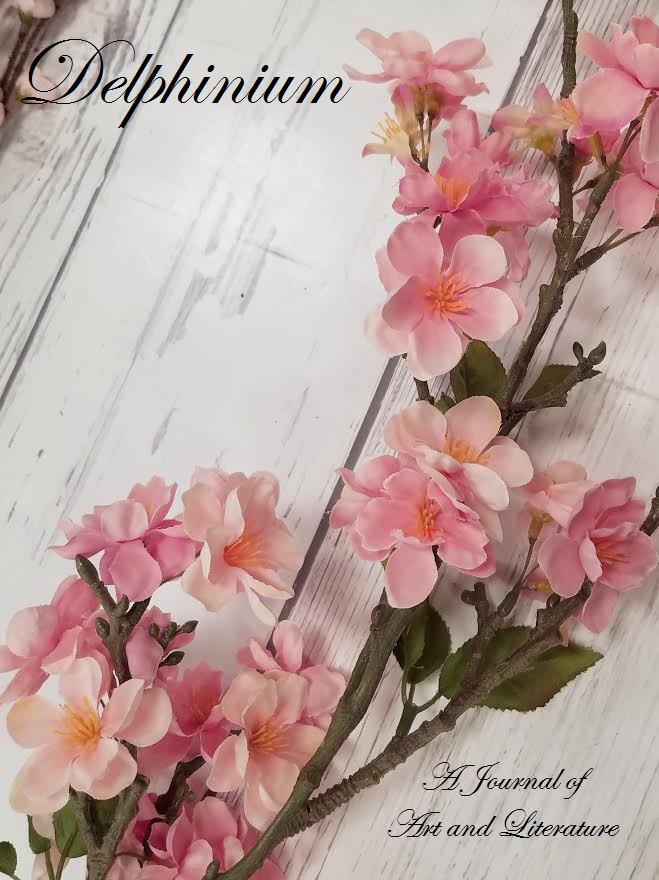
Delphinium – with care, blooms twice

Sticking to their word, Delphinium blooms again. The lovely editors at REaDLips have promised to give some of the proceeds of Delphinium’s Summer Issue 2017 (and going into the future) to literacy programs.  I’m beginning to appreciate Delphinium and those at REaDLips more than ever. They are showing themselves to have a heart, to care about our society. I am more than proud to be affiliated with this journal, proud to be published a long side amazing award winning authors as well as my own students. That’s right! Lynn Johnson was a student in my African – American Literature class. Her poem, published in Delphinium, was one she wrote in response to one of our readings and shared in class as part of her creative project.

I hope you’ll give Delphinium a read, and not because I’m published in it (well, not JUST because), the journal features authors and artists of diverse cultures and it will benefit art and literacy programs.

delphin cover3

Namas-Cray

My friend Laura LaBrie from Lovely Lattitudes, first said this word to me.  It describes life, don’t you think?  My new book was all set to go, it just needed a title.  I felt like this word, “Namas- Cray” accurately described the stories involved.

In everyone of these stories, the characters are, shall we say, a little off. One woman is planning her “Perfect Day,” when she’s interrupted by a young couple about to rob her. Did  I mention her perfect day involves suicide?

In “Harvey Levin Can’t Die,” the narrator is just going about her life, working at a coffee shop down on Ventura Blvd, when the whole world seems to get serious. Her b/f leaves her to go back to college. Customers want to talk about serious stuff, not reality tv. WTH? But she finds the underground – and accidentally – I mean, it was probably an accident – mows down Harvey Levin with her car.  She tried to report it! The police didn’t want to hear it!

Talk about having a cray day –

So this title fit PERFECTLY.  I think whether you are an avid reader or someone who picks up a book to make it look like you’re an avid reader, you will love this book.  (Humble, right?)namascraycoverwithfilter

You can win a copy on GoodReads!


Giving away Hope

Happy June, Beautiful People. May your summer be as pleasant as you are.
 
 
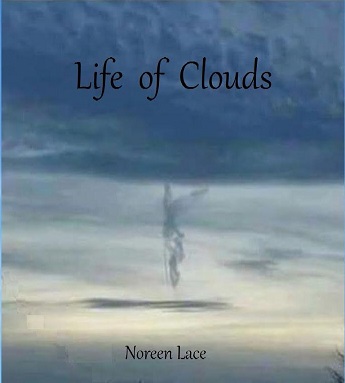
Described by one reader as:
Much like a series of prose poems, Ms. Lace renders her characters’ stories in short, fragmented spurts that reflect the movement of the lives she depicts. Both moving and entertaining, The Life of Clouds is a pleasant afternoon read
 
Three little girls are left by their father. Their strict, yet ill grandma moves in with them. The loss and change leave the girls fragmented and confused. They grow up experiencing OCD, Anxiety, and drug addiction.
Chloe doesn’t leave the house
Ashley doesn’t come home
The narrator.. you’ll have to judge.
They’re looking for hope while remembering their father’s songs of clouds.
 

Why Literature Matters …..

open old book, a rose in a vase and a feather


This is a repost of an article that appeared in the New York Times in 1985.  In 1965 Congress passed The National Foundation of the Arts and Humanities Act to protect and support the arts.  A nation is historicized  by the art and literature produced by ALL LEVELS AND CLASSES of our society.

Read it – see how apropos it is today:

The Arts’ Key Role in Our Society

By ARTHUR SCHLESINGER JR.    Sept 20, 1985

This is a year curiously dotted by anniversaries; and one must hope that, as we salute the bitter memories of war, a less dramatic anniversary will not slip by unnoticed.

Twenty years ago this week, the Congress passed the National Foundation of the Arts and Humanities Act. The act’s preamble declared that support of the arts and humanities, ”while primarily a matter for private and local initiative, is also an appropriate matter of concern to the Federal Government.” In enacting this law, which led to the establishment of the National Endowments for the Arts and for the Humanities, Congress affirmed a conviction that the arts and humanities are vital to the health and glory of the Republic.

This was not a novel idea. In his first annual message, President George Washington told Congress he was ”persuaded that you will agree with me in opinion that there is nothing which can better deserve your patronage than the promotion of science and literature.” A third of a century later, President John Quincy Adams called for laws promoting ”the cultivation and encouragement of the mechanic and of the elegant arts, the advancement of literature, and the progress of the sciences.” In the third year of the Civil War, President Abraham Lincoln ordered that construction of the Capitol dome be completed. When critics objected to the diversion of labor and money from the prosecution of the war, President Lincoln said, ”If people see the Capitol going on, it is a sign that we intend this Union shall go on.”

President Franklin D. Roosevelt recalled this story in 1941 when, in a world ablaze with war, he dedicated the National Gallery of Art in Washington. And President John F. Kennedy recalled both these stories when he urged public support for the arts in 1962. Both Lincoln and Roosevelt, Kennedy said, ”understood that the life of the arts, far from being an interruption, a distraction, in the life of a nation, is very close to the center of a nation’s purpose – and is a test of the quality of a nation’s civilization.” The policy of Federal support is an expression of the value the Republic places on the arts, a symbol of the role assigned to the arts in our national life. And Congress today remains steadfast in its belief in the centrality of arts to a civilized society. It has shown no disposition to repeal the act of 1965 and has steadily resisted Presidential attempts to cut National Endowments budgets.

Yet the idea of public support, and with it the idea that the state of the arts is a matter of national concern, are under increasing challenge -ironically not from Congress but from renegade parts of the intellectual community itself. We live in a decade that likes to disparage government and to exalt the market. We are told that, if a cultural institution cannot pay its way, then it has no economic justification and, if no economic justification, no social justification. Art, we are given to understand, must stand or fall by the box-office test, and the devil take the hindmost.

To deny the arts a public role is the real trahison des clercs. For painters, composers, writers, film-makers, sculptors, architects, orchestras, museums, libraries, concert halls, opera houses contribute indispensably to the pride and glory of the nation. They are crucial to the forming of national traditions and to the preservation of civic cohesion. George Washington wrote: ”The Arts and Sciences essential to the prosperity of the State and to the ornament and happiness of human life have a primary claim to the encouragement of every lover of his Country and mankind.” The arts and humanities serve us all. They are surely as worthy as banks, corporations and other agencies of private profit to be objects of Federal concern, subsidy and even bail-out.

If history tells us anything, it tells us that the United States, like all other nations, will be measured in the eyes of posterity less by the size of its gross national product and the menace of its military arsenal than by its character and achievement as a civilization. Government cannot create civilization. Its action can at best be marginal to the adventure and mystery of art. But public support reinvigorates the understanding of art as a common participation, a common possession and a common heritage.

”Great nations,” said John Ruskin, ”write their autobiographies in three manuscripts – the book of their deeds, the book of their words and the book of their art. Not one of these books can be understood unless we read the two others; but of the three the only quite trustworthy one is the last. The acts of a nation may be triumphant by its good fortune; and its words mighty by the genius of a few of its children; but its art only by the general gifts and common sympathies of the race.”


The Evolution of Writing Style

A prompt in a writing group to think about style inspired me to consider the evolution of my own writing style.

Writing evolves, grows, hopefully gets better, with all we learn and experience in life.  But style is something a little different. Style, sometimes, doesn’t change. Or, I should argue, doesn’t change that much. Maybe, it’s the small changes that only a critical reader might notice.

Last year, when I published Here in the Silence, I felt the stories earned that title. All the protagonists were struggling with finding their own voice. They felt silent or silenced, either from their own lack or from those around them.

This year, with Namas-Cray, my characters are different. Some are still struggling with being heard, (Of Strays and Exes), while some believe they are completely aware of who they are and what they want (A Perfect Day). There’s darkness, but there’s a dark ironic humor that embeds itself in their thoughts and actions: “Of Strays” begins with “When I killed my neighbors dog….” and in “A Perfect Day” a woman’s suicide is interrupted by an armed burglary.

What’s different between these two years of writing is the ironic humor. And, I’ve noticed that’s worked it’s way into most of my writing, including my poetry, “The Fly” features a fly who has “24 rose colored hours” of life, both celebrating and loathing those hours.

I’ve always handled my own life’s struggles with humor. When my daughter was a teenager, she looked at me and said, “Is everything funny to you?” Anyone who has a teenager knows – it’s got to be funny or you’ll lose your freaking mind. Therefore, to answer her question, I gave her a long, slow nod (gritting my teeth).

Does that mean my writing style will make you laugh at the dead dog or at the woman’s suicide attempt?  Absolutely not!  That’s where the irony comes in. It’s subtle and sardonic. The protagonist in “Of Strays,” offers to pay for the dog.  She doesn’t quite get the loss. But the protagonist grows to understand. And, in “A Perfect Day,” suicide is never a humorous topic, but our very serious plans being interrupted by life is something everyone can relate to. Her day is no longer so perfect when an armed robber says, “your money or your life.” And his plan, certainly, is not going as well either. Irony!

One of my students believes that “humor” should never be used in conjunction with a serious topic. In many cases, this is true. But we have to look at the irony surrounding the fiction that is how we learn and grow; introducing a topic with subtly allows the readers a way in to understand the situation, relate, empathize. The same is true of our lives. If you slam someone with truth, they are likely to back off and not engage. We introduce ourselves first, our struggles, along with the irony of moving on in our lives.

Let’s take a look at my life – what has happened in my life that might have made me feel more sardonic.  I teach a report writing class, which I run like a lesson in professionalism. How you present yourself as well as your writing says a lot about the person you are.  And then comes this Presidential campaign. How do I tell my 18-22 year old students to act like a professional when #45 acts like a spoiled child who’s had too much sugar?

Irony much?  This year, I was offered an African American Literature course. How do I stand in front of 36 students of diverse backgrounds as a white woman lecturing them on African American Lit?  Humor. Confront the irony. I asked them on the first day of class, “Does anyone want to know why a white girl is teaching an African American Lit Course?”

(According to the students, btw, I did a great job. Let me say, that I absolutely loved it! We built some iron bridges of communication in that class that I hope the students take out into the world with them. I took the course for a number of reasons, one of them was the above #45. But that’s a whole other story – We’re focusing on irony, life, writing style).

I do believe life affects writing style. Everything we learn, do, experience, and want should affect our writing style. We should grow and evolve as humans and as writers.

I was stuck once on a story. I’d been working with it, not quite able to get it to that sweet spot, when I decided on a vacay to New Orleans. I’m not much of a drinker, so it’s not the absinthe smoothies on Bourbon Street that inspired the trip, so much as the fanfare, the history, and the culture. I might have thought about the story while I was there; I don’t really remember. But, upon my return, the answer materialized. The story became what it needed to be. (It’s under consideration for an award as I write this).

That trip has stayed with me, as well as my other travels, other experiences: the homeless man at Starbucks focusing with intensity on a spiral bound notebook as if he was finishing his own novel – “$1.00 Stories” – the psychic who told me my illusion bubbles had burst “How to Throw a Psychic a Surprise Party” and so on. We must let life affect us, work its way into us, our style must evolve, or we stay stuck in life and in art.

writing life.jpg

I’m interested in hearing thoughts on this.  Do agree? Disagree? Has your style changed? How or why?

Sleep pulls me down….

My untitled poem

[Sleep pulls me down on a Christmas pillow]


2016 books


has been published in Silver Streams journal.

Silver Streams is a new publisher in Ireland. Call me Internationale.