Eddy – Win a Copy

Eddy, my new novella, will be out next month. I’ve eddycoverfinalbeen invited to read and speak at the Poe Museum’s Birthday celebration upon its release.

However, you can win a free copy before it’s released!

This is a fictional account of an actual event in Edgar Allan Poe’s Life. In 1848, whether accidental or purposeful, Edgar took an overdose of Laudanum, which was an opiate based medicine available on the open market. It was sold in pharmacies as well as pubs!

Poe nearly died as a result. This is a fictional imagining of that experience.

Poe reimagines the life and death of each of the women he loved. The story begins and ends in the Boston rooming house in which Poe found himself in November 1848 right after he’s bought the Laudanum. His overdose rouses images of his mother backstage at the theater in Richmond during her last performance  and continues on to Virginia in their Philadelphia home while she played the piano for their guests. The story doesn’t neglect his other loves.

Debbie the events coordinator from the Poe Museum said she was “blown away” and couldn’t wait to share it with her colleagues.

Eddy won’t be available until January 6th. But you can WIN a advanced copy by entering your email address.  You don’t need to enter more than once, your email address is your entry. A single one will be randomly selected by a generator, and the winner will be notified by email on or about January 5th.

darktimes


If you need more to whet your appetite, take a look at my interview with Super News Live on their Dark Mysteries Show about The Mysterious Death of Edgar Allan Poe.

I’m excited about releasing this as Poe’s work and life has been such an inspiration, not only to me but to many. His work will continue to inspire writers, artists, and film makers for many years to come.


EnJOY!

Not Writing is Not an Option: Rethinking Writer’s Block

I’ve been under the impression that writer’s block was actually procrastination; however, someone wrote recently “whoever doesn’t believe in writer’s block has never experienced the sheer frustration it can cause.”

This, and the comments that followed, made me reconsider my position on writer’s block.

Experts state that very few people actually experience the psychological issues that cause real writer’s block. That statement, and my observations of procrastination in action, have lead me to believe that most people who say they suffer from writer’s block aren’t actually suffering from deep mental disturbances but of more common problems that plague us all – distractions.

However, the advice this person received caused me to pause:

“Drink heavily.”

“Don’t force yourself to write, it’ll come.”

These seemed the least helpful. While I know there’s a stereotype that follows artists and writers – the best ones suffer, and suffer from addiction in many forms. I doubt very seriously whether getting drunk will help the person. And, if you don’t write at all, how will anything come?

Other advice went something like this:

“Just write.”

To which one person wrote a long response about the ridiculousness of this answer. I, however, disagree. When asked by my students “what if you get stuck on a part?” I answered, I go on to a different part, or I write something else. I usually have more than one project going at the same time. I know some writers don’t do this, and I understand their reasoning. At this point, it works for me.

“Go for a walk, do yoga, meditate.”

This is actually pretty good advice. Studies show going for a walk or exercise in any form can feed creativity. Yoga is meant to calm the energy in the body so one can focus and/or meditate.

Others said, “listen to music” or “write a character study.”

This could help. While writing one novel, I listened to blues and jazz to help me give the character depth and personality.

Finally, someone asked the person who’d posted they had writer’s block and needed a solution: “What’s bothering you?”

Now, that’s a damn good question. Most of my writer’s procrastination comes when some thing is bothering me.

The person’s answer was different than I expected.

“I can’t make the story go where I want it to go.”

OOOOHHHHH!

This is a whole different type of problem. I learned writing in two ways. One method was to write a formulaic story with beginning, middle, and the end in mind. Use an outline and stick to it. And I can do this. But it’s no fun for me. The second way I learned was to just write and see where the story wants to go or needs to go. Most of my writing comes this way. It’s natural, it’s organic, it’s unforced; maybe that’s why it flows.

Think of how much power water has. Human-made streams run over their banks, create their own pathways; in one way or another, they defy the path man made. Think of how much concrete and lead it takes to build a retaining wall to create a dam, and still they must have holes or release valves. How many still end up crumbling, breaking, or overflowing?

That’s what writing should be.

Ideas and words should flow. Let them live. Trust them. Trust yourself.

If they are dammed up, forced into an unreasonable plot or direction, then I can understand that type of writer’s block.

The advice offered for that was: “write the end, and work backward,” and “move on to another scene.”

This should probably work if the plot of the story is strong and the elements are all in place. However, the person maybe be stuck because a needed plot point is absent.

Before any solutions can be offered, the type of “block” the writer is facing must be addressed.  Is it really, “I’m stuck,” or is it “I’m distracted”? If there’s a phone in front of you, and facebook, twitter, or your blog open while you’re writing – that’s probably writer’s distraction. If the writer is stuck at a plot point, at a character arc, I’d suggest to meditate on it, sleep with it, think about it until it works itself out, but I also suggest skip ahead, write another scene, write that scene/character you tell yourself you’ll never use.

See – it’s still writing. NOT WRITING IS NOT AN OPTION. No one ever got better at something by NOT doing it. No one ever finished a project by not doing it. No one ever became successful by stopping what they were doing.


She was “BLOWN away”!

Eddy is set to be released the first week of January 2018. It will be followed by a book signing in Santa Clarita, then in Richmond, Virginia at the Poe Museum!

Debbie Phillips from the Poe Museum said she “was BLOWN away. I love it, and am excited to share it with my colleagues.”

In 1848, Poe took an overdose of Laudanum. Eddy is the fictional account of what happened under the influence of the opiate based drug.

“Half mad from an overdose of laudanum, Poe re-imagines the death of each woman he loved even as their souls reach out from beyond the grave to save his life.”

eddycoverfinal

To Celebrate my upcoming publications – I’ll be posting Poe related trivia and never before seen photos of fan art – or more specifically – the art people have made for me knowing I’m a Poe fan!

I’ve got so much love for Poe fans!

Goals & Accomplishment

goals

I know many people don’t start think about goal setting for another four weeks, but I consider it year ’round.

I don’t want until January 1st to begin anything, except a new year. I don’t make resolutions that I don’t keep, I rarely make resolutions at all.  When I want to start something new, whether it be health, wealth, a writing, I do it right away.

So – I’m not going to talk about what I’m going to do four weeks from now, but what I did 10 or 11 months ago.  In January of last year (not January 1, I think it was near the end of the month,) I made a vision board of what I wanted to see in my life. I’d never made one before.  I won’t bore you with all the things I placed on it, just a few things that did actually come to me throughout the year.

Of course, I had writing and publishing goals. I didn’t have a set number of publications or a set number of hours spent writing; those I set more often than yearly. eighteenHowever, by continuing to work on those writing and publishing goals, I’ve succeeded in publishing EIGHTEEN times this year.  18!  18 poems, short stories, books, etc floating around out there in the world!


I received these four complimentary copies in one week!

books.png


What Lies Beneath features a poem “UnWalden Pond.”
Vine Leaves has two poems: “The Fly” and “After.”
Wild Women’s Medicine Circle a narrative poem, “H.”
Delphinium published “Hope.”


Elsewhere on the vision board, I had things like book signings and talk shows and other personal things, some of which happened, some of which have not YET.

One of the things I included was an interview.  I’ve done two in the last month, but I did a live on air interview with darktimes.png

Super News Live on their show Dark Times in June. They gave me about 24 hours’ notice!  But

it was so much fun. The members of the crew and staff were very sweet!


Our brains like Goal Setting! Even setting little goals and crossing them off our lists makes us feel like we’ve accomplished something.

With my vision board, I didn’t actively cross anything off.  In fact, at some points, I forgot I’d had things on it. I looked at it after my Poe interview and realized – I had a picture of LIVE interview on it!!

I haven’t set goals for next year – yet. I have set short term goals that I will reset and realign when needed.

Waiting for New Year’s to set goals is like planning for failure. Why wait? What can you do right now to accomplish what you want? What can you do in the next month to know what you want to accomplish next year? If you know what you want to work on – why not start now?

I think by having a list or a goal written down somewhere, picture or other form, encourages us to more actively pursue, perceive, maybe envision that goal and work to accomplish it.

Good Luck!


A True Halloween Creeper Story

There was a challenge today in one of the writing groups to write 1000 word flash fiction Halloween story. This is a true story. It happened a few years ago. (It was written in an hour – so it’s not perfect)

halloween22


A True Halloween Creeper Story


Syd and I spent Halloween jogging in the rain. Our neighborhood doesn’t receive many trick-or-treaters, so this gives us a chance to see kids in costumes making their rounds. Sometimes the costumes scare Sydney; while dogs get the whole idea of doing crazy things for treats, they’re a little uncertain of masks and make up.

There are a lot of dogs in our neighborhood, which makes running difficult because of the social factor. The neighbors with friendly dogs stop and chat. So, toward the end, it’s more walk than run for us.

As I slow toward my own block, I run into Dan with his dog. Dan has a newfoundland; if the dog stood on his hindlegs, he’d be over six feet tall. A strong, powerful rescue dog, Dan said. “In case I ever need rescuing,” he joked.

“Where’s your wife?” The rain slowed to a sprinkle.

“Work trip. She’ll be gone til Saturday.”

“I didn’t realize her job required travel.” I’ve never seen one of them without the other. They walk their dog through our neighborhood on a regular basis.

Dan shrugs. “Yeah, once in a while.” His dog pulls him forward, and he yanks back. I smell the alcohol on his breath as he yells, “heel!”

Syd’s half the size of his dog, but the same color. She turns to look at him, even as his dog ignores him.

“What are you doing tonight?” Dan asks.

“Hiding from the kids. I didn’t buy candy.”  I laugh.

“Oh, yeah,” he says as if he forgot it was Halloween. “You can hide at my house if you want. I have beers.”

I laugh again. “No. I wouldn’t want your wife, or anyone else for that matter, to get the wrong impression.”

He shrugs and almost loses his balance. It becomes apparent, he’s had more drinks than I first assumed.

“It doesn’t matter. She’s used to it. I do photography in my spare time.”

I don’t know Dan or his wife that well. I only know them from our run-ins when walking the dogs, a few moments spent here or there chatting.

“You’re a photographer, right?”

I shake my head, “No, just pictures of flowers once in a while.”

“Yeah, I can see that. I see you covered in flowers.” His eyes shine as the last sprinkles of rain hit the ground and he pauses to look at me.

“Uhm, excuse me?”

“I photograph women, models. I’d like to photograph you.” He gets that half smirk that I’ve seen on men in bars when I was younger. A last ditch sales pitch that’s sure to hit. They, like he, doesn’t realize how incredibly silly they look. Dan’s older, he’s heavier. He has the appearance of someone who indulges in too much of everything except self-care. His skin is ruddy, hair unbrushed.

“No.” I say. There’s another block before my house and he’s heading the same direction. I hope another neighbor comes out to say hello.

“It would be strictly professional,” he slurs. “I’ve photographed hundreds of women, thousands. I used to run a website.”

“A website?”  He told me before he worked for the city; he’d retired early. I hadn’t believed that at the time, but didn’t care. Much like I don’t care about this conversation and I’d rather get to my warm, dry house and give Syd a treat.

He leans in, the scent of alcohol billows in front of us. “I don’t tell many people; it’s not something to be talked about in pleasant company.” He half laugh, half grunts.

I fall back a step, lean over to adjust my shoe laces. Maybe he’ll keep walking. When he stops and waits, I ask, “Does your wife know about the website and the photography?”

He shrugs again. The dog yanks at him and he yells louder than before. “Freaking, g’damnit, heel!” The giant, near panda bear, turns his head, seems to snub him, and pushes forward with less force.

Sydney slows down, lowers her ears, then she stays by my side as we start walking again.

“You know, I told my wife, it doesn’t really matter if we’re married or not. I mean, she could take one house, I could take the other. You know? Who stays married anymore, right?”

I see another neighbor, Jenny, coming toward us; I wave madly. She’s jogging with her little terrier, Fritzie. I hope she’ll stop, talk; I think, if she does, I’ll walk in the opposite direction with her.

“Hi, Jen!” I say loudly. She’s wearing her earbuds under her hoodie and I’m not sure she can hear me.

She waves, picks up Fritz and quickens her pace around us. I imagine she’s afraid of Dan’s dog. But when I see her sideways glance, I wonder if it’s more Dan that freaks out her. Suddenly, more things make sense.

“I could do the pictures very tastefully.” He half chuckles. “It’ll only be me; what are you afraid of?”

I decide to take the clear, hard line with him. “Well, I have children, and I’m a teacher. I’d be afraid to compromise my ethics and lose my job.”

We’re just a house from mine. I cut across my neighbor’s and my own lawn. The misty night has left my skin damp, but it’s him who makes my skin crawl.

“Well, if you know any young girls….” he calls behind me.

“I’ll be sure to warn them away from you!” I call back. Once in the house, I see him pause at the end of the drive, probably trying to make sense of what I said. I lock the door, turn out the lights, and give Syd treats; then we sit in the dark to watch someone a little less creepy, like Michael Meyers.

michael-myersjpg-c73192_1280w


4 Ways to Stay Poor

Someone said to me the other day, “the only thing my parents taught me was how to be poor.”

Many of our parents are unaware of life outside of their socioeconomic class; they may have ideas about how to help us, which might not be enough.

My father’s idea was work ethic – he worked from sun-up til sun-down as a roofer.

So – my sarcastic look at how to stay poor:

  1. Stay home and watch television. Because, certainly, that’s what successful people do. They don’t go on to learn more, success came knocking at their door!

Every year, I hear students say, “I don’t need college, Mark Zuckerberg or Bill Gates didn’t finish college.” And every year, I give a mini lecture, as gently as possible, about how these men were working and learning in their field of study long before college. I sometimes hint (because I believe) these men were geniuses. And they still had to work hard!

     2. Listen to your friends who say you’re a sell out. Because friends always have our best interest at heart and know way more than we do about our life and what we want, we should definitely listen to them if we want more and they put us in our places.

When I applied to college, one woman said to me, “Sounds like someone wants to be rich and famous.” I shrugged, not having the wherewithal to defend my choice, and maybe it wouldn’t have helped anyway. At that time, I would have settled for getting out of the ghetto.

       3. Dreams are meant to be secret, private, and stuffed away. By all means, don’t follow them. You don’t actually want to have a good idea and the confidence to follow through.

I can not tell you how many people made fun of and put down my dreams. One girl used to curl her hand into a decrepit fist, “Don’t have you writer’s cramp yet?” Other people swore I was “wasting time writing stupid poems and stories no one will ever read.”

     4. Don’t ask questions, you might feel stupid. There’s nothing worse in the world than looking or feeling stupid. It’s true, you might get an answer, but that’s beside the point!

The first time I went to a college campus, I went into the advisor’s office and she handed me a form. “Did you fill this out?” I hadn’t. “Well, fill this out and come back.”  I had a lot of questions, including about the form she handed me, but she ushered me out, and I remember turning to her and her shutting the door right in my face. I’d made an appointment months before. I’d taken three buses to get there. I wanted to turn around and walk away. But before I left, I picked up some other forms and talked to the student assistant in the front office who was FAR MORE HELPFUL than that rude, thoughtless woman who hadn’t given me the chance to even ask a single question. I could have walked away, and I wanted to leave as soon as possible, but before I walked out, I’d decided I wouldn’t let one shitty person who didn’t care dictate my success.


Now – if you have interest at all in succeeding – Try this link: Habits of Self Made Millionaires.


Existential Crisis or not?

After the farmer’s market, some mornings, I drive around, usually down Ventura Blvd. It’s been conducive to considering life, writing. 21741308_1794773787218606_5919141729243852808_o

I find that I usually stop somewhere for a coffee and write.
Even though I’m widely published in literary journals and other, my own work doesn’t sell much. I’m probably not that great at marketing; however, it may also be due to the fact that I don’t write genre fiction and few people know what to expect when I say literary fiction.

Obviously, it’s up to me if I want to change what I write. But, this afternoon, sifting through donations of people’s old clothes to go to different centers, places, and people who need them, I thought – I’m here to do more than write the next big romance or homelessaction/adventure story. I’m here to tell stories of real people and real lives, hard lived. ($1.00 Stories was inspired by a true story of a homeless man who wrote stories and felt he earned enough to live on)
The novel I spent the spring writing (and is currently making the rounds to publishers) is about a young man who is a recovering drug addict and a woman who spent her life allowing others to make choices for her.

I’ve allowed my heart and my life to be touched by a great many different people. Hearing and interpreting other’s stories, trying to understand and learning to empathize with individuals makes life worth living. Writing stories that people can connect with because they have a sister, brother, aunt who has experienced something similar is important to me.

My purpose is to tell the stories that are hard to write, hard to hear, and give real life meaning. This might mean I don’t make the homelessbest seller’s list, but it also might mean my work touched someone, taught someone, helped another human being experience empathy for a friend or stranger’s life.
My last few stories “Deception” is about how we lie to ourselves and each other,“The Gold Tooth” deals with a sibling who will never be what we hoped for them.  My poems, “H” and “Hunger”, both of

which will appear in Wild Woman Medicine Circle next month, explore hardships people must endure because of others’ expectations.

This is what I choose to write, I was born to write. It has meaning to me. I hope others finding it meaningful to them.

October

Is one of my favorite months!

We have Halloween. Libras. And, this year, the 168th anniversary of Poe’s death. This is not necessarily a good reason to like October, but it is part of what makes October so memorable.

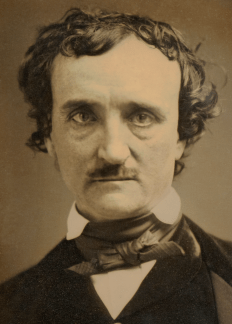
Edgar_Allan_Poe_daguerreotype_cropSo… 168 years ago, Edgar Allan Poe visited some friends at a pub, saw a doctor who suggested he not travel, then boarded a train, forgetting his trunk, mistakenly with the Doctor’s cane, to pick up his “dear Mother,” Maria Clemm. She was to come and live with him and his new fiance, Elmira Royster Shelton.

The rest, we know, is surrounded in mystery. I was interviewed in June regarding my thoughts of what happened. Thank you to the members of Super News Live.


Another reason to be excited about October – REaDLips has released a short story of mine. $1.00 Stories. They called it a “chilling” story. Well, you’ll have to be the judge of that.1story

Available on e-book:    

Or soft cover:

Cris is an author who’s lost his magic touch. He meets a homeless man who might have the inspiration he needs.

But what happens is anything but magic or inspirational.

What Do Published Authors Know?

Recently, I read a mini article posted on a blog of sorts, wherein the writer called out Stephen King’s book On Writing, concluding that “famous writers don’t know Jack.”

king1

WOW! Really?


I was shocked and offended. And I assume that is the reaction she wanted to elicit in order to bring traffic to her article or her own website.

Let me clarify that I am not an avid Stephen King reader. I’m not much into science fiction, but I have been reintroduced to his work upon reading Doctor Sleep, the continuation, in some sense, of The Shining. I have read On Writing some years ago. I’m pretty certain it’s still on my bookshelf as it’s required reading for anyone who wants to write – whether you like it or not. And my favorite essay of his, which I sometimes share with students is “Why We Crave Horror Movies.”

Therefore, I’m not defending a writer I love with a passion but an author I admire with sincerity. And I am taking issue with the blogger’s lack of professionalism in her disrespectful and disingenuous response to a successful and prolific author.

Stephen King

In Academia, occasionally members of the community in praising literary fiction take issue with popular literature. In one such class, when someone asked about King, the instructor responded – “In 100 years, no one will remember him.”

Yeah, I’m guessing someone who has written over 50 novels as well as over 200 short stories, among others projects will be remembered.

Again, my issues with her article is that she comes across as disingenuous. I don’t believe she really believes King is wrong, I think she wants to make a name for herself and create a controversial reaction and bring traffic to her website, so she can look at the numbers and get a little thrill when it pops up instead of actually presenting sound and original ideas. I say this because she didn’t actually say much of value.

This blogger’s premise is that writing is a gift and it is done intuitively, so authors don’t necessarily know how to explain writing. Understood. As well, she takes issues with some basic rules that I’ve learned since third grade. She says, “we’d all end up sounding like Stephen King.” Not necessarily so.

king2

Her final claim: “You can do anything, provided that you can pull it off.”


Well, duh! You can break every damn rule of writing if you’ve got a story so great that Hollywood will buy it and the publishers are going to make bank from it.  Dare I talk about The Hunger Games?  As an English teacher, it hurt my eyes to read the numerous punctuation errors. But, as one of my editors said, Story is King. It’s the story that matters, not the comma splices that most non academics won’t even notice.

However, every good writer should know the “rules.” And I’m using that term loosely here. A writer should be familiar with what has come before, what others are doing, as well and what others believe the rules should be.  How many people have commented on Picasso’s blue period, ignorant of his background, and said “I could do that!” Picasso learned and practiced the rules. Then he chose to break them. When I break a rule of writing, I ask myself: “Is it for effect, and is it resulting in the desired effect?

I say: “Break that damn rule if you want. Just know why you’re doing it and if it’s working.” If Stephen King breaks a rule, even his “own” rule, I imagine he knows it and knows why he’s doing it. I don’t think On Writing is prescriptive; I believe it’s meant to be descriptive.

So, I suppose I don’t even have that much issue with what she said, but it’s how she said it. Stephen King is an award winning, multi-best-selling author, show some respect. That’s called Professionalism. You can disagree with someone, you just want to do it respectfully.  She says she leaves the “writing instruction” to the “less qualified people -“.

king3.gifREALLY?  The author of over 200 short stories is less qualified than who – YOU?  How many books have you published?  I looked her up. A few “middle grade readers,” a nonfiction book, a few short stories. She says she prefers to tell people how to get published.

I go back to her line, “famous writers don’t know Jack.” How unprofessional can you be?

I teach a business writing class (among others); I run the class like a course in professionalism. And this is something I would say is an absolute NO! We can disagree with anyone – I tell my students – but we should know how to respectfully disagree.

As a writer, I see a lot of unprofessional behavior. (I in no way claim to be perfect myself).  I belong to writers’ groups and read (more than I post) in these online writers’ groups. And it can be things like this – open to the public – that can get a person in trouble. You never know who you are dealing with on the other end of that computer. Random arguments, stupid comments, and radical, unqualified statements can hinder one’s success.

I was asked recently by a publishing company for my CV. This is not a problem; I sent it right over. Why would I not?  I posted asking for advice about the CV, for future reference. Some people seemed beside themselves, as if a publishing company asking for my CV was out of line. The publishing company is my potential employer. They are entitled to my CV and, as a professional writer, I want to show it to them!

Now, what if I had written a blog such as that – disrespectfully and disingenuously criticizing one of their best authors? It might cause the publishing company to think twice about even looking at my work, let alone looking at my CV. The cold, hard fact in this world is most companies are not going to hire or work with people who are unprofessional. While they may want people to speak their minds, they don’t want people publicly running off at the mouth. Charlie Sheen and any number of actors learned this the hard way.

king4

I am not at all saying that we shouldn’t voice our opinions! If you disagree with anyone, you should be able to, and have the absolute right to speak your opinion. I’m suggesting it be done with polite professionalism.

Who is this author of a few middle-grade books to be criticizing King? She is never going to convince ME or many writers that King is wrong. However, had she respectfully disagreed with his views on the certain aspects of writing, clearly stated her reasoning – it would have been far more professional and more believable! I would have read it, taken her opinion into consideration, and possibly even agreed with her. However, by her announcing that he is “less qualified” and doesn’t “know Jack,” not only do I question her intelligence and her integrity, she’s possibly offended people she’d rather have as friends or colleagues. (You’ll notice I didn’t link her article here. I’d prefer not to give attention-seekers more attention).

I, personally, would rather respectfully disagree with people than announcing contrary opinions for the sake of readership. I guess being boisterous will get you noticed. But, it will also get you noticed, if you know what I mean.

I’ll take her words, “You can do anything, provided that you can pull it off.” – Yes, yes, you can. You’ve seen numerous examples of people running off at the mouth about others and nothing happened to them or their career. However, are you sure you can do it and not experience consequences? Have yking5ou built up enough credit, have enough backing, or whatever else you need, to make certain you will not face consequences. OR – have you done this, seen it done, heard it done, and the person hasn’t gone very far in their career. Hmmmm.  Might be a reason.
Say what you will. I suggest you say it with respect.


Why Literature Matters …..

open old book, a rose in a vase and a feather


This is a repost of an article that appeared in the New York Times in 1985.  In 1965 Congress passed The National Foundation of the Arts and Humanities Act to protect and support the arts.  A nation is historicized  by the art and literature produced by ALL LEVELS AND CLASSES of our society.

Read it – see how apropos it is today:

The Arts’ Key Role in Our Society

By ARTHUR SCHLESINGER JR.    Sept 20, 1985

This is a year curiously dotted by anniversaries; and one must hope that, as we salute the bitter memories of war, a less dramatic anniversary will not slip by unnoticed.

Twenty years ago this week, the Congress passed the National Foundation of the Arts and Humanities Act. The act’s preamble declared that support of the arts and humanities, ”while primarily a matter for private and local initiative, is also an appropriate matter of concern to the Federal Government.” In enacting this law, which led to the establishment of the National Endowments for the Arts and for the Humanities, Congress affirmed a conviction that the arts and humanities are vital to the health and glory of the Republic.

This was not a novel idea. In his first annual message, President George Washington told Congress he was ”persuaded that you will agree with me in opinion that there is nothing which can better deserve your patronage than the promotion of science and literature.” A third of a century later, President John Quincy Adams called for laws promoting ”the cultivation and encouragement of the mechanic and of the elegant arts, the advancement of literature, and the progress of the sciences.” In the third year of the Civil War, President Abraham Lincoln ordered that construction of the Capitol dome be completed. When critics objected to the diversion of labor and money from the prosecution of the war, President Lincoln said, ”If people see the Capitol going on, it is a sign that we intend this Union shall go on.”

President Franklin D. Roosevelt recalled this story in 1941 when, in a world ablaze with war, he dedicated the National Gallery of Art in Washington. And President John F. Kennedy recalled both these stories when he urged public support for the arts in 1962. Both Lincoln and Roosevelt, Kennedy said, ”understood that the life of the arts, far from being an interruption, a distraction, in the life of a nation, is very close to the center of a nation’s purpose – and is a test of the quality of a nation’s civilization.” The policy of Federal support is an expression of the value the Republic places on the arts, a symbol of the role assigned to the arts in our national life. And Congress today remains steadfast in its belief in the centrality of arts to a civilized society. It has shown no disposition to repeal the act of 1965 and has steadily resisted Presidential attempts to cut National Endowments budgets.

Yet the idea of public support, and with it the idea that the state of the arts is a matter of national concern, are under increasing challenge -ironically not from Congress but from renegade parts of the intellectual community itself. We live in a decade that likes to disparage government and to exalt the market. We are told that, if a cultural institution cannot pay its way, then it has no economic justification and, if no economic justification, no social justification. Art, we are given to understand, must stand or fall by the box-office test, and the devil take the hindmost.

To deny the arts a public role is the real trahison des clercs. For painters, composers, writers, film-makers, sculptors, architects, orchestras, museums, libraries, concert halls, opera houses contribute indispensably to the pride and glory of the nation. They are crucial to the forming of national traditions and to the preservation of civic cohesion. George Washington wrote: ”The Arts and Sciences essential to the prosperity of the State and to the ornament and happiness of human life have a primary claim to the encouragement of every lover of his Country and mankind.” The arts and humanities serve us all. They are surely as worthy as banks, corporations and other agencies of private profit to be objects of Federal concern, subsidy and even bail-out.

If history tells us anything, it tells us that the United States, like all other nations, will be measured in the eyes of posterity less by the size of its gross national product and the menace of its military arsenal than by its character and achievement as a civilization. Government cannot create civilization. Its action can at best be marginal to the adventure and mystery of art. But public support reinvigorates the understanding of art as a common participation, a common possession and a common heritage.

”Great nations,” said John Ruskin, ”write their autobiographies in three manuscripts – the book of their deeds, the book of their words and the book of their art. Not one of these books can be understood unless we read the two others; but of the three the only quite trustworthy one is the last. The acts of a nation may be triumphant by its good fortune; and its words mighty by the genius of a few of its children; but its art only by the general gifts and common sympathies of the race.”