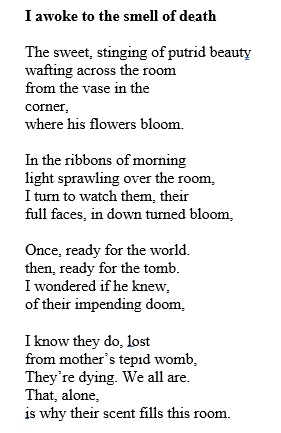
My first published poem, many years ago.

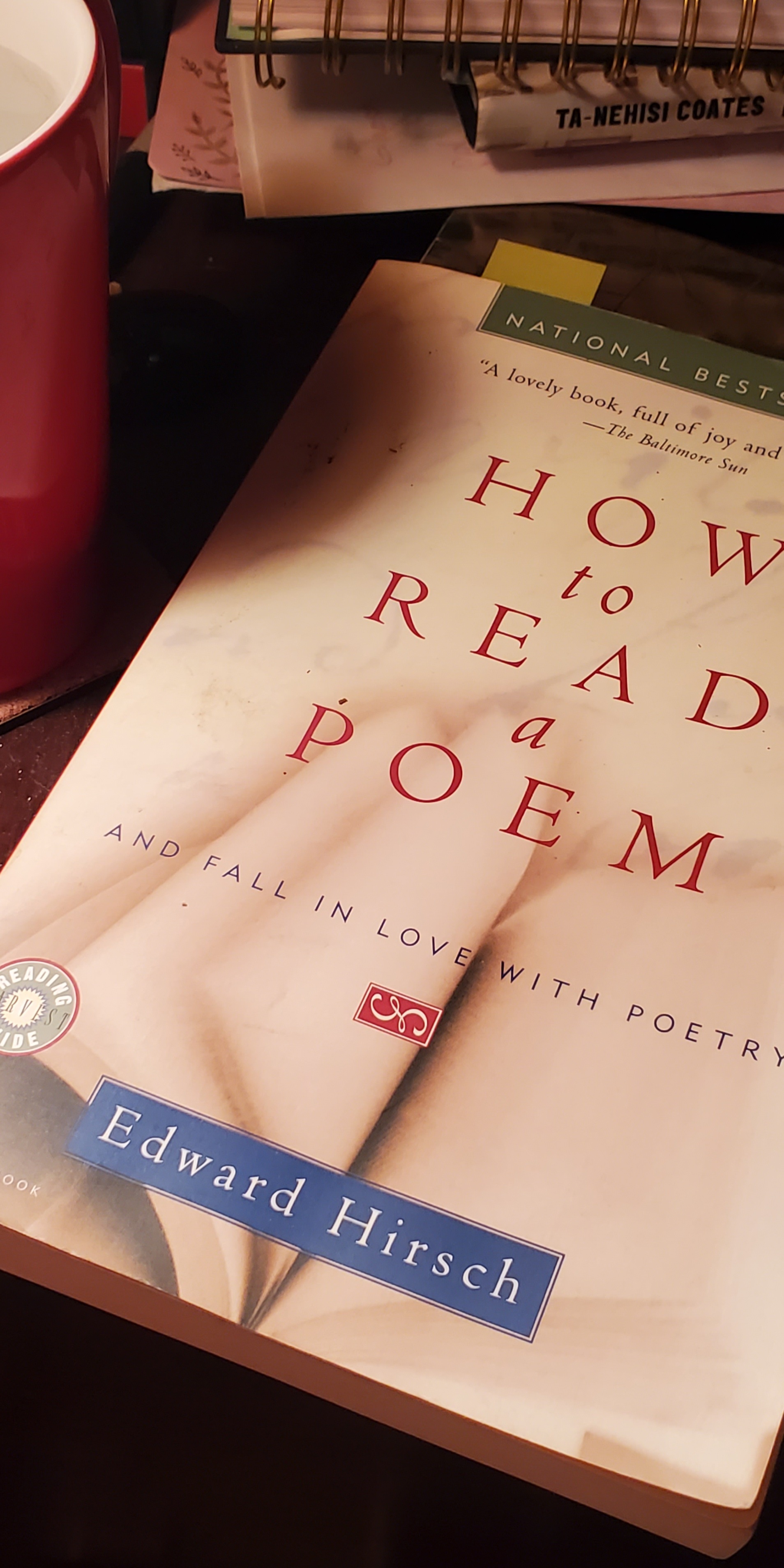
How to Read a Poem and Fall in Love with Poetry by Edward Hirsch is the most passionate, love filled book about the writing of poetry. It changed how I read and wrote poetry. It changed the way I taught!
This book isn’t prescriptive. No hard and fast rules here.
This is written by a person who loves poetry and wants readers to love it as well. I took this philosophy into my teaching of literature. I want my students to find things they enjoy reading – which I hope will encourage them to read more. We don’t spend hours analyzing poetry only to be told we’re wrong (how many of us have those high school memories?!).
Reading poetry should be like taking a warm bath, sinking into the steamy water, enjoying the bubbles against your skin, the scent wafting over you.
As for writing poetry, it seems there are no rights or wrongs. He suggests you give colors sounds, sounds feelings, etc. My writing grew more descriptive, creative, beautiful. I took chances and created new meaning in the relationship between words and ideas. I stretched my poetry muscles and it has paid off. This month, I plan to share some of my poetry with you.
It was the most illuminating, freeing book I’ve read throughout my academic and writing career.

Do you love this cover? I do. I’m fascinated with the place.
I also love the title – which is what this blog used to be called.
It’s a quote by Pete Townshend from his song, I Am an Animal:
“I was always here in the silence
But I was never under your eye”
We’ve all felt that way at some point, haven’t we? Unnoticed? Unwatched. Even though we were there the whole time.
I guess that’s what inspired this book of short stories.
One of my favorite stories in this book of short fiction is “The Places Between.” A story of a couple. I want to say it’s a sad story – he’s always thinking of someone else; she needs a change.
Is that another place we’ve all been? Hopefully, not for long.

From the Dead Poet’s Society.
And true. True. True. Would life have any depth without the stories and poetry we share?

“In high school your teacher made you analyze a poem and then told you that you were wrong, correct?”
Applause. Nods. Agreement.
If at all possible, stop doing this to students. That is why so many people dislike poetry. They feel it’s too hard to understand and when they try, they are told they are wrong.
In my class, I allow students to choose which poems they want to read. Then I ask why they chose those poems. They all have their own reasons, looking for something interesting, the shorter the better, some element they can relate too. And I ask them what they got out of it.
Not what it meant. Not to analyze it. What did you get out of it? No wrong answers, no judgement.
My students have told me that I’ve allowed them to love poetry, to appreciate it for whatever they feel it adds to their lives.
We go over the elements, the possible meanings; but, mostly, I just want them to love poetry again. And it works.
I’ve taken away the fear of being wrong, of being stupid, and gave them the sheer enjoyment of language.
Deeper meaning will come – at their own pace – and when/if they want it to.


 Noreen Lace
You must be logged in to post a comment.