Friday Feature – Fantasy for Mental Health by Lara Lee


Today, I’ve asked Lara Lee, fantasy author to write something for us.

~~~~~~~~~~~~~~~~~~~~~~~~~~~~

fantasy2In brainstorming ideas for one of my novels, I decided to research the question: Can a person be immune to brainwashing? We have all seen on television or in movies or even old books the trope of someone being brainwashed to do horrendous crimes against their will. It is overused, so I often stay away from it. My villain just seemed the kind of person to try and brainwash my hero, but I was curious how this worked in reality. Other books have their protagonist resist by the strength of their will. Was that how it is done?

No!

I was absolutely shocked by the research I came across. Strong-willed people were not immune to brainwashing, daydreamers were. Often, those resistant to brainwashing were people no one would expect, average looking people with little to brag about. Why is this?

First, we have to deal with what brainwashing is. Many people over the recent years have argued that true brainwashing doesn’t exist. Just like hypnosis, a person cannot be forced to do something against their foundation beliefs. The term and identification of the phenomenon of brainwashing came from around the time of the Korean War. Prisoners of war were “brainwashed” and then released to their home countries as spies for the Koreans. The same phenomenon was also seen in cults in the US and other organizations. These people did change. They did act in a way that they previously thought was wrong. Something happened to them that changed them.fantasy1

Brainwashing, like the movies, doesn’t happen. People’s thoughts are not wiped clean and then planted with new thoughts, but what does happen is that a person is put in such restrictive environment that denies all basic needs until the point that the person either is on the brink of a nervous breakdown or experiences one. Then the captor offers “kindness” such as water or food and slowly breaks down the victim’s foundational beliefs to those that the captor wants. They are convinced and persuaded under pressure to adopt new ideas. Sometimes these new thoughts stick for a lifetime. Sometimes they only last until a healthy lifestyle is restored. It again depends on the person.

As I read this description, I realized that sometimes life events bring people to the point of breaking, even without a captor. We have all heard of people who suffered emotional breakdowns just from trauma in ordinary living. Deaths, illness, financial struggles, relationship problems produce extraordinary strain. Life can be hard, and at times people break. Depression, anxiety, and PTSD are common. Some people endure a lot in life and stay strong. Some people crumble relatively quickly. So I continued my research wondering how one would fight this mental breakdown. It stopped being about brainwashing and more about mental health. How do we endure high stress without falling apart?

The secret is dissociation.

It turns out, that people who can disassociate from the circumstance that they are in do well. This practice is often taught to soldiers in the military to help in case they are captured and tortured. Dissociation is the process of mentally removing yourself from reality and separating your emotions from your circumstances. If not done intentionally, it can be a psychological disorder, but, when done intentionally, it provides a brief relief from the pain of reality.

To me, this sounds like escapism literature, my favorite being fantasy. We all either have said or heard someone say that they read or go to the movies to “get away” from life. This act of “getting away” is to remove yourself from reality for a time into a fake world. Escapism is often about ignoring the pain of reality to have a little fun, or just to “veg” for a while. Sounds a little like disassociation right?

Not all entertainment is escapism. Some highlight the painful realities of life, but the popularity of the superhero movies, Harry Potter, Twilight, Game of Thrones, and The Hunger Games show that escapism is alive and well. I personally remember in some of the darkest times of my life escaping into books to bring relief to my emotions. I read nearly the entire Dresden file series that had been written up to at that point when a loved one was dying. I was often asked how I survived some of what I went through without shutting down, getting a divorce, or turning to substance abuse. I do have a Christian faith that I depend on, but I think I was also provided a way of emotion disassociation through fantasy fiction that helped me bare the emotions. God is not against fantasy; he told parables himself.fantasy

From the beginning of human history, we have had folklore, myths, legends, and fairy tales. These are the precursor to our modern fantasy fiction. The ancient world knew they needed an escape from the harsh realities of life. The human mind can only handle so much before breaking and caving in. Some seek relief in substance abuse or unhealthy relationships. Fantasy is a place in which you can be the hero and in control for 300 pages. Perhaps you will never endure the type of stress used in brainwashing, but I think we all can benefit from a bit of fantasy.


Lara Lee

The Shadow of the Gryphon

~~~~~~~~~~~~~~~~~~~~~~~~~~~~~~~


Thank you, Lara!


Writer Wednesday: Writer and Writing is a Relationship

heartI know people say writing is a commitment, but it’s more than that. Writing isn’t “like” a relationship, it IS a relationship. A writer must be involved with the whole process of writing, must love it, need it, want to continue to work to make it better. It takes commitment, time, dedication, and the desire to move forward in life with writing.

A few years ago, I was at a conference where the main speaker (don’t remember his relat 1name) said, “You have to be selfish. You must take the time for yourself, for your writing.” He went on to say he spent every Friday at a hotel with his writing. (are you picturing him checking into a seedy, no-tell motel with an old typewriter?;-)

My friend joked, “Noreen does this thing where she actually spends time writing.” My regular action became fodder for humor because he is a writer, but he falls under the category of non-writing writers like many others.

Life happens. We have families, pets, jobs, homes, tons of responsibilities. But notice that list – I put family first. People we love comes first. This is why a writer might consider writing as a relationship – so they give it priority.

I schedule things around my writing whenever possible. I will make doctor appointments, meetings, and everything I have power to plan secondary to my writing by scheduling them before or after my planned writing time.

Once a person considers themselves in a relationship with their writing, they may relat 3naturally form relationship goals! If writing were a romantic relationship, how would you handle it differently? Would you want to go to sleep with it or wake up with it or both? What would you want to give it? Would you spend more time with it, going over the details, working it out so it was just perfect, going over it and over it again to work it out nice and smooth? What do you do for your significant other? Take it out to dinner? On vacation?

Writing, like a lover, needs constant attention and nourishment. Placing it on the back burner means we may never get to it. It’ll be there, but not as warm and flush as we’d like. Being in a relationship with writing means the needs of both are fulfilled. Writing is fresh and flowing and continually improved and the writer is happier, more productive.

We do this because we love it, we are driven to do it. Treat writing like it’s important to you.

Think of writing before you fall asleep, when you wake up in the middle of the night just to say one more thing.

relat 2

West End – the opening chapter

Hi, All.  I was feeling West End today. I wanted to share a little portion, but couldn’t decide, so I give you all the opening selection for West End.  Enjoy.

front-cover-small

BEFORE MY MOTHER drank herself to death, I knew her as a gentle creature who fed wild squirrels from her hand.  On the back patio at mid-day, she’d stand very still, calm, peanuts laced in the fingertips of her outstretched hand. The squirrel, a female, her babies came later, approached with caution, across the railing, onto the windowsill, grab the nut, run to the other side of the patio where the squirrel peeled back the shell, ate the meat, then returned for another and another. For a while, the squirrels became my mother’s greatest pleasure.

When the female squirrel stopped coming, my mother worried, but the baby squirrels continued to visit. Then, the cubs must have grown, left the nest, because one by one they disappeared until only a single squirrel came to the daily meeting.

That winter, mother’s heart sucked itself dry. Familiar faces appeared, distant relatives, long-ago friends, who talked our concerns away with assurances for tomorrow and beyond.

“Little honeys, it will be okay.”

“I brought the eggplant casserole, green dish.”

“She was a wonderful woman.”

“Call if you need anything.”

Sarah and I stood at the door where someone’s aunt told us to stand. We pointed people who carried in food to the kitchen, guided people with flowers to the dining room, pointed the rest to Daddy who sat on the couch, gaze glued to the floor. We didn’t have to say anything, and no one asked.

The familiar strangers came and went and with them, our mother, our hopeless youth, our language.

The house became quiet. I couldn’t remember the last complete sentence I spoke or heard, couldn’t remember the last partial sentence I’d said to my father or he to me. My sister and I exchanged words, hushed, sometimes soundless breaths only we knew the meanings for. We lived our lives in half-words, pale sounds that sunk into the silence, in ideas of what we had to do next: breakfast, school, homework, laundry, dinner, dishes, bed. This soundless process became our lives; a strange off-balance way to live, but we did it for some months content not to break that pattern.

One cold February morning, a descending snowstorm blocked the roads, locked us indoors, kept us from going to school, our father from his work. Our first full day alone together in the house. Sarah and I sat at the painted brown kitchen nook picking at our cold Raisin Bran; the milk just tangy enough for us to question the freshness. A tapping noise brought our eyes to each other’s. Then silence.

“Wind.” Sarah exhaled with barely enough voice to make a sound much beyond the breath itself.

“Yeah.” My voice not much stronger. We returned to the cereal.

Tap…Tap…Tap…

Her gaze followed the floor to the sink, the counter, the back door.

“The door?”

I shook my head. “Nah.” Not today, at mid-day, in this storm. “Wind.”

I slipped from the nook; she followed. We stood, somewhat unnerved when the tapping came again. We could see through the glass in the door; no one stood there. I moved to the windows to get another view of the patio, leaned over, heard shuffling, then rattling against the window. We jumped. A squirrel clattered against the window, caused us both a momentary and laughable fright. Sarah touched my arm. We each took a deep breath. Our first that winter. The squirrel, the female or one of the children, we didn’t know and could never tell anyway, gave us a quizzical look, stretched up against the window; her little paws stretched against the glass. Tears welled. Quiet, unmoving, we held our breath, each other, tried not to let out the flow of emotions the winter built up.

Father’s footsteps, heavy on the linoleum, came toward us. We straightened.

“What’s going–”

“Shhh,” we both hushed him; his rough, dry voice might drive the squirrel away.

“It’s the squirrel,” Sarah said.

He looked puzzled.

She motioned toward the window. “The squirrels Mom used to feed. She used to give them nuts.”

“Well, give it some.” He waved his hands at us.

“Where are they?” Sarah pulled open random cabinet doors.

“I don’t know.” I opened the opposite cabinet doors.

“Well, look, look. They have to be here.” Father took to the drawers.

The three of us searched for a bag of peanuts Mother bought for the squirrels, hid from us to deter our snacking.

“He must be hungry.” Father gazed out the window at the back yard covered in snow. The porch railings, the powerlines, all draped in sheets of white; the squirrel, nervous, waited at the end of the banister. “Peanut butter. Get the peanut butter.”

“Will he eat that?” Sarah reached for the jar.

“Certainly,” Father assured us. “It’s peanuts, isn’t it?”

I grabbed for the bread.

“Just spread it on,” he said, more animated than I’d ever seen him.

We did.

“Wait, he can’t eat it like that Break it up.” He put his hands in the mess with ours.

Of course, we knew, but at the moment, that strange, unsettling, yet somehow comforting moment, we all needed to take part.

Sarah set the plate on the patio just outside the backdoor. The squirrel chattered, juddered its head from her to the door, the windows, its tail jerking back and forth as if with nervous jitters, then approached the plate, took a piece, and skittered back to the railing to eat it.

Dad ordered us away from the window. The little squirrel tittered, danced delicately, tail flitting, to take more food. We backed out of the kitchen.

Something shifted inside the house. The rooms warmed. The silence faded. The house took on old noises; the refrigerator hummed; the kitchen light buzzed; switches flicked with their old sticky clicks.

Our voices returned. We spoke more than mere sounds. We’d broached full sentences. But I don’t know if we ever surpassed that. We’d never been a family of paragraphs or stories. Laughter rarely rose to the ceiling. Now, with one of the speakers forever hushed, we were destined to be something less than complete.

Winter dissolved into spring; the strawberries mother planted last summer grew green, red, wild. We left nuts out all the time. Sometimes squirrels ate them; sometimes they’d sit until the birds got them or the ants swarmed them.

Sunrise reopened in summer, but never again did we hear our names called from the front patio as we walked up the street, never again did the light intonation of words follow us through the night, “not too late,” never again, upon our return, would we be met with a drunk asleep on the table with just enough consciousness to whisper “too late” when we passed through the kitchen to go to bed.


*West End is available on Amazon, Kindle, and Audible.

What’s New With You?

I’ve been remiss in my posting – which is a social media no-no.  icecreamCan I tell you a secret? I’m really just an introverted writer and I really want to do is:


Write!


Edgar_Allan_Poe_3


I had a fantastic time at the Poe Museum reading Eddy. They live streamed it (I didn’t know they were doing that!) and I’ve been invited back, hope to go soon!


27982653_1680480425366915_8840169907577678606_o

In the meantime, I’ll be at AWP.


But the real news today: my short stories – loving the covers! – are available for .99 cents on smashwords and kindle.


So – whenever you need something to do – click the link, read a story, let me know what you think!

Be Joyful!

A True Halloween Creeper Story

There was a challenge today in one of the writing groups to write 1000 word flash fiction Halloween story. This is a true story. It happened a few years ago. (It was written in an hour – so it’s not perfect)

halloween22


A True Halloween Creeper Story


Syd and I spent Halloween jogging in the rain. Our neighborhood doesn’t receive many trick-or-treaters, so this gives us a chance to see kids in costumes making their rounds. Sometimes the costumes scare Sydney; while dogs get the whole idea of doing crazy things for treats, they’re a little uncertain of masks and make up.

There are a lot of dogs in our neighborhood, which makes running difficult because of the social factor. The neighbors with friendly dogs stop and chat. So, toward the end, it’s more walk than run for us.

As I slow toward my own block, I run into Dan with his dog. Dan has a newfoundland; if the dog stood on his hindlegs, he’d be over six feet tall. A strong, powerful rescue dog, Dan said. “In case I ever need rescuing,” he joked.

“Where’s your wife?” The rain slowed to a sprinkle.

“Work trip. She’ll be gone til Saturday.”

“I didn’t realize her job required travel.” I’ve never seen one of them without the other. They walk their dog through our neighborhood on a regular basis.

Dan shrugs. “Yeah, once in a while.” His dog pulls him forward, and he yanks back. I smell the alcohol on his breath as he yells, “heel!”

Syd’s half the size of his dog, but the same color. She turns to look at him, even as his dog ignores him.

“What are you doing tonight?” Dan asks.

“Hiding from the kids. I didn’t buy candy.”  I laugh.

“Oh, yeah,” he says as if he forgot it was Halloween. “You can hide at my house if you want. I have beers.”

I laugh again. “No. I wouldn’t want your wife, or anyone else for that matter, to get the wrong impression.”

He shrugs and almost loses his balance. It becomes apparent, he’s had more drinks than I first assumed.

“It doesn’t matter. She’s used to it. I do photography in my spare time.”

I don’t know Dan or his wife that well. I only know them from our run-ins when walking the dogs, a few moments spent here or there chatting.

“You’re a photographer, right?”

I shake my head, “No, just pictures of flowers once in a while.”

“Yeah, I can see that. I see you covered in flowers.” His eyes shine as the last sprinkles of rain hit the ground and he pauses to look at me.

“Uhm, excuse me?”

“I photograph women, models. I’d like to photograph you.” He gets that half smirk that I’ve seen on men in bars when I was younger. A last ditch sales pitch that’s sure to hit. They, like he, doesn’t realize how incredibly silly they look. Dan’s older, he’s heavier. He has the appearance of someone who indulges in too much of everything except self-care. His skin is ruddy, hair unbrushed.

“No.” I say. There’s another block before my house and he’s heading the same direction. I hope another neighbor comes out to say hello.

“It would be strictly professional,” he slurs. “I’ve photographed hundreds of women, thousands. I used to run a website.”

“A website?”  He told me before he worked for the city; he’d retired early. I hadn’t believed that at the time, but didn’t care. Much like I don’t care about this conversation and I’d rather get to my warm, dry house and give Syd a treat.

He leans in, the scent of alcohol billows in front of us. “I don’t tell many people; it’s not something to be talked about in pleasant company.” He half laugh, half grunts.

I fall back a step, lean over to adjust my shoe laces. Maybe he’ll keep walking. When he stops and waits, I ask, “Does your wife know about the website and the photography?”

He shrugs again. The dog yanks at him and he yells louder than before. “Freaking, g’damnit, heel!” The giant, near panda bear, turns his head, seems to snub him, and pushes forward with less force.

Sydney slows down, lowers her ears, then she stays by my side as we start walking again.

“You know, I told my wife, it doesn’t really matter if we’re married or not. I mean, she could take one house, I could take the other. You know? Who stays married anymore, right?”

I see another neighbor, Jenny, coming toward us; I wave madly. She’s jogging with her little terrier, Fritzie. I hope she’ll stop, talk; I think, if she does, I’ll walk in the opposite direction with her.

“Hi, Jen!” I say loudly. She’s wearing her earbuds under her hoodie and I’m not sure she can hear me.

She waves, picks up Fritz and quickens her pace around us. I imagine she’s afraid of Dan’s dog. But when I see her sideways glance, I wonder if it’s more Dan that freaks out her. Suddenly, more things make sense.

“I could do the pictures very tastefully.” He half chuckles. “It’ll only be me; what are you afraid of?”

I decide to take the clear, hard line with him. “Well, I have children, and I’m a teacher. I’d be afraid to compromise my ethics and lose my job.”

We’re just a house from mine. I cut across my neighbor’s and my own lawn. The misty night has left my skin damp, but it’s him who makes my skin crawl.

“Well, if you know any young girls….” he calls behind me.

“I’ll be sure to warn them away from you!” I call back. Once in the house, I see him pause at the end of the drive, probably trying to make sense of what I said. I lock the door, turn out the lights, and give Syd treats; then we sit in the dark to watch someone a little less creepy, like Michael Meyers.

michael-myersjpg-c73192_1280w


Existential Crisis or not?

After the farmer’s market, some mornings, I drive around, usually down Ventura Blvd. It’s been conducive to considering life, writing. 21741308_1794773787218606_5919141729243852808_o

I find that I usually stop somewhere for a coffee and write.
Even though I’m widely published in literary journals and other, my own work doesn’t sell much. I’m probably not that great at marketing; however, it may also be due to the fact that I don’t write genre fiction and few people know what to expect when I say literary fiction.

Obviously, it’s up to me if I want to change what I write. But, this afternoon, sifting through donations of people’s old clothes to go to different centers, places, and people who need them, I thought – I’m here to do more than write the next big romance or homelessaction/adventure story. I’m here to tell stories of real people and real lives, hard lived. ($1.00 Stories was inspired by a true story of a homeless man who wrote stories and felt he earned enough to live on)
The novel I spent the spring writing (and is currently making the rounds to publishers) is about a young man who is a recovering drug addict and a woman who spent her life allowing others to make choices for her.

I’ve allowed my heart and my life to be touched by a great many different people. Hearing and interpreting other’s stories, trying to understand and learning to empathize with individuals makes life worth living. Writing stories that people can connect with because they have a sister, brother, aunt who has experienced something similar is important to me.

My purpose is to tell the stories that are hard to write, hard to hear, and give real life meaning. This might mean I don’t make the homelessbest seller’s list, but it also might mean my work touched someone, taught someone, helped another human being experience empathy for a friend or stranger’s life.
My last few stories “Deception” is about how we lie to ourselves and each other,“The Gold Tooth” deals with a sibling who will never be what we hoped for them.  My poems, “H” and “Hunger”, both of

which will appear in Wild Woman Medicine Circle next month, explore hardships people must endure because of others’ expectations.

This is what I choose to write, I was born to write. It has meaning to me. I hope others finding it meaningful to them.

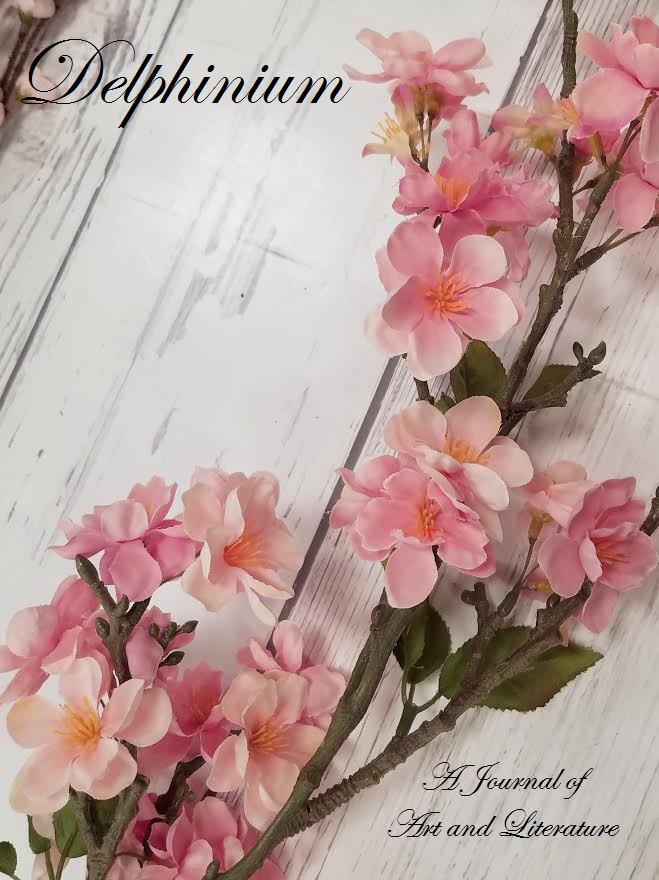
Delphinium – with care, blooms twice

Sticking to their word, Delphinium blooms again. The lovely editors at REaDLips have promised to give some of the proceeds of Delphinium’s Summer Issue 2017 (and going into the future) to literacy programs.  I’m beginning to appreciate Delphinium and those at REaDLips more than ever. They are showing themselves to have a heart, to care about our society. I am more than proud to be affiliated with this journal, proud to be published a long side amazing award winning authors as well as my own students. That’s right! Lynn Johnson was a student in my African – American Literature class. Her poem, published in Delphinium, was one she wrote in response to one of our readings and shared in class as part of her creative project.

I hope you’ll give Delphinium a read, and not because I’m published in it (well, not JUST because), the journal features authors and artists of diverse cultures and it will benefit art and literacy programs.

delphin cover3

Namas-Cray

My friend Laura LaBrie from Lovely Lattitudes, first said this word to me.  It describes life, don’t you think?  My new book was all set to go, it just needed a title.  I felt like this word, “Namas- Cray” accurately described the stories involved.

In everyone of these stories, the characters are, shall we say, a little off. One woman is planning her “Perfect Day,” when she’s interrupted by a young couple about to rob her. Did  I mention her perfect day involves suicide?

In “Harvey Levin Can’t Die,” the narrator is just going about her life, working at a coffee shop down on Ventura Blvd, when the whole world seems to get serious. Her b/f leaves her to go back to college. Customers want to talk about serious stuff, not reality tv. WTH? But she finds the underground – and accidentally – I mean, it was probably an accident – mows down Harvey Levin with her car.  She tried to report it! The police didn’t want to hear it!

Talk about having a cray day –

So this title fit PERFECTLY.  I think whether you are an avid reader or someone who picks up a book to make it look like you’re an avid reader, you will love this book.  (Humble, right?)namascraycoverwithfilter

You can win a copy on GoodReads!


The Evolution of Writing Style

A prompt in a writing group to think about style inspired me to consider the evolution of my own writing style.

Writing evolves, grows, hopefully gets better, with all we learn and experience in life.  But style is something a little different. Style, sometimes, doesn’t change. Or, I should argue, doesn’t change that much. Maybe, it’s the small changes that only a critical reader might notice.

Last year, when I published Here in the Silence, I felt the stories earned that title. All the protagonists were struggling with finding their own voice. They felt silent or silenced, either from their own lack or from those around them.

This year, with Namas-Cray, my characters are different. Some are still struggling with being heard, (Of Strays and Exes), while some believe they are completely aware of who they are and what they want (A Perfect Day). There’s darkness, but there’s a dark ironic humor that embeds itself in their thoughts and actions: “Of Strays” begins with “When I killed my neighbors dog….” and in “A Perfect Day” a woman’s suicide is interrupted by an armed burglary.

What’s different between these two years of writing is the ironic humor. And, I’ve noticed that’s worked it’s way into most of my writing, including my poetry, “The Fly” features a fly who has “24 rose colored hours” of life, both celebrating and loathing those hours.

I’ve always handled my own life’s struggles with humor. When my daughter was a teenager, she looked at me and said, “Is everything funny to you?” Anyone who has a teenager knows – it’s got to be funny or you’ll lose your freaking mind. Therefore, to answer her question, I gave her a long, slow nod (gritting my teeth).

Does that mean my writing style will make you laugh at the dead dog or at the woman’s suicide attempt?  Absolutely not!  That’s where the irony comes in. It’s subtle and sardonic. The protagonist in “Of Strays,” offers to pay for the dog.  She doesn’t quite get the loss. But the protagonist grows to understand. And, in “A Perfect Day,” suicide is never a humorous topic, but our very serious plans being interrupted by life is something everyone can relate to. Her day is no longer so perfect when an armed robber says, “your money or your life.” And his plan, certainly, is not going as well either. Irony!

One of my students believes that “humor” should never be used in conjunction with a serious topic. In many cases, this is true. But we have to look at the irony surrounding the fiction that is how we learn and grow; introducing a topic with subtly allows the readers a way in to understand the situation, relate, empathize. The same is true of our lives. If you slam someone with truth, they are likely to back off and not engage. We introduce ourselves first, our struggles, along with the irony of moving on in our lives.

Let’s take a look at my life – what has happened in my life that might have made me feel more sardonic.  I teach a report writing class, which I run like a lesson in professionalism. How you present yourself as well as your writing says a lot about the person you are.  And then comes this Presidential campaign. How do I tell my 18-22 year old students to act like a professional when #45 acts like a spoiled child who’s had too much sugar?

Irony much?  This year, I was offered an African American Literature course. How do I stand in front of 36 students of diverse backgrounds as a white woman lecturing them on African American Lit?  Humor. Confront the irony. I asked them on the first day of class, “Does anyone want to know why a white girl is teaching an African American Lit Course?”

(According to the students, btw, I did a great job. Let me say, that I absolutely loved it! We built some iron bridges of communication in that class that I hope the students take out into the world with them. I took the course for a number of reasons, one of them was the above #45. But that’s a whole other story – We’re focusing on irony, life, writing style).

I do believe life affects writing style. Everything we learn, do, experience, and want should affect our writing style. We should grow and evolve as humans and as writers.

I was stuck once on a story. I’d been working with it, not quite able to get it to that sweet spot, when I decided on a vacay to New Orleans. I’m not much of a drinker, so it’s not the absinthe smoothies on Bourbon Street that inspired the trip, so much as the fanfare, the history, and the culture. I might have thought about the story while I was there; I don’t really remember. But, upon my return, the answer materialized. The story became what it needed to be. (It’s under consideration for an award as I write this).

That trip has stayed with me, as well as my other travels, other experiences: the homeless man at Starbucks focusing with intensity on a spiral bound notebook as if he was finishing his own novel – “$1.00 Stories” – the psychic who told me my illusion bubbles had burst “How to Throw a Psychic a Surprise Party” and so on. We must let life affect us, work its way into us, our style must evolve, or we stay stuck in life and in art.

writing life.jpg

I’m interested in hearing thoughts on this.  Do agree? Disagree? Has your style changed? How or why?

A Cray Giveaway

namascraycoverwithfilter

In celebration of my upcoming release of Namas-Cray in July, I’m giving books away for the next few months. You can enter to win a signed copy of my book, Here in the Silence, by entering this GoodReads Giveaway.

Namas-Cray features a number of short stories in which either the character is or reader will be questioning their sanity.


here in silence


Here in the Silence is a collection of short stories which reveal characters stuck in their own type of reticence. Some are unable to articulate their desires, others choose not to. A resentful son needs to come to terms with his father’s unsavory past. A young woman finds herself in trouble and doesn’t know how to help herself. A successful writer has difficulty responding to the girl of his dreams. What can their silences tell us about the world, the people around us, and ourselves? This collection brings together some previously published short stories as well as new fiction. Some of the previously published stories are no longer in print and this is the only place to read them.