Coffee and your Character – Writer Wednesday

I’ve been thinking of coffee shops. And it’s not only because I’m a caffeine addict. Coffee and coffee shops are a part of our everyday lives and, therefore, our characters’ lives. What type of coffee shop and what they order will inform our readers of who they are in ways we won’t need to spell it out.

catwithstarbucks

I, personally, savor that first sip of morning tea. For a few moments, it’s the perfect temperature and I hold it close to my face, ready for the next sip as the first drips of bitter black tea warm my throat and my body, the caffeine going to work immediately to bring me to full wakefulness in anticipation of a busy day.

A friend described a man in her carpool who stopped every day at Starbucks for a large quadruple espresso latte on their way to work and on their drive back from work. But, she added, he also complained constantly about his budget. This told me a lot about the person in just a few sentences.

Does your character rush into Starbucks and curse the line? Probably orders ahead for pick up, but what if it’s not there? Or is your character the kind that seeks out the independent coffee shop because it may be less busy or just because it’s independent.

There used to be a coffee shop on Ventura Blvd between Hazeltine and Woodman. I don’t pinkremember the name, but I do remember the walls were pink. I liked it for it’s small town charm. Local home made jams lined the shelves behind me while local artists’ paintings adorned their walls. They only had a few wooden tables, a few more outside, and a few bar-type seats at the counter. Instead of the iced black or green tea choices at you-know-where, I opted for their daily choices, which might icled iced peach or raspberry-ginger. They offered an array of vegan or gluten free cookies as well. Who could resist?

I used this coffee shop in my story “Harvey Levin Can’t Die” (originally published in Pilcrow and Dagger Sept 2016). The story really is about change. How society reflects the harveylevincan't dieindividual and how the individual internalizes society. One of the characters worked there, but felt out of place. This also represented her life, she felt out of place and hadn’t really begun to make real decisions about who she was or what she wanted. But, of course, that changed and so did her involvement in the coffee shop and the guests as she becomes more proactive in her life. The reader is left to decide the interaction between her and society and whether the influence is good or bad.

It would have implied something different about my character if she’d worked at a chain coffee shop. The chain itself would have had an influence and been a foil. She wouldn’t have been able to grow and and the readers couldn’t see the change within the coffee shop itself; therefore, the setting was important in that instance.

Each place, each chain, is different. The people who go to the local Coffee Bean and Tea Leaf Company are different than those who go to Pete’s or even Starbucks. As writers, I imagine we’ve all spent time in these places. And our jobs as writers are to observe. Beyond the color scheme and coffee served, there’s a different atmosphere garnered by and at these places, and the people are different or act different.

I rarely see the impatient phone-bearing customers from the Monday morning Starbucks run at Pete’s. Nor do I see the more relaxed culture of the Pete’s “give me the multi-grain scone and flipped macchiato” at Coffee Bean.

1dollarstorysmashwordsI used another independent coffee shop for “$1.00 Stories” (originally published in The Chicago Tribune’s Printers Row Journal April – 2016). A mixture of independent coffee shops, one of which still squeaks by in the recesses of North Hollywood. I wanted a friendly owner and regulars my character would recognize. Not that he cared about them; it was more important for the story that they were familiar with Cris, and they accepted with good-natured-humor his occasional weirdness. I didn’t want to make him completely unlikable. I wanted him to come across as a little more complex, so he went to this coffee shop where he knew the owner and sneered at the community table while the regulars chuckled.

The joy I get from using independent coffee shops (or even invented coffee shops) is that I get to describe them, which will also tell us something about the character. In “Harvey Levin”, the character hated the pink walls. But using a chain also tells us something about the character.

Our characters are going to need caffeine at some point in the story. Giving the reader their choice of coffee shops, even in one line, gives the reader an insight into the person we’re creating.

Now my tea’s cold. But I don’t own a microwave and that never tastes good anyway.


Harvey Levin Can’t Die is available on Kindle and at Smashwords.

$1.00 Stories is available at Kindle and at Smashwords.


What’s New With You?

I’ve been remiss in my posting – which is a social media no-no.  icecreamCan I tell you a secret? I’m really just an introverted writer and I really want to do is:


Write!


Edgar_Allan_Poe_3


I had a fantastic time at the Poe Museum reading Eddy. They live streamed it (I didn’t know they were doing that!) and I’ve been invited back, hope to go soon!


27982653_1680480425366915_8840169907577678606_o

In the meantime, I’ll be at AWP.


But the real news today: my short stories – loving the covers! – are available for .99 cents on smashwords and kindle.


So – whenever you need something to do – click the link, read a story, let me know what you think!

Be Joyful!

Existential Crisis or not?

After the farmer’s market, some mornings, I drive around, usually down Ventura Blvd. It’s been conducive to considering life, writing. 21741308_1794773787218606_5919141729243852808_o

I find that I usually stop somewhere for a coffee and write.
Even though I’m widely published in literary journals and other, my own work doesn’t sell much. I’m probably not that great at marketing; however, it may also be due to the fact that I don’t write genre fiction and few people know what to expect when I say literary fiction.

Obviously, it’s up to me if I want to change what I write. But, this afternoon, sifting through donations of people’s old clothes to go to different centers, places, and people who need them, I thought – I’m here to do more than write the next big romance or homelessaction/adventure story. I’m here to tell stories of real people and real lives, hard lived. ($1.00 Stories was inspired by a true story of a homeless man who wrote stories and felt he earned enough to live on)
The novel I spent the spring writing (and is currently making the rounds to publishers) is about a young man who is a recovering drug addict and a woman who spent her life allowing others to make choices for her.

I’ve allowed my heart and my life to be touched by a great many different people. Hearing and interpreting other’s stories, trying to understand and learning to empathize with individuals makes life worth living. Writing stories that people can connect with because they have a sister, brother, aunt who has experienced something similar is important to me.

My purpose is to tell the stories that are hard to write, hard to hear, and give real life meaning. This might mean I don’t make the homelessbest seller’s list, but it also might mean my work touched someone, taught someone, helped another human being experience empathy for a friend or stranger’s life.

My last few stories “Deception” is about how we lie to ourselves and each other,“The Gold Tooth” deals with a sibling who will never be what we hoped for them.  My poems, “H” and “Hunger”, both of

which will appear in Wild Woman Medicine Circle next month, explore hardships people must endure because of others’ expectations.

This is what I choose to write, I was born to write. It has meaning to me. I hope others finding it meaningful to them.

Death Watch

Do you know how everyone loses their minds when a parent passes away?

My father experienced a slow decline; soon after Memorial Day two years ago, he passed.

memorial day

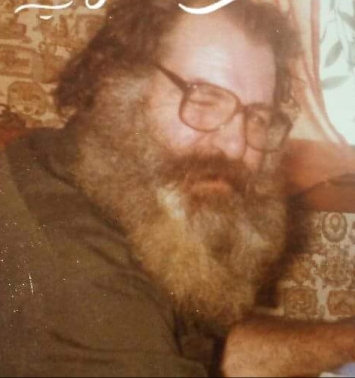
My father was a big man, over six foot tall, strong and thick. He was a marine in his younger years, worked as a roofer for much of his life. He used to brag about how many packs of shingles he carried up the ladder. He was good at cards and had a smile on his face much of the time.

My short piece, “Memorial Day Death Watch,” is inspired in part by the last week or so of my father’s decline. I learned what every family learns regardless of how close or far away the members are when someone dies – people lose their minds.

“Memorial Day Death Watch” was a finalist in Writer’s Advice Flash Contest in April. It’s been published in FishFood Magazine quite recently.


20170813_233017

My father prior to his illness.


In celebration of this publication, I‘m giving away copies of “Dad Shining” on GoodReads. The giveaway begins August 21st and goes until August 28th. Watch FB and Twitter for those reminders.

Dad Shining is available on Kindle and in Paperback on Amazon. One Reviewer writes: “The author has a unique writing style, beautiful detail, but with space throughout for the reader to fit in. I look forward to reading other books and stories by this author.”


The Myth of Writer’s Block

Writer’s block is a myth perpetuated by people who don’t really want to write.

write

And I really don’t like when people ask me if I ever “get it,” as if it’s contagious. In some ways, I think it is. People talk about it too much and infect others with their ideas of this mysterious and loathsome “writer’s block.”

Maybe I’m thinking of the block all wrong. I’m not sure at all what it means. Does it mean the person can’t sit in a chair and write? Are their hands broken? Is their brain injured? Or does it mean they can’t write as well as they want? Does it mean that writing’s not easy?

Hey – wait – let’s hold on to that one: Writing is not easy?!

Of course, at times, it’s not easy! Sometimes the scene isn’t quite right or the dialogue is inauthentic or the words aren’t laying out as smooth and beautiful as we’d like. Does that mean we lay down the ivory pipe, get up from our Italian baroque seventeenth century carved desk, retire our gray wool writing jacket with the patches on the elbows, and lounge for the rest of the day waiting for this “block” to pass?

None of it’s real!Writers-Block-is-a-Lie

The desk, the jacket, or the block – these are images people use to perpetuate the myth that writing is some magical gift that is laid down upon us and is taken away just as easily.

I’m not saying the ability to ribbon words rhythmically and meaningfully isn’t a gift – but it is work.

Now there’s the word we need to use. The only thing, perhaps, people are being blocked from is WORK.

A writer needs time. The lack of time can inhibit starting or finishing – but we make time. Many writers (Vonnegut, Angelou) woke up early.  I used to be one of those people who said – oh, no, I need my sleep. But then I decided I wanted to write more than I needed extra sleep. Writers, for centuries, have had no choice but to get up early or stay up late in order to produce.

And there’s that word again. Work. Let’s get to it, ladies and gentlemen, no matter how gifted you are, writing is work, writing is commitment. And there’s the other word so many people are afraid of: commitment.

If you want to be a writer it takes work and it takes commitment. The real work of writing is to commit yourself to it, to sit your ass in that chair, at that desk, or dining table, or in the corner closet, and write. Sometimes nothing is going to come out right. And that’s when you keep working, or you take a break, go grab a cuppa and get back to it. Writer’s commit themselves to time and action, whether it’s one hour a day or eight hours a day. And sometimes things come out well and sometimes they’re a struggle.

plumbers block


Imagine writing as a job. If you want to be successful, can you give up the moment it gets challenging?  Can you imagine your plumber calling you and saying, “I just can’t come today, I have plumber’s block”?


If something you’ve started has stunted, write something else, take it in a different direction, write an angry letter to one of the characters insisting they do what you want them to, then let them write one to you.

poe2


Let’s be honest about what writer’s block really is –

  • it’s procrastination;
  • it’s distraction; 
  • it’s fear of rejection.


I do believe people go through periods where they’re not as productive, or they have some psychological issues blocking them from releasing their ideas. These problems can be solved – therapy.

beautiful journalist looks typewriterIf you want to take part in the myth – “oh I can’t write today!”

If you want to perpetuate the myth – “What do you do when you get blocked?”

That’s fine. However, Do not bring your kind of negativity to me – “Do you ever get blocked?” Because I don’t want to hear it; I don’t want to be a part of it; and I certainly don’t want you attempting to infect me with your dis-ease.


read


Now – sit that ass in that chair and WRITE something. 😉 Good luck. 


It doesn’t matter…..

I loved The Munsters when I was a child. When asked to write an “artist’s statement” in graduate school – I actually said I wanted to be kicking around in the leaf-blown yard of Munster-like house.

I came across this lovely little clip recently. True wisdom for our age – for any age.

Love each other because you’re human. Understand that we all follow different paths and respect one another.


What does matter is the size of your heart and the strength of your character….

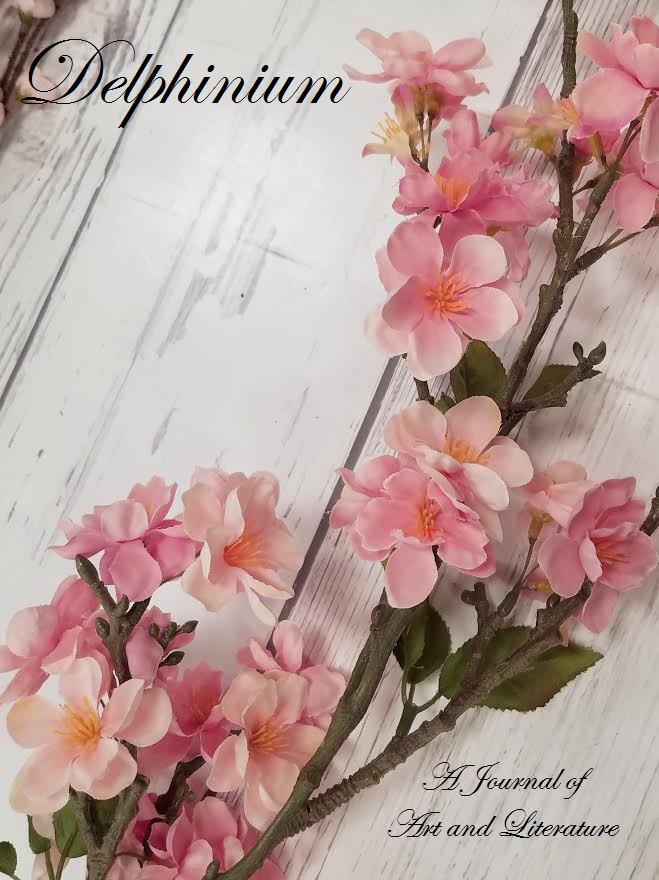
Delphinium – with care, blooms twice

Sticking to their word, Delphinium blooms again. The lovely editors at REaDLips have promised to give some of the proceeds of Delphinium’s Summer Issue 2017 (and going into the future) to literacy programs.  I’m beginning to appreciate Delphinium and those at REaDLips more than ever. They are showing themselves to have a heart, to care about our society. I am more than proud to be affiliated with this journal, proud to be published a long side amazing award winning authors as well as my own students. That’s right! Lynn Johnson was a student in my African – American Literature class. Her poem, published in Delphinium, was one she wrote in response to one of our readings and shared in class as part of her creative project.

I hope you’ll give Delphinium a read, and not because I’m published in it (well, not JUST because), the journal features authors and artists of diverse cultures and it will benefit art and literacy programs.

delphin cover3

Namas-Cray

My friend Laura LaBrie from Lovely Lattitudes, first said this word to me.  It describes life, don’t you think?  My new book was all set to go, it just needed a title.  I felt like this word, “Namas- Cray” accurately described the stories involved.

In everyone of these stories, the characters are, shall we say, a little off. One woman is planning her “Perfect Day,” when she’s interrupted by a young couple about to rob her. Did  I mention her perfect day involves suicide?

In “Harvey Levin Can’t Die,” the narrator is just going about her life, working at a coffee shop down on Ventura Blvd, when the whole world seems to get serious. Her b/f leaves her to go back to college. Customers want to talk about serious stuff, not reality tv. WTH? But she finds the underground – and accidentally – I mean, it was probably an accident – mows down Harvey Levin with her car.  She tried to report it! The police didn’t want to hear it!

Talk about having a cray day –

So this title fit PERFECTLY.  I think whether you are an avid reader or someone who picks up a book to make it look like you’re an avid reader, you will love this book.  (Humble, right?)namascraycoverwithfilter

You can win a copy on GoodReads!


Giving away Hope

Happy June, Beautiful People. May your summer be as pleasant as you are.
 
 
Described by one reader as:
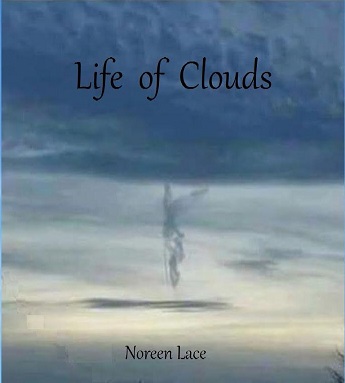
Much like a series of prose poems, Ms. Lace renders her characters’ stories in short, fragmented spurts that reflect the movement of the lives she depicts. Both moving and entertaining, The Life of Clouds is a pleasant afternoon read
 
Three little girls are left by their father. Their strict, yet ill grandma moves in with them. The loss and change leave the girls fragmented and confused. They grow up experiencing OCD, Anxiety, and drug addiction.
Chloe doesn’t leave the house
Ashley doesn’t come home
The narrator.. you’ll have to judge.
They’re looking for hope while remembering their father’s songs of clouds.
 

Grandma’s Secret Revealed!

When Grandma asks you to do something –

255 and 356

You do it!

So when Grandma asked Katie to “take care of something” and “don’t tell anyone,” she barely hesitated. She had to get on a plane in the middle of the night and go to a storage unit……

What had Grandma kept hidden for 60 some years?

April-Final-1-768x1002

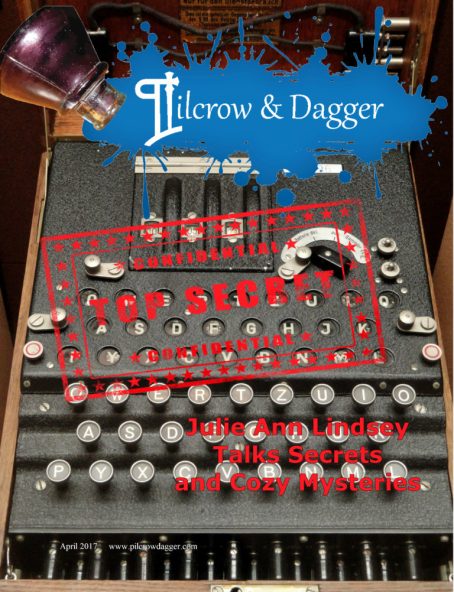
If you’d like to know… You’ll have to open this Top Secret File at Pilcrow & Dagger.