When Timothy Savage speaks of Davey’s Savior, his novel about a father and son, it’s with a passion which encourages the reader to pick it up. He uses that same passion in almost everything he does from caring for his own son to detailing the journey of Davy and his father.
I knew when I asked Timothy to write something, he’d present something marvelous…. and so he has.
~~~~~~~~
Revision as Courtship
 Courtship is romance taken form. It’s where those thoughts and fantasies translate into actions, from the ordinary chocolates and flowers to those thoughtful gestures, everything from a caress of the hand to simple time spent in conversation, all taking place behind a barrier of uncertainty. You spend time with that special someone, you share meals and thoughts and feelings, you enjoy those little tingles that come from being in their presence, but you don’t yet cross into intimacy. Perhaps you’re old-fashioned, or imagine yourself as gentlemanly or ladylike; you save something for later. In any case, you’re not quite at that point of leaping into their arms with wild abandon.
That’s okay. Sometimes saving something for later is a good thing, even as you relish those moments together without quite sharing everything. It’s all driven by a simple truth: Courtship is a time for getting to know each other, and to be blunt, for sizing each other up.
In a long-term romance meant to last, you need to see them — and they need to see you — exactly as you both are. You need to see them happy, angry, confounded, upset, blissful.  To see into their soul. To see whether it’s safe to make yourself vulnerable before blending your soul with theirs. To see your own flaws and those of your partner in clear focus, to get beneath the layers of what someone might project, and instead look for and grab onto those glimpses of truth beneath the veneer of attraction…
Wait a minute. If this is a column about writing for writers, why do I have romance on the mind? Easy. For writers, it’s like this when you’re about to embark on the process of revision. Many writers – myself included – feel a kind of anxiety, a hesitation, before diving into the process of editing and revision. You stare at your draft without moving, afraid to press a key or redline that sentence for fear of screwing everything up. It’s the same anxiety one feels before dialing that special someone for the very first time.
Writing — especially the art of crafting a book — can be thought of as a long-term romance with your story. And that sizing-up process, the very beginning of courtship, is an important first step in editing and revisions, too.
As an author, you need to make yourself vulnerable to your manuscript, to see it exactly as it is. To seek out those “warts and all” glimpses of its true nature. It’s the moment and author and manuscript test each other through presence, seeing whether they enjoy each other’s company after spending long periods of time together, or seeing whether they’d rather hide in the washroom and phone a friend for rescue.
But if you enjoy the experience together, if you enjoy spending that time and look forward to the next conversation, maybe it’s time to dig back in and read that manuscript as a reader would, as someone who’s not quite made themselves vulnerable to possibility of intimacy.
Personally, I’ve made a practice of revising “big to small.” What I mean by that is the act of seeing my story as a whole, of taking in the work-in-progress with all its flaws and foibles, sizing up its true essence, and determining what changes are necessary in a structural way to bring that story I’d envisioned into reality. Eventually I focus on smaller and smaller details; not story structure or overall plots, but the little touches that keep the reader enthralled. It’s a little like going from that first casual dinner to the first moment “alone together”; reach that level and it’s just the two of you in a dance, in the hopes of making it all work.
Revising “big to small” meant courting my other characters all over again. Looking at each of those peripheral stories in my manuscript with a critical eye, deciding whether they added to the central relationship in my book or distracted from it. Deciding which of those scenes were necessary, what worked and what did not. Deciding what should remain, and what could be safely relegated to a “cuts” folder for later consideration or swipe-left deletion.
 In the end, after many dates with my manuscript that ranged through blind and awkward, rushed and too quick, exciting and anticipatory, intimate and ecstatic, the story evolved into better forms than ever taken before. I saw it for what it was, working through the small details, caressing each sentence and nuance until the story as envisioned came across as “meant to be.”
Revision is courtship. And courtship, despite the nerves and uncertainties and awkward moments, is fun. So don’t be afraid to dive right in. Swipe right on that revision. Hold that car door open, and bring along the flowers and candy for both of you. In the end, whether your revision succeeds or fails — whether the relationship with your manuscript lasts or fizzles during the courtship of revision — you’ll be a better author for having the courage to experience it.
*
Noreen, thank you for the invitation to contribute to your ‘Friday Feature!’ Dashing off a blog post about writing is always great fun, and if it helps to inspire another writer or two, excellent!
Speaking of inspiration, I want to give a little credit where credit is due. The idea of ‘Revision as Courtship’ came out of discussions and collaborations with my dear, dear friend, writing partner across the pond, editor, and author of the 17th Century Midwives series of historical fiction novels, Annelisa Christensen. Her insights helped me to view revisions with something other than anxiety, and for that I am forever grateful.
tws
~~~~~~~~~~~
Thank you, Timothy.
You can find Davey’s Savior on Amazon
Tim’s Website – where you might find a little inspiration or even some help!

 I don’t like the word “can’t.”
 Others have limited views of what they can accomplish and, therefore, what anyone can accomplish, so they believe their guiding you away from an upcoming failure.

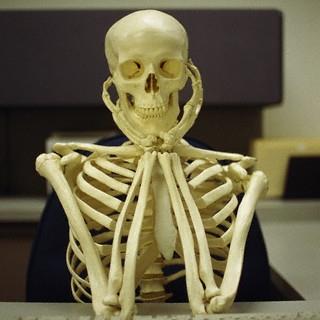 Waiting is the easy part.
 I consider it is not a fear of failure – because, by not trying, aren’t they failures already? Or maybe that’s it – they can claim they never “got their chance,” when, in fact, they never actually took a chance. That’s the true failure.
 What comes to mind? Are there images of magnificent places you’ve been, impressive people you’ve met, or extravagant stories that stimulates your soul, sparks your imagination and almost brings you to tears? These everyday inspirations lead me to be the best version of myself, however, this is not a source of inspiration for my writing.
 I like to explore the darker sides of life, which is interesting to me because I am naturally a good humoured optimistic individual. There are an unbounding instances of inspirational dualities in life, the play between light and dark, life and death, vice and virtue, and I realize as a writer I am one of them.

 Sometimes, I wish I was the driver of the Karma truck. But, I suppose, being a writer is better. Still have the problem of sitting too long, but we get to exact revenge too. The best kind of revenge – in print.
 But, first, I had to roll my eyes and throw back my head. I just wanted some sympathy, some empathy. But she gave me more than that – she gave me purpose, building from ashes, and a way for me to transmit sympathy to another by relating to a scenario which many of us have experienced. (I know, still too vague.)
 I started writing when I was a freshman in high school. My very first writing efforts were poems filled with rhymes and cliches. During my sophomore year of high school I took a creative writing class, the only creative writing class I’ve ever taken. I hated it. I especially hated the teacher. She liked this weird, semi-beatnik/hippie style of writing, poems filled with “crazy” images like “throwing batteries at dead cows” and things that tasted like “copper pastries”. She liked short stories with bizarre characters and situations, things that were weird for the sake of being weird; weird that did not move the story in any direction.
 I studied abroad in Granada, Spain during my junior year at the University of Illinois at Urbana-Champaign in 2003. I fell in love with the country and with a young woman in my study abroad group. Today, Spain represents the unattainable in my life. I have since developed an anxiety/claustrophobic disorder and refuse to fly. I can no longer physically travel to Spain. I can only travel to Spain through my mind, through memories. The young woman I fell in love with in Granada was also the first woman I ever truly loved. It was an experience of first-time, authentic love, love for a person and place. I know I can never recapture that kind of intensity in regards to love. One can only feel that kind of love when young. Everything after that is fine, marriage and such, but it will never be as pure or intense. And that’s what Last Night in Granada is about. It is a story about the unattainable.

 Of the four writers, none had been published and I became the only one who expressed specific goals. In one session, a women writer spent the whole time helping another writer without responding to the rest of us. It sometimes happened, so we weren’t offended; but the following week, the same woman spent two minutes on mine and said something to the effect, “I don’t even know what to tell you with this…” before moving to another person. I realized I was wasting my time there.
 We’d meet once a week or once every other week to read and review each other’s work. Timing and responses began bumpy but smoothed out rather quickly. We were near the same writing level, although I give her credit for being better than I. As we got to know one another, we understood what the other was attempting to accomplish in their own fiction. This helped us read one another’s work more productively.
 authentic and detailed critiques with increased confidence, which lead me to more submissions, and ultimately more publications.


 this. They wonder if I don’t care about my work. They think I’m mad for even considering it. There are some things I won’t change. But, so far, the editors who have asked for changes have asked for simple things like rewrite this sentence, change this punctuation. No one has asked me to make major changes to any piece I love.


 Every beach is just a little different. Just as the light is, depending where on the planet you stand. Being there helps.

 Noreen Lace
You must be logged in to post a comment.