
Plath was one of the original “confessional poets,” and her poetry, at first, was not well received. Her poetry, however, spoke to many. Much love for the Plath!
Plath was one of the original “confessional poets,” and her poetry, at first, was not well received. Her poetry, however, spoke to many. Much love for the Plath!
 Dan Brown believes strongly in protecting the process.
By process, he means, the writing schedule and habits that create the difference between a writer who produces and the writer who does not.
This has become personally important to me; and lately it has come to my attention that there’s more to protecting the process than just showing up.
It’s about protecting yourself from the negative forces that affect the writing.
We are often disturbed and distracted by people and events around us. I’m not talking about the road raging driver or ineffective salesperson- we should never allow such an insignificant person or event to affect us at all.
I believe we have to prioritize who and what is important – they come first in our lives either before, after, or within our process. The rest of the world must fall away.
I don’t make appointments during my writing time. That has become a habit for the last some years. However, I have allowed other things to interrupt my life, things I thought were vital. This is mostly due to what is expected of me as a social, agreeable person. Lately, though, I’ve realized do have a choice.
I don’t care if I come across as a little anti-social or less agreeable. I’m protecting myself from people and events who will affect my time, writing, and state of mind.
I used to see a writer regularly arguing with others on social media. I asked him why he didn’t just ignore these people. He said it didn’t bother him, they needed to be taught a lesson.
Recently, he deleted many of his social media accounts and limiting his time on others, telling his followers that all the interactions were causing him distress and he hadn’t been able to write.
I’m not only talking about social media, but the regular, sometimes expected, social interactions we have. If they are draining, why do we take part in them? Expectations? Do we get anything out of it?
If not, then rethink it.

 Steven Tyler of Aerosmith says, “Dare to Suck.”
It seems that he and his band mates have a regular meeting in which they bring the wildest, crappiest, outlandish ideas to toss them around and see if they work.
9 out of 10 of those ideas have to be trashed – but the tenth gets you something like “Dude Walks Like a Lady.”
Why not throw around ideas that seem completely outrageous?! They can always be  canned later, but in the meantime you have some ideas to play with and you might, well, come up with something good.
I wrote the line, “When I killed my neighbors dog…” My friends said, you can not use that. But I played with it to see where it might take me, and I wrote “Of Strays and Exes” by just playing with this strange line that came to me in a dream.
It was accepted for publication in Pilcrow and Dagger almost immediately and later made into a podcast. You can find it kindle now, or search P&G’s podcasts.
**Disclaimer: No animals were killed or injured in the writing of that story.
 In writing groups, the question often floats around the room, do you do hours or pages? Then there’s always some friendly disagreement over which is better.
I, personally, do hours. I get up and sit at my computer and write for a certain amount of time.
I’ve heard arguments that if I force myself to write at least a page or a certain number of words, I would be more motivated. But, see, I don’t have a problem with motivation. Many days, I get up with an idea ready to flesh out. Other days, I struggle. Like all writers.
One writer told me to do pages or word count, so when I’m done I’ll know I’ve accomplished something.
However, I recently heard an argument that made complete sense to me and might to you as well.
The writer said – do hours. That way, if you have a bad day, you know you can get up and  leave when your work day is over. If you have a bad day when you’re doing pages – then you’ve struggled with a single page for however many hours and you’re less likely to want to come back the next day, and when you do come back, you’ll realize the page you struggled with has to be deleted anyway.
I imagine some people who chose pages to rush through on some days so they can get on to other things or give up when the page doesn’t come. One woman shared she writes pages so she can get on to other things.
I guess, I feel, I’m not in a hurry to “get on with other things.” Whereas it she sounded happy to get up and get on with her life, I’d sometimes like to sit and write longer than I’m normally free to do.
Perhaps the best choice for each individual is based on their personality. But I vote for hours. I still know I’ve accomplished something – stuck with my commitment and ritual – whether I have a page or a finished short story.
 Do you feel the need to have a certain, special place to write? Maybe you have little items you feel inspire you sitting around your desk, computer, in the same room, maybe there is a stone of carnelian or citrine to spark creativity, or even big dark shades to hide you from the world.
My writing space is usually the dining room table, two windows, a bird feeder on one so my cat, usually sitting beside me can be entertained. But I also write on the couch in the living room with a lap desk, and sometimes in my bed.
Dan Brown (author of the Da Vinci code and many others) believes writing space isn’t important. It’s the ritual and the commitment, not the space. He relates a story in which he was visiting his parents and he wrote in the laundry room, lap top on the ironing board while sitting on milk crates with the washer running – because he needed an undisturbed space.
I’d say that space would disturb me – and talk about holes in a story. My apologies, Mr.  Brown. However, if he gets up at 4 a.m. to write (as he states), who is doing laundry at that time? And, if the laundry was put in later, then obviously someone came in to disturb you. And, by that time, he couldn’t move to another room? Okay, sorry, sorry. Back to the point.
We do need a space to write. Ideally, we want to have certain creature comforts around us; for me, it’s a cup of tea. However, I have written on concrete benches, lying across the hotel bed, in a tiny corner that had a table and chair, in coffee shops with noise, and alone in my house at 4 a.m.
The point is our desire for the ideal space should not limit our writing time or commitment (and I think this was Mr. Brown’s point as well). If we limit our writing to the ideal, we’ll have an excuse to not write when any little thing is out of place.
Brown states he writes 365 days a year. That’s what this blog is about, right? 365. It’s about commitment. It is my challenge and my commitment to write 365. I’m doing okay, regardless of the space I’m writing in.
 When we think of “use it or lose it”, many of us think of the physical body. And, I have to admit that I was reading something about the physical aspect of our beings when I thought of applying this to writing.
When I don’t write for a day, a week, or a month, then I start again, it’s difficult and frustrating; the writing comes out scratchy, not making much sense. But, then, as I sit there forcing out the words, pushing the bad stuff out of the way, it might take me another week or month to get it moving again, but it does move and the flow is active once again.
Think of writing as a muscle – it needs regular exercise in order to flow smoothly. 
If muscles aren’t exercised regularly, they lose mass. However, once they begin to work and move again, they regain the mass rather quickly. But the movement must be continual to see progress.
The same goes for writing. We need to write regularly in order to keep the flow of ideas as well as the flow of the story moving and our skills steady. Any disruption over a period of time will make the first times back difficult and challenging.
As always, the advice is – Keep Writing. Your skills will improve with practice and time. Your flow of ideas will improve and grow as long as you keep exercising those creative muscles.
Think of it like this:

I was doing an exercise in a seminar I was taking. I was given an article; a long, seemingly rambling, however, well executed nonfiction piece on the downfall of certain companies. Just writing that sentence feels painful. Why did I waste my time?
But, see, it turned out not to be a waste of time. In a lecture, recently, a similar topic came up and I was able to give a reasonable discussion about how this downfall relates to the business of writing.
Wow – I did not see that coming.
That is something I’ve always done, however. I’ve actively added to my body of knowledge by reading far and wide, not limiting myself just to my genre or even just to fiction.
What I’ve found is that this adds depth to my characters, validity to my narrative, realism to my stories. I’m don’t limit myself, therefore, my characters seem more authentic.
In 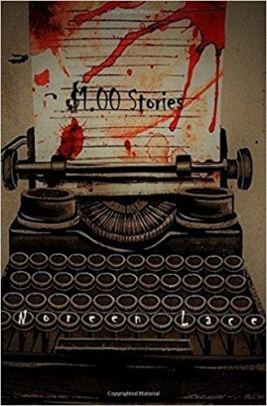 $I.00 Stories, I developed the homeless man from articles I’d read about mental illness and the homeless. In West End, I was able to add more depth to my character having read psychological texts on motherless daughters.
My advice is always – read far and wide and don’t limit yourself. Read when you’re waiting in line at starbucks, read before bed, read when you wake up, or you’re waiting to pick up your kids, or meet your friends. Get off of facebook and twitter or stay on those sites and subscribe to the digital magazines.
I hear people say – I don’t have time to read. Yes. You. Do. Find where you’re losing time and capture it.

Maybe it’s me, but I doubt I’m alone in this: A writer’s support system sometimes seems a shaky and insecure. Some people do not understand, others say ridiculous things, and some are even jealous of our steps forward.
Finding a support system is an active and ongoing endeavor. People move on, they step back, and we need to keep moving forward, be unwilling to let negative people and comments to hold us back.
Don’t be afraid to move on. It doesn’t mean you have to cut contact with everyone or even anyone, but you certainly want to keep those who are positive supporters of your in the forefront of your mind and heart.
Sometimes, we feel very alone. Writing is a solitary act, but we don’t have to live in a bubble. Make contact through writer’s groups, online and in person. Meet other writers at conferences or critique groups and stay in contact with them. Join a book group, we need friends.


 Noreen Lace
You must be logged in to post a comment.