
Completing and publishing a book — any book — is a noble accomplishment. Unfortunately, it’s only half the battle.
Writing, publishing and marketing used to be co-joined triplets, or at least close cousins. Now, though, they have drifted apart into separate entities. As a consequence, the new mantra from publishers turning down a manuscript has become: “We really like your book, but we don’t think we can sell it.”
What you realize, as you skim over the Top 100 best-selling offerings on Amazon or even the hallowed New York Times list, is that “marketability” now has very little to do with what we used to perceive as “quality.” Not that a well-written book can’t be successful, but writing well is no longer a crucial requirement, writing not-so-well no longer a deal-breaker.
The good news is, thanks to current technology and increased self publishing options, almost anyone who really wants to get a book published can now do so. The bad news is, almost anyone who really wants to get a book published can now do so.
The fact that 30 million or so books are now listed on Amazon has drastically changed the rules of engagement. The issue is no longer getting published, but getting noticed.
Writers are obviously the losers in this not-so-brave new world, but so are readers. Books go surging past us like flotsam on a flood-swollen river, never to be seen again. If it was published in 2016, it has already become a relic.
The idea of Snowflakes in a Blizzard, which started three years ago, is to become just one small voice shouting: “Whoa!”
I spent more than 30 years as a newspaper reporter and columnist, wrote a lot for magazines and Websites on the side, published two books that sold over 3,000 copies each locally, and won a lot of writing awards from the Virginia Press Association.
In some occupations, all that would have helped ease my transition when I retired from journalism to write books full-time. In the publishing field, I had to check it all at the door.
When my first novel, “The Kudzu Kid,” went up on Amazon, I was excited. I now had my own little niche, exposed to the world. I had a publisher who, at least in theory, was prepared to spread the word. I had a distributor to transport my books to the far corners of the nation. Smiling contentedly, I sat back and waited for the orders to pour in.
And waited. And waited. Eventually, it dawned on me that since nobody outside of Central Virginia had ever heard of me, the odds of anyone randomly clicking on my Amazon page were infinitesimal. Why would they?
At some point during the mini-funk that followed, aggravated by the winter blahs, I was standing in front of my living room widow in Lake George, NY, watching it snow, when this thought occurred to me: “Getting noticed for a new writer these days is like a snowflake trying to stand out in a blizzard.”
A few months later, I started the Snowflakes in a Blizzard blog.
Each week, Snowflakes highlights three books. They could be novels, poetry, short stories, non-fiction, memoirs or a hybrid. What they have in common are that they are a) unique in some way and b) could use more attention. The “template” for every book is filled out by the author and goes individually to each of our 3,000-plus followers, complete with a few reviews and a sample chapter. It’s a way of getting one-on-one attention.
Also, it’s completely free. I like that for several reasons:
First, it takes the pressure off. Charging for a service is all about making a promise — in this case, pay me and I’ll sell books for you. I can’t do that, because I have no way of tracking who might have purchased a book because of a Snowflakes post they received.
Second, it makes for a better vibe between me and other writers. They are colleagues, not customers.
Finally, I don’t feel competitive with any other writer-friendly blogs or Websites. In fact, I’d be delighted if a thousand other sites sprang up just like Snowflakes in a Blizzard, because that would still not take care of all the writers who need such a service.
You may have heard it said that the opposite of love is not hate, but indifference. In the case of the book-buying public, the enemy is our very human tendency to stick with what we know. Early in our lives, most of us have settled in on what food, music, movies and, yes, books we like.
This fact unquestionably drives the book publishing business. It has become a lot like politics — survey the public to find out what they think they want, then give it to them. It accounts for the focus on genres, the reliance on best-seller lists and the dicotomy of wealth between the top one percent of authors and everybody else.
I don’t like to point fingers at the publishing industry, because they need sales to survive. So do agents. I do, however, think that the current glut of books has contributed in many cases to tunnel vision and laziness. What used to be “Wow, this is a great book — we need to tell people about this talented new author,” has morphed into “Oh, too bad — it doesn’t have the right genre for our demographic.”
This genre fixation is one of my major gripes about the book business today. Instead of offering unique work that only they could produce, some authors are “writing to genre,” following a list of pre-prescribed rules in an effort to “fit.” Yet so many of the books that made a big impact upon arrival — think “In Cold Blood,” “The Color Purple,” “To Kill a Mockingbird,” “Roots” — probably would have flunked the genre test.
To their credit, a lot of small “indie” publishers do seek out and nurture talented new writers. Sometimes, they are richly rewarded for it.
My other gripe is the attitude held by some gatekeepers that they are doing writers a huge favor by publishing them. I growl, internally, every time I see this on a Website: “If you don’t hear from us in two months, it means we’re not interested.”
How much time and trouble would it take to type “Thanks, but not for us,” and hit “send”? Or maybe, “We’re thinking about it.”
This lack of communication shows a naked disrespect to authors who, after all, just want to enter into a business deal with them. Think of how you’d feel if you walked into a restaurant, sat down at a table, and were then ignored for an hour before you finally got up and left.
OK, so the creative universe is awash with other books. Publishers and agents can be uncaring, potential book buyers unlikely to try something new, both realities especially hard on new writers who haven’t yet accumulated prior publications, lots of good reviews or a book club fan base.
So what can we do? I make no claims of being an expert (I’ve never had a best selling book, so what do I know?), but I do have some suggestions.
- Look at the myriad niches that might be hidden beneath the main thrust of your book. These could include the setting, the occupation of main characters, a societal issue that is addressed, etc. Find some on-line clusters of people who reflect those nooks and crannies and send them a sample chapter. Do everything you can to show a publisher or agent that your book will, indeed, have a ready-made audience.
- Don’t forget the local connection. After your book is published (or even before), show up at your local newspaper office, meet the book editor, and suggest a review of your book. Don’t forget the little free papers than have mushroomed everywhere.
- Arrange similar meetings with small bookstore owners in your area.
- Set up as many book signings as you can handle, including businesses other than bookstores.
I invite you to check out the Snowflakes in a Blizzard site, and perhaps even follow it. Or, you may have a book you’d like to have featured, or know someone else who does.
My e-mail address is writersbridge@hotmail.com, and I love to talk about writing, any time.
Much luck, Darrell. Thanks!
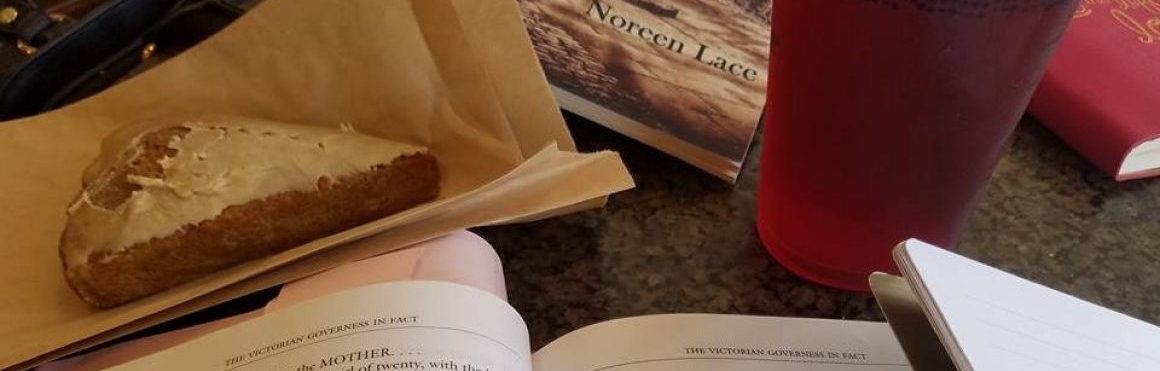
 Sometimes, I wish I was the driver of the Karma truck. But, I suppose, being a writer is better. Still have the problem of sitting too long, but we get to exact revenge too. The best kind of revenge – in print.
 But, first, I had to roll my eyes and throw back my head. I just wanted some sympathy, some empathy. But she gave me more than that – she gave me purpose, building from ashes, and a way for me to transmit sympathy to another by relating to a scenario which many of us have experienced. (I know, still too vague.)


 As a single parent, writing can be difficult. I’m required to be creative and write around my daughter’s schedule. I find time in the mornings, for twenty or thirty minutes, before I get her up for pre-school. At work, I take five minutes here and there when I can to make notes or outline an idea or tw
 o. I get another hour, if I’m not too tired, after I read her stories and put her to sleep.
 I write poetry in the park on warm Saturday afternoons while the children are screaming with joy on the climbing gym. I write lyrics in the parking lot, in the chilled air of my car, waiting for pre-school to end. I outline a story over the humid stove, while my daughter waits impatiently at the dining room table, chomping on carrots.

 Of the four writers, none had been published and I became the only one who expressed specific goals. In one session, a women writer spent the whole time helping another writer without responding to the rest of us. It sometimes happened, so we weren’t offended; but the following week, the same woman spent two minutes on mine and said something to the effect, “I don’t even know what to tell you with this…” before moving to another person. I realized I was wasting my time there.
 We’d meet once a week or once every other week to read and review each other’s work. Timing and responses began bumpy but smoothed out rather quickly. We were near the same writing level, although I give her credit for being better than I. As we got to know one another, we understood what the other was attempting to accomplish in their own fiction. This helped us read one another’s work more productively.
 authentic and detailed critiques with increased confidence, which lead me to more submissions, and ultimately more publications.


 this. They wonder if I don’t care about my work. They think I’m mad for even considering it. There are some things I won’t change. But, so far, the editors who have asked for changes have asked for simple things like rewrite this sentence, change this punctuation. No one has asked me to make major changes to any piece I love.


 Every beach is just a little different. Just as the light is, depending where on the planet you stand. Being there helps.


 remember the name, but I do remember the walls were pink. I liked it for it’s small town charm. Local home made jams lined the shelves behind me while local artists’ paintings adorned their walls. They only had a few wooden tables, a few more outside, and a few bar-type seats at the counter. Instead of the iced black or green tea choices at you-know-where, I opted for their daily choices, which might icled iced peach or raspberry-ginger. They offered an array of vegan or gluten free cookies as well. Who could resist?
 individual and how the individual internalizes society. One of the characters worked there, but felt out of place. This also represented her life, she felt out of place and hadn’t really begun to make real decisions about who she was or what she wanted. But, of course, that changed and so did her involvement in the coffee shop and the guests as she becomes more proactive in her life. The reader is left to decide the interaction between her and society and whether the influence is good or bad.
 I used another independent coffee shop
 Noreen Lace
You must be logged in to post a comment.