Friday Feature: Building a Community of Writers – Rebecca Clark

Hi, All.  Today, I asked Rebecca Clark to tell us about The Writer’s Point.

~~~~~~~~~~~~~~~~~~~~~~~~~~~~~~~~~~~~~~~~~~~~~~~~~

fridayfeature


My name is Rebecca Clark. I am the founder of The Write Point, a free social networking community for writers, editors, publishers, beta readers, and literary agents.

Here’s my story.

For the past 15 years I’ve been writing fiction stories. Mainly for myself. It wasn’t until about 7 years ago that I thought maybe I could actually publish something! I wanted to share my make-believe worlds with others. So, I dug deep into the Internet to see what I could find about agents, publishing, the editing process, and what ever else a successful book entailed. I found several forums full of knowledgeable authors.

Forums are messy, in my opinion. I was a brand new writer lost in a world of writers who knew everything I needed to know, but somehow I felt that I didn’t fit in. There was one forum website in particular that made me feel like I shouldn’t be a writer at all. Every question I asked was answered with “google it”.

So, I googled it. I learned so much on my own, but I really just wanted to be a part of a community, some place where I felt at home with people just like me.

Last year, I decided that if I couldn’t find a place to call “home”, I’d create one. So, I did! Fortunately for me, a couple of years ago, I graduated with a degree in Computer Information Systems: Website Development and Design. I could take the time to build upon the idea, and actually understand what I was doing in the process.

The Write Point is a FREE community that I hope will become a place for new writers to feel welcome, and experienced writers can share their expertise without making anyone feel like they aren’t good enough!

Noreen, thank you for allowing me to share the story of The Write Point. To learn more about us, visit https://thewritepoint.com.

The Write Point Facebook page is: https://www.facebook.com/thewritepoint

You can also find me tweeting here: https://www.twitter.com/bekkahclark and here https://www.twitter.com/twp_network

~~~~~~~~~~~~~~~~~~~~~~~~~~~~~~~~~~~~~~~~~~~~~~~~

Many thanks, Rebecca.

Writers, Enjoy!

weekend

Writer Wednesday – The Mystery of Flow

Door-Into-MindIdeas come easily to some writers, not so smoothly to others.

There’s a little door to our writing mind which must always remain open and then things will flow in and out. it’s a frame of mind, to be open and to listen, or to always have writing on your mind, like a song playing in the background.

In a supermarket, the cashier says something to me. It could be an every day comment that strikes me a little strange. That (creative) door is standing ajar and a shadow is leaning against the frame when the cashier, red hair piled 50’s high, said something about “blueberry pie.” But I heard Blue Pie. My writer mind twirls within possibilities. That idea that lingered at the door-frame to my writer mind smacked right into the blue pie and it became a dog named Blue and Grandmother’s award-winning pie at a local fair in the height of the home-making 50’s.

I’m standing in the window of my little home watering plants; the catnip falls to my feet and I remember a dream I had the night before. Catnip Dreams begins whirring.doors

Enough of the bleating sirens, says an annoyed neighbor upon hearing yet another car alarm as my dog anxiously howls at the buzz. He says sirens. I hear a howl. I see ancient mermaids sitting on a rock caterwauling.

The space between our everyday life our creative brain must not close. Between kids and to-do lists, work and school, it must become a screen which catches things and holds them, even somewhat distorted, until we race to a notebook and write.

doors.jpg

Writing Wednesday – STRESS!

stress

One of the worst types of writer’s block is caused by stress.

I like to roll out of bed and get straight to writing before any other distraction or activity comes up. I find that I work better and longer if I push everything else away until a manageable time. However, I find stress takes me completely out of my writing brain.

Where I can stop for breakfast, talk to friends or family, or even keep an appointment and get back to writing, when I’m stopped by a stressful event or activity I find it extremely difficult to do any work.

The good thing is that it takes a lot to get me to that level of stress; however, that’s not so Stressed-Brainfor many writers. Besides the littlest distractions causing problems for many writers, any stress weighing on a writer can keep them from being productive. One of the elements of stress is the inability to focus on anything else – it is the most distracting distraction a writer can face. Stress causes us to avoid things – things like writing!

If you’re experiencing something like this and can’t get on track with your writing, you need to ask yourself what is happening in the background of your life. It depends on each individual’s ability to handle stress, but it could be a small thing like a car problem or a large thing like a family problem. These things wreak havoc with our ability to be productive.

Again, my cure for this is to focus first on my writing and, second, on anything else. Cures for others might be similar. Block out the stress and focus on the writing – this could be a way of de-stressing. Creating a time to worry about problems is an age old recommendation. Years ago, someone told me “plan ten minutes before bedtime to worry.” I, personally, prefer before sleep and after waking to be the least stressful times. But it could still work – schedule your worry time like we all should schedule our writing time. Or, give yourself time to solve that problem, and realize if it’s something you can not solve and let it go.

stress2Let it go! If it is a stress we have no power over that is the only answer. It will pass. Focus on the writing, that you can control!

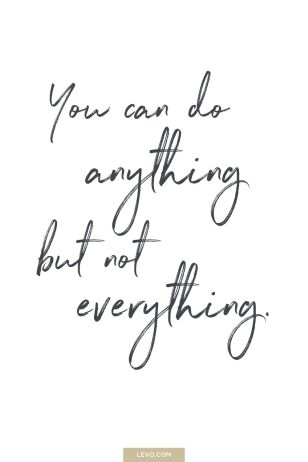
I like the quote “you can do anything, but you can’t do everything.” That’s what we have to remember. We can choose to stress about problems that we can’t immediately solve, or we can choose to use our writing as a distraction from that stress.

If you’ve found anything that’s worked for you, please post it in the comments!


Next week – decision making and writing.

Writer Wednesday: Say Yes to the Edit….

When I’ve mentioned, within a writer’s group, an editor asked for changes the room heats with disagreement.

writerblog2


“You’re not going to do it, are you?”

“Why would you sell yourself like that?”

“How dare they?!”


They dare because they are willing to publish my work; and while it does matter what they ask, I’m willing to listen and consider their ideas and advice. Usually, it is merely for clarifications or changes in simple sentence structure or the like.

My story, $1.00 Stories, was originally published by the Chicano Tribune’s Printers Row Journal. When that editor called me and hesitantly said, “we’re requesting changes;” I think he was quite surprised with my, “certainly.” The only requested was a few clarifications between the character’s name, Chris, and his nickname, C.C.

writerblog3It would be foolhardy and, even, unprofessional for me to say no without hearing them out.

While I suppose many writers believe the editor might ask for major changes in ideas or plot, I haven’t had any ask me for such things. As writers, we need to be open to consider what is said.

By request, I critiqued another writer’s work. I offered my point of view, and they became offended, tried to explain what they meant in this scene or that narration. My response, “there are all great ideas, but they are not in there.” The young person huffed off, I believe, without hearing me. Writers, we cannot be that sensitive.

We are not perfect human beings. We make errors. Some things are clear to us, but not to others. We can improve our work for the better by listening to others’ opinions. Of course, not all are worth considering. But an editor’s opinion, one who is willing to publish your work, is valuable.


writerblog1

Writer Wednesday: Writer and Writing is a Relationship

heartI know people say writing is a commitment, but it’s more than that. Writing isn’t “like” a relationship, it IS a relationship. A writer must be involved with the whole process of writing, must love it, need it, want to continue to work to make it better. It takes commitment, time, dedication, and the desire to move forward in life with writing.

A few years ago, I was at a conference where the main speaker (don’t remember his relat 1name) said, “You have to be selfish. You must take the time for yourself, for your writing.” He went on to say he spent every Friday at a hotel with his writing. (are you picturing him checking into a seedy, no-tell motel with an old typewriter?;-)

My friend joked, “Noreen does this thing where she actually spends time writing.” My regular action became fodder for humor because he is a writer, but he falls under the category of non-writing writers like many others.

Life happens. We have families, pets, jobs, homes, tons of responsibilities. But notice that list – I put family first. People we love comes first. This is why a writer might consider writing as a relationship – so they give it priority.

I schedule things around my writing whenever possible. I will make doctor appointments, meetings, and everything I have power to plan secondary to my writing by scheduling them before or after my planned writing time.

Once a person considers themselves in a relationship with their writing, they may relat 3naturally form relationship goals! If writing were a romantic relationship, how would you handle it differently? Would you want to go to sleep with it or wake up with it or both? What would you want to give it? Would you spend more time with it, going over the details, working it out so it was just perfect, going over it and over it again to work it out nice and smooth? What do you do for your significant other? Take it out to dinner? On vacation?

Writing, like a lover, needs constant attention and nourishment. Placing it on the back burner means we may never get to it. It’ll be there, but not as warm and flush as we’d like. Being in a relationship with writing means the needs of both are fulfilled. Writing is fresh and flowing and continually improved and the writer is happier, more productive.

We do this because we love it, we are driven to do it. Treat writing like it’s important to you.

Think of writing before you fall asleep, when you wake up in the middle of the night just to say one more thing.

relat 2

Coffee and your Character – Writer Wednesday

I’ve been thinking of coffee shops. And it’s not only because I’m a caffeine addict. Coffee and coffee shops are a part of our everyday lives and, therefore, our characters’ lives. What type of coffee shop and what they order will inform our readers of who they are in ways we won’t need to spell it out.

catwithstarbucks

I, personally, savor that first sip of morning tea. For a few moments, it’s the perfect temperature and I hold it close to my face, ready for the next sip as the first drips of bitter black tea warm my throat and my body, the caffeine going to work immediately to bring me to full wakefulness in anticipation of a busy day.

A friend described a man in her carpool who stopped every day at Starbucks for a large quadruple espresso latte on their way to work and on their drive back from work. But, she added, he also complained constantly about his budget. This told me a lot about the person in just a few sentences.

Does your character rush into Starbucks and curse the line? Probably orders ahead for pick up, but what if it’s not there? Or is your character the kind that seeks out the independent coffee shop because it may be less busy or just because it’s independent.

There used to be a coffee shop on Ventura Blvd between Hazeltine and Woodman. I don’t pinkremember the name, but I do remember the walls were pink. I liked it for it’s small town charm. Local home made jams lined the shelves behind me while local artists’ paintings adorned their walls. They only had a few wooden tables, a few more outside, and a few bar-type seats at the counter. Instead of the iced black or green tea choices at you-know-where, I opted for their daily choices, which might icled iced peach or raspberry-ginger. They offered an array of vegan or gluten free cookies as well. Who could resist?

I used this coffee shop in my story “Harvey Levin Can’t Die” (originally published in Pilcrow and Dagger Sept 2016). The story really is about change. How society reflects the harveylevincan't dieindividual and how the individual internalizes society. One of the characters worked there, but felt out of place. This also represented her life, she felt out of place and hadn’t really begun to make real decisions about who she was or what she wanted. But, of course, that changed and so did her involvement in the coffee shop and the guests as she becomes more proactive in her life. The reader is left to decide the interaction between her and society and whether the influence is good or bad.

It would have implied something different about my character if she’d worked at a chain coffee shop. The chain itself would have had an influence and been a foil. She wouldn’t have been able to grow and and the readers couldn’t see the change within the coffee shop itself; therefore, the setting was important in that instance.

Each place, each chain, is different. The people who go to the local Coffee Bean and Tea Leaf Company are different than those who go to Pete’s or even Starbucks. As writers, I imagine we’ve all spent time in these places. And our jobs as writers are to observe. Beyond the color scheme and coffee served, there’s a different atmosphere garnered by and at these places, and the people are different or act different.

I rarely see the impatient phone-bearing customers from the Monday morning Starbucks run at Pete’s. Nor do I see the more relaxed culture of the Pete’s “give me the multi-grain scone and flipped macchiato” at Coffee Bean.

1dollarstorysmashwordsI used another independent coffee shop for “$1.00 Stories” (originally published in The Chicago Tribune’s Printers Row Journal April – 2016). A mixture of independent coffee shops, one of which still squeaks by in the recesses of North Hollywood. I wanted a friendly owner and regulars my character would recognize. Not that he cared about them; it was more important for the story that they were familiar with Cris, and they accepted with good-natured-humor his occasional weirdness. I didn’t want to make him completely unlikable. I wanted him to come across as a little more complex, so he went to this coffee shop where he knew the owner and sneered at the community table while the regulars chuckled.

The joy I get from using independent coffee shops (or even invented coffee shops) is that I get to describe them, which will also tell us something about the character. In “Harvey Levin”, the character hated the pink walls. But using a chain also tells us something about the character.

Our characters are going to need caffeine at some point in the story. Giving the reader their choice of coffee shops, even in one line, gives the reader an insight into the person we’re creating.

Now my tea’s cold. But I don’t own a microwave and that never tastes good anyway.


Harvey Levin Can’t Die is available on Kindle and at Smashwords.

$1.00 Stories is available at Kindle and at Smashwords.


What’s New With You?

I’ve been remiss in my posting – which is a social media no-no.  icecreamCan I tell you a secret? I’m really just an introverted writer and I really want to do is:


Write!


Edgar_Allan_Poe_3


I had a fantastic time at the Poe Museum reading Eddy. They live streamed it (I didn’t know they were doing that!) and I’ve been invited back, hope to go soon!


27982653_1680480425366915_8840169907577678606_o

In the meantime, I’ll be at AWP.


But the real news today: my short stories – loving the covers! – are available for .99 cents on smashwords and kindle.


So – whenever you need something to do – click the link, read a story, let me know what you think!

Be Joyful!

Existential Crisis or not?

After the farmer’s market, some mornings, I drive around, usually down Ventura Blvd. It’s been conducive to considering life, writing. 21741308_1794773787218606_5919141729243852808_o

I find that I usually stop somewhere for a coffee and write.
Even though I’m widely published in literary journals and other, my own work doesn’t sell much. I’m probably not that great at marketing; however, it may also be due to the fact that I don’t write genre fiction and few people know what to expect when I say literary fiction.

Obviously, it’s up to me if I want to change what I write. But, this afternoon, sifting through donations of people’s old clothes to go to different centers, places, and people who need them, I thought – I’m here to do more than write the next big romance or homelessaction/adventure story. I’m here to tell stories of real people and real lives, hard lived. ($1.00 Stories was inspired by a true story of a homeless man who wrote stories and felt he earned enough to live on)
The novel I spent the spring writing (and is currently making the rounds to publishers) is about a young man who is a recovering drug addict and a woman who spent her life allowing others to make choices for her.

I’ve allowed my heart and my life to be touched by a great many different people. Hearing and interpreting other’s stories, trying to understand and learning to empathize with individuals makes life worth living. Writing stories that people can connect with because they have a sister, brother, aunt who has experienced something similar is important to me.

My purpose is to tell the stories that are hard to write, hard to hear, and give real life meaning. This might mean I don’t make the homelessbest seller’s list, but it also might mean my work touched someone, taught someone, helped another human being experience empathy for a friend or stranger’s life.

My last few stories “Deception” is about how we lie to ourselves and each other,“The Gold Tooth” deals with a sibling who will never be what we hoped for them.  My poems, “H” and “Hunger”, both of

which will appear in Wild Woman Medicine Circle next month, explore hardships people must endure because of others’ expectations.

This is what I choose to write, I was born to write. It has meaning to me. I hope others finding it meaningful to them.

What Do Published Authors Know?

Recently, I read a mini article posted on a blog of sorts, wherein the writer called out Stephen King’s book On Writing, concluding that “famous writers don’t know Jack.”

king1

WOW! Really?


I was shocked and offended. And I assume that is the reaction she wanted to elicit in order to bring traffic to her article or her own website.

Let me clarify that I am not an avid Stephen King reader. I’m not much into science fiction, but I have been reintroduced to his work upon reading Doctor Sleep, the continuation, in some sense, of The Shining. I have read On Writing some years ago. I’m pretty certain it’s still on my bookshelf as it’s required reading for anyone who wants to write – whether you like it or not. And my favorite essay of his, which I sometimes share with students is “Why We Crave Horror Movies.”

Therefore, I’m not defending a writer I love with a passion but an author I admire with sincerity. And I am taking issue with the blogger’s lack of professionalism in her disrespectful and disingenuous response to a successful and prolific author.

Stephen King

In Academia, occasionally members of the community in praising literary fiction take issue with popular literature. In one such class, when someone asked about King, the instructor responded – “In 100 years, no one will remember him.”

Yeah, I’m guessing someone who has written over 50 novels as well as over 200 short stories, among others projects will be remembered.

Again, my issues with her article is that she comes across as disingenuous. I don’t believe she really believes King is wrong, I think she wants to make a name for herself and create a controversial reaction and bring traffic to her website, so she can look at the numbers and get a little thrill when it pops up instead of actually presenting sound and original ideas. I say this because she didn’t actually say much of value.

This blogger’s premise is that writing is a gift and it is done intuitively, so authors don’t necessarily know how to explain writing. Understood. As well, she takes issues with some basic rules that I’ve learned since third grade. She says, “we’d all end up sounding like Stephen King.” Not necessarily so.

king2

Her final claim: “You can do anything, provided that you can pull it off.”


Well, duh! You can break every damn rule of writing if you’ve got a story so great that Hollywood will buy it and the publishers are going to make bank from it.  Dare I talk about The Hunger Games?  As an English teacher, it hurt my eyes to read the numerous punctuation errors. But, as one of my editors said, Story is King. It’s the story that matters, not the comma splices that most non academics won’t even notice.

However, every good writer should know the “rules.” And I’m using that term loosely here. A writer should be familiar with what has come before, what others are doing, as well and what others believe the rules should be.  How many people have commented on Picasso’s blue period, ignorant of his background, and said “I could do that!” Picasso learned and practiced the rules. Then he chose to break them. When I break a rule of writing, I ask myself: “Is it for effect, and is it resulting in the desired effect?

I say: “Break that damn rule if you want. Just know why you’re doing it and if it’s working.” If Stephen King breaks a rule, even his “own” rule, I imagine he knows it and knows why he’s doing it. I don’t think On Writing is prescriptive; I believe it’s meant to be descriptive.

So, I suppose I don’t even have that much issue with what she said, but it’s how she said it. Stephen King is an award winning, multi-best-selling author, show some respect. That’s called Professionalism. You can disagree with someone, you just want to do it respectfully.  She says she leaves the “writing instruction” to the “less qualified people -“.

king3.gifREALLY?  The author of over 200 short stories is less qualified than who – YOU?  How many books have you published?  I looked her up. A few “middle grade readers,” a nonfiction book, a few short stories. She says she prefers to tell people how to get published.

I go back to her line, “famous writers don’t know Jack.” How unprofessional can you be?

I teach a business writing class (among others); I run the class like a course in professionalism. And this is something I would say is an absolute NO! We can disagree with anyone – I tell my students – but we should know how to respectfully disagree.

As a writer, I see a lot of unprofessional behavior. (I in no way claim to be perfect myself).  I belong to writers’ groups and read (more than I post) in these online writers’ groups. And it can be things like this – open to the public – that can get a person in trouble. You never know who you are dealing with on the other end of that computer. Random arguments, stupid comments, and radical, unqualified statements can hinder one’s success.

I was asked recently by a publishing company for my CV. This is not a problem; I sent it right over. Why would I not?  I posted asking for advice about the CV, for future reference. Some people seemed beside themselves, as if a publishing company asking for my CV was out of line. The publishing company is my potential employer. They are entitled to my CV and, as a professional writer, I want to show it to them!

Now, what if I had written a blog such as that – disrespectfully and disingenuously criticizing one of their best authors? It might cause the publishing company to think twice about even looking at my work, let alone looking at my CV. The cold, hard fact in this world is most companies are not going to hire or work with people who are unprofessional. While they may want people to speak their minds, they don’t want people publicly running off at the mouth. Charlie Sheen and any number of actors learned this the hard way.

king4

I am not at all saying that we shouldn’t voice our opinions! If you disagree with anyone, you should be able to, and have the absolute right to speak your opinion. I’m suggesting it be done with polite professionalism.

Who is this author of a few middle-grade books to be criticizing King? She is never going to convince ME or many writers that King is wrong. However, had she respectfully disagreed with his views on the certain aspects of writing, clearly stated her reasoning – it would have been far more professional and more believable! I would have read it, taken her opinion into consideration, and possibly even agreed with her. However, by her announcing that he is “less qualified” and doesn’t “know Jack,” not only do I question her intelligence and her integrity, she’s possibly offended people she’d rather have as friends or colleagues. (You’ll notice I didn’t link her article here. I’d prefer not to give attention-seekers more attention).

I, personally, would rather respectfully disagree with people than announcing contrary opinions for the sake of readership. I guess being boisterous will get you noticed. But, it will also get you noticed, if you know what I mean.

I’ll take her words, “You can do anything, provided that you can pull it off.” – Yes, yes, you can. You’ve seen numerous examples of people running off at the mouth about others and nothing happened to them or their career. However, are you sure you can do it and not experience consequences? Have yking5ou built up enough credit, have enough backing, or whatever else you need, to make certain you will not face consequences. OR – have you done this, seen it done, heard it done, and the person hasn’t gone very far in their career. Hmmmm.  Might be a reason.

Say what you will. I suggest you say it with respect.


The Myth of Writer’s Block

Writer’s block is a myth perpetuated by people who don’t really want to write.

write

And I really don’t like when people ask me if I ever “get it,” as if it’s contagious. In some ways, I think it is. People talk about it too much and infect others with their ideas of this mysterious and loathsome “writer’s block.”

Maybe I’m thinking of the block all wrong. I’m not sure at all what it means. Does it mean the person can’t sit in a chair and write? Are their hands broken? Is their brain injured? Or does it mean they can’t write as well as they want? Does it mean that writing’s not easy?

Hey – wait – let’s hold on to that one: Writing is not easy?!

Of course, at times, it’s not easy! Sometimes the scene isn’t quite right or the dialogue is inauthentic or the words aren’t laying out as smooth and beautiful as we’d like. Does that mean we lay down the ivory pipe, get up from our Italian baroque seventeenth century carved desk, retire our gray wool writing jacket with the patches on the elbows, and lounge for the rest of the day waiting for this “block” to pass?

None of it’s real!Writers-Block-is-a-Lie

The desk, the jacket, or the block – these are images people use to perpetuate the myth that writing is some magical gift that is laid down upon us and is taken away just as easily.

I’m not saying the ability to ribbon words rhythmically and meaningfully isn’t a gift – but it is work.

Now there’s the word we need to use. The only thing, perhaps, people are being blocked from is WORK.

A writer needs time. The lack of time can inhibit starting or finishing – but we make time. Many writers (Vonnegut, Angelou) woke up early.  I used to be one of those people who said – oh, no, I need my sleep. But then I decided I wanted to write more than I needed extra sleep. Writers, for centuries, have had no choice but to get up early or stay up late in order to produce.

And there’s that word again. Work. Let’s get to it, ladies and gentlemen, no matter how gifted you are, writing is work, writing is commitment. And there’s the other word so many people are afraid of: commitment.

If you want to be a writer it takes work and it takes commitment. The real work of writing is to commit yourself to it, to sit your ass in that chair, at that desk, or dining table, or in the corner closet, and write. Sometimes nothing is going to come out right. And that’s when you keep working, or you take a break, go grab a cuppa and get back to it. Writer’s commit themselves to time and action, whether it’s one hour a day or eight hours a day. And sometimes things come out well and sometimes they’re a struggle.

plumbers block


Imagine writing as a job. If you want to be successful, can you give up the moment it gets challenging?  Can you imagine your plumber calling you and saying, “I just can’t come today, I have plumber’s block”?


If something you’ve started has stunted, write something else, take it in a different direction, write an angry letter to one of the characters insisting they do what you want them to, then let them write one to you.

poe2


Let’s be honest about what writer’s block really is –

  • it’s procrastination;
  • it’s distraction; 
  • it’s fear of rejection.


I do believe people go through periods where they’re not as productive, or they have some psychological issues blocking them from releasing their ideas. These problems can be solved – therapy.

beautiful journalist looks typewriterIf you want to take part in the myth – “oh I can’t write today!”

If you want to perpetuate the myth – “What do you do when you get blocked?”

That’s fine. However, Do not bring your kind of negativity to me – “Do you ever get blocked?” Because I don’t want to hear it; I don’t want to be a part of it; and I certainly don’t want you attempting to infect me with your dis-ease.


read


Now – sit that ass in that chair and WRITE something. 😉 Good luck.