Recently, I read a mini article posted on a blog of sorts, wherein the writer called out Stephen King’s book On Writing, concluding that “famous writers don’t know Jack.”

WOW! Really?
I was shocked and offended. And I assume that is the reaction she wanted to elicit in order to bring traffic to her article or her own website.
Let me clarify that I am not an avid Stephen King reader. I’m not much into science fiction, but I have been reintroduced to his work upon reading Doctor Sleep, the continuation, in some sense, of The Shining. I have read On Writing some years ago. I’m pretty certain it’s still on my bookshelf as it’s required reading for anyone who wants to write – whether you like it or not. And my favorite essay of his, which I sometimes share with students is “Why We Crave Horror Movies.”
Therefore, I’m not defending a writer I love with a passion but an author I admire with sincerity. And I am taking issue with the blogger’s lack of professionalism in her disrespectful and disingenuous response to a successful and prolific author.

In Academia, occasionally members of the community in praising literary fiction take issue with popular literature. In one such class, when someone asked about King, the instructor responded – “In 100 years, no one will remember him.”
Yeah, I’m guessing someone who has written over 50 novels as well as over 200 short stories, among others projects will be remembered.
Again, my issues with her article is that she comes across as disingenuous. I don’t believe she really believes King is wrong, I think she wants to make a name for herself and create a controversial reaction and bring traffic to her website, so she can look at the numbers and get a little thrill when it pops up instead of actually presenting sound and original ideas. I say this because she didn’t actually say much of value.
This blogger’s premise is that writing is a gift and it is done intuitively, so authors don’t necessarily know how to explain writing. Understood. As well, she takes issues with some basic rules that I’ve learned since third grade. She says, “we’d all end up sounding like Stephen King.” Not necessarily so.

Her final claim: “You can do anything, provided that you can pull it off.”
Well, duh! You can break every damn rule of writing if you’ve got a story so great that Hollywood will buy it and the publishers are going to make bank from it. Dare I talk about The Hunger Games? As an English teacher, it hurt my eyes to read the numerous punctuation errors. But, as one of my editors said, Story is King. It’s the story that matters, not the comma splices that most non academics won’t even notice.
However, every good writer should know the “rules.” And I’m using that term loosely here. A writer should be familiar with what has come before, what others are doing, as well and what others believe the rules should be. How many people have commented on Picasso’s blue period, ignorant of his background, and said “I could do that!” Picasso learned and practiced the rules. Then he chose to break them. When I break a rule of writing, I ask myself: “Is it for effect, and is it resulting in the desired effect?
I say: “Break that damn rule if you want. Just know why you’re doing it and if it’s working.” If Stephen King breaks a rule, even his “own” rule, I imagine he knows it and knows why he’s doing it. I don’t think On Writing is prescriptive; I believe it’s meant to be descriptive.
So, I suppose I don’t even have that much issue with what she said, but it’s how she said it. Stephen King is an award winning, multi-best-selling author, show some respect. That’s called Professionalism. You can disagree with someone, you just want to do it respectfully. She says she leaves the “writing instruction” to the “less qualified people -“.
 REALLY? The author of over 200 short stories is less qualified than who – YOU? How many books have you published? I looked her up. A few “middle grade readers,” a nonfiction book, a few short stories. She says she prefers to tell people how to get published.
I go back to her line, “famous writers don’t know Jack.” How unprofessional can you be?
I teach a business writing class (among others); I run the class like a course in professionalism. And this is something I would say is an absolute NO! We can disagree with anyone – I tell my students – but we should know how to respectfully disagree.
As a writer, I see a lot of unprofessional behavior. (I in no way claim to be perfect myself). I belong to writers’ groups and read (more than I post) in these online writers’ groups. And it can be things like this – open to the public – that can get a person in trouble. You never know who you are dealing with on the other end of that computer. Random arguments, stupid comments, and radical, unqualified statements can hinder one’s success.
I was asked recently by a publishing company for my CV. This is not a problem; I sent it right over. Why would I not? I posted asking for advice about the CV, for future reference. Some people seemed beside themselves, as if a publishing company asking for my CV was out of line. The publishing company is my potential employer. They are entitled to my CV and, as a professional writer, I want to show it to them!
Now, what if I had written a blog such as that – disrespectfully and disingenuously criticizing one of their best authors? It might cause the publishing company to think twice about even looking at my work, let alone looking at my CV. The cold, hard fact in this world is most companies are not going to hire or work with people who are unprofessional. While they may want people to speak their minds, they don’t want people publicly running off at the mouth. Charlie Sheen and any number of actors learned this the hard way.

I am not at all saying that we shouldn’t voice our opinions! If you disagree with anyone, you should be able to, and have the absolute right to speak your opinion. I’m suggesting it be done with polite professionalism.
Who is this author of a few middle-grade books to be criticizing King? She is never going to convince ME or many writers that King is wrong. However, had she respectfully disagreed with his views on the certain aspects of writing, clearly stated her reasoning – it would have been far more professional and more believable! I would have read it, taken her opinion into consideration, and possibly even agreed with her. However, by her announcing that he is “less qualified” and doesn’t “know Jack,” not only do I question her intelligence and her integrity, she’s possibly offended people she’d rather have as friends or colleagues. (You’ll notice I didn’t link her article here. I’d prefer not to give attention-seekers more attention).
I, personally, would rather respectfully disagree with people than announcing contrary opinions for the sake of readership. I guess being boisterous will get you noticed. But, it will also get you noticed, if you know what I mean.
I’ll take her words, “You can do anything, provided that you can pull it off.” – Yes, yes, you can. You’ve seen numerous examples of people running off at the mouth about others and nothing happened to them or their career. However, are you sure you can do it and not experience consequences? Have y ou built up enough credit, have enough backing, or whatever else you need, to make certain you will not face consequences. OR – have you done this, seen it done, heard it done, and the person hasn’t gone very far in their career. Hmmmm. Might be a reason.
Say what you will. I suggest you say it with respect.
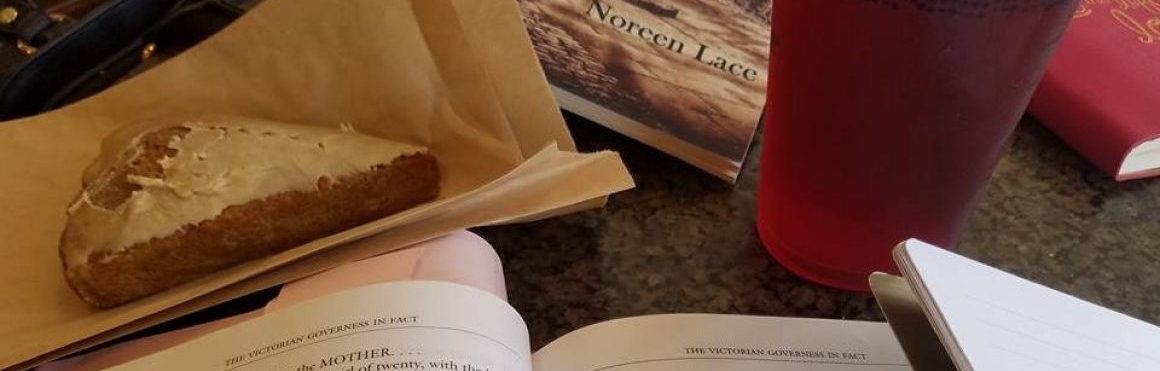
 we reach for a pillow and poof – a story occurs to us. Some of us continue to snuggle tight to that pillow and tell ourselves we’ll remember it in the morning …zzzzz… and it’s gone; others of us roll back over, grab that notebook and make notes.
 There’s something magical happening in our brains at certain moments during the night. We’re transitioning from deep rem sleep back to stage one, nrem sleep, where we are most likely to be awakened; this is also about the time, along with other times, that hypnagogic sleep is taking place. This is a transitional state for our minds and bodies, and the best time for “stories” to happen.


 Funny title, right? It is. But, it is also true and powerful on many levels. “The one” usually represents your one and only significant other in love matters. Still, how about being yourself “the one” in all the aspects of your life? Sounds crazy? Maybe, at first. But, being the one of your own life means tremendous power for yourself and your overall life….
 For example, you want to be a writer? Who is the first person that can help you with that? You are! You want to start a successful business? Who is the first person that can help you with that? You are! You want to have money? Who can do that fast enough for you? You can! You want to become independent in a way or another? Who can first help you with that? You can! See? Why would you wait for others to do or make things for you as long as you can? Why wait and meet with disappointments of all kinds? Some promise and never keep their promises. Some don’t say a word, but keep you on your toes, and again, you meet with disappointment, and so on.
 The power of being THE ONE of your own life is at your finger tip. Start being THE ONE! Let others become your supporting characters and you the action maker! Be the writer of your own story! Create your own destiny! Create your one and only! Manifest amazing things for you that only you can! Taste the sweet success of your own efforts! Make things happen according to your own will! Be the magician of your own life and materialize your wants and needs! Be the next Bill Gates, Oprah and so on! They both started on their own, one had more misery at first than the other and see them now! They had the power and magic on relying on themselves and on nobody else! They both believed in being THE ONE of their lives! They took action, they became their own heroes, and now they bask in the success and material needs they themselves created with the power of being THE ONE!


 Of the four writers, none had been published and I became the only one who expressed specific goals. In one session, a women writer spent the whole time helping another writer without responding to the rest of us. It sometimes happened, so we weren’t offended; but the following week, the same woman spent two minutes on mine and said something to the effect, “I don’t even know what to tell you with this…” before moving to another person. I realized I was wasting my time there.
 We’d meet once a week or once every other week to read and review each other’s work. Timing and responses began bumpy but smoothed out rather quickly. We were near the same writing level, although I give her credit for being better than I. As we got to know one another, we understood what the other was attempting to accomplish in their own fiction. This helped us read one another’s work more productively.
 authentic and detailed critiques with increased confidence, which lead me to more submissions, and ultimately more publications.

 Courtship is romance taken form. It’s where those thoughts and fantasies translate into actions, from the ordinary chocolates and flowers to those thoughtful gestures, everything from a caress of the hand to simple time spent in conversation, all taking place behind a barrier of uncertainty. You spend time with that special someone, you share meals and thoughts and feelings, you enjoy those little tingles that come from being in their presence, but you don’t yet cross into intimacy. Perhaps you’re old-fashioned, or imagine yourself as gentlemanly or ladylike; you save something for later. In any case, you’re not quite at that point of leaping into their arms with wild abandon.
 To see into their soul. To see whether it’s safe to make yourself vulnerable before blending your soul with theirs. To see your own flaws and those of your partner in clear focus, to get beneath the layers of what someone might project, and instead look for and grab onto those glimpses of truth beneath the veneer of attraction…
 In the end, after many dates with my manuscript that ranged through blind and awkward, rushed and too quick, exciting and anticipatory, intimate and ecstatic, the story evolved into better forms than ever taken before. I saw it for what it was, working through the small details, caressing each sentence and nuance until the story as envisioned came across as “meant to be.”


 this. They wonder if I don’t care about my work. They think I’m mad for even considering it. There are some things I won’t change. But, so far, the editors who have asked for changes have asked for simple things like rewrite this sentence, change this punctuation. No one has asked me to make major changes to any piece I love.


 Every beach is just a little different. Just as the light is, depending where on the planet you stand. Being there helps.


 Noreen Lace
You must be logged in to post a comment.