Weathering the Storms

weather-storms-thumbnail

Is there anything worse than a bad review?  Probably, but we don’t think so when we get one.

But ask yourself why you’re upset.

1. Is there some truth to the review? No – then forget it! Yes – then what is it?

One woman relayed that her one star review mentioned grammar and punctuation errors. She said, “I know there are some, but there’s not that many!”

It seems she knew she put out work that was not of a superior quality; she can’t be upset when someone calls her on it.

2. Is it someone who just wishes to malign you? Accept that there are going to be haters. Everyone has them. Remember this quote: “Well behaved women rarely make history.” If someone dislikes you – you might just be doing something right.

3. Someone told me – it’s only the writer who reads all the bad reviews. I think that’s supposed to make us feel better. But it’s true. When you look at reviews, do you search out every bad review there is? or do you read maybe the top five or ten of all the reviews?

I, personally, read a few of each. A few of the five star, a few of the three star, and a few of the one star – critical readers can tell if someone has an ax to grind or if they have real concerns.

Read Like a Wordsmith

wordDon’t read other words like a critic looking for the good, bad, and ugly. Read to discover what the author did well and how they did it.

This is reading like a writer, like a wordsmith.

Atwood says she will only review something if she likes it. She is not a critic and won’t write a bad review.

One of my friends told me he won’t even write a bad yelp review. He says, I praise those who deserve it, but it’s not my place to criticize.

I thought this was a great idea.

If you feel you must say something to alert other readers, then be honest and specific, but do add at least one good thing about the book, story, movie, service etc.


The enemy…..

sylvia-plath-quote-1

Plath was one of the original “confessional poets,” and her poetry, at first, was not well received. Her poetry, however, spoke to many. Much love for the Plath!

Fiction = Lies / Writers = Liars?

gaiman.jpgNeil Gaiman says lies are what fiction is made of. Well, yes, but….

He says, we make up people and places and put them in circumstances which aren’t true. Yes, well, but…

But we tell some sort of universal truth with these lies and that’s what makes it good fiction.

Gaiman is all about honesty, so I’m surprised he calls what we do lies. I don’t consider fiction lies. But I can see how people think it is. But then, do we call writers liars? I would hope not.

There’s a difference, isn’t there?  I, personally, keep my life honest. I appreciate honesty from everyone in my circle and will not continue to be around people who are known to have lied.

Plato believed fiction was dangerous to society. He wrote in “dialogues” to teach philosophy or what he believed philosophical truths.

He was fictionalizing these dialogues. And if fictions, like philosophy, seek truth and honesty, aren’t they important?plato.jpg

Gaiman says the magic of fiction is the big, important truth.

I guess, if the fiction doesn’t tell us a truth, it has been a waste of our time, of our words, and is, therefore, a lie.


Visualization for Success

Superego

We tell our students to do this – visualize what you want to happen.

Take your visualization a step further, especially if you’ve lost hope or are having a hard time finishing a work:

Create the cover for your book. Maybe slap an award on that cover.

Write a famous person’s review for that book then add quotes to the back cover.

Write the copy for the inside jacket cover.

Hang it or place it on your desk where you will see it every day.

Science says, visualization can help us get to where we want to be!

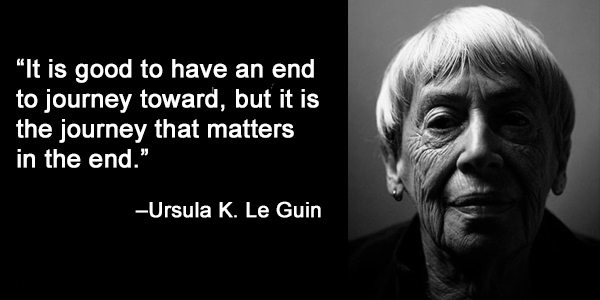
Women’s History – Women Writers

le-guin-1

How is a Writer like a Peanut?

How are you like a peanut?

I gave this prompt to my students. Even as I was assigning this prompt, I saw the looks on their faces. They were not the first class to question my sanity; that happens regularly. So, my answer, must be “I’m a little nutty.”

Some of my students came up with amazing responses.

peanut

  • Like a peanut, I have a hard shell. But once I open up, I’m quite pleasant to know.
  • Like a peanut, I’m coming out of my shell.
  • Like a peanut, I’m a little rough around the edges, but smooth on the inside.
  • Like a peanut, I am versatile.
  • Like a peanut in a shell, I am not alone.
  • Like a peanut, I’m caramel colored.

This is challenging and, as writers, we must challenge ourselves. When we challenge ourselves, new parts of us open and allow us to grow and see life from a different point of view.

Choose an item from your refrigerator or snack drawer and compare it to yourself.
(Or choose an item and compare it to your main character.)

If you’d like to share it in our group, please do. peanut2


Dare to Suck

indexSteven Tyler of Aerosmith says, “Dare to Suck.”
It seems that he and his band mates have a regular meeting in which they bring the wildest, crappiest, outlandish ideas to toss them around and see if they work.

9 out of 10 of those ideas have to be trashed – but the tenth gets you something like “Dude Walks Like a Lady.”

Why not throw around ideas that seem completely outrageous?!  They can always be strays.jpgcanned later, but in the meantime you have some ideas to play with and you might, well, come up with something good.

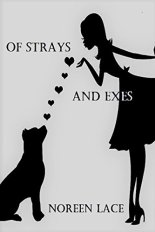
I wrote the line, “When I killed my neighbors dog…” My friends said, you can not use that. But I played with it to see where it might take me, and I wrote “Of Strays and Exes” by just playing with this strange line that came to me in a dream.

It was accepted for publication in Pilcrow and Dagger almost immediately and later made into a podcast. You can find it kindle now, or search P&G’s podcasts.

**Disclaimer: No animals were killed or injured in the writing of that story.


A Writer’s Space

2018_09_30+Scientific+writing2Do you feel the need to have a certain, special place to write? Maybe you have little items you feel inspire you sitting around your desk, computer, in the same room, maybe there is a stone of carnelian or citrine to spark creativity, or even big dark shades to hide you from the world.

My writing space is usually the dining room table, two windows, a bird feeder on one so my cat, usually sitting beside me can be entertained. But I also write on the couch in the living room with a lap desk, and sometimes in my bed.

Dan Brown (author of the Da Vinci code and many others) believes writing space isn’t important. It’s the ritual and the commitment, not the space. He relates a story in which he was visiting his parents and he wrote in the laundry room, lap top on the ironing board while sitting on milk crates with the washer running – because he needed an undisturbed space.

I’d say that space would disturb me – and talk about holes in a story. My apologies, Mr. 0 v7CyD5RM41-JF6Kk.jpgBrown. However, if he gets up at 4 a.m. to write (as he states), who is doing laundry at that time? And, if the laundry was put in later, then obviously someone came in to disturb you. And, by that time, he couldn’t move to another room?  Okay, sorry, sorry. Back to the point.

We do need a space to write. Ideally, we want to have certain creature comforts around us; for me, it’s a cup of tea. However, I have written on concrete benches, lying across the hotel bed, in a tiny corner that had a table and chair, in coffee shops with noise, and alone in my house at 4 a.m.

The point is our desire for the ideal space should not limit our writing time or commitment (and I think this was Mr. Brown’s point as well). If we limit our writing to the ideal, we’ll have an excuse to not write when any little thing is out of place.

Brown states he writes 365 days a year. That’s what this blog is about, right? 365. It’s about commitment. It is my challenge and my commitment to write 365. I’m doing okay, regardless of the space I’m writing in.

Use it or Lose it – for writers?

muscle-armWhen we think of “use it or lose it”, many of us think of the physical body. And, I have to admit that I was reading something about the physical aspect of our beings when I thought of applying this to writing.

When I don’t write for a day, a week, or a month, then I start again, it’s difficult and frustrating; the writing comes out scratchy, not making much sense. But, then, as I sit there forcing out the words, pushing the bad stuff out of the way, it might take me another week or month to get it moving again, but it does move and the flow is active once again.

Think of writing as a muscle – it needs regular exercise in order to flow smoothly. keepwir

If muscles aren’t exercised regularly, they lose mass. However, once they begin to work and move again, they regain the mass rather quickly. But the movement must be continual to see progress.

The same goes for writing. We need to write regularly in order to keep the flow of ideas as well as the flow of the story moving and our skills steady. Any disruption over a period of time will make the first times back difficult and challenging.

As always, the advice is – Keep Writing. Your skills will improve with practice and time. Your flow of ideas will improve and grow as long as you keep exercising those creative muscles.


Think of it like this:

Actually what the brain is doing is changing its local wiring, changing the details of how the machinery controlling your behavior is connected. It’s also changing itself in other physical, chemical, and functional ways. Collectively, those changes account for the improvement or acquisition of any human ability.