Why I Write

14563288_1399791920050130_5249056612799485051_n

The second part of the statement of poetics written many years ago included the reason I write.

Of the many reasons I write, comes the desire for order.

Life is chaotic. Many things are not only out of our control, which I can live with, but happen without explanation; the lack of reasoning is challenging for me to accept.

Sometimes I write stories to understand. Therefore, I write stories to order my universe. To put life in terms I can understand.

I read a story many years ago about a child who died from cancer. How does such a precious gift leave us so soon? I wrote a fairy tale called Seeds (never published). The story could never explain or give an answer to such a sad happening, but it did give life to a little girl I never knew.

Of all the reasons you write, can you narrow it down to one or two? Share here or one of the social media accounts.

A Statement of Poetics

newyearA few months ago, I found some things I wrote years ago. Among the stories and poetry hid my statement of poetics. As a requirement for one class, we needed to construct a formal (maybe semi-formal, we were all creative writers) statement of our values as integrated into our writing. That’s the simple definition. A statement needs to include your desire for your writing, your intention.

I resisted this assignment. It’s rather challenging to label yourself, pin your writing down. However, I knew I had to do it for myself – to discover what it was I believed of my creative abilities.

One of the things from that statement stuck with me, even when I thought I’d lost it.

“If left to my own devices, I would hermatize.

I would be the strange lady in the old shanty down the street

who wanders her Munster-looking yard by moonight kicking at sticks,

overturning last fall’s leaves in search of new ideas or an old peace of mine.”

Of course, it was not my intention to hermatize; it’s a part of my personality to want to be left alone to write.

What it reminds me of is Virginia Woolf’s proclamation in A Room of One’s Own in which she surmises, we need a room of our own in which to think, write, create.

That was written 90 years ago, but the statement is truer than ever.

Given social media, television, cell phones, kids, work, responsibility and life, we are newyearmore distracted than ever! Many of us writers need to actively seek out a quiet space where we will not be hunted down and found out.

And we need to learn to pry ourselves away from those other things which are so important to us – kids, family, work – to form a little space for ourselves.

My intention for 2019 is to seek out that space and to carve out some time for myself to write.

Happy New Year, writers.

What is your intention for 2019?


Writing 365 – What it’s all about

I had a hellava 2018. It felt like my life was under construction. My house was growing, my family was growing, and it all culminated right around Christmas.

writing1Since then, I feel the desire to run a hundred miles an hour. I have so much energy and joy, I feel I need to focus on my writing.

In 2017, I had 17 publications. In 2018, it held steady around twelve. In 2017, I finished a novel. In 2018, I began three and finished none!

My inbox is suffering from an overload of hiking challenges, yoga challenges, travel challenges, change-your-life, improve-your-health offers. I sat down and thought – all of these things are important to me; I strive to be healthy, happy, in shape. However, the most important thing to me, at this time, is writing. I feel I didn’t do enough in the last six months and want to stay focused.

I believe writers are living more distracted, less supportive lives. In an effort to focus myself, I thought I would begin my day by being inspired and inspiring others. We receive what we put out there.

Therefore, I propose my own 365 challenge. I want to offer a short blog every morning. It will include writing tips, unblocking tricks, inspiration, and writer interviews. Occasionally, it may be as short as a quote or a question – that’s where you come in. Sometimes, I may offer you a prompt, share your response if you want.

You can follow this blog, my facebook page, twitter, or instagram. I may create a group, writing4but I don’t want to overwhelm anyone. You certainly don’t have to follow all or even feel obligated to participate in the prompts. I’m asking you to participate in your own writing life – whatever that looks like to you.

What makes me the person to do this? I mentioned my publications. I’m also a teacher. I feel I have something to offer. If you feel you can benefit – then join us. Come and go as you please, respond or don’t.

In your responses, feel free to be honest, but let’s be respectful to one another as well. In this harsh world, which is getting harder all the time, leave the negativity elsewhere.

I’m not sure I can do this for 365 days. But that is my challenge for the year – to write every day of 2019.

It all starts on January 1st (my birthday, by the way); I intend to hit the ground writing!

What is your challenge?

writing2

Friday Feature: Ron Terranova and his buddy, The Cyclops, Polyphemus.

i, poly for kdp
Introducing- The Cyclops Polyphemus

My novella, “I, Polyphemus,” is now available on Amazon.com. Writing this book has been a labor of love for me, involving a couple of years of rewrites and research. With its publication I thought I would blog an introduction into the book’s genesis.

I became fascinated with Greek mythology when I was eleven after I nearly died from a serious illness. It was also at this same time that I began to write.

The tales of gods, heroes and fantastic creatures were somehow palliative, and drew me away from my focus on my illness. Of the many tales that captured my imagination, Homer’s Odyssey was my favorite, and Odysseus was my favorite hero. He was not the strongest or greatest warrior among the Greeks, but throughout the story he is referred to with the sobriquet “Wily” Odysseus. Reluctant to go to war against the Trojans, he acquiesces, angering Poseidon, who makes his journey home after the fall of Troy a long and tormented one

In book IX of the Odyssey, the cyclops Polyphemus is introduced. Odysseus and a number of his men take harbor on Cyclops Island on their way home to Ithaca. Nearly starving, they discover a cave stocked with milk and cheeses and glut themselves, when the cave’s occupant, Polyphemus, arrives home, and, after perfunctory introductions, begins to devour the Greeks.
In the Odyssey, of all of the characters Odysseus encounters, whether it be Circe, the Sirens, Calypso or the Lotus Eaters, seemed knowable. But Polyphemus was a brute riddle. For me he represented the existential absurd, as it seemed he was put on Earth for the sole purpose of encountering Odysseus and eating his men. He is a one dimensional enigma.
rterranovaAs a writer, the challenge to flesh him out and make him a sympathetic character was akin to the alchemist’s feat of turning base metal into gold. But what if in my story he is a loving shepherd who feels his sheep are his children? What if in my tale, Odysseus and his men instead of eating his cheese, murder his children? And what if the violation unleashes the dormant poet within the brute?
Through the years, as I would revisit the Odyssey, and as my political world view evolved, my perception of Odysseus evolved as well. He became more nuanced and less sympathetic. His wiles now seemed deceitful and duplicitous. He was complicit in the murder of civilians in the villages surrounding the walled fortress of Troy, he was an active agent in a war of aggression and the architect of the wooden horse that brought down Troy. He could now be recast as an imperialist, sociopath and war criminal. In my story he is the antagonist provoking Polyphemus into violence and madness.

This is a novella, but stylistically it has elements of Homer’s Iliad and Odyssey as an epic narrative poem. The narrative is almost exclusively in the voice and point of view of Polyphemus. In portions of the story the narration weaves in and out of dreams, and enters the realms of Magical Realism and Surrealism. As in Homer’s works, the characters exist in a duplicitous world where intervention from the gods and Fates is constant.

The most central character next to Polyphemus is the centaur Chiron, who represents reason and denies the gods’ existence, and becomes a benevolent father figure to Polyphemus. Incorporating numerous characters from Greek mythology into the story was at first a challenge, but ultimately I felt I chose the right ones as my vision of Polyphemus began to take form.

As a character grows and begins to take shape, it is almost as if at some point the writer passes the torch to the character; the writing almost seems co-authored. For me, this happened when Polyphemus goes mad. It was as if I had become an observer merely chronicling what I saw as Polyphemus came to full, complex fruition- a mad poet, a vengeful father and a killer who kills with dark, sarcastic humor and a flamboyant joie de vivre. The complicated anti-hero Homer would never recognize was born.

I put everything I’ve learned and everything I had into this book, and my reinvented protagonist has become like a brother.

With that, let me introduce you to my one eyed friend- the cyclops Polyphemus.

~~~~~~~~~~~~~~~~~~~~~~~~~~~~~~~~~~~~~~~~~~~~~~~~~~~~~~~~~~~~~~~~

Thanks, Ron!

noreen

Interviewed by Anda Stan….

Interview-Time-Guest-Author-Noreen-Lace-1280x480Hi, all.  I wanted to give you the link for the interview:  Check out AndaStan.com for almost the whole truth, a few little secrets, and some tips.


laughtIt was a very thorough interview – she poked me with a stick until I gave it all up!


Enjoy!

world-ecard-email.gif

Friday Feature: Facing Challenges

vickyMy Name is Vicky Mclellan, since I was young I have always wanted to be an author.  But I have also faced many challenges in my life, I am Physically Disabled; my mother gave me up at the age of nine. I was raised by my Grandmother and Aunt.  Even though I cannot walk, I do not let it stop me from chasing my dreams, I have Graduated High-School, and I have become a published author.

I think my motivation comes from my heartbreaks as a child. Being left behind, feeling like I was different and out of place, I want to prove that just because a person is different and has different kinds of challenges that others cannot understand, they are still worthy, they still have a voice that deserves to be heard. No matter how many tears I’ve cried through-out my life, I have never given up, because I know that I matter, others like me matter. I want other people to feel like they can reach for their dreams, no matter what walk of life they have had, or what they face. They can fight for the life they want, as long as they never give up. Waking up in the morning is half the battle – I know those words have been said many times, and it sounds like I’m just trying to fill up space, but take it from me, a person who has felt unworthy and useless many times in my life, the will to wake up everyday, sometimes takes true strength to find.  

My motivation to write also comes from wanting to give others an outlet and show them that they are never alone, their dreams matter, it does get better, and there’s always somewhere constructive to vent – The Page. And that is truly my motivation. That’s what pushes me, and feeds my drive – Pushes My Pen – if You will.  

I have always tried to spin my bad situations into a positive learning experience; I find writing helps me do that. Even when I write fiction, I find it helps me put things in perspective and see a situation from all sides because most of the characters I write about have a little piece of my personality in them.  There’s something about seeing something written down, staring at the words, seeing part of me on that page, really helps me find myself on days when I feel lost.  vickey1

   I find that writing in general, has inspired me to become more creative and kept my heart alive. When you’re not mobile, its hard to find things that stimulate the mind, The world kind of gets small, and writing has opened so many doors for me, it has really helped me to open up.  I hope that when others read my material, they feel that emotion and openness.  My motivation as a writer is to not only show people that there is more to me than just a metal wheelchair, but to let them hear my voice and to show others that they can speak too.  My message to the world is to never stop creating. 

Vicky Mclellan

Bath Time

~~~~~~~~~~~~~~~~~~~~~~~~~~~~~~~~~~~~~~~~~~~~~~~~~


Thanks for sharing, Vicky! Much luck!

noreen

Friday Feature: Kerrie Flanagan’s Two are Better Than One.

Two are Better Than One; Tips for a Successful Co-Author Partnership
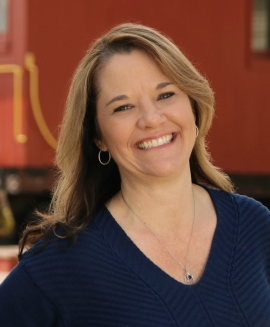
KerrieFlanagan_blue_PhotoCredit_SuzetteMcIntyre_CloseupWhen you meet the one, it all falls into place. You no longer have to carry the burden alone. The workload is shared, you encourage each other through the tough times and celebrate successes together. With the right partner, co-authoring can be an incredible experience that fuses the synergy and talents of two writers into creating one cohesive book.

About a year ago, I was talking with my writing friend Chuck. One of us (I don’t remember who) brought up the idea of writing something together. We both got excited and started discussing what we should write. He typically writes fantasy novels and I write nonfiction, short fiction and children’s books. Even our writing styles were (and still are) worlds apart, but that didn’t stop us. We both felt this could work. Not because of what we had written in the past, but because of us. Or personalities, work ethic and most of all our ability to trust one another to get the job done right.

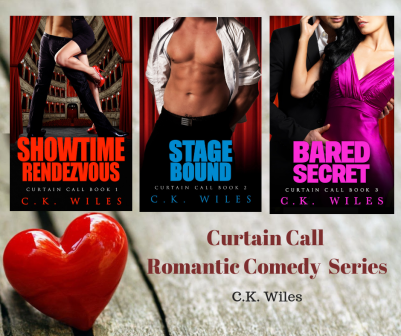
We took a strategic approach when choosing a genre to write and researched the top selling creating cohesive self-published books. According to Author Earnings, in 2017 romance had the second highest number of ebooks sold, right below literature & Fiction. We also learned that romance readers go through books like potato chips, self-published authors in this genre do well and series sell better than single titles. It wasn’t long before we decided to commit to a three-book romantic comedy series, under the pen name, C.K. Wiles, to see what would happen.

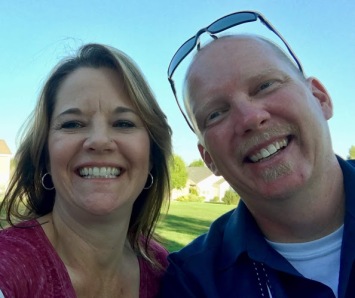
We fell easily into a system that works for us. Chuck and I would brainstorm the story Kerrie and Chuckidea together, which is a fun, creative part of the process. Chuck then creates a detailed outline of the story that we then go over together to make sure everything is there. He then takes off and starts writing. After he gets a few chapters completed, he begins sending them to me. I then go through to add more emotion, fill in any holes in the storyline and tighten the writing. Once he has sent me everything, I send the edited chapters back to him so he can make final adjustments and we talk through any areas that need more work. We both read it through one more time before sending the finished manuscript to a copy editor.
While our writing system made the process smooth, we found many components that make a co-author partnership successful.

Know Your Strengths

Each writer brings his/her own strengths to each book project. Figure those out early and embrace them. This is less about making sure tasks are equally divided and more about working with your strengths to ensure you publish the best book possible. Chuck is a fast fiction writer and not a fan of developmental editing. I am a slow fiction writer, but I love taking a rough draft of a manuscript and molding it into a great story. This works well for us and we can typically get a book finished in a little over two months. When it comes to the publishing aspects, I take the lead on that since I have experience in that area. We hire out the covers and copy editing, but I am able to format the books (print and ebook) and upload them into the various platforms.

 Trust Each Other

Find someone who you respect as a writer and are confident in their skills. Chuck and I knew each other for years and provided feedback and critiques on each other’s work. I value his opinion and suggestions with my writing, so I knew before forming this partnership that I could work with him and vice-versa. When it comes to co-authoring, this trust is crucial. You have to be confident that you and partner have the same goals and visions for the book. Then allow each other the freedom to make changes and adjustments to produce the best book possible. There will be times when you disagree, and that’s ok. Talk through them and come up with a solution you can both live with.

Leave Your Ego at the Door
Curtain Call Romance Series (1).pngWhen you are working with a co-author, you have to let go of your ego. The whole goal is to create a book you are both proud of and you are happy to have your name (or pen name) associated with it. Chuck and I have different writing styles, but with our co-authored books, our writing melds together to create a new, unique voice. It is not about, “this is mine” and “that is yours,” it is seeing it as “ours.” If we got caught up in claiming different parts as our own or not being willing to work as a team to create the best book possible, we wouldn’t get anything finished.

Because of our effective partnership, we achieved our goal of publishing three books in our Curtain Call series. We have enjoyed our co-author experience so much, we are moving forward together with other writing projects as we work to market our series and get those books into the hands of readers. Co-authoring can be amazing with the right person. If this is something that interests you, take the time to find another writer you trust, one whose strengths and weaknesses compliment yours and one who is ok checking egos at the door. Then you will enjoy a synonymous relationship where you can create literary art as one.

BONUS: As a thank you, click here for a free digital copy of, Showtime Rendezvous.

—–

Kerrie Flanagan is an accomplished freelance writer with over 20 years’ experience. She is thrilled to be writing romantic comedies with her favorite writing partner, Chuck Harrelson. Together, under the pen-name, C.K. Wiles, they are the authors of Showtime Rendezvous, Stage Bound and Bared Secret. In addition, Kerrie is the author of, Writer’s Digest Guide to Magazine Article Writing and 8 other books published under her imprint, Hot Chocolate Press.

You can listen to this episode of the Stark Reflections Podcast where Chuck and Kerrie talk more about their co-author experiences.

~~~~~~~~~~~~~~~~~~~~~~~~~~~~~~~~~~~~~~~~~~~~

Thanks, Kerri!

noreen

Writer Wednesday: Can the Can’t!

cantI don’t like the word “can’t.”

I don’t like people telling me I can’t do something. I’ve experienced some person  or another throughout my whole life telling me I can’t do this or I can’t do that. For too many years, I believed them.

Now, it just annoys me.

I made a goal to write six short stories in a month. Someone, another writer, said, “You can’t do that.” Their point: writing must organically develop from inspiration, forcing it unnaturally would create work which was unpublishable.

Three of those six stories have already been published. Can’t? HA!cant2

I spend time on photography, just because I like it. Unasked, another person inserted their opinion: “You can’t do that!” They had the idea that a person can only be good at one creative pursuit and I shouldn’t waste my time on another. I took up photography for the pure joy of capturing visual beauty, but I’ve had a number of photographs published now too!

Why are people so wrapped up in “can’t”?

Some people judge themselves based on how they know you. When you change or move forward or do something they never thought you would or could, it changes how they see you and, therefore, how they see themselves.

cant1Others have limited views of what they can accomplish and, therefore, what anyone can accomplish, so they believe their guiding you away from an upcoming failure.


Whatever their reasons, never let anyone keep you from spreading your wings, doing what you want, need, must do to achieve what you want.

Writers must be brave. Depart from the naysayers and live your fullest life. Travel. Love. Experience. Write. Try something new.

Do not listen to the “can’t”!

cant3

Writer Wednesday: Sharing is….?

climbing helping  team work , success conceptIn a writer’s group, I asked a specific person how one would use a certain program. They responded with, “I’d be glad to show you; my rates are very reasonable.”
I was shocked into silence. I asked a simple question, and they wanted to charge me for their answer?

But, then again, they have the right to earn a living by selling their knowledge.

How often have I given my knowledge for free? I could charge, I thought, for all the information and skills I’ve accumulated over the years.

But – wait a minute – writers really don’t make that much money, and we’re all strugglingshare3 in the same boat of trying to get our books, articles, short stories, or other out there to larger audiences.

Think of being on a life-raft and you are the one who has the clean water, or maybe the secret to cleaning the water, would you really sell it to another passenger? Some people would.

There’s a story from a Gladwell book about how post-its came about. (To simplify:) One worker in the paper department bumped into someone from their glue department, they both talked about what they were working on and the problems there were having. If only we could….   and boom – two collaborators came up with an idea worked together to bring that to fruition by sharing their expertise and invented something we all use (and made billions for 3M!).  Companies like 3M, Apple, Google, and others now use that theory to come up with new ideas, products, and solutions for every day problems!

shareWhen we all work together, we all become better humans. I want to share my ideas and experiences and share other writer’s with you, other ideas with everyone who desires to listen.

I have a job; I have many jobs. I’m not about to take advantage of others who are students in life or in writing and try to make a buck from them. I’d rather share my knowledge. I’d rather help my fellow passengers on this journey.

Thanks to all who have shared their knowledge with me. Thank you to those writers who give of themselves and their resources to make a better writing community.

When we work together, we can all benefit.

share1

Friday Feature: The Overlooked, The Forgotten, The Displaced: Unbridled Inspirations – By Dianna Brown


Close your eyes for a few seconds and think of the word ‘inspiration.’ inspirationWhat comes to mind? Are there images of magnificent places you’ve been, impressive people you’ve met, or extravagant stories that stimulates your soul, sparks your imagination and almost brings you to tears? These everyday inspirations lead me to be the best version of myself, however, this is not a source of inspiration for my writing.

What if I told you my writing inspiration is in the overlooked, the forgotten and the displaced? I see potential in the bleakness of a shadow. I take interest in peculiar sights. I notice the unnoticed. My desire to write stems from the stories that are cut short. Not just unrequited love stories, but stories attached to the abandoned—whether objects, people or places. I am intrigued by ghost towns, and the remnants of memories left behind.

Sometimes inspiration comes from one word. I have a fascination and love of words. Maybe it’s a name, a word I overhear in conversation, or one that stands out while I’m reading. To me, words hold weight and are springboards for the fine details of characters, setting and, sometimes, plot. I call these words, triggers. One word triggers a plethora of infinite possibilities. Couple this with an innate curiosity about the little things in life and inspiration calls out from every direction.

Inspiration also comes from pain. Writing is a resiliency of spirit. It provides an avenue to unleash hurt by navigating emotions through an alignment of fictitious stories. I also believe the act of writing is an acute desire to heal. This is true for reading as well, as there is nothing more enjoyable than being whisked away in the transfixation of a book.

I wonder sometimes if writing is a window into the subconscious. Much of what I write is not intentionally thought about, but comes out in a stream of consciousness that can surprise me. In dreams, I hear the music of the most haunting melodies and poetic lyrics. In the middle of the night you can find me scribbling what I remember by the light of my phone, blurry-eyed. Unfortunately, in the morning the indecipherable lines can never match the beauty of my dreams. Words that enter my mind are often ones I’ve never heard of before, and after I’ve written my word count goal, I will look up the definition of the word, to find it fits perfectly with the meaning of the sentence. Although it’s likely words stored in my subconscious, that I’ve encountered somewhere along the way, it shocks me nonetheless.

When I wrote the novel ‘Saltwater Joys’ I had inspirations from childhood memories of oral Newfoundland folktales and ghost stories—ones I still love to hear again and again. I explored these memories and extended the stories into what might have been, had the story taken a different turn. It is like a scavenger hunt in my mind. One idea gives me a clue to where I might go with the story or character next. Other inspirations for this literary fiction novel came from the works of Edgar Allan Poe, as well as many classic tales and poems that made me see the unimaginably intricate, and sometimes horrific, connections in life.

inspiration2I like to explore the darker sides of life, which is interesting to me because I am naturally a good humoured optimistic individual. There are an unbounding instances of inspirational dualities in life, the play between light and dark, life and death, vice and virtue, and I realize as a writer I am one of them.

Dianna Brown’s Website


~~~~~~~~~~~~~~~~~~~~~~~~~~~~~~~~~~~~~~~~~~~~~~~

Thanks, Dianna.

noreen