Writing with Bones

I think I read Writing Down the Bones maybe more than 20 years ago.  I do believe it’s still on my bookshelf. I keep books that have spoken to me.

writing-down-the-bones.jpgAlthough one website says it’s a good book for beginning writers, I think we might all find some inspiration in these pages.

In yoga, sometimes we go back to level one, we go back to the training. After so many years of doing it, so many teachers putting their own twists on it, so many times we’ve worked with (or around) an injury – it’s good to go back to the basics.

I see nothing wrong with doing that in writing either.

Writing Down the Bones – a book by Natalie Goldberg. This site gives you a generous sampling of the book.

I’m planning to pick it up again – see what else I can learn, what I might relearn.

Write, write, then write…

writingquote7

On my bookshelf

I’ve finished my Tana French detective series and didn’t want to go to bed without another book in hand. (Nevermind there are three on my bedside table).

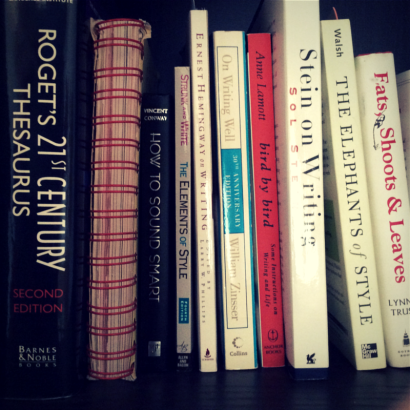
bookshelf.pngI began browsing my bookshelf, which is semi-organized: books I’ve read and loved. Books I want to read. School books. Writing books. and, of course, Poe books

I also have something mixed in that would seem, at first glance, not to belong. Books on psychology, the law, philosophy. I assume many writer’s bookshelves are this way.

A writer needs a wide variety of knowledge.

I know we have google at our disposal; however, I find reading books about, for example, the Psychology of Marketing allows me to get an in depth look that a wikipage or a few short articles are not going to give me. This allows me to create a more realistic character or more thorough background to make the story more believable.

For West End, I needed to understand two things, the idea of an absent or unloving mother, and the different forms depression can take. Anxiety runs throughout my work from Of Strays and Exes to Life of Clouds – which features children affected in different ways by the disappearance of their father.

I’ve heard handymen say they are the jack of all trades. I think writers are akin to that. We need to learn many things in order to live many lives.


Influence

Billy Collins (poet) believes we must read to be influenced, and suggests young people mimic their favorite writers in order to develop their skills and to develop their own voice.

I think many young writers do this. It’s a natural form of development.

Other writers are afraid to read when they’re lion.jpgwriting; they don’t want to be influenced. I think by the point you develop your own voice, you won’t so easily be influenced.

I think reading Michael Ondaatje’s In the Skin of a Lion was imperative for me to stumble across. I’d never attempted to intimate him – but he took my understanding of writing and voice to a whole new level. The storyline, the use of language, and the originality of his voice was unlike anything I’ve ever read and it blew my mind.

What reading Ondaatje did for me was to help launch my voice and style. I say this because at the time, I was mired in instructors and writers telling me no, no, no. They so strongly believed in their own way of doing things, they didn’t allow other writers to develop in other ways. It was limiting.

I’ve said this before and I’ll say it again – read far and wide! Do not be afraid of being influenced – open yourself to learning something new!


Free Reads

cofffee.jpgWhat’s better than coffee?  FREE COFFEE!  Or coffee that someone else bought for you.  And that’s what happened to me the other day. I ordered my coffee and the guy said – “On me – because you’re a great teacher!”

That coffee tasted better than any coffee I’d had of late.

So – for you – free reads.

Here’s a story of mine – originally printed in Avatar: All the Beautiful People.

And here’s some freebies from other authors: 23 Free Stories

If you’re a kindle subscriber, there are many more stories!

Blocked? How to shake it loose.

wall-art-2852231_960_720

Creative blocks are brought on by various reasons.

Writers, poets, artists, musicians need to express themselves. Sometimes, something plugs our flow of creativity.

My friend and I have found release in other creative outlets. She took a watercolor painting class. She feared, at first, that she was taking away from her writing; however, what she found is that it opened her flow and she felt even more creative and was able to add even more to her usual creativity.

I take art and other classes on a regular basis. Most of the time their directly related to writing, but sometimes they are not – but they still feed my imagination and add depth to my writing.

The Healer’s Daughter will be released on May 15th in The Ear. This story came pouring out after a six week drawing class I took at a local museum/gallery. And… I feel like it’s one of my best, filled with color and meaning.

Shake something loose by trying another outlet. You may come back stronger and more creative than before.

The Joy of Acceptance…

The acceptance of being your own person, writing in your own style, not mimicking or falling in line.

I get a lot more rejections than I do acceptances, but I don’t dwell on the rejections.

56635085_2231045933643692_5441110500400168960_o.jpg


There is an art to accepting or rejecting any work. And, although any acceptance is a happy occasion, a particular nice one such as this is always a joy to receive.

To update you on my publications of late –

Heaven’s Password is about a woman who finds herself in heaven, in a line reminiscent of the DMV, and is asked for a password. She’s not the most patient person and can’t remember ever setting up a password. Just like your bank account, you can’t get in without it! This was published in the The Survivor issue of P&G.

Bowie and the Basket Case is due out any day now from ID Press. When someone breaks into her house, Anna doesn’t readily find anything missing. But soon she realizes little things are disappearing and reappearing – is someone gas-lighting her?

The Healer’s Daughter was accepted by The Ear and will be out May 15th. Self explanatory title?

And finally, or so far, Voice of Eve has sent me the lovely acceptance above for my photography and three poems – as you’ve read – June 15th.

Thanks for reading, dear souls.

Wishing you much love and happiness.

noreen

Read Like a Wordsmith

wordDon’t read other words like a critic looking for the good, bad, and ugly. Read to discover what the author did well and how they did it.

This is reading like a writer, like a wordsmith.

Atwood says she will only review something if she likes it. She is not a critic and won’t write a bad review.

One of my friends told me he won’t even write a bad yelp review. He says, I praise those who deserve it, but it’s not my place to criticize.

I thought this was a great idea.

If you feel you must say something to alert other readers, then be honest and specific, but do add at least one good thing about the book, story, movie, service etc.


Dare to Suck

indexSteven Tyler of Aerosmith says, “Dare to Suck.”

It seems that he and his band mates have a regular meeting in which they bring the wildest, crappiest, outlandish ideas to toss them around and see if they work.

9 out of 10 of those ideas have to be trashed – but the tenth gets you something like “Dude Walks Like a Lady.”

Why not throw around ideas that seem completely outrageous?!  They can always be strays.jpgcanned later, but in the meantime you have some ideas to play with and you might, well, come up with something good.

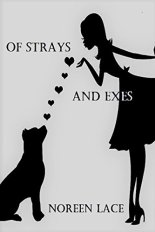
I wrote the line, “When I killed my neighbors dog…” My friends said, you can not use that. But I played with it to see where it might take me, and I wrote “Of Strays and Exes” by just playing with this strange line that came to me in a dream.

It was accepted for publication in Pilcrow and Dagger almost immediately and later made into a podcast. You can find it kindle now, or search P&G’s podcasts.

**Disclaimer: No animals were killed or injured in the writing of that story.


Hours Vs Pages – Writer’s Choice?

timeIn writing groups, the question often floats around the room, do you do hours or pages? Then there’s always some friendly disagreement over which is better.

I, personally, do hours. I get up and sit at my computer and write for a certain amount of time.

I’ve heard arguments that if I force myself to write at least a page or a certain number of words, I would be more motivated. But, see, I don’t have a problem with motivation. Many days, I get up with an idea ready to flesh out. Other days, I struggle. Like all writers.

One writer told me to do pages or word count, so when I’m done I’ll know I’ve accomplished something.

However, I recently heard an argument that made complete sense to me and might to you as well.

The writer said – do hours. That way, if you have a bad day, you know you can get up and Yellowed pages from a dictionaryleave when your work day is over. If you have a bad day when you’re doing pages – then you’ve struggled with a single page for however many hours and you’re less likely to want to come back the next day, and when you do come back, you’ll realize the page you struggled with has to be deleted anyway.
I imagine some people who chose pages to rush through on some days so they can get on to other things or give up when the page doesn’t come. One woman shared she writes pages so she can get on to other things.

I guess, I feel, I’m not in a hurry to “get on with other things.” Whereas it she sounded happy to get up and get on with her life, I’d sometimes like to sit and write longer than I’m normally free to do.

Perhaps the best choice for each individual is based on their personality. But I vote for hours. I still know I’ve accomplished something – stuck with my commitment and ritual – whether I have a page or a finished short story.