 When people ask where I’m from, I give my prepared answer. ‘Not really from anywhere. Seems like I’ve lived everywhere.’
And that’s true. Over my half-century of time, I’ve lived in Nebraska, Chicago, Minneapolis/St. Paul, Kansas (Overland Park and Lawrence), Seattle, back to Minneapolis/St. Paul, Providence, San Luis Obispo, and the city where I currently reside, Fresno, the fifth-largest city in California (behind Los Angeles, San Diego, San Jose and San Francisco, in that order) and the largest city in the United States disconnected from the Interstate Highway System. I like to claim that at this point, I’ve made nearly one lap of the country. Map it out and my path becomes a curious zig-zag that seems to alight nowhere and puts down roots only in memory.
That current spot Fresno isn’t exactly scenic. We’re kind of flat and agricultural, and if it 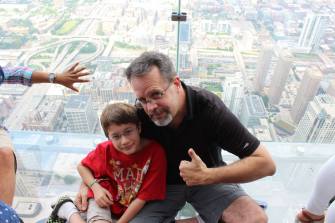 weren’t for triple-digit summer heat, certain sections would be indistinguishable from the desolate wilds of North Dakota. It’s so non-scenic that literature has more or less left it out, too. Need proof? A Goodreads count of books set in California is nearly 600. But books set in Fresno? Three. One by William Saroyan, better remembered here as ‘That Famous Guy Who Used to Ride His Bike Through Fresno’s Tower District.’ The second is ‘The Abortion’ by Brautigan, destined thanks to the area’s politics to be a non-seller. The third is by a guy who teaches journalism at Fresno State.
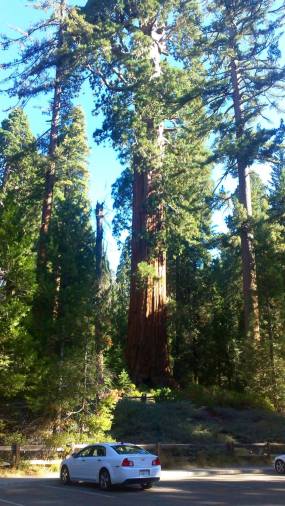
But despite being a setting apparently unworthy of literature, Fresno does have one advantage: It’s a quick two-hour drive from legendary settings. Yosemite. King’s Canyon. The majestic Giant Sequoias. Beaches along the Pacific, including my favorite, Avila Beach. If you’re feeling ambitious, you can invest an extra hour in that drive and — traffic willing — be in the Bay Area waiting for the ground to shake, or in Hollywood practicing sidewalk astronomy. So Fresno tends to be one of those places people pass through on their way to places far more interesting.
 But I suppose I’m grateful that living here encourages travel, even if it does so in a backhanded, better-off-getting-outta-here sort of way. That urge to hop in a car and see something else, that desire to book a plane ticket and go even farther, is not only great for the soul, it’s great for my writing.
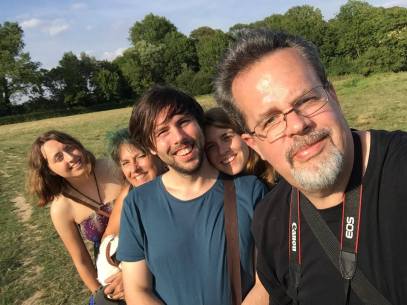
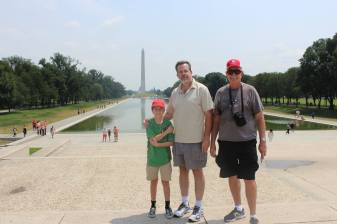
I’ve lived here for more than 12 years, and aside from an occasional drive to Avila for some seclusion in a hot tub, full-time work-at-home Dad Duty kept me from traveling much for those first seven years. I’ve made up for that drought over the last few years, though. First a memorable trip to see the sights in Chicago with my son when he was only eight, where we braved the Willis Tower’s ‘Ledge’ and walked the Magnificent Mile together. Then a three-generation trip to Washington D.C. — myself, my son, and my father, where we explored the sights of true democracy while plugging our ears to my father’s Faux News talking points. Next, two very memorable trips — one solo — to a place I find more inspiring than any other: the southeast of England, where people very dear to me make me feel more welcome than anywhere else, to the point where I call them ‘my English family’ most sincerely.
Being a shutterbug, my other travel trick is to photograph everything. You know that guy 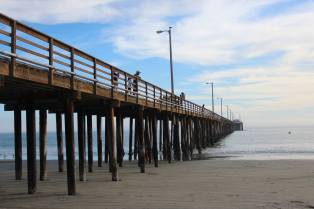 with the DSLR strapped around his neck, taking shots of everything from the loo signs to the historical plaques set across monuments managed by the National Trust? Yep, me. Those photos come in handy during the writing process, too. Need the feeling of ‘being there’ recreated? Go visit the photo album. Need to check a historical detail? Dig out the plaque pics and read the answer. Need to remember exactly what order the Roman gods appeared on a bas-relief at the Adler Planetarium? It’s right there in the photo.
 As a writer I carry those places with me, and whether I want them to or not, they find their ways into my writing. My Nebraska origins find a home in my writing as Kolej, a small town with a big dark secret in my coming book ‘Lillie Augustine.’ Minnesota and Providence figure prominently in my memoir about full-time fatherhood, titled ‘One Ugly Mother.’ That memorable Chicago trip finds itself in another draft titled ‘Fortunate Consolation,’ where a father leads his special-needs son on a journey to escape the trickster Goddess of Fate. Two very special places — West and East Hills in Hastings, East Sussex — will soon find themselves adapted as different worlds entirely in a collaborative science-fiction epic. That Pacific hamlet of Avila Beach was the setting for my published novel ‘Davey’s Savior,’ an intimate story set next to the pier on a very small stretch of an epic beach. And Fresno? While the city itself may make me want to be elsewhere, its agrarian nature still found its way into a draft my editor promises will be a moneymaker: the saga of ‘Lifeboat.’
You take your rewards where you can get them, right? So, until I have a best seller, it seems my challenges come in recreating places dear to me in words, and rewards through memories made in unforgettable places. With a little luck, I’ll make them equally memorable for my readers. Because after all, what is a good book if not a zig-zag journey that takes root in your readers’ hearts?
Timothy Savage – Author of Davey’s Savior
~~~~~~~~~~~~~~~~~~~~~~~~~~~~~~~~~~~~~~~~~~~~~~~
Thank you, Timothy. I wholeheartedly agree!


 Chatting with my students, I reminded them I didn’t have google nor a cell phone and, if I needed to look up information, I had to walk to the library and figure out the card catalogue. (Of course, I added the obligatory “walk ten miles in the snow up hill both ways”).
 I think I would be, like many people today, too distracted to focus on creating other worlds and investigating the motivations of people/characters.
 I guess I’m saying, boredom can be good for you. Daydreaming, thinking, and spending an afternoon lounging without distraction can be helpful to a writer. We need to allow our minds wander sometimes, see where they go; keep your mind from distraction, turn off the tele, the cell, the computer, and be inhibited by the lack – your mind will rebel and it will begin to create.
 In a writer’s group, I asked a specific person how one would use a certain program. They responded with, “I’d be glad to show you; my rates are very reasonable.”
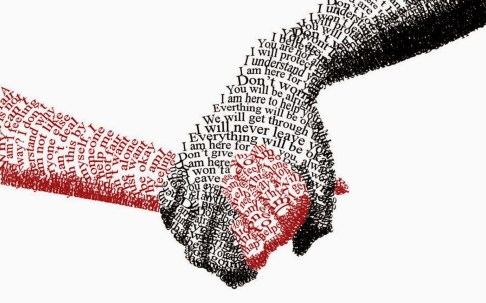 in the same boat of trying to get our books, articles, short stories, or other out there to larger audiences.
 When we all work together, we all become better humans. I want to share my ideas and experiences and share other writer’s with you, other ideas with everyone who desires to listen.

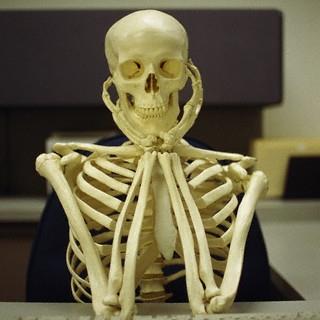 Waiting is the easy part.
 I consider it is not a fear of failure – because, by not trying, aren’t they failures already? Or maybe that’s it – they can claim they never “got their chance,” when, in fact, they never actually took a chance. That’s the true failure.
 What comes to mind? Are there images of magnificent places you’ve been, impressive people you’ve met, or extravagant stories that stimulates your soul, sparks your imagination and almost brings you to tears? These everyday inspirations lead me to be the best version of myself, however, this is not a source of inspiration for my writing.
 I like to explore the darker sides of life, which is interesting to me because I am naturally a good humoured optimistic individual. There are an unbounding instances of inspirational dualities in life, the play between light and dark, life and death, vice and virtue, and I realize as a writer I am one of them.

 Sometimes, I wish I was the driver of the Karma truck. But, I suppose, being a writer is better. Still have the problem of sitting too long, but we get to exact revenge too. The best kind of revenge – in print.
 But, first, I had to roll my eyes and throw back my head. I just wanted some sympathy, some empathy. But she gave me more than that – she gave me purpose, building from ashes, and a way for me to transmit sympathy to another by relating to a scenario which many of us have experienced. (I know, still too vague.)
 I started writing when I was a freshman in high school. My very first writing efforts were poems filled with rhymes and cliches. During my sophomore year of high school I took a creative writing class, the only creative writing class I’ve ever taken. I hated it. I especially hated the teacher. She liked this weird, semi-beatnik/hippie style of writing, poems filled with “crazy” images like “throwing batteries at dead cows” and things that tasted like “copper pastries”. She liked short stories with bizarre characters and situations, things that were weird for the sake of being weird; weird that did not move the story in any direction.
 I studied abroad in Granada, Spain during my junior year at the University of Illinois at Urbana-Champaign in 2003. I fell in love with the country and with a young woman in my study abroad group. Today, Spain represents the unattainable in my life. I have since developed an anxiety/claustrophobic disorder and refuse to fly. I can no longer physically travel to Spain. I can only travel to Spain through my mind, through memories. The young woman I fell in love with in Granada was also the first woman I ever truly loved. It was an experience of first-time, authentic love, love for a person and place. I know I can never recapture that kind of intensity in regards to love. One can only feel that kind of love when young. Everything after that is fine, marriage and such, but it will never be as pure or intense. And that’s what Last Night in Granada is about. It is a story about the unattainable.


 , originally released in 1970, rewritten and rereleased in 2003.
 For the original writing of The Gunslinger, King has this to say about his younger self, “too many writing seminars, and had grown used to the idea those writing seminars promulgate: that one is writing for other people rather than oneself; that language is more important than story; that ambiguity is preferred over clarity and simplicity…”
 heavy, story slipping under the covers of darkness of words and rhythm.


 Set a timer or an alarm on your watch or cell phone for five or six minutes and write whatever comes to mind. If you can’t think of anything, then use one work to start. The word I use in my classes is “movies.” Perhaps you could use “love”, “news”, “dog.” Any word will actually do. Don’t worry about what you’re writing or where it’s actually going – just write and if at the end of five minutes all you have is a freewrite about rover doing his business on the neighbor’s lawn, then you haven’t wasted that much time. Do it again.

 Noreen Lace
You must be logged in to post a comment.