Notebook or Computer?

books.jpg

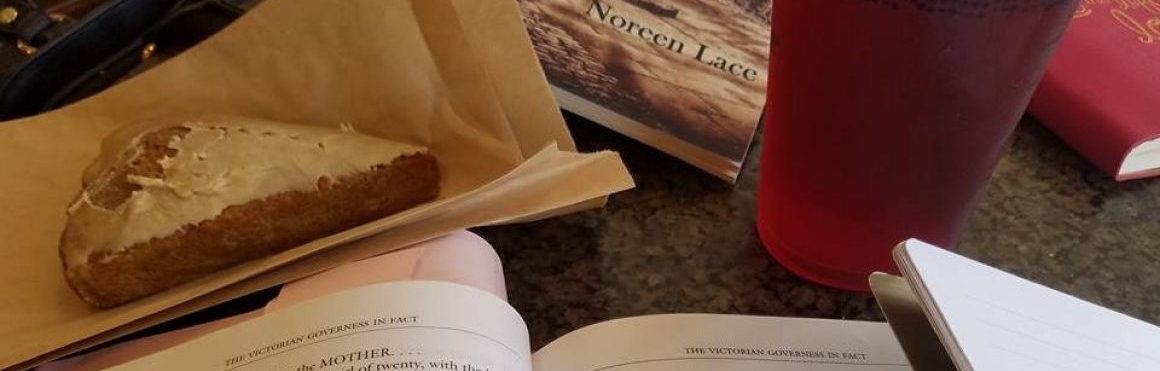
Dan Brown, Neil Gaiman, Judy Blume, and a number of other authors talk about writing in notebooks.

Blume says she fills it up from start to finish. I have to admit, a have a number of half empty notebooks. I keep them in various places, the car, the bedroom, dining room table, my desk. Then, I move them around, put them elsewhere and begin a new one before I rediscover the one I previously used.

I used to use big composition notebooks. These days I use smaller journal types.

Studies show that writing by long hand in a notebook uses a different part of the brain.

I wrote Grandma’s Last Secret by long hand in a notebook.  I wrote the whole of West End in a notebook before I ever thought of touching the laptop. I feel like there’s a difference for me. And sometimes, the notebook is easier on the eyes, easier on the brain. I don’t feel as much pressure from a pen and paper that I do when I sit in front of the computer.

But I do write on the computer sometimes too. I sit down and I’ll write a story, sometimes, from start to finish on the computer without considering a notebook.

Do you use notebooks? Or computers? or Both?  Feel free to share in our facebook group.

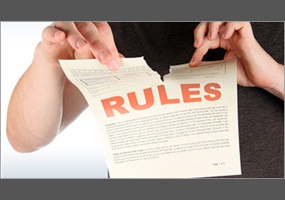
Are you a rule follower?

rules.jpgJudy Blume recounts a story in which she took a writing for children class and they set out the rules involved in writing for young children, then she went and broke all of them.

Rules have purpose, have value. They give us the basics.

Hear me out on this – I believe we need to know the rules. We don’t need to necessarily continue to follow the rules.

Picasso followed the rules. But when he was comfortable and confident, he broke them in order to develop his own style.

Every writer should know the rules of writing. Even if they choose not to follow them.

Poetry Month

Life.png

From the Dead Poet’s Society.

And true. True. True. Would life have any depth without the stories and poetry we share?

Teaching Poetry

poetry_3

“In high school your teacher made you analyze a poem and then told you that you were wrong, correct?”

Applause. Nods. Agreement.

If at all possible, stop doing this to students. That is why so many people dislike poetry. They feel it’s too hard to understand and when they try, they are told they are wrong.

In my class, I allow students to choose which poems they want to read. Then I ask why they chose those poems. They all have their own reasons, looking for something interesting, the shorter the better, some element they can relate too.  And I ask them what they got out of it.

Not what it meant. Not to analyze it. What did you get out of it? No wrong answers, no judgement.

My students have told me that I’ve allowed them to love poetry, to appreciate it for whatever they feel it adds to their lives.

We go over the elements, the possible meanings; but, mostly, I just want them to love poetry again. And it works.

I’ve taken away the fear of being wrong, of being stupid, and gave them the sheer enjoyment of language.

Deeper meaning will come – at their own pace – and when/if they want it to.

Women Writing

women writing

Help!….

typewriter-judy-blume-only-advice-1-340x200

Study the Masters….

faulkner“Read, read, read. Read everything — trash, classics, good and bad, and see how they do it. Just like a carpenter who works as an apprentice and studies the master. Read! You’ll absorb it.
Then write. If it’s good, you’ll find out. If it’s not, throw it out of the window.”


Some people feel they should not read others or study the masters because it will influence their voice; however, experts recommend that is where you begin in order to develop your voice. Finding your voice takes time and it takes writing, regardless of who you read.  But you do, without a doubt, need to read far and wide.

Weathering the Storms

weather-storms-thumbnail

Is there anything worse than a bad review?  Probably, but we don’t think so when we get one.

But ask yourself why you’re upset.

1. Is there some truth to the review? No – then forget it! Yes – then what is it?

One woman relayed that her one star review mentioned grammar and punctuation errors. She said, “I know there are some, but there’s not that many!”

It seems she knew she put out work that was not of a superior quality; she can’t be upset when someone calls her on it.

2. Is it someone who just wishes to malign you? Accept that there are going to be haters. Everyone has them. Remember this quote: “Well behaved women rarely make history.” If someone dislikes you – you might just be doing something right.

3. Someone told me – it’s only the writer who reads all the bad reviews. I think that’s supposed to make us feel better. But it’s true. When you look at reviews, do you search out every bad review there is? or do you read maybe the top five or ten of all the reviews?

I, personally, read a few of each. A few of the five star, a few of the three star, and a few of the one star – critical readers can tell if someone has an ax to grind or if they have real concerns.

Motivation Vs Inspiration

inspiratin.jpgI hear a number of writer’s ask about how to get inspired or keep inspiration. I think they’re confusing inspiration with motivation.

We are inspired by the things around us, an odd phrase, a beautiful scene, a great idea. The motivation comes to write it down. You must keep motivated long after the inspiration abates.

And that, ladies and gentlemen, is where dedication comes in.

With dedication to the craft, even when motivation and/or inspiration fail you – you will not fail.

Inspiration is just the beginning! Stay dedicated. Motivation will follow.

What Do the Flowers Mean?

lily

Sometimes a flower is just a flower, but sometimes the flower is a tell tale sign, a foreshadowing of what is to come. That’s for the writer to decide.

However, I think the writer must stay consistent. If you’re using flowers in the story and use a lily to insinuate death or disaster, then you can’t just throw a carnation in later without thinking what that might mean.

Good stories have that layering that critical readers can spot and will enjoy. However, I think, too much can kill a story. As I said, if you’re using flowers as symbols stick with that. If you add flowers, the alignment of the stars, the colors of the curtains, and grandma’s foretelling – that might be too much. It’s like hitting the reader over the head with the symbolism and it’ll detract from the storytelling.