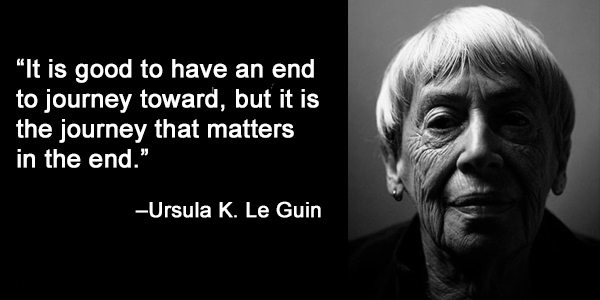
Not writing scares me….

ghostly.pngWrite what scares you…..

This is a poetry prompt given to me in one of my graduate level classes.

I don’t think it has to be just for poetry.

Experts tell us we should do something that scares us every day. I don’t know. I’ve done quite a lot of things that scare me – crossing the highest bridge in North America, swimming with sharks, – but those are kinds of scary that gives you a rush. Still valid to write about.

But in that assignment and poem, I wrote about a missing girl. Because those are the types of things that do scare me – when children go missing.

I wrote:

Have you seen her pass this way?

Shoe found, white.

Blood on the laces….


Write about what scares you….


Feel free to share!


Help!….

typewriter-judy-blume-only-advice-1-340x200

Weathering the Storms

weather-storms-thumbnail

Is there anything worse than a bad review?  Probably, but we don’t think so when we get one.

But ask yourself why you’re upset.

1. Is there some truth to the review? No – then forget it! Yes – then what is it?

One woman relayed that her one star review mentioned grammar and punctuation errors. She said, “I know there are some, but there’s not that many!”

It seems she knew she put out work that was not of a superior quality; she can’t be upset when someone calls her on it.

2. Is it someone who just wishes to malign you? Accept that there are going to be haters. Everyone has them. Remember this quote: “Well behaved women rarely make history.” If someone dislikes you – you might just be doing something right.

3. Someone told me – it’s only the writer who reads all the bad reviews. I think that’s supposed to make us feel better. But it’s true. When you look at reviews, do you search out every bad review there is? or do you read maybe the top five or ten of all the reviews?

I, personally, read a few of each. A few of the five star, a few of the three star, and a few of the one star – critical readers can tell if someone has an ax to grind or if they have real concerns.

Women’s History – Women Writers

le-guin-1

A Writer’s Space

2018_09_30+Scientific+writing2Do you feel the need to have a certain, special place to write? Maybe you have little items you feel inspire you sitting around your desk, computer, in the same room, maybe there is a stone of carnelian or citrine to spark creativity, or even big dark shades to hide you from the world.

My writing space is usually the dining room table, two windows, a bird feeder on one so my cat, usually sitting beside me can be entertained. But I also write on the couch in the living room with a lap desk, and sometimes in my bed.

Dan Brown (author of the Da Vinci code and many others) believes writing space isn’t important. It’s the ritual and the commitment, not the space. He relates a story in which he was visiting his parents and he wrote in the laundry room, lap top on the ironing board while sitting on milk crates with the washer running – because he needed an undisturbed space.

I’d say that space would disturb me – and talk about holes in a story. My apologies, Mr. 0 v7CyD5RM41-JF6Kk.jpgBrown. However, if he gets up at 4 a.m. to write (as he states), who is doing laundry at that time? And, if the laundry was put in later, then obviously someone came in to disturb you. And, by that time, he couldn’t move to another room?  Okay, sorry, sorry. Back to the point.

We do need a space to write. Ideally, we want to have certain creature comforts around us; for me, it’s a cup of tea. However, I have written on concrete benches, lying across the hotel bed, in a tiny corner that had a table and chair, in coffee shops with noise, and alone in my house at 4 a.m.

The point is our desire for the ideal space should not limit our writing time or commitment (and I think this was Mr. Brown’s point as well). If we limit our writing to the ideal, we’ll have an excuse to not write when any little thing is out of place.

Brown states he writes 365 days a year. That’s what this blog is about, right? 365. It’s about commitment. It is my challenge and my commitment to write 365. I’m doing okay, regardless of the space I’m writing in.

Monday Motivation


fork

Writing exercise:

Take a very common thing from your kitchen and write a poem about it.

It will most likely become a poem about something else.

Share in our Facebook group!

I think I’m going to try a spoon.  (There’s actually a pretty famous poem about a spoon – by Billy Collins)


An Author’s Test

testIf someone says they read your work, it does not matter whether you believe them or not or whether they did or not – Don’t test them!

I work with an American Pen Award winner – he is the epitome of modest and professional.  I ran into him and said, “loved the book.” He said thank you. And that is all we should say!

I had one writer begin asking me questions about their work. I felt they didn’t believe I’d read their work, so they wanted to test me.

Maybe it was they just wanted to ask my opinion or probe my analysis of certain aspects of their work. But, see, I read for pleasure.I’m unprepared to answer questions other than what I enjoyed about the novel.

There are times I’ve read  to analyze someone’s work because I wanted to learn something from or when they’ve asked me too because they want my opinion on one or more aspects of their work.

So – when a writer asks some in depth question about some random detail on page 145 – I’m test1really sort of stopped short.

I read nightly. If I read their book or story last week, I’ve probably read another book and 50 student essays since.  If I read it last month, we’re talking at least two books, possibly three, and over 124 student essays and 300 short literature responses from students.

Last, but not least, it’s just plain rude. When someone has told me they’ve read my story, I say thank you. If they want to ask me questions or say more, I’m willing to listen. But I leave it to the reader.


This is a GREAT BOOK!!!

citizen_rankine-cover-imageclaudie

Descending into Madness…

logo1-the-descent-into-madnessSometimes, that’s what writing feels like.

I recently finished a particularly difficult story. I’d written it over the summer. Then life happened, and while I wrote here and there and started new things, finished other things, submitted, and even came back to this story repeatedly, it refused to be finished.

This story became the terrible twos who kept throwing a spoon down on the floor and crying for me to pick it up only to throw it down again.

When my real children did this – I left the spoon on the floor and shrugged, “guess you’re using your fingers now,” but you can’t do that with a story, huh?

But what you can do with the story – as with all writing – is keep showing up. That’s what I did. I kept putting that story in front of me and trying to work out of the kinks. We can’t give up the story when it gets hard.

One of my favorite stories is one Stephen King tells about Carrie. I’m paraphrasing here: His wife found Carrie in the trash and brought it back to him, saying something to the effect, you can’t stop just because it got hard.

(of course these are the days when we used typewriters or notebooks and were able to physically put those in the trash and not just click delete, which, by the way, don’t ever do!  Ignore the story, put it elsewhere, but don’t delete it!)

And I’ve read/heard the above King/Carrie story a few different ways, so it may not be exact; however, the point is – You can’t give up a story because it’s hard.

Even if the story never gets published – I learned something by writing it, by sticking it out.

The new term in student success is “Grit.”  (I know, it’s also an old John Wayne movie). It alludes to the idea that the students who struggle and push through who will become a successful student and graduate. It applies across the board – school, life, and definitely writing! (Not surprisingly, to that movie as well).

I recall another story I’d had a particularly challenging time with. And just when I thought it was finished – the dreaded blue screen!  It was gone. Memory wiped. I gave it a few weeks (and a long weekend in New Orleans) and came back at it.  “Psychic Surprise Party” was published six months later in The Oleander Review. (It will be republished in May online).

Even if this one is never published, I learned something by doing it. I’ve learned something in all of these not-yet-published stories and poems. We are writers. We are driven to write. It is our little corner of the puzzle-solving-world in which we exist.

The next one might be easier. And maybe it’s smilethis challenging one that will push something out of the way for the next one. Maybe the next one will be difficult too, but we’re going somewhere, learning something – keep pushing through.

That’s what makes us writers.

And we’re all a little mad here…..


To Publish or not to Publish – is that really a question?

To some people it is.

I have a friend who picks and chooses where he wants to be published so carefully that he submits maybe once or twice a year at most. He hasn’t been published in maybe 6 or 8 years.

He’s an extremely good writer. Better than I.  colllins

He says, he wants to only be published where his name will be seen, where it will matter.

I took this to mean he didn’t approve of my many publications with small presses, some of which no one has ever heard.

What do you value and why? Ask yourself.

Billy Collins, btw, began publishing in what he refers to as fly by night or small presses of which no one ever heard.