Writing with Bones

I think I read Writing Down the Bones maybe more than 20 years ago.  I do believe it’s still on my bookshelf. I keep books that have spoken to me.

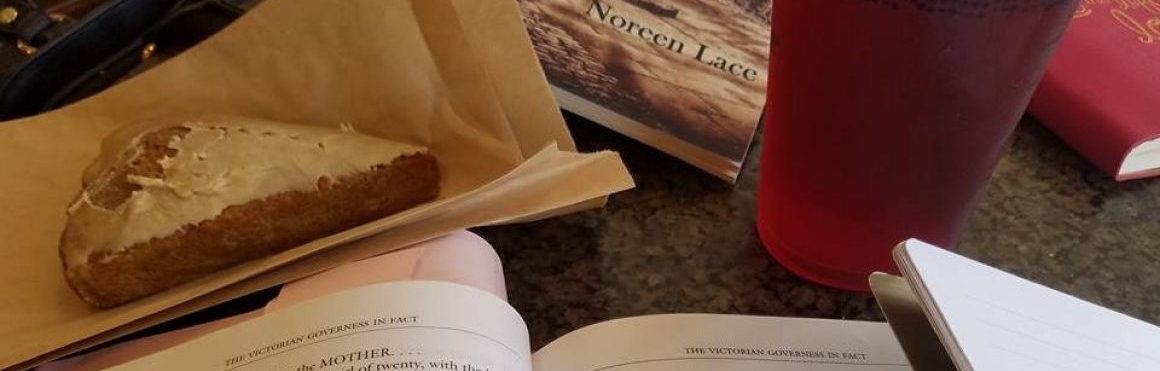
writing-down-the-bones.jpgAlthough one website says it’s a good book for beginning writers, I think we might all find some inspiration in these pages.

In yoga, sometimes we go back to level one, we go back to the training. After so many years of doing it, so many teachers putting their own twists on it, so many times we’ve worked with (or around) an injury – it’s good to go back to the basics.

I see nothing wrong with doing that in writing either.

Writing Down the Bones – a book by Natalie Goldberg. This site gives you a generous sampling of the book.

I’m planning to pick it up again – see what else I can learn, what I might relearn.

On my bookshelf

I’ve finished my Tana French detective series and didn’t want to go to bed without another book in hand. (Nevermind there are three on my bedside table).

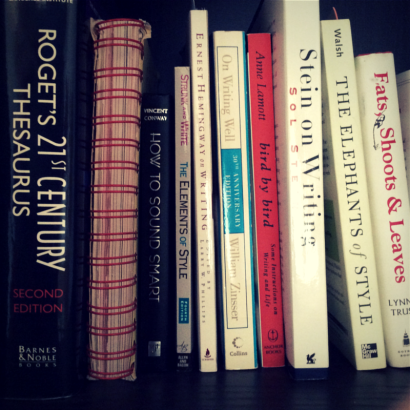
bookshelf.pngI began browsing my bookshelf, which is semi-organized: books I’ve read and loved. Books I want to read. School books. Writing books. and, of course, Poe books

I also have something mixed in that would seem, at first glance, not to belong. Books on psychology, the law, philosophy. I assume many writer’s bookshelves are this way.

A writer needs a wide variety of knowledge.

I know we have google at our disposal; however, I find reading books about, for example, the Psychology of Marketing allows me to get an in depth look that a wikipage or a few short articles are not going to give me. This allows me to create a more realistic character or more thorough background to make the story more believable.

For West End, I needed to understand two things, the idea of an absent or unloving mother, and the different forms depression can take. Anxiety runs throughout my work from Of Strays and Exes to Life of Clouds – which features children affected in different ways by the disappearance of their father.

I’ve heard handymen say they are the jack of all trades. I think writers are akin to that. We need to learn many things in order to live many lives.


Taboo topics

taboo.jpg

I was looking up taboo topics in America. It’s different for many cultures. In America, sex, race, politics, and religion are among the ones that make most people uncomfortable.

The problem with these topics is the ignorance surrounding them. Many people have insufficient information and are uncertain how to talk about the topics.

A good way to start is to open the conversation admitting to ignorance. I’m not sure that works as a writer – but we should be humble and avoid making blanket statements. But I have always believed part of being a writer was to educate people.

I don’t know that I’ve crossed any lines (no angry emails have appeared in my inbox), Perhaps I’ve been subtle enough to make someone think but not offend anyone. (Except possibly with “Harvey Levin Can’t Die.” 🙂

And although some people feel that is their job to “wake people up” by offending them, I take a different stance. While I am an honest person, it is my goal to be more effective than offensive.

I wonder if anyone has taken up any of these – or other – taboo topics and what the response was?

Blocked? How to shake it loose.

wall-art-2852231_960_720

Creative blocks are brought on by various reasons.

Writers, poets, artists, musicians need to express themselves. Sometimes, something plugs our flow of creativity.

My friend and I have found release in other creative outlets. She took a watercolor painting class. She feared, at first, that she was taking away from her writing; however, what she found is that it opened her flow and she felt even more creative and was able to add even more to her usual creativity.

I take art and other classes on a regular basis. Most of the time their directly related to writing, but sometimes they are not – but they still feed my imagination and add depth to my writing.

The Healer’s Daughter will be released on May 15th in The Ear. This story came pouring out after a six week drawing class I took at a local museum/gallery. And… I feel like it’s one of my best, filled with color and meaning.

Shake something loose by trying another outlet. You may come back stronger and more creative than before.

The Joy of Acceptance…

The acceptance of being your own person, writing in your own style, not mimicking or falling in line.

I get a lot more rejections than I do acceptances, but I don’t dwell on the rejections.

56635085_2231045933643692_5441110500400168960_o.jpg


There is an art to accepting or rejecting any work. And, although any acceptance is a happy occasion, a particular nice one such as this is always a joy to receive.

To update you on my publications of late –

Heaven’s Password is about a woman who finds herself in heaven, in a line reminiscent of the DMV, and is asked for a password. She’s not the most patient person and can’t remember ever setting up a password. Just like your bank account, you can’t get in without it! This was published in the The Survivor issue of P&G.

Bowie and the Basket Case is due out any day now from ID Press. When someone breaks into her house, Anna doesn’t readily find anything missing. But soon she realizes little things are disappearing and reappearing – is someone gas-lighting her?

The Healer’s Daughter was accepted by The Ear and will be out May 15th. Self explanatory title?

And finally, or so far, Voice of Eve has sent me the lovely acceptance above for my photography and three poems – as you’ve read – June 15th.

Thanks for reading, dear souls.

Wishing you much love and happiness.

noreen

Dreamcatcher Poem

dreamcatcherThe dreamcatcher is supposed to catch bad dreams and let the good dreams through.

Write down an image remembered from a dream, a word, a sound, a thought, into each space.

Then put them together – or leave them as is.

A dreamcatcher is random. Your poem might be as well. Yet, at some point, some place, in some way, it’ll all come together.

A Writer’s Space

2018_09_30+Scientific+writing2Do you feel the need to have a certain, special place to write? Maybe you have little items you feel inspire you sitting around your desk, computer, in the same room, maybe there is a stone of carnelian or citrine to spark creativity, or even big dark shades to hide you from the world.

My writing space is usually the dining room table, two windows, a bird feeder on one so my cat, usually sitting beside me can be entertained. But I also write on the couch in the living room with a lap desk, and sometimes in my bed.

Dan Brown (author of the Da Vinci code and many others) believes writing space isn’t important. It’s the ritual and the commitment, not the space. He relates a story in which he was visiting his parents and he wrote in the laundry room, lap top on the ironing board while sitting on milk crates with the washer running – because he needed an undisturbed space.

I’d say that space would disturb me – and talk about holes in a story. My apologies, Mr. 0 v7CyD5RM41-JF6Kk.jpgBrown. However, if he gets up at 4 a.m. to write (as he states), who is doing laundry at that time? And, if the laundry was put in later, then obviously someone came in to disturb you. And, by that time, he couldn’t move to another room?  Okay, sorry, sorry. Back to the point.

We do need a space to write. Ideally, we want to have certain creature comforts around us; for me, it’s a cup of tea. However, I have written on concrete benches, lying across the hotel bed, in a tiny corner that had a table and chair, in coffee shops with noise, and alone in my house at 4 a.m.

The point is our desire for the ideal space should not limit our writing time or commitment (and I think this was Mr. Brown’s point as well). If we limit our writing to the ideal, we’ll have an excuse to not write when any little thing is out of place.

Brown states he writes 365 days a year. That’s what this blog is about, right? 365. It’s about commitment. It is my challenge and my commitment to write 365. I’m doing okay, regardless of the space I’m writing in.

Far and Wide and Every Lost Minute.

Stack-of-books-great-education-1000x520

I was doing an exercise in a seminar I was taking. I was given an article; a long, seemingly rambling, however, well executed nonfiction piece on the downfall of certain companies. Just writing that sentence feels painful. Why did I waste my time?

But, see, it turned out not to be a waste of time. In a lecture, recently, a similar topic came up and I was able to give a reasonable discussion about how this downfall relates to the business of writing.

Wow – I did not see that coming.

That is something I’ve always done, however. I’ve actively added to my body of knowledge by reading far and wide, not limiting myself just to my genre or even just to fiction.

What I’ve found is that this adds depth to my characters, validity to my narrative, realism to my stories. I’m don’t limit myself, therefore, my characters seem more authentic.

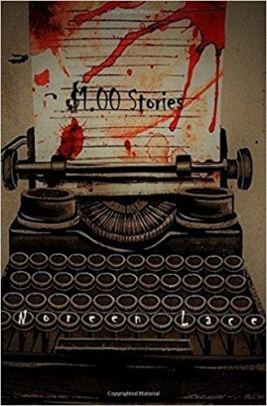
In 51WOVy2yYkL._SX326_BO1,204,203,200_$I.00 Stories, I developed the homeless man from articles I’d read about mental illness and the homeless. In West End, I was able to add more depth to my character having read psychological texts on motherless daughters.

My advice is always – read far and wide and don’t limit yourself. Read when you’re waiting in line at starbucks, read before bed, read when you wake up, or you’re waiting to pick up your kids, or meet your friends. Get off of facebook and twitter or stay on those sites and subscribe to the digital magazines.

I hear people say – I don’t have time to read. Yes. You. Do. Find where you’re losing time and capture it.


Descending into Madness…

logo1-the-descent-into-madnessSometimes, that’s what writing feels like.

I recently finished a particularly difficult story. I’d written it over the summer. Then life happened, and while I wrote here and there and started new things, finished other things, submitted, and even came back to this story repeatedly, it refused to be finished.

This story became the terrible twos who kept throwing a spoon down on the floor and crying for me to pick it up only to throw it down again.

When my real children did this – I left the spoon on the floor and shrugged, “guess you’re using your fingers now,” but you can’t do that with a story, huh?

But what you can do with the story – as with all writing – is keep showing up. That’s what I did. I kept putting that story in front of me and trying to work out of the kinks. We can’t give up the story when it gets hard.

One of my favorite stories is one Stephen King tells about Carrie. I’m paraphrasing here: His wife found Carrie in the trash and brought it back to him, saying something to the effect, you can’t stop just because it got hard.

(of course these are the days when we used typewriters or notebooks and were able to physically put those in the trash and not just click delete, which, by the way, don’t ever do!  Ignore the story, put it elsewhere, but don’t delete it!)

And I’ve read/heard the above King/Carrie story a few different ways, so it may not be exact; however, the point is – You can’t give up a story because it’s hard.

Even if the story never gets published – I learned something by writing it, by sticking it out.

The new term in student success is “Grit.”  (I know, it’s also an old John Wayne movie). It alludes to the idea that the students who struggle and push through who will become a successful student and graduate. It applies across the board – school, life, and definitely writing! (Not surprisingly, to that movie as well).

I recall another story I’d had a particularly challenging time with. And just when I thought it was finished – the dreaded blue screen!  It was gone. Memory wiped. I gave it a few weeks (and a long weekend in New Orleans) and came back at it.  “Psychic Surprise Party” was published six months later in The Oleander Review. (It will be republished in May online).

Even if this one is never published, I learned something by doing it. I’ve learned something in all of these not-yet-published stories and poems. We are writers. We are driven to write. It is our little corner of the puzzle-solving-world in which we exist.

The next one might be easier. And maybe it’s smilethis challenging one that will push something out of the way for the next one. Maybe the next one will be difficult too, but we’re going somewhere, learning something – keep pushing through.

That’s what makes us writers.

And we’re all a little mad here…..


Approaching Authenticity – Creativity, Psychology, and Christian Faith by Bozena Zawisz

bozenaSomething I often hear as a counselor is clients speaking about the weight of expectations they feel they’re carrying on their shoulders; and the frustration, guilt, or resentment they feel in relation to them.

Many of these expectations are often tied to a particular role they “fall into,” that contains within it: unexamined assumptions relating to some action(s) they feel they should be doing, rules for communicating (what they feel they should be saying, and how), pressures to take on board “shared” viewpoints…

Often they express feeling as if they lost their center or connection with themselves.

Some roles are consciously/purposefully chosen. I choose to relate to clients within the boundaries of a counselors’ role. At other times, individuals can fall into an interaction where there is an expectation/pressure to engage in a “role-play”… mindlessly… pulled by some emotional pathway, deeply engraved by a lifetime’s worth of conditioning… For example, many adults continue to feel strongly affected by their parents’ perceived expectations of them…

Sometimes individuals’ roles within relationships include assumptions about hierarchy (in some cultures more than others), expectations relating to distributions of privileges, expectations relating to the division of weight that is placed on the inner experience of each individual. Often, the language which does not fit an expected role-script is unwelcome, discouraged…

One of my favorite historical examples of a figure who modeled the importance of rising beyond roles and cultural expectations, and embodied authenticity and inner strength, was Jesus. I admire the way he kept right away from describing himself via popular roles or politically loaded terms of the time, which he perceived as a poor fit with his life’s journey and purpose.

I love the way Jesus preferred to describe his inner experience and communion with God using creative metaphors-that beautifully made use of people’s familiar associations (e.g. used imagery such as harvests, laborers, etc.) yet transcended the language of the well established familiar social and political roles, traditions, expectations, and their underlying beliefs and perceptions.

Jesus had a hard time with the Pharisees. Perhaps they perceived his non-compliance with the established roles that reinforced their power and privileges-most unsettling. Jesus smacked too much of personal power, disregard for the authority of political/social pecking order…

Possibly to connect with a sense of inner peace, he was documented to withdraw into solitude oftentimes, perhaps in this way he restored his strength by nurturing his connection with God. Just as in his case, I believe that it is a helpful first step in our journey towards authenticity to find ways to connect with a loving place of self-care and strength within ourselves.

Given the powerful focus our society (and at times other people) have on trying to hijack strong within_frontour attention and encourage us to look to the outside of ourselves for fulfillment–creative expression of, and reflection on, our inner experience allows us to re-center and reconnect with our inner journey of transformation.

And, support us in reclaiming control over reconstructing our experience so that it resonates with our values, faith, the direction of our journey, and more closely aligns with our truth.

Bozena Zawisz

Website

Neither Innocent or Guilty


~~~~~~~~~~~~~~~~~~~~~~~~~~~~~~~~~~~~~~~~~~~~~~~~~~~~~~~

Many Thanks for sharing!

noreen