Interruptions…

I’m going to interrupt the flow of this blog , but windex1.jpge really should talk about how we deal with interruptions to our work.

I try not to take phone calls during my work time; however, sometimes I have to. A doctor appointment, a work call – all important, can’t wait until later. At least with those, you know you won’t be on the phone long.

The other day a friend called me. I hadn’t talked to him in over a month, so I wanted to see how he was. We live in different times zone, which makes scheduling time for a chat rather challenging. I told myself, even upon answering, that I wouldn’t talk long. But we did get carried away in catching up.

Set boundaries. I finally did tell him I needed to get back to my writing. He understands. Many people don’t, so I don’t regularly say that. I do tell them I can talk to them later or that I’m in the middle of something – both of which are true.

Phone calls and text messages are easier to put on hold – put the phone in the other room or turn it off. It really is not that hard.  Having children or spouses is a whole different topic, which I’m going to talk about during another blog.

*

Right now, as I said, I need to interrupt the flow of this the gold tooth.jpgblog with an announcement.

You can win my short story, The Gold Tooth! Click here. This is only for a limited time.

Long lost sisters are reunited at the reading of their mother’s will. Celeste who has cared for their mother in her declining years is awarded a small, broken music box. The force of nature, Nancy, who hasn’t been seen they were teenagers, is awarded the entire estate. Before they leave the office, Nancy is given the option to exchange the estate for the box. Nancy laughs off the incredible offer and moves into the estate. What’s discovered in the music box could cost one sister her freedom and the other her life.

My Family Can’t Find Out!

woman-in-shadow-1280x853-1024x682Many posts in writers’ groups and questions in writerly gathering surrounds the fear of family or friends finding out what they are writing.

Surprisingly, some of these are fiction writers. Although many are memoirists, poets, fiction writers and essayists are also concerned with offending someone they know.

My response to this is: They’ll probably never recognize themselves! The truth is many people see themselves far differently than others do.

Furthermore, studies show that we remember events differently; to be more accurate, we remember different details of the same events, and our memories are not as reliable as we’d like to think.

Legally, in memoir, if names are changed, there is little a person can do if they do recognize themselves. One attorney told me: They’re welcome to write their own version of the events.

Fear stock-fearshould never hold a writer back. A small change in details or location can allow for some question if someone does think the story might include them.

Even if you think you’ll never publish it – write it. You’ll feel better!


Approaching Authenticity – Creativity, Psychology, and Christian Faith by Bozena Zawisz

bozenaSomething I often hear as a counselor is clients speaking about the weight of expectations they feel they’re carrying on their shoulders; and the frustration, guilt, or resentment they feel in relation to them.

Many of these expectations are often tied to a particular role they “fall into,” that contains within it: unexamined assumptions relating to some action(s) they feel they should be doing, rules for communicating (what they feel they should be saying, and how), pressures to take on board “shared” viewpoints…

Often they express feeling as if they lost their center or connection with themselves.

Some roles are consciously/purposefully chosen. I choose to relate to clients within the boundaries of a counselors’ role. At other times, individuals can fall into an interaction where there is an expectation/pressure to engage in a “role-play”… mindlessly… pulled by some emotional pathway, deeply engraved by a lifetime’s worth of conditioning… For example, many adults continue to feel strongly affected by their parents’ perceived expectations of them…

Sometimes individuals’ roles within relationships include assumptions about hierarchy (in some cultures more than others), expectations relating to distributions of privileges, expectations relating to the division of weight that is placed on the inner experience of each individual. Often, the language which does not fit an expected role-script is unwelcome, discouraged…

One of my favorite historical examples of a figure who modeled the importance of rising beyond roles and cultural expectations, and embodied authenticity and inner strength, was Jesus. I admire the way he kept right away from describing himself via popular roles or politically loaded terms of the time, which he perceived as a poor fit with his life’s journey and purpose.

I love the way Jesus preferred to describe his inner experience and communion with God using creative metaphors-that beautifully made use of people’s familiar associations (e.g. used imagery such as harvests, laborers, etc.) yet transcended the language of the well established familiar social and political roles, traditions, expectations, and their underlying beliefs and perceptions.

Jesus had a hard time with the Pharisees. Perhaps they perceived his non-compliance with the established roles that reinforced their power and privileges-most unsettling. Jesus smacked too much of personal power, disregard for the authority of political/social pecking order…

Possibly to connect with a sense of inner peace, he was documented to withdraw into solitude oftentimes, perhaps in this way he restored his strength by nurturing his connection with God. Just as in his case, I believe that it is a helpful first step in our journey towards authenticity to find ways to connect with a loving place of self-care and strength within ourselves.

Given the powerful focus our society (and at times other people) have on trying to hijack strong within_frontour attention and encourage us to look to the outside of ourselves for fulfillment–creative expression of, and reflection on, our inner experience allows us to re-center and reconnect with our inner journey of transformation.


And, support us in reclaiming control over reconstructing our experience so that it resonates with our values, faith, the direction of our journey, and more closely aligns with our truth.

Bozena Zawisz

Website

Neither Innocent or Guilty


~~~~~~~~~~~~~~~~~~~~~~~~~~~~~~~~~~~~~~~~~~~~~~~~~~~~~~~

Many Thanks for sharing!

noreen

Readers make the best….

518680-book-1362931097-972-640x480Readers make the best writers….   I think almost every professional writer I know, heard, and read has repeated this.

People who read understand voice because they’ve heard a number of different writers use it.

Readers internalize pacing. The pacing of a story or poem is of the utmost importance.

People who read know more vocabulary. The thesaurus helps, but there’s nothing like knowing the perfect word in the necessary place.

Readers are not affected by others’ style but can recognize a need for individual style.

It’s important to read extensively in your own genre. In academia, we refer to it by “adding our voice to the conversation.” One must know what is being done in order to respond, in any number of ways, to it.

People who read are aware of the benefits that serve their writing.

Fear of …?

istock_000012625357xsmall1There’s a theory that we don’t fear failure, we fear success.


A researcher gave graduating students an impromptu essay prompt: “After finding out Joe/Jane aced their medical exams for graduation, he/she …..”

It’s reported that the vast majority of students set up a scenario in which Joe or Jane went out and partied, got in some sort of trouble, an accident, arrested, or in some cases just gave up and “decided to do something else with their lives.”

The researchers decided this was not an indication of the fear of failure, because they’d set up a scenario in which the person(Joe/Jane) had already succeeded, yet the students then wrecked the plan. Therefore, they surmised it a fear of success.fear

This possible fear of success comes from anxiety, which is rampant in society today. People stay where they are comfortable, where they are familiar, and their habits serve them. Moving on to the next level, success, will bring about different challenges, and the fear of the unknown wins out.

It occurs to me that this happens to writers. People write, and write, and write, but then don’t submit. Is it really the rejection they fear? or is it the success?  Think of all the anxiety that comes with the next level of publishing. You’ll be expected to do well, to do it again. And, what else might change?

What do you think? What do you fear?

images


The Mystery of Semicolons

indexMany people are confused by semicolons; some people just hate them.

Kurt Vonnegut hated them. Even Malcom Gladwell seems adverse to them. He said, he doesn’t see their point. So, Mr. Gladwell, this blog is dedicated to you.

I, personally, LOVE semicolons; it’s like I don’t have to stop my thought! LARGE-HEARTbeat.jpgHowever, some of my editors have asked me to cut them down. One editor-friend said, “they do not appear in popular fiction.”

BUT THEY SHOULD!

Whether you like, hate, are confused, or don’t give a damn about them, every writer should know how to use them correctly.

The secret to the semicolon is simple. Two complete sentences which are closely related in thought or idea. Other writers believe a comma and conjunction (fanboys) or a period is just as good, but I think of it this way:

blog.png

Did this help anyone?

61qc-fijuml._uy395_


The Comma Coma – a deadly disease

Do you go into a coma when someone starts talking about commas?

Don’t get bit by the deadly comma coma bug! Figure out how to make the comma work for you, not against you!

tumblr_static_comma

The purpose of all punctuation is to clarify your thoughts and ideas so readers can enjoy and understand the book!

Did you have a teacher that told you, “whenever you feel the need to pause, insert a comma”?

WORST ADVICE EVER!

When we are writing, we naturally pause to think. That is not necessarily where a legal-grammar-rules-keep-calm-and-use-commas-e1490740001283comma needs to be.

Commas have a number of rules. My favorite site to use – and to introduce to my students – is the Owl at Purdue. Their comma usage explanations are clear and detailed.

One of my editor-friends believes the comma used for introductory words, phrases, and clauses is “going the way of the dinosaur.” While I agree that some people and publications seem to think so, I think it’s still a valid and needed use. [I’ve used introductory commas in this blog – one was in the previous sentence, “While I agree…]

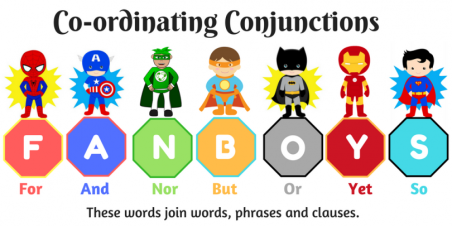
The Fanboys rules is the easiest to remember; however, because of the number of teachers giving the pause advice, I get sentences that look like this:

The Rams won but, not everyone was happy.

We sometimes punctuate our speech this way for emphasis, but you can’t hear tone in these words, and it’s just wrong.  < this sentence contains correct use of the fanboys rule.

co-ordinating-conjuctions-banner-810x405

My students often ask me to explain the whole “Oxford Comma” disagreement. Well, it goes like this: There are people who use the oxford comma and then there are monsters!

Example:Oxford-comma-explained.png

Commas are confusing, but they’re not impossible to learn. Any editor is going to appreciate the correct use of commas regardless of how much they appreciate or introductory comma. 🙂


Interview your character

interviewDoes your character like her/his marshmallows burned and why?

I love this – but it’s not mine.

I got this from Writer to Agent advice video from The AWP and Folio Literary Management.

Watch this video for tons of good information!


Humility is Success

spiritual-principle-humilityI’ve met a number of people from all different walks of life; the one trait I admire most across the board is humility.

I was at a writer’s conference signing. I happened to be waiting at the front desk when another writer walked up and took me for someone who worked there. He didn’t look at my name tag; he didn’t look at me at all. He said something to the effect, “I’m in a hurry, get my tag for me.”

I smiled and said, “let me get you someone who can help you.”

He huffed out a breath.

I found it rather humorous. He would run into me once or twice during the event and didn’t remember the front desk incident. But, moreso, I found he treated most people as if they were there to serve him.  I’d never heard of him before, and I haven’t bothered to read any of his books. Had he been the least bit human to anyone, I probably would have bought his book then and there.

We don’t have to act like asshats to get what we want. Self-importance rarely serves anyone and doesn’t  win any awards. It may get you knocked off the invite list.

Humility is not a denial of our skills or our sense of self-respect. Humility is being modest about the skills, talent, and dreams we are working to achieve. And it takes nothing away from us or from those around us.

index

Writing Exercise

malcolm-gladwell.jpgI’m a big fan of Malcom Gladwell, writer for the New Yorker and author of The Turning Point, Outliers, and many others.

A writing exercise from Malcom Gladwell:

Begin a correspondence with another writer. Each of you take turns sending and responding – and respond immediately with something interesting or intriguing.

It’s a good way to practice intelligent conversations so you can learn to chat with just about anyone.