Submission Log

Submission-Banner.png

How do you keep track of your submissions?

I keep a log of when, where, and what I’ve submitted. I also updated it when my piece is rejected, accepted, or haven’t heard from the publisher.

There are a number of ways to keep logs, either by date, title, or other.

I keep mine by date of submission, but it’s easily searchable if I want to find out where and when I submitted anything specific.

I also keep a log of places not to submit again. It’s a very short list, but if you run across an editor who is unprofessional or a journal that operates with questionable practices, you should keep track.

Using submittable as your tracking system works if you don’t submit to journals or publishers who are not members, as I do, but I find their site challenging to navigate when I’m looking for a certain title I may have submitted at different time periods. My list is long and some journals don’t actually update.

I’ve had a few things accepted (or rejected) and the publisher has not updated my submission on the site; therefore, it appears to still be in process.

I find my own log more easy to navigate.


Writing with Bones

I think I read Writing Down the Bones maybe more than 20 years ago.  I do believe it’s still on my bookshelf. I keep books that have spoken to me.

writing-down-the-bones.jpgAlthough one website says it’s a good book for beginning writers, I think we might all find some inspiration in these pages.

In yoga, sometimes we go back to level one, we go back to the training. After so many years of doing it, so many teachers putting their own twists on it, so many times we’ve worked with (or around) an injury – it’s good to go back to the basics.

I see nothing wrong with doing that in writing either.

Writing Down the Bones – a book by Natalie Goldberg. This site gives you a generous sampling of the book.

I’m planning to pick it up again – see what else I can learn, what I might relearn.

6 Reasons Self-Publishing Beats Traditional Houses and Agents – Guest Blog by John Grabowski

For most writers, getting a contract from a traditional publishing house is the golden biscuit, the grand reward after a struggle with run-on sentences, superfluous commas, and tired clichés. Many people will then spend years looking for an agent, and then have an agent try to place their work with a publishers, big or small.

But here’s reality: unless you’re J.K. Rowling or Stephen King, you’re almost certainly not going to receive the red carpet treatment you’re no doubt envisioning. Once upon a time, not a long time ago, self-publishing was considered the literary outback, the place for hacks. Now, in an ironic twist, we just may be witnessing the reversal of fortune. The Bix Six seem to be wallowing in their formulas. Meanwhile, much fresh thinking is coming from self-published authors who build their followings online. So rather than wait for your genius to be appreciated, here are six reasons you should consider being self-published:


  • You are your own editorial voice. While every self-published work should go past the eyes and red pen of an experienced editor, ultimately you can write and publish what you want. You don’t have to deal with an editor or agent who wants a happier ending, a younger protagonist, or the locale moved from Pittsburgh to Paris.


Your hired editor may suggest changes, and you should listen. But ultimately you stand or fall on the product. You won’t have to deal with the agent who refuses to read a manuscript because she never looks at anything that begins with dialogue, or one who says she won’t consider a novel written in the first person, or one who says the work cannot have a “Prologue” or an “Afterward.” Ask yourself if a reader ever put a book back on the bookstore shelf for any of those reasons and you’ll begin to see how silly and random the process can be.


  • You set pricing and distribution. Ever wonder why some really great book has not been reissued, forcing you to buy a beat-up second hand copy? The publisher decides distribution, pricing, and how long the title will be in the catalog. If they don’t want to keep it in their catalog, there’s nothing the author can do.


With self-publishing, your works can live on forever. Or, if later on your freshman effort embarrasses you, you can make it disappear with the click of a mouse.


  • You control the book’s cover design and artwork. This may be intimidating for some but it’s liberating to me. While some professional cover designs are great, others are simply terrible: a stock photo, the title centered above it, the author’s name beneath it. Not surprisingly, artwork like that tends to go to the lesser-known and novice authors.


If you’re unsure how to design a cover (and it involves a lot more than putting your title over a picture and your name on the bottom), google some freelance artists who do it. Study their work and contact the ones you like. If you don’t want to shell out the cash, and you have access to some design tools yourself, find covers of comparable works and study what you like, then try to imitate it as best you can.


  • You can fix mistakes. Even some very big, very famous novels have typos in them. Or formatting errors. When it’s your own work you can go back and fix the mistake, then re-upload the file. With traditional publishers, your mistakes remain, oftentimes even in second and subsequent editions.


  • You promote your work the way you want. Don’t think being published by a big house means jaunts to NPR interviews and author events at prestigious venues. Most houses do nothing to promote the majority of their authors. You have to do your own marketing and PR (an art in itself), so you might as well own and control what you’re working so hard to promote.


  • You can write the next novel you want. The curse of traditional publishing these days is even if you are a smash hit, they will want more of the same. If your goal is to write a second novel that’s different from your first, you may find doors shut to you. Despite claims on websites that agents and editors are looking for “fresh,” “new” voices, most are really chasing trends; that’s how they keep their jobs. Self-publishing is a wonderful opportunity for you to be you, and today’s self-published books look every bit as good as the product of the Big Boys. Rather than write your one-hundredth query letter, why not consider a faster, more streamlined way to reach readers?


John Grabowski worked in advertising, television news and public relations before daring to write his first novel. Entertaining Welsey Shaw was praised by Kirkus Reviews for being witty, fast-paced, and “filled with flirtatious banter.” A collection of his shorter fiction, Violet Rothko & Other Stories, will be published in September 2019.  authorjohngrabowski.com

____________________________________________________________________________________


Thanks, John!

noreen

On my bookshelf

I’ve finished my Tana French detective series and didn’t want to go to bed without another book in hand. (Nevermind there are three on my bedside table).

bookshelf.pngI began browsing my bookshelf, which is semi-organized: books I’ve read and loved. Books I want to read. School books. Writing books. and, of course, Poe books

I also have something mixed in that would seem, at first glance, not to belong. Books on psychology, the law, philosophy. I assume many writer’s bookshelves are this way.

A writer needs a wide variety of knowledge.

I know we have google at our disposal; however, I find reading books about, for example, the Psychology of Marketing allows me to get an in depth look that a wikipage or a few short articles are not going to give me. This allows me to create a more realistic character or more thorough background to make the story more believable.

For West End, I needed to understand two things, the idea of an absent or unloving mother, and the different forms depression can take. Anxiety runs throughout my work from Of Strays and Exes to Life of Clouds – which features children affected in different ways by the disappearance of their father.

I’ve heard handymen say they are the jack of all trades. I think writers are akin to that. We need to learn many things in order to live many lives.


Influence

Billy Collins (poet) believes we must read to be influenced, and suggests young people mimic their favorite writers in order to develop their skills and to develop their own voice.

I think many young writers do this. It’s a natural form of development.

Other writers are afraid to read when they’re lion.jpgwriting; they don’t want to be influenced. I think by the point you develop your own voice, you won’t so easily be influenced.

I think reading Michael Ondaatje’s In the Skin of a Lion was imperative for me to stumble across. I’d never attempted to intimate him – but he took my understanding of writing and voice to a whole new level. The storyline, the use of language, and the originality of his voice was unlike anything I’ve ever read and it blew my mind.

What reading Ondaatje did for me was to help launch my voice and style. I say this because at the time, I was mired in instructors and writers telling me no, no, no. They so strongly believed in their own way of doing things, they didn’t allow other writers to develop in other ways. It was limiting.

I’ve said this before and I’ll say it again – read far and wide! Do not be afraid of being influenced – open yourself to learning something new!


Motivation Vs Inspiration

inspiratin.jpgI hear a number of writer’s ask about how to get inspired or keep inspiration. I think they’re confusing inspiration with motivation.

We are inspired by the things around us, an odd phrase, a beautiful scene, a great idea. The motivation comes to write it down. You must keep motivated long after the inspiration abates.

And that, ladies and gentlemen, is where dedication comes in.

With dedication to the craft, even when motivation and/or inspiration fail you – you will not fail.

Inspiration is just the beginning! Stay dedicated. Motivation will follow.

Approaching Authenticity – Creativity, Psychology, and Christian Faith by Bozena Zawisz

bozenaSomething I often hear as a counselor is clients speaking about the weight of expectations they feel they’re carrying on their shoulders; and the frustration, guilt, or resentment they feel in relation to them.

Many of these expectations are often tied to a particular role they “fall into,” that contains within it: unexamined assumptions relating to some action(s) they feel they should be doing, rules for communicating (what they feel they should be saying, and how), pressures to take on board “shared” viewpoints…

Often they express feeling as if they lost their center or connection with themselves.

Some roles are consciously/purposefully chosen. I choose to relate to clients within the boundaries of a counselors’ role. At other times, individuals can fall into an interaction where there is an expectation/pressure to engage in a “role-play”… mindlessly… pulled by some emotional pathway, deeply engraved by a lifetime’s worth of conditioning… For example, many adults continue to feel strongly affected by their parents’ perceived expectations of them…

Sometimes individuals’ roles within relationships include assumptions about hierarchy (in some cultures more than others), expectations relating to distributions of privileges, expectations relating to the division of weight that is placed on the inner experience of each individual. Often, the language which does not fit an expected role-script is unwelcome, discouraged…

One of my favorite historical examples of a figure who modeled the importance of rising beyond roles and cultural expectations, and embodied authenticity and inner strength, was Jesus. I admire the way he kept right away from describing himself via popular roles or politically loaded terms of the time, which he perceived as a poor fit with his life’s journey and purpose.

I love the way Jesus preferred to describe his inner experience and communion with God using creative metaphors-that beautifully made use of people’s familiar associations (e.g. used imagery such as harvests, laborers, etc.) yet transcended the language of the well established familiar social and political roles, traditions, expectations, and their underlying beliefs and perceptions.

Jesus had a hard time with the Pharisees. Perhaps they perceived his non-compliance with the established roles that reinforced their power and privileges-most unsettling. Jesus smacked too much of personal power, disregard for the authority of political/social pecking order…

Possibly to connect with a sense of inner peace, he was documented to withdraw into solitude oftentimes, perhaps in this way he restored his strength by nurturing his connection with God. Just as in his case, I believe that it is a helpful first step in our journey towards authenticity to find ways to connect with a loving place of self-care and strength within ourselves.

Given the powerful focus our society (and at times other people) have on trying to hijack strong within_frontour attention and encourage us to look to the outside of ourselves for fulfillment–creative expression of, and reflection on, our inner experience allows us to re-center and reconnect with our inner journey of transformation.

And, support us in reclaiming control over reconstructing our experience so that it resonates with our values, faith, the direction of our journey, and more closely aligns with our truth.

Bozena Zawisz

Website

Neither Innocent or Guilty


~~~~~~~~~~~~~~~~~~~~~~~~~~~~~~~~~~~~~~~~~~~~~~~~~~~~~~~

Many Thanks for sharing!

noreen

A Tribute to Poe on his Birthday

January 19th, is the 210th anniversary of Poe’s Birth.

poe4Although many people are content with the reason of Poe’s continued relevance in our society is the stereotypical tortured artist.  There is no doubt he was tortured, and for reasons of which we are all familiar; he was an orphan who lost every women he ever loved.

His battles with alcohol, I believe, are highly exaggerated. But it makes for a good story. I’m not saying he never drank – he drank to excess plenty of times, he may have officially been an alcoholic as we understand the word today; however, it was not a constant. There were many years through his marriage to Virginia that he did not drink or drink to excess. Before his death in 1849, he’d joined the Sons of Temperance Movement – to get people to stop drinking.

The reason Poe has remained relevant throughout the years is his work touchespoe our deepest fears and deepest desires. He has continued to inspire other writers


poe2and artists of all types.


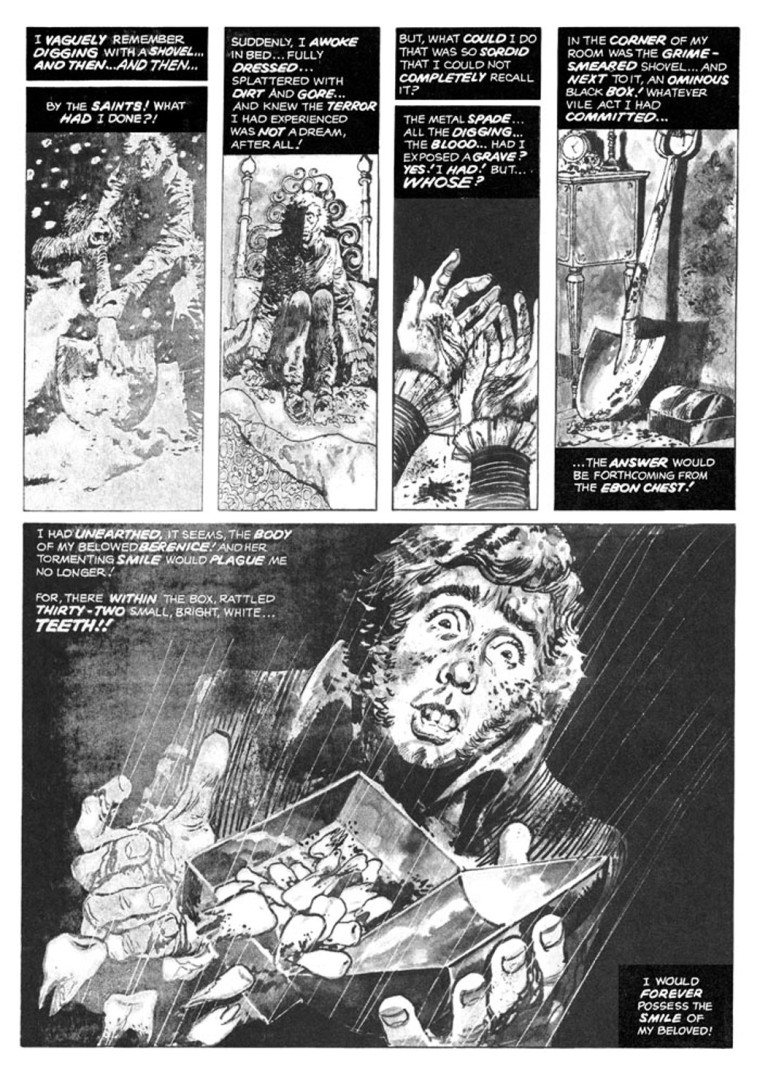
He wrote far more than what we, today, consider horror. He wrote essays, literary analysis, investigative pieces. He wrote about street paving, Stonehenge, and he was inspired by what he read in newspapers.  Berenice and others were inspired by stories of grave robbers in local papers.
poe3

The famed portrait of Edgar Allan Poe was taken three days after his suicide attempt in 1848.

Edgar_Allan_Poe_daguerreotype_crop.png

And, Eddy, my imaginative fiction, was inspired by that suicide attempt. He bought two bottles of laudanum on a cold winter night meaning to do himself in. He’d lost Virginia and felt he had no one. (Laudanum contained opium and derivatives of morphine and codeine.)

eddyfinalredonefromtresized


For Poe’s Birthday, I offer an excerpt from the novella:

   He stumbles from the pub, slips, and falls on the iced over bricks of Boston’s November streets. Save for the muddled voices beyond the closed door, the street is quiet as his body thuds to the ground. His breath billows in front of him as he gasps and grumbles and struggles to his knees, then his feet, to regain his drunken balance.

   The gaslamp on the corner offers a wavering yellow glow for the struggling figure on the lonely winter night. Thin strands of hair blow in the chilled breeze; he runs his hands over his head, straightens himself before he pulls at the sagging overcoat and tugs it closed.

     Remembering the tinctures of laudanum pried from the chary pharmacist, he hurriedly shoves his hands in his pockets, retrieves the bottles.

   His heavy breath mounds in front of him and, for a moment, he can’t see; then the luminous cloud of brandy scented air dissipates. The medicines are intact. Relieved, he stuffs them back in his pocket and buttons his jacket.

   “Edgar,” someone calls from the corner; the noise from the pub trails the swarthy figure out until the door slams to a close behind him. “You alright?”

   Edgar waves him off without turning around.

   The thick shadow chuckles as he staggers in the opposite direction.

   The winter is freezing cold, but the snow hasn’t endured. Small white crystals pile in corners and fill the air. The icy rain soaks him before he reaches his chamber on the second floor of the boarding house. The room is small, impersonal, but warmer than the street. An unlit lantern shimmies on the desk as he unsteadily seats himself, glances out the window.

   A barely discernable outline disquiets the otherwise muted darkness on the corner of the street below. He knows it’s the black dog that’s stalked him his whole life. Suddenly angered, he shoves himself forward, pushes the unlit lamp aside and topples the ink jar.

   “Get outta here, you wretched creature.” The incensed command lost in the night.

      Recovering the secreted bottles of opium from his coat pocket, he sets them side by side in front of him. Unsteadily he tugs the lid from one and snorts in a single gulp.

For More Posts on Poe – click this link.

To get the book at 3.99 – this weekend only – click this link.

To get the ebook at .99 – today only – click this link.


edgar_allan_poe_3.jpg


Much love and luck.


How much time should it take?

Don’t focus on the time, the weeks, or the future. Focus on the now.

Meaning: Don’t focus on the end of your story or the concerns about editing, about rewriting, publishing, stay with the here and now. Work on your story one page at a time, one day at a time, and go at your own pace.

The tortoise actually wins the race, kids!

Feed Your Creativity

According to science, exercise can feed creativity. Before you turn away, click the blog.gifunfollow button or run off screaming – oh no, she’s telling us to exercise, I knew it! – they say just getting out of the chair, walking for twenty minutes, or even (gasp) cleaning, just moving our bodies can get some juices flowing and give us a fresh outlook to come back to our writing.

So, no, you don’t have to go to the gym, learn kickboxing, or twist yourself into a pretzel, just take a deep breath and walk around in a circle for a few moments.  Who knows, dizziness of the circling might give you some great ideas!