Disabilities in fiction

People_with_Disabilities.jpgI was thinking how few people with disabilities are featured on regular television shows and movies. And rarely do we see people with disabilities in fiction, unless they are the main character.

There are a number of children’s book, teen books, and mainstream novels wherein a physical disability is the main feature and/ part of the main character and therefore the thrust of the storyline, but I think we need to incorporate people with disabilities into our secondary and background characters.

In one show I watch, they had to replace a minor character, a secretary who might be seen once or twice a week, and be required to answer a mundane question like, “Where’s the boss?” This show (which shall remain nameless) receives kudos for being among the first (many years ago) to feature minority characters, an interracial affair, gay characters, and, now, even a gay relationships; yet, they don’t have any characters with disabilities.

It’s really up to the writers – us – to push this envelop. We don’t need to know the whole back story if our main character walks into an office to say, “Where’s the boss?” and receives the same sprite answer, “if only someone would tell me!” from someone in a wheelchair.


Blocked? How to shake it loose.

wall-art-2852231_960_720

Creative blocks are brought on by various reasons.

Writers, poets, artists, musicians need to express themselves. Sometimes, something plugs our flow of creativity.

My friend and I have found release in other creative outlets. She took a watercolor painting class. She feared, at first, that she was taking away from her writing; however, what she found is that it opened her flow and she felt even more creative and was able to add even more to her usual creativity.

I take art and other classes on a regular basis. Most of the time their directly related to writing, but sometimes they are not – but they still feed my imagination and add depth to my writing.

The Healer’s Daughter will be released on May 15th in The Ear. This story came pouring out after a six week drawing class I took at a local museum/gallery. And… I feel like it’s one of my best, filled with color and meaning.

Shake something loose by trying another outlet. You may come back stronger and more creative than before.

The Joy of Acceptance…

The acceptance of being your own person, writing in your own style, not mimicking or falling in line.

I get a lot more rejections than I do acceptances, but I don’t dwell on the rejections.

56635085_2231045933643692_5441110500400168960_o.jpg


There is an art to accepting or rejecting any work. And, although any acceptance is a happy occasion, a particular nice one such as this is always a joy to receive.

To update you on my publications of late –

Heaven’s Password is about a woman who finds herself in heaven, in a line reminiscent of the DMV, and is asked for a password. She’s not the most patient person and can’t remember ever setting up a password. Just like your bank account, you can’t get in without it! This was published in the The Survivor issue of P&G.

Bowie and the Basket Case is due out any day now from ID Press. When someone breaks into her house, Anna doesn’t readily find anything missing. But soon she realizes little things are disappearing and reappearing – is someone gas-lighting her?

The Healer’s Daughter was accepted by The Ear and will be out May 15th. Self explanatory title?

And finally, or so far, Voice of Eve has sent me the lovely acceptance above for my photography and three poems – as you’ve read – June 15th.

Thanks for reading, dear souls.

Wishing you much love and happiness.

noreen

Dreamcatcher Poem

dreamcatcherThe dreamcatcher is supposed to catch bad dreams and let the good dreams through.

Write down an image remembered from a dream, a word, a sound, a thought, into each space.

Then put them together – or leave them as is.

A dreamcatcher is random. Your poem might be as well. Yet, at some point, some place, in some way, it’ll all come together.

Not writing scares me….

ghostly.pngWrite what scares you…..

This is a poetry prompt given to me in one of my graduate level classes.

I don’t think it has to be just for poetry.

Experts tell us we should do something that scares us every day. I don’t know. I’ve done quite a lot of things that scare me – crossing the highest bridge in North America, swimming with sharks, – but those are kinds of scary that gives you a rush. Still valid to write about.

But in that assignment and poem, I wrote about a missing girl. Because those are the types of things that do scare me – when children go missing.

I wrote:

Have you seen her pass this way?

Shoe found, white.

Blood on the laces….


Write about what scares you….


Feel free to share!


Weathering the Storms

weather-storms-thumbnail

Is there anything worse than a bad review?  Probably, but we don’t think so when we get one.

But ask yourself why you’re upset.

1. Is there some truth to the review? No – then forget it! Yes – then what is it?

One woman relayed that her one star review mentioned grammar and punctuation errors. She said, “I know there are some, but there’s not that many!”

It seems she knew she put out work that was not of a superior quality; she can’t be upset when someone calls her on it.

2. Is it someone who just wishes to malign you? Accept that there are going to be haters. Everyone has them. Remember this quote: “Well behaved women rarely make history.” If someone dislikes you – you might just be doing something right.

3. Someone told me – it’s only the writer who reads all the bad reviews. I think that’s supposed to make us feel better. But it’s true. When you look at reviews, do you search out every bad review there is? or do you read maybe the top five or ten of all the reviews?

I, personally, read a few of each. A few of the five star, a few of the three star, and a few of the one star – critical readers can tell if someone has an ax to grind or if they have real concerns.

The enemy…..

sylvia-plath-quote-1

Plath was one of the original “confessional poets,” and her poetry, at first, was not well received. Her poetry, however, spoke to many. Much love for the Plath!

Women’s History – Women Writers

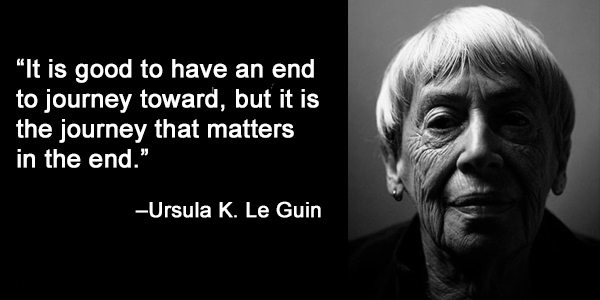
le-guin-1

A Writer’s Space

2018_09_30+Scientific+writing2Do you feel the need to have a certain, special place to write? Maybe you have little items you feel inspire you sitting around your desk, computer, in the same room, maybe there is a stone of carnelian or citrine to spark creativity, or even big dark shades to hide you from the world.

My writing space is usually the dining room table, two windows, a bird feeder on one so my cat, usually sitting beside me can be entertained. But I also write on the couch in the living room with a lap desk, and sometimes in my bed.

Dan Brown (author of the Da Vinci code and many others) believes writing space isn’t important. It’s the ritual and the commitment, not the space. He relates a story in which he was visiting his parents and he wrote in the laundry room, lap top on the ironing board while sitting on milk crates with the washer running – because he needed an undisturbed space.

I’d say that space would disturb me – and talk about holes in a story. My apologies, Mr. 0 v7CyD5RM41-JF6Kk.jpgBrown. However, if he gets up at 4 a.m. to write (as he states), who is doing laundry at that time? And, if the laundry was put in later, then obviously someone came in to disturb you. And, by that time, he couldn’t move to another room?  Okay, sorry, sorry. Back to the point.

We do need a space to write. Ideally, we want to have certain creature comforts around us; for me, it’s a cup of tea. However, I have written on concrete benches, lying across the hotel bed, in a tiny corner that had a table and chair, in coffee shops with noise, and alone in my house at 4 a.m.

The point is our desire for the ideal space should not limit our writing time or commitment (and I think this was Mr. Brown’s point as well). If we limit our writing to the ideal, we’ll have an excuse to not write when any little thing is out of place.

Brown states he writes 365 days a year. That’s what this blog is about, right? 365. It’s about commitment. It is my challenge and my commitment to write 365. I’m doing okay, regardless of the space I’m writing in.

Great Writers Say…..

women wr

Love Toni Morrison!