Stories that whisper
 Many posts in writers’ groups and questions in writerly gathering surrounds the fear of family or friends finding out what they are writing.
Surprisingly, some of these are fiction writers. Although many are memoirists, poets, fiction writers and essayists are also concerned with offending someone they know.
My response to this is: They’ll probably never recognize themselves! The truth is many people see themselves far differently than others do.
Furthermore, studies show that we remember events differently; to be more accurate, we remember different details of the same events, and our memories are not as reliable as we’d like to think.
Legally, in memoir, if names are changed, there is little a person can do if they do recognize themselves. One attorney told me: They’re welcome to write their own version of the events.
Fear  should never hold a writer back. A small change in details or location can allow for some question if someone does think the story might include them.
Even if you think you’ll never publish it – write it. You’ll feel better!
Some authors are unhappy when readers see something in their story, novel, or poem that was not intended.
I subscribe to the theory of reader response. Our work is going to touch different people in different ways; readers are going to get out of it something related to what they bring to it, so if they don’t see what we originally intended, they are not wrong, nor did they read it wrong, they are merely giving the writer an insight.
I, personally, am thrilled when readers see something I hadn’t intended. For my novella, West End, one reader said the melancholy of the main character haunted her. Other readers believed some of the characters might have actually been spirits or ghosts. One of the characters, I left open. His questionable appearances deepened the story and the effects on the main character who is dealing with depression.
However, when another reader felt that the son might have been a ghost – it made me go back and reread my own work!
Once the story, novel, or poem is out there, readers are going to take away or put into it whatever is in their own toolbox and we can not control it. We may not like it – I had one person mistake me for one of my characters – but we do have to accept it. I usually thank the reader for their insights, regardless of what I feel about the response.
All readings are good readings!
If you’re interested in reading West End – it’ll be on sale Saturday and Sunday. And – then let me know what you think!
January 19th, is the 210th anniversary of Poe’s Birth.
 Although many people are content with the reason of Poe’s continued relevance in our society is the stereotypical tortured artist. There is no doubt he was tortured, and for reasons of which we are all familiar; he was an orphan who lost every women he ever loved.
His battles with alcohol, I believe, are highly exaggerated. But it makes for a good story. I’m not saying he never drank – he drank to excess plenty of times, he may have officially been an alcoholic as we understand the word today; however, it was not a constant. There were many years through his marriage to Virginia that he did not drink or drink to excess. Before his death in 1849, he’d joined the Sons of Temperance Movement – to get people to stop drinking.
The reason Poe has remained relevant throughout the years is his work touches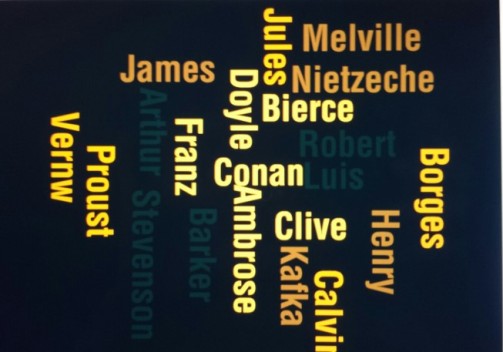 our deepest fears and deepest desires. He has continued to inspire other writers
 and artists of all types.
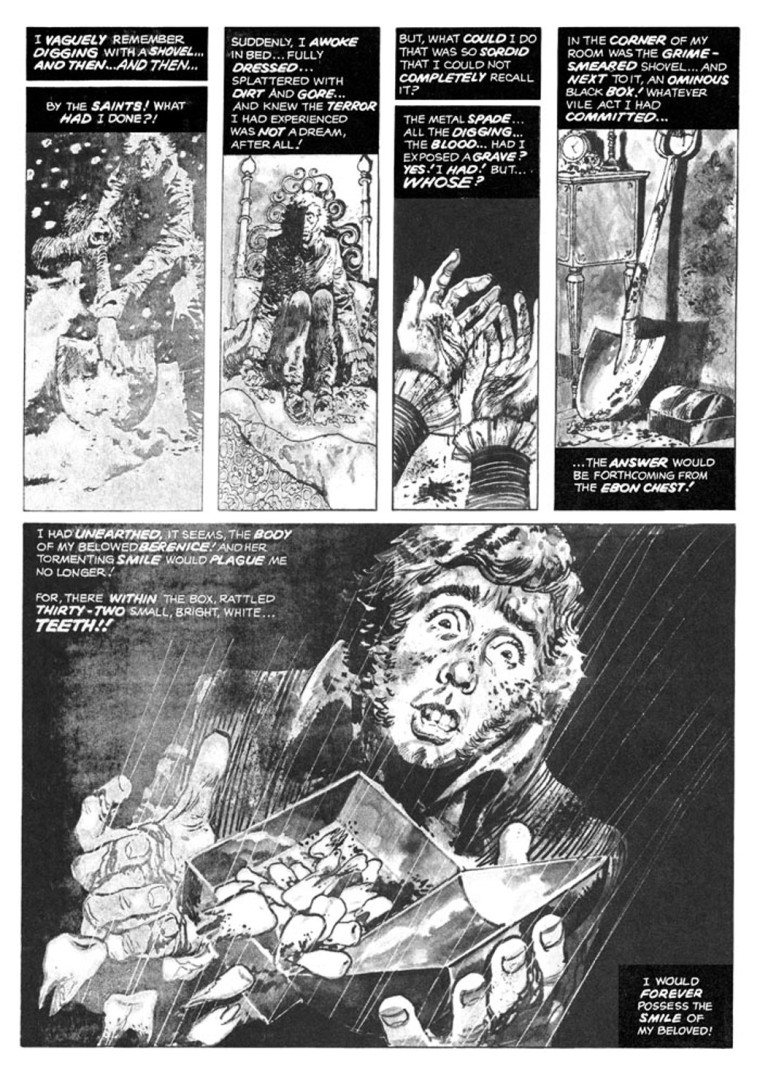
He wrote far more than what we, today, consider horror. He wrote essays, literary analysis, investigative pieces. He wrote about street paving, Stonehenge, and he was inspired by what he read in newspapers. Berenice and others were inspired by stories of grave robbers in local papers.
The famed portrait of Edgar Allan Poe was taken three days after his suicide attempt in 1848.

And, Eddy, my imaginative fiction, was inspired by that suicide attempt. He bought two bottles of laudanum on a cold winter night meaning to do himself in. He’d lost Virginia and felt he had no one. (Laudanum contained opium and derivatives of morphine and codeine.)

For Poe’s Birthday, I offer an excerpt from the novella:
He stumbles from the pub, slips, and falls on the iced over bricks of Boston’s November streets. Save for the muddled voices beyond the closed door, the street is quiet as his body thuds to the ground. His breath billows in front of him as he gasps and grumbles and struggles to his knees, then his feet, to regain his drunken balance.
The gaslamp on the corner offers a wavering yellow glow for the struggling figure on the lonely winter night. Thin strands of hair blow in the chilled breeze; he runs his hands over his head, straightens himself before he pulls at the sagging overcoat and tugs it closed.
Remembering the tinctures of laudanum pried from the chary pharmacist, he hurriedly shoves his hands in his pockets, retrieves the bottles.
His heavy breath mounds in front of him and, for a moment, he can’t see; then the luminous cloud of brandy scented air dissipates. The medicines are intact. Relieved, he stuffs them back in his pocket and buttons his jacket.
“Edgar,” someone calls from the corner; the noise from the pub trails the swarthy figure out until the door slams to a close behind him. “You alright?”
Edgar waves him off without turning around.
The thick shadow chuckles as he staggers in the opposite direction.
The winter is freezing cold, but the snow hasn’t endured. Small white crystals pile in corners and fill the air. The icy rain soaks him before he reaches his chamber on the second floor of the boarding house. The room is small, impersonal, but warmer than the street. An unlit lantern shimmies on the desk as he unsteadily seats himself, glances out the window.
A barely discernable outline disquiets the otherwise muted darkness on the corner of the street below. He knows it’s the black dog that’s stalked him his whole life. Suddenly angered, he shoves himself forward, pushes the unlit lamp aside and topples the ink jar.
“Get outta here, you wretched creature.” The incensed command lost in the night.
Recovering the secreted bottles of opium from his coat pocket, he sets them side by side in front of him. Unsteadily he tugs the lid from one and snorts in a single gulp.
For More Posts on Poe – click this link.
To get the book at 3.99 – this weekend only – click this link.
To get the ebook at .99 – today only – click this link.

Much love and luck.
Close your eyes for a few seconds and think of the word ‘inspiration.’  What comes to mind? Are there images of magnificent places you’ve been, impressive people you’ve met, or extravagant stories that stimulates your soul, sparks your imagination and almost brings you to tears? These everyday inspirations lead me to be the best version of myself, however, this is not a source of inspiration for my writing.
What if I told you my writing inspiration is in the overlooked, the forgotten and the displaced? I see potential in the bleakness of a shadow. I take interest in peculiar sights. I notice the unnoticed. My desire to write stems from the stories that are cut short. Not just unrequited love stories, but stories attached to the abandoned—whether objects, people or places. I am intrigued by ghost towns, and the remnants of memories left behind.
Sometimes inspiration comes from one word. I have a fascination and love of words. Maybe it’s a name, a word I overhear in conversation, or one that stands out while I’m reading. To me, words hold weight and are springboards for the fine details of characters, setting and, sometimes, plot. I call these words, triggers. One word triggers a plethora of infinite possibilities. Couple this with an innate curiosity about the little things in life and inspiration calls out from every direction.
Inspiration also comes from pain. Writing is a resiliency of spirit. It provides an avenue to unleash hurt by navigating emotions through an alignment of fictitious stories. I also believe the act of writing is an acute desire to heal. This is true for reading as well, as there is nothing more enjoyable than being whisked away in the transfixation of a book.
I wonder sometimes if writing is a window into the subconscious. Much of what I write is not intentionally thought about, but comes out in a stream of consciousness that can surprise me. In dreams, I hear the music of the most haunting melodies and poetic lyrics. In the middle of the night you can find me scribbling what I remember by the light of my phone, blurry-eyed. Unfortunately, in the morning the indecipherable lines can never match the beauty of my dreams. Words that enter my mind are often ones I’ve never heard of before, and after I’ve written my word count goal, I will look up the definition of the word, to find it fits perfectly with the meaning of the sentence. Although it’s likely words stored in my subconscious, that I’ve encountered somewhere along the way, it shocks me nonetheless.
When I wrote the novel ‘Saltwater Joys’ I had inspirations from childhood memories of oral Newfoundland folktales and ghost stories—ones I still love to hear again and again. I explored these memories and extended the stories into what might have been, had the story taken a different turn. It is like a scavenger hunt in my mind. One idea gives me a clue to where I might go with the story or character next. Other inspirations for this literary fiction novel came from the works of Edgar Allan Poe, as well as many classic tales and poems that made me see the unimaginably intricate, and sometimes horrific, connections in life.
 I like to explore the darker sides of life, which is interesting to me because I am naturally a good humoured optimistic individual. There are an unbounding instances of inspirational dualities in life, the play between light and dark, life and death, vice and virtue, and I realize as a writer I am one of them.
~~~~~~~~~~~~~~~~~~~~~~~~~~~~~~~~~~~~~~~~~~~~~~~
Thanks, Dianna.


“Most of what writers write about their work is ill-informed bullshit.”
You gotta love Stephen King, if not for his fiction, for the way he sets things straight and to the point.
This is the line that begins King’s rewrite for his novel The Gunslinger , originally released in 1970, rewritten and rereleased in 2003.
He rewrote and released the novel – only Stephen King could do that.
In any case, I found his forward notably valuable. His words are not only ever for his readers, but for writers as well.
His approach to revision he says, “hasn’t changed much,” and it is “to plunge in and go as fast as I can, keeping the edge of my narrative blade as sharp as possible through constant use…. Looking back,” he says, “prompts too many questions.”
I agree. I’m one to power through and not consider edits until I’m completely finished. This way I don’t get hung up wondering if this is right, if that flows, should I change this word here? Nothing is finished until the end is on paper, then comes the time for change; however, King puts his work away for a time. I, personally, give it an edit or two or ten. I give it to my friends, I reread, fawn over every word, sentence and…. it still has errors I don’t catch for six months or a year.
 For the original writing of The Gunslinger, King has this to say about his younger self, “too many writing seminars, and had grown used to the idea those writing seminars promulgate: that one is writing for other people rather than oneself; that language is more important than story; that ambiguity is preferred over clarity and simplicity…”
I was once in one of those very seminars when someone brought up Stephen King, “don’t worry,” the professor announced, “he’ll never be remembered in the annals of history.”
The same professor, the same class, a few sessions later, eyed me after my story had been workshopped and discussed. “I’m still trying to figure out the reason for writing the story.”
“I think,” braved another student, “she wrote it for pleasure, for publication.”
The Professor’s eyes narrowed, her lips thinned, and she sat forward in the old wooden desk, “we don’t do that in this class,” she hissed.
My nervous smile slipped away as silence rose from our feet up. No one moved. No one breathed. One girl had already run out crying, perhaps they were waiting for me. I didn’t want to cry, nor run out, but I’d felt everything I’d done up til that point undeniably wrong.
I learned to write, over the next few year, the way of the MFA, ambiguous, language  heavy, story slipping under the covers of darkness of words and rhythm.
Stephen King, I thought then and now, by sheer volume and honesty of craft, will not be forgotten. And I’m not sure he cares one way or the other.
I think we can all learn a thing or two from Professor King.
I’m happy to have P.S. Malcom’s writing advice to offer today. Enjoy!
~~~~~~~~~~~~~~~~~~~~~~~~~~~~~~~~~~~~~~~~~~
Three Ways To Come Up With A New Book Idea
I’m so excited to be here on the blog today, and I wanted to chat about writing.
Us writers sometimes get the urge to write something—anything—but often find  ourselves with a lack of ideas or inspiration. This is a really tough position to be in because you have the motivation to create and write, but nothing to work with. *Cue frustration*
Of course, this is worse when you have deadlines to meet or depend on a good portion of your book sales to pay the bills. You gotta keep those books coming! So today, I’m going to share three tips to help you come up with a new book idea:
1) Get inspired
I know, best advice of the year right?
 It sounds simple and blunt, if you’re not giving yourself space to get inspired, you can chase all the inspiration in the world and still end up with nothing. Stress from work, family life, responsibilities and pressure can all contribute to a block in your creative energy, and if you don’t make time to relax, unwind, and just chill, you won’t be able to imagine and envision your next story idea.
So my advice?
Do something different, whether it means going for a walk or a drive, spending an hour reading at a quiet café, heading to the beach for the day, painting or playing a musical instrument for an hour, or sitting in a hammock with your earbuds in. Whatever it is, make sure it’s an hour of distraction free time, and don’t force yourself to think up ideas. Let them come to you in the flow of the music, or the visuals of the painting, or the concepts of the book you’re reading.
It might take a couple of tries, but if you stay consistent in giving yourself space, you’ll find your inspiration again. I always get my best ideas (such as the inspiration for my Ryan Rupert Series) while away on vacation or immersing myself in something new.
2) Ask yourself questions
I’m not telling you to sit there like a lunatic and talk to yourself. What I mean is ask yourself questions about your current WIPs, or journal your thoughts, and ask yourself what you don’t know about your budding story idea yet.
Quite often, we come up with a simple, small concept but fail to expand on this idea enough to turn it into a feasible, book-length story. This results in us sitting down to write with our amazing new story idea and being stuck on where to begin because we have no clue what the story is about yet or who’s involved and why.
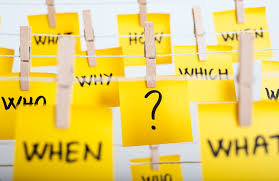 While this is all a process undertaken as we write, it’s a good idea to get clarity on the bare basics before you begin putting pen to paper, so ask yourself what you don’t know, answer what you can come up with, and go from there. I use this method all the time for my own books, and it’s also something I teach my writing students too.
3) Pick a topic and expand on it
If you’ve got nothing—not even a concept to work with—this is where you pick something you’re interested in and expand on it.
If you love mythology, you might browse through some of your favourite stories until you find an idea or concept that interests you, and find a way to put your own unique twist on it.
Or, if you love a particular country, you might immerse yourself in it’s culture and think about how you can tell a story from the perspective of somebody living that lifestyle.
There are so many possibilities to choose from, and you can turn any personal passion into a story. Just try it! You might not end up with a book-length story, but even the practise can help you get back into the swing of writing and help you conjure a new idea for a full-length book.
I hope these tips help anyone struggling to write!
Also, thank you for having me on your blog Noreen.
P.S. Malcom (Webpage) (Facebook)
~~~~~~~~~~~~~~~~~~~~~~~~~~~~~~~~~~~~~~~~~~~~~~~
You’re welcome. And, Thank you. Simple reminders are the best.
Monday – a new food section on food on this blog. Who does not love food?

 I know people say writing is a commitment, but it’s more than that. Writing isn’t “like” a relationship, it IS a relationship. A writer must be involved with the whole process of writing, must love it, need it, want to continue to work to make it better. It takes commitment, time, dedication, and the desire to move forward in life with writing.
A few years ago, I was at a conference where the main speaker (don’t remember his  name) said, “You have to be selfish. You must take the time for yourself, for your writing.” He went on to say he spent every Friday at a hotel with his writing. (are you picturing him checking into a seedy, no-tell motel with an old typewriter?;-)
My friend joked, “Noreen does this thing where she actually spends time writing.” My regular action became fodder for humor because he is a writer, but he falls under the category of non-writing writers like many others.
Life happens. We have families, pets, jobs, homes, tons of responsibilities. But notice that list – I put family first. People we love comes first. This is why a writer might consider writing as a relationship – so they give it priority.
I schedule things around my writing whenever possible. I will make doctor appointments, meetings, and everything I have power to plan secondary to my writing by scheduling them before or after my planned writing time.
Once a person considers themselves in a relationship with their writing, they may  naturally form relationship goals! If writing were a romantic relationship, how would you handle it differently? Would you want to go to sleep with it or wake up with it or both? What would you want to give it? Would you spend more time with it, going over the details, working it out so it was just perfect, going over it and over it again to work it out nice and smooth? What do you do for your significant other? Take it out to dinner? On vacation?
Writing, like a lover, needs constant attention and nourishment. Placing it on the back burner means we may never get to it. It’ll be there, but not as warm and flush as we’d like. Being in a relationship with writing means the needs of both are fulfilled. Writing is fresh and flowing and continually improved and the writer is happier, more productive.
We do this because we love it, we are driven to do it. Treat writing like it’s important to you.
Think of writing before you fall asleep, when you wake up in the middle of the night just to say one more thing.

Hi, All. I was feeling West End today. I wanted to share a little portion, but couldn’t decide, so I give you all the opening selection for West End. Enjoy.

BEFORE MY MOTHER drank herself to death, I knew her as a gentle creature who fed wild squirrels from her hand. On the back patio at mid-day, she’d stand very still, calm, peanuts laced in the fingertips of her outstretched hand. The squirrel, a female, her babies came later, approached with caution, across the railing, onto the windowsill, grab the nut, run to the other side of the patio where the squirrel peeled back the shell, ate the meat, then returned for another and another. For a while, the squirrels became my mother’s greatest pleasure.
When the female squirrel stopped coming, my mother worried, but the baby squirrels continued to visit. Then, the cubs must have grown, left the nest, because one by one they disappeared until only a single squirrel came to the daily meeting.
That winter, mother’s heart sucked itself dry. Familiar faces appeared, distant relatives, long-ago friends, who talked our concerns away with assurances for tomorrow and beyond.
“Little honeys, it will be okay.”
“I brought the eggplant casserole, green dish.”
“She was a wonderful woman.”
“Call if you need anything.”
Sarah and I stood at the door where someone’s aunt told us to stand. We pointed people who carried in food to the kitchen, guided people with flowers to the dining room, pointed the rest to Daddy who sat on the couch, gaze glued to the floor. We didn’t have to say anything, and no one asked.
The familiar strangers came and went and with them, our mother, our hopeless youth, our language.
The house became quiet. I couldn’t remember the last complete sentence I spoke or heard, couldn’t remember the last partial sentence I’d said to my father or he to me. My sister and I exchanged words, hushed, sometimes soundless breaths only we knew the meanings for. We lived our lives in half-words, pale sounds that sunk into the silence, in ideas of what we had to do next: breakfast, school, homework, laundry, dinner, dishes, bed. This soundless process became our lives; a strange off-balance way to live, but we did it for some months content not to break that pattern.
One cold February morning, a descending snowstorm blocked the roads, locked us indoors, kept us from going to school, our father from his work. Our first full day alone together in the house. Sarah and I sat at the painted brown kitchen nook picking at our cold Raisin Bran; the milk just tangy enough for us to question the freshness. A tapping noise brought our eyes to each other’s. Then silence.
“Wind.” Sarah exhaled with barely enough voice to make a sound much beyond the breath itself.
“Yeah.” My voice not much stronger. We returned to the cereal.
Tap…Tap…Tap…
Her gaze followed the floor to the sink, the counter, the back door.
“The door?”
I shook my head. “Nah.” Not today, at mid-day, in this storm. “Wind.”
I slipped from the nook; she followed. We stood, somewhat unnerved when the tapping came again. We could see through the glass in the door; no one stood there. I moved to the windows to get another view of the patio, leaned over, heard shuffling, then rattling against the window. We jumped. A squirrel clattered against the window, caused us both a momentary and laughable fright. Sarah touched my arm. We each took a deep breath. Our first that winter. The squirrel, the female or one of the children, we didn’t know and could never tell anyway, gave us a quizzical look, stretched up against the window; her little paws stretched against the glass. Tears welled. Quiet, unmoving, we held our breath, each other, tried not to let out the flow of emotions the winter built up.
Father’s footsteps, heavy on the linoleum, came toward us. We straightened.
“What’s going–”
“Shhh,” we both hushed him; his rough, dry voice might drive the squirrel away.
“It’s the squirrel,” Sarah said.
He looked puzzled.
She motioned toward the window. “The squirrels Mom used to feed. She used to give them nuts.”
“Well, give it some.” He waved his hands at us.
“Where are they?” Sarah pulled open random cabinet doors.
“I don’t know.” I opened the opposite cabinet doors.
“Well, look, look. They have to be here.” Father took to the drawers.
The three of us searched for a bag of peanuts Mother bought for the squirrels, hid from us to deter our snacking.
“He must be hungry.” Father gazed out the window at the back yard covered in snow. The porch railings, the powerlines, all draped in sheets of white; the squirrel, nervous, waited at the end of the banister. “Peanut butter. Get the peanut butter.”
“Will he eat that?” Sarah reached for the jar.
“Certainly,” Father assured us. “It’s peanuts, isn’t it?”
I grabbed for the bread.
“Just spread it on,” he said, more animated than I’d ever seen him.
We did.
“Wait, he can’t eat it like that Break it up.” He put his hands in the mess with ours.
Of course, we knew, but at the moment, that strange, unsettling, yet somehow comforting moment, we all needed to take part.
Sarah set the plate on the patio just outside the backdoor. The squirrel chattered, juddered its head from her to the door, the windows, its tail jerking back and forth as if with nervous jitters, then approached the plate, took a piece, and skittered back to the railing to eat it.
Dad ordered us away from the window. The little squirrel tittered, danced delicately, tail flitting, to take more food. We backed out of the kitchen.
Something shifted inside the house. The rooms warmed. The silence faded. The house took on old noises; the refrigerator hummed; the kitchen light buzzed; switches flicked with their old sticky clicks.
Our voices returned. We spoke more than mere sounds. We’d broached full sentences. But I don’t know if we ever surpassed that. We’d never been a family of paragraphs or stories. Laughter rarely rose to the ceiling. Now, with one of the speakers forever hushed, we were destined to be something less than complete.
Winter dissolved into spring; the strawberries mother planted last summer grew green, red, wild. We left nuts out all the time. Sometimes squirrels ate them; sometimes they’d sit until the birds got them or the ants swarmed them.
Sunrise reopened in summer, but never again did we hear our names called from the front patio as we walked up the street, never again did the light intonation of words follow us through the night, “not too late,” never again, upon our return, would we be met with a drunk asleep on the table with just enough consciousness to whisper “too late” when we passed through the kitchen to go to bed.
*West End is available on Amazon, Kindle, and Audible.
I’ve been thinking of coffee shops. And it’s not only because I’m a caffeine addict. Coffee and coffee shops are a part of our everyday lives and, therefore, our characters’ lives. What type of coffee shop and what they order will inform our readers of who they are in ways we won’t need to spell it out.

I, personally, savor that first sip of morning tea. For a few moments, it’s the perfect temperature and I hold it close to my face, ready for the next sip as the first drips of bitter black tea warm my throat and my body, the caffeine going to work immediately to bring me to full wakefulness in anticipation of a busy day.
A friend described a man in her carpool who stopped every day at Starbucks for a large quadruple espresso latte on their way to work and on their drive back from work. But, she added, he also complained constantly about his budget. This told me a lot about the person in just a few sentences.
Does your character rush into Starbucks and curse the line? Probably orders ahead for pick up, but what if it’s not there? Or is your character the kind that seeks out the independent coffee shop because it may be less busy or just because it’s independent.
There used to be a coffee shop on Ventura Blvd between Hazeltine and Woodman. I don’t  remember the name, but I do remember the walls were pink. I liked it for it’s small town charm. Local home made jams lined the shelves behind me while local artists’ paintings adorned their walls. They only had a few wooden tables, a few more outside, and a few bar-type seats at the counter. Instead of the iced black or green tea choices at you-know-where, I opted for their daily choices, which might icled iced peach or raspberry-ginger. They offered an array of vegan or gluten free cookies as well. Who could resist?
I used this coffee shop in my story “Harvey Levin Can’t Die” (originally published in Pilcrow and Dagger Sept 2016). The story really is about change. How society reflects the  individual and how the individual internalizes society. One of the characters worked there, but felt out of place. This also represented her life, she felt out of place and hadn’t really begun to make real decisions about who she was or what she wanted. But, of course, that changed and so did her involvement in the coffee shop and the guests as she becomes more proactive in her life. The reader is left to decide the interaction between her and society and whether the influence is good or bad.
It would have implied something different about my character if she’d worked at a chain coffee shop. The chain itself would have had an influence and been a foil. She wouldn’t have been able to grow and and the readers couldn’t see the change within the coffee shop itself; therefore, the setting was important in that instance.
Each place, each chain, is different. The people who go to the local Coffee Bean and Tea Leaf Company are different than those who go to Pete’s or even Starbucks. As writers, I imagine we’ve all spent time in these places. And our jobs as writers are to observe. Beyond the color scheme and coffee served, there’s a different atmosphere garnered by and at these places, and the people are different or act different.
I rarely see the impatient phone-bearing customers from the Monday morning Starbucks run at Pete’s. Nor do I see the more relaxed culture of the Pete’s “give me the multi-grain scone and flipped macchiato” at Coffee Bean.
 I used another independent coffee shop for “$1.00 Stories” (originally published in The Chicago Tribune’s Printers Row Journal April – 2016). A mixture of independent coffee shops, one of which still squeaks by in the recesses of North Hollywood. I wanted a friendly owner and regulars my character would recognize. Not that he cared about them; it was more important for the story that they were familiar with Cris, and they accepted with good-natured-humor his occasional weirdness. I didn’t want to make him completely unlikable. I wanted him to come across as a little more complex, so he went to this coffee shop where he knew the owner and sneered at the community table while the regulars chuckled.
The joy I get from using independent coffee shops (or even invented coffee shops) is that I get to describe them, which will also tell us something about the character. In “Harvey Levin”, the character hated the pink walls. But using a chain also tells us something about the character.
Our characters are going to need caffeine at some point in the story. Giving the reader their choice of coffee shops, even in one line, gives the reader an insight into the person we’re creating.
Now my tea’s cold. But I don’t own a microwave and that never tastes good anyway.
Harvey Levin Can’t Die is available on Kindle and at Smashwords.
$1.00 Stories is available at Kindle and at Smashwords.


 Noreen Lace
You must be logged in to post a comment.