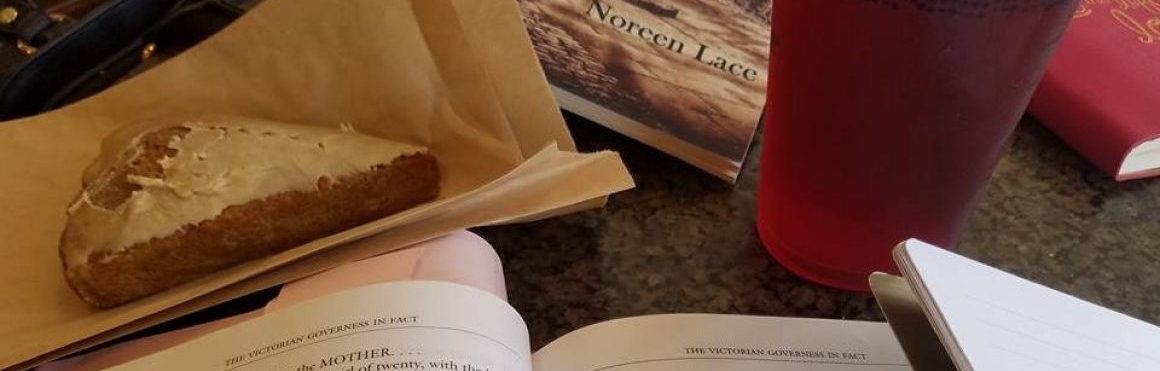
Friday Feature: Snowflakes in a Blizzard, Darrel Laurant’s Project to Assist Writers

Darrel Laurant contacted me some time ago about featuring my book, West End, on his project website. I’m only happy to now have him talk about that project here.

~~~~~~~~~~~~~~~~~~~~~~~~~~~~~~~~~~~~~~~~~~~~~

PlainNegligibleGrebe-size_restricted.gif


Completing and publishing a book — any book — is a noble accomplishment. Unfortunately, it’s only half the battle.

Writing, publishing and marketing used to be co-joined triplets, or at least close cousins. Now, though, they have drifted apart into separate entities. As a consequence, the new mantra from publishers turning down a manuscript has become: “We really like your book, but we don’t think we can sell it.”

What you realize, as you skim over the Top 100 best-selling offerings on Amazon or even the hallowed New York Times list, is that “marketability” now has very little to do with what we used to perceive as “quality.” Not that a well-written book can’t be successful, but writing well is no longer a crucial requirement, writing not-so-well no longer a deal-breaker.

The good news is, thanks to current technology and increased self publishing options, almost anyone who really wants to get a book published can now do so. The bad news is, almost anyone who really wants to get a book published can now do so.

The fact that 30 million or so books are now listed on Amazon has drastically changed the rules of engagement. The issue is no longer getting published, but getting noticed.

Writers are obviously the losers in this not-so-brave new world, but so are readers. Books go surging past us like flotsam on a flood-swollen river, never to be seen again. If it was published in 2016, it has already become a relic.

The idea of Snowflakes in a Blizzard, which started three years ago, is to become just one small voice shouting: “Whoa!”

I spent more than 30 years as a newspaper reporter and columnist, wrote a lot for magazines and Websites on the side, published two books that sold over 3,000 copies each locally, and won a lot of writing awards from the Virginia Press Association.

In some occupations, all that would have helped ease my transition when I retired from journalism to write books full-time. In the publishing field, I had to check it all at the door.

When my first novel, “The Kudzu Kid,” went up on Amazon, I was excited. I now had my own little niche, exposed to the world. I had a publisher who, at least in theory, was prepared to spread the word. I had a distributor to transport my books to the far corners of the nation. Smiling contentedly, I sat back and waited for the orders to pour in.

And waited. And waited. Eventually, it dawned on me that since nobody outside of Central Virginia had ever heard of me, the odds of anyone randomly clicking on my Amazon page were infinitesimal. Why would they?

At some point during the mini-funk that followed, aggravated by the winter blahs, I was standing in front of my living room widow in Lake George, NY, watching it snow, when this thought occurred to me: “Getting noticed for a new writer these days is like a snowflake trying to stand out in a blizzard.”

A few months later, I started the Snowflakes in a Blizzard blog.

Each week, Snowflakes highlights three books. They could be novels, poetry, short stories, non-fiction, memoirs or a hybrid. What they have in common are that they are a) unique in some way and b) could use more attention. The “template” for every book is filled out by the author and goes individually to each of our 3,000-plus followers, complete with a few reviews and a sample chapter. It’s a way of getting one-on-one attention.

Also, it’s completely free. I like that for several reasons:

First, it takes the pressure off. Charging for a service is all about making a promise — in this case, pay me and I’ll sell books for you.  I can’t do that, because I have no way of tracking who might have purchased a book because of a Snowflakes post they received.

Second, it makes for a better vibe between me and other writers. They are colleagues, not customers.

Finally, I don’t feel competitive with any other writer-friendly blogs or Websites. In fact, I’d be delighted if a thousand other sites sprang up just like Snowflakes in a Blizzard, because that would still not take care of all the writers who need such a service.

You may have heard it said that the opposite of love is not hate, but indifference. In the case of the book-buying public, the enemy is our very human tendency to stick with what we know. Early in our lives, most of us have settled in on what food, music, movies and, yes, books we like.

This fact unquestionably drives the book publishing business. It has become a lot like politics — survey the public to find out what they think they want, then give it to them. It accounts for the focus on genres, the reliance on best-seller lists and the dicotomy of wealth between the top one percent of authors and everybody else.

I don’t like to point fingers at the publishing industry, because they need sales to survive. So do agents. I do, however, think that the current glut of books has contributed in many cases to tunnel vision and laziness. What used to be “Wow, this is a great book — we need to tell people about this talented new author,” has morphed into “Oh, too bad — it doesn’t have the right genre for our demographic.”

This genre fixation is one of my major gripes about the book business today. Instead of offering unique work that only they could produce, some authors are “writing to genre,” following a list of pre-prescribed rules in an effort to “fit.” Yet so many of the books that made a big impact upon arrival — think “In Cold Blood,” “The Color Purple,” “To Kill a Mockingbird,” “Roots” — probably would have flunked the genre test.

To their credit, a lot of small “indie” publishers do seek out and nurture talented new writers. Sometimes, they are richly rewarded for it.

My other gripe is the attitude held by some gatekeepers that they are doing writers a huge favor by publishing them. I growl, internally, every time I see this on a Website: “If you don’t hear from us in two months, it means we’re not interested.”

How much time and trouble would it take to type “Thanks, but not for us,” and hit “send”? Or maybe, “We’re thinking about it.”

This lack of communication shows a naked disrespect to authors who, after all, just want to enter into a business deal with them. Think of how you’d feel if you walked into a restaurant, sat down at a table, and were then ignored for an hour before you finally got up and left.

OK, so the creative universe is awash with other books. Publishers and agents can be uncaring, potential book buyers unlikely to try something new, both realities especially hard on new writers who haven’t yet accumulated prior publications, lots of good reviews or a book club fan base.

So what can we do? I make no claims of being an expert (I’ve never had a best selling book, so what do I know?), but I do have some suggestions.

  1. Look at the myriad niches that might be hidden beneath the main thrust of your book. These could include the setting, the occupation of main characters, a societal issue that is addressed, etc. Find some on-line clusters of people who reflect those nooks and crannies and send them a sample chapter. Do everything you can to show a publisher or agent that your book will, indeed, have a ready-made audience.
  2. Don’t forget the local connection. After your book is published (or even before), show up at your local newspaper office, meet the book editor, and suggest a review of your book. Don’t forget the little free papers than have mushroomed everywhere.
  3. Arrange similar meetings with small bookstore owners in your area.
  4. Set up as many book signings as you can handle, including businesses other than bookstores.

I invite you to check out the Snowflakes in a Blizzard site, and perhaps even follow it. Or, you may have a book you’d like to have featured, or know someone else who does.

My e-mail address is writersbridge@hotmail.com, and I love to talk about writing, any time.

~~~~~~~~~~~~~~~~~~~~~~~~~~~~~~~~~~~~
Much luck, Darrell. Thanks!
noreen

Writer Wednesday: Faux Deadlines

deadlines

My students, and other writers, often tell me that deadlines and time limits are the only things that inspire them. That last minute of the clock ticking down puts the pressure on enough to force them to write, and they swear better writing comes out of them.

Although I think there’s some truth to this, overall teachers and editors agree this isn’t the best form of writing.

However, what if we forced ourselves under faux deadlines?deadline1

I’m suggesting you create your own deadlines.  Some writers enforce rules for their writing, like they must produce five pages a day or a thousand words, etc. But if you feel you write best under deadlines, the pressure cooker ready to pop, then do that. Or do it for an experiment, for fun.

There are programs you can download (or are on your computer, so I discovered on mine) which will shut your wifi off for a certain amount of time. While I don’t think many of us could comfortably go wireless for an hour or hours at a time, I suggest you do fifteen minutes. Give yourself a challenge and free write for 15 minutes. After that fifteen minutes, if you want to keep going do so, but I’ll suggest another challenge – stop, read over what you wrote and pick out a really good idea or line, and then start another freewrite – maybe turn your wifi off or turn a timer on…  for whatever amount of time..

deadlineSet a timer or an alarm on your watch or cell phone for five or six minutes and write whatever comes to mind. If you can’t think of anything, then use one work to start. The word I use in my classes is “movies.” Perhaps you could use “love”, “news”, “dog.” Any word will actually do. Don’t worry about what you’re writing or where it’s actually going – just write and if at the end of five minutes all you have is a freewrite about rover doing his business on the neighbor’s lawn, then you haven’t wasted that much time. Do it again.

Speaking of wasted time, consider all the time we stand in lines doing nothing except checking email or social media. Next time you’re in line at starbucks or waiting at the doctor’s office, use your phone to brainstorm an idea. If you’re stuck, take an idea from whatever’s around you.

No excuses. Give yourself a deadline. Write ANYTHING in order to shake something loose.

DEADLINE

Writer Wednesday: Writer Dreams

We all get those ideas that occur to us in the middle of the night as we’re rolling over, sleepwe reach for a pillow and poof – a story occurs to us.  Some of us continue to snuggle tight to that pillow and tell ourselves we’ll remember it in the morning …zzzzz… and it’s gone; others of us roll back over, grab that notebook and make notes.

Some of those notes are not going to make a darn bit of sense in the morning, some will. My idea for “Of Strays and Exes” came to me in the middle of the night in the form of a strange first line…  “when I ran over my neighbor’s dog…”  I grabbed that notebook and started scribbling. I put it down, only to take it up again and again until I finally got out of bed and wrote nearly the whole story before climbing back into bed for an hour’s sleep before work.

sleep1There’s something magical happening in our brains at certain moments during the night. We’re transitioning from deep rem sleep back to stage one, nrem sleep, where we are most likely to be awakened; this is also about the time, along with other times, that hypnagogic sleep is taking place. This is a transitional state for our minds and bodies, and the best time for “stories” to happen.

During that hypnagogic stage. We’re barely asleep, barely awake and sparks are happening between neurons that give us bright ideas, great lines, interesting themes.

Most of us are working people who have to get up in the morning and go to work or raise our children or help our parents, so we don’t grab those moments as we might if say – we were independently wealthy and didn’t have to do a 9 to 5er. charlie

If you can’t write at night, try to capture that hypnagogic state during your disciplined writing time or  other random moments.

I had to have an MRI recently. Have you ever been in one of those machines, clicking, burring, whirring, and it sounds like you’re trapped in a jet engine of sorts?  I put myself in one of those states and by the time the technician was pulling me out, I wanted to stay in longer.

It’s meditation and breathing – you knew I was going to say that. But for this meditation, lay down, think about your breathing while blocking everything out except the images of your story.

If you’re using this to create stories, think blue sky, blue sky, blue sky while breathing in and out. Let whatever happens in that sky occur. When you come up on an image that works for you – and you will – follow that image like a cloud in the sky, see where it takes you.

Or – of course – if you can, get up in the middle of the night and follow those half-wakeful/half hypnagogic dreams…

sleep2

Friday Feature: Writing as Courtship – Timothy Savage

When Timothy Savage speaks of Davey’s Savior, his novel about a father and son, it’s with a passion which encourages the reader to pick it up. He uses that same passion in almost everything he does from caring for his own son to detailing the journey of Davy and his father.

I knew when I asked Timothy to write something, he’d present something marvelous…. and so he has.

~~~~~~~~

Revision as Courtship

courtshipCourtship is romance taken form. It’s where those thoughts and fantasies translate into actions, from the ordinary chocolates and flowers to those thoughtful gestures, everything from a caress of the hand to simple time spent in conversation, all taking place behind a barrier of uncertainty. You spend time with that special someone, you share meals and thoughts and feelings, you enjoy those little tingles that come from being in their presence, but you don’t yet cross into intimacy. Perhaps you’re old-fashioned, or imagine yourself as gentlemanly or ladylike; you save something for later. In any case, you’re not quite at that point of leaping into their arms with wild abandon.

That’s okay. Sometimes saving something for later is a good thing, even as you relish those moments together without quite sharing everything. It’s all driven by a simple truth: Courtship is a time for getting to know each other, and to be blunt, for sizing each other up.

In a long-term romance meant to last, you need to see them — and they need to see you — exactly as you both are. You need to see them happy, angry, confounded, upset, blissful. courtship2To see into their soul. To see whether it’s safe to make yourself vulnerable before blending your soul with theirs. To see your own flaws and those of your partner in clear focus, to get beneath the layers of what someone might project, and instead look for and grab onto those glimpses of truth beneath the veneer of attraction…

Wait a minute. If this is a column about writing for writers, why do I have romance on the mind? Easy. For writers, it’s like this when you’re about to embark on the process of revision. Many writers – myself included – feel a kind of anxiety, a hesitation, before diving into the process of editing and revision. You stare at your draft without moving, afraid to press a key or redline that sentence for fear of screwing everything up. It’s the same anxiety one feels before dialing that special someone for the very first time.

Writing — especially the art of crafting a book — can be thought of as a long-term romance with your story. And that sizing-up process, the very beginning of courtship, is an important first step in editing and revisions, too.

As an author, you need to make yourself vulnerable to your manuscript, to see it exactly as it is. To seek out those “warts and all” glimpses of its true nature. It’s the moment and author and manuscript test each other through presence, seeing whether they enjoy each other’s company after spending long periods of time together, or seeing whether they’d rather hide in the washroom and phone a friend for rescue.

But if you enjoy the experience together, if you enjoy spending that time and look forward to the next conversation, maybe it’s time to dig back in and read that manuscript as a reader would, as someone who’s not quite made themselves vulnerable to possibility of intimacy.

Personally, I’ve made a practice of revising “big to small.” What I mean by that is the act of seeing my story as a whole, of taking in the work-in-progress with all its flaws and foibles, sizing up its true essence, and determining what changes are necessary in a structural way to bring that story I’d envisioned into reality. Eventually I focus on smaller and smaller details; not story structure or overall plots, but the little touches that keep the reader enthralled. It’s a little like going from that first casual dinner to the first moment “alone together”; reach that level and it’s just the two of you in a dance, in the hopes of making it all work.

Revising “big to small” meant courting my other characters all over again. Looking at each of those peripheral stories in my manuscript with a critical eye, deciding whether they added to the central relationship in my book or distracted from it. Deciding which of those scenes were necessary, what worked and what did not. Deciding what should remain, and what could be safely relegated to a “cuts” folder for later consideration or swipe-left deletion.

courtship2In the end, after many dates with my manuscript that ranged through blind and awkward, rushed and too quick, exciting and anticipatory, intimate and ecstatic, the story evolved into better forms than ever taken before. I saw it for what it was, working through the small details, caressing each sentence and nuance until the story as envisioned came across as “meant to be.”

Revision is courtship. And courtship, despite the nerves and uncertainties and awkward moments, is fun. So don’t be afraid to dive right in. Swipe right on that revision. Hold that car door open, and bring along the flowers and candy for both of you. In the end, whether your revision succeeds or fails — whether the relationship with your manuscript lasts or fizzles during the courtship of revision — you’ll be a better author for having the courage to experience it.

*

Noreen, thank you for the invitation to contribute to your ‘Friday Feature!’ Dashing off a blog post about writing is always great fun, and if it helps to inspire another writer or two, excellent!

Speaking of inspiration, I want to give a little credit where credit is due. The idea of ‘Revision as Courtship’ came out of discussions and collaborations with my dear, dear friend, writing partner across the pond, editor, and author of the 17th Century Midwives series of historical fiction novels, Annelisa Christensen. Her insights helped me to view revisions with something other than anxiety, and for that I am forever grateful.

tws

~~~~~~~~~~~

Thank you, Timothy.

You can find Davey’s Savior on Amazon

Tim’s Website – where you might find a little inspiration or even some help!

courtship1


Nice Feature of West End –

Thanks, Darrell!

Check out SnowFlakes in a Blizzard

front-cover-small

If anyone would like a free audible copy – let me know by commenting below. First two people only!

Friday Feature: Submissions

This week for the friday feature, I thought I’d offer tips on Submitting.

Last year, I had 17 or 18 publications. This year so far, I’ve had maybe 9 or 10 acceptances. I must be doing something right.  submissions-photo-01

I think it should go without saying your work should be free of grammar and punctuation errors. I heard from one writer who was offended by an editor; her response: “I know I had errors, but they weren’t that bad.” – No excuses. Edit that work before you send it out.

First: Make a regular time to sit down to submit. This takes HOURS. It’s not going to be just a fifteen minute or thirty minute venture. You must read what the lit mags are looking for as well as how they want it submitted. Then compare it to what you might have already written, or what you’re willing to write.

Second: Keep track of your submissions. submissions1

Third: Accept rejection. (It tells me that I’m doing my job by submitting.)

Fourth: Accept criticism. You are going to get opinions. Just today, I received a rejection that said I repeated a word. That was the whole of their rejection. The word in question was repeated twice in the whole story, but I guess they didn’t like it. I moved on.

Fifth: If they ask for changes – agree (maybe). I’ve met many writers who take issue withsubmission this. They wonder if I don’t care about my work. They think I’m mad for even considering it. There are some things I won’t change. But, so far, the editors who have asked for changes have asked for simple things like rewrite this sentence, change this punctuation. No one has asked me to make major changes to any piece I love.

And Finally: Be considerate to writers, editors, and publishers in emails, on public sites, and anywhere you may meet them. When you act inappropriately, word can get around.

Publications Page

Amazon Page

submit

Writer Wednesday – The Mystery of Flow

Door-Into-MindIdeas come easily to some writers, not so smoothly to others.

There’s a little door to our writing mind which must always remain open and then things will flow in and out. it’s a frame of mind, to be open and to listen, or to always have writing on your mind, like a song playing in the background.

In a supermarket, the cashier says something to me. It could be an every day comment that strikes me a little strange. That (creative) door is standing ajar and a shadow is leaning against the frame when the cashier, red hair piled 50’s high, said something about “blueberry pie.” But I heard Blue Pie. My writer mind twirls within possibilities. That idea that lingered at the door-frame to my writer mind smacked right into the blue pie and it became a dog named Blue and Grandmother’s award-winning pie at a local fair in the height of the home-making 50’s.

I’m standing in the window of my little home watering plants; the catnip falls to my feet and I remember a dream I had the night before. Catnip Dreams begins whirring.doors

Enough of the bleating sirens, says an annoyed neighbor upon hearing yet another car alarm as my dog anxiously howls at the buzz. He says sirens. I hear a howl. I see ancient mermaids sitting on a rock caterwauling.

The space between our everyday life our creative brain must not close. Between kids and to-do lists, work and school, it must become a screen which catches things and holds them, even somewhat distorted, until we race to a notebook and write.

doors.jpg

Food Crimes: A Lover’s Revenge

muffins2

Many years ago, in a suburb north of Los Angeles, Eat My Cupcake was in danger of becoming another victim of the gluten-free, sugar substituted society when Zin stepped in.

People wanted choices, she said. Eat my Cupcake changed to Eat My Muffin and featured exclusive, secret recipes that other bakers tried to duplicate but none succeeded; the some sweet, some savory, some healthy, some masquerading as healthy became a much sought-after experience.

Therefore, in the once nondescript neighborhood with the small bakery, lines around the corner formed beginning early each mornings, people waiting for the one and only Zin’s famous muffins.

Among one of the favorites was a Millet Muffin. The savory-sweet combination of light and fluffy grain pastry was a hit. muffins1

Zin was offered money, lured by head baker guarantees at more established places with promises of salary, health insurance, assistants.

But she liked where she was, who she was, and the freedom to create.

Rob became Zin’s lover years before she became almost-famous. Rob followed her from place to place, always a second to her baking but accepted the position. They loved each other.

But more hours meant more workers meant more people in Zin’s life. Zin had two weaknesses, fresh white flour and sweet young flesh. She slipped into an affair with one of her assistants, Rob was heartbroken and angry.

muffin3One night, crying over a tequila sour, the recipe came out in a drunken slur. Friends who sympathized turned for a single moment to make a note.

Zin begged forgiveness and agreed to work fewer hours, no assistants. Rob forgave her. He barely remembers his drunken night but thinks something may have slipped. Zin is blissfully unaware that her recipe is being shared in whispers like a friend’s quite insinuations.

What follows is the rumored recipe from a once famous bakery and a once famous baker.

Millet Muffins

½ cup of millet

1 ½ cup of flour

1 tsp baking soda

Dash of salt

½ – ¾ cup of brown sugar

1 (room temperature) egg

1/3   cup of butter (room temperature)

¾  cup of buttermilk (room temperature)

Mix the wet ingredients

Mix the dry ingredients

Oil the muffin pan/preheat the oven to 375.

Mix the wet and dry ingredients together and place the muffins in the oven.

Bake for 18-20 minutes.

muffins4


*Based on a true story. Names/places changed.

To the best of my knowledge, this is the original recipe. Although I have not baked them myself, I’ve been the beneficiary of the final product. Mmmm.

There are two lessons to this story. First – don’t cheat on your partner who may have your secret recipes. Second, don’t trust a writer with your stolen secret recipe.

Not Writing is Not an Option: Rethinking Writer’s Block

I’ve been under the impression that writer’s block was actually procrastination; however, someone wrote recently “whoever doesn’t believe in writer’s block has never experienced the sheer frustration it can cause.”

This, and the comments that followed, made me reconsider my position on writer’s block.

Experts state that very few people actually experience the psychological issues that cause real writer’s block. That statement, and my observations of procrastination in action, have lead me to believe that most people who say they suffer from writer’s block aren’t actually suffering from deep mental disturbances but of more common problems that plague us all – distractions.

However, the advice this person received caused me to pause:

“Drink heavily.”

“Don’t force yourself to write, it’ll come.”

These seemed the least helpful. While I know there’s a stereotype that follows artists and writers – the best ones suffer, and suffer from addiction in many forms. I doubt very seriously whether getting drunk will help the person. And, if you don’t write at all, how will anything come?

Other advice went something like this:

“Just write.”

To which one person wrote a long response about the ridiculousness of this answer. I, however, disagree. When asked by my students “what if you get stuck on a part?” I answered, I go on to a different part, or I write something else. I usually have more than one project going at the same time. I know some writers don’t do this, and I understand their reasoning. At this point, it works for me.

“Go for a walk, do yoga, meditate.”

This is actually pretty good advice. Studies show going for a walk or exercise in any form can feed creativity. Yoga is meant to calm the energy in the body so one can focus and/or meditate.

Others said, “listen to music” or “write a character study.”

This could help. While writing one novel, I listened to blues and jazz to help me give the character depth and personality.

Finally, someone asked the person who’d posted they had writer’s block and needed a solution: “What’s bothering you?”

Now, that’s a damn good question. Most of my writer’s procrastination comes when some thing is bothering me.

The person’s answer was different than I expected.

“I can’t make the story go where I want it to go.”

OOOOHHHHH!

This is a whole different type of problem. I learned writing in two ways. One method was to write a formulaic story with beginning, middle, and the end in mind. Use an outline and stick to it. And I can do this. But it’s no fun for me. The second way I learned was to just write and see where the story wants to go or needs to go. Most of my writing comes this way. It’s natural, it’s organic, it’s unforced; maybe that’s why it flows.

Think of how much power water has. Human-made streams run over their banks, create their own pathways; in one way or another, they defy the path man made. Think of how much concrete and lead it takes to build a retaining wall to create a dam, and still they must have holes or release valves. How many still end up crumbling, breaking, or overflowing?

That’s what writing should be.

Ideas and words should flow. Let them live. Trust them. Trust yourself.

If they are dammed up, forced into an unreasonable plot or direction, then I can understand that type of writer’s block.

The advice offered for that was: “write the end, and work backward,” and “move on to another scene.”

This should probably work if the plot of the story is strong and the elements are all in place. However, the person maybe be stuck because a needed plot point is absent.

Before any solutions can be offered, the type of “block” the writer is facing must be addressed.  Is it really, “I’m stuck,” or is it “I’m distracted”? If there’s a phone in front of you, and facebook, twitter, or your blog open while you’re writing – that’s probably writer’s distraction. If the writer is stuck at a plot point, at a character arc, I’d suggest to meditate on it, sleep with it, think about it until it works itself out, but I also suggest skip ahead, write another scene, write that scene/character you tell yourself you’ll never use.

See – it’s still writing. NOT WRITING IS NOT AN OPTION. No one ever got better at something by NOT doing it. No one ever finished a project by not doing it. No one ever became successful by stopping what they were doing.