I Am Not Necessarily Me

me.png

I use first person narrator in many of my stories.  I find the level of intimacy I can connect with in the character makes the experience feel more authentic.

I also enjoy the unreliability of the first person narrator. Although I don’t intend to make my main characters questionable, all first person accounts must be met with skepticism.

There’s one possible downside to the first person narrator and I’m certain many writers have experienced the fan who believes they understand the author based on a story which utilized the “I”.

dadshiningOne reader contacted me convinced Dad Shining was about me. “This is a true story, I bet!” He wrote.

This is complimentary in the fact that the story must have been realistic enough for this reader to believe and enjoy it.

However, Dad Shining (originally published in The Chicago Tribune’s Printers Row Journal) is written from a male point of view experiencing a life event incomparable to what a woman could experience.

There’s not much a writer can do about being mistaken for their narrator except to gently correct the reader without offending them or merely thank them. I said, “thank you for reading.”

My main character in West End is a young woman, and I did use an area close to where I grew up. A number of readers have attempted to call me out on that. One reader wrote, “I know most of this is you, except for the part of leaving the boy.” Another reader, convinced it was me believed I’d been married before and left them to change my name and start a new life incognito.

This did bother me to some extent; the woman in West End is in some ways stuck in west end coverlife, and while that might be my fear, it is not me.

Still others found the first person narrator unreliable enough to question her sanity and ask me if she was seeing spirits. These questions I rather enjoyed. One character I had intended to be questionable, but when asked about another – I don’t want to say as I don’t want to ruin it for anyone! – I was blown away!

And that is the benefit and, perhaps, curse of first person narrator. The connection is so authentically intimate that you might convince readers it’s you; And you might just convince them the narrator is a little off her rocker!

Review Power

BUFA-Time-for-Review.jpgOne writer wrote recently that they’d received some really nice reviews, but one reader sent an email blasting him for some part of his novel. He took this to heart and let it destroy his mood and his confidence in his writing.

One bad apple don’t spoil the whole bunch of readers.

The cold, hard fact is – writers need reviews. But I’m not sold that a bad one is actually a bad thing to have. It shows that people, other than family, friends, and hardcore fans have taken the chance. Critical readers will look at the review closely to see what the person took issue with. Reviews that just say, “terrible,” just like reviews that say, “it was great,” doesn’t tell the readers anything and they’re likely to overlook these. If the reviewer said something more specific, “weak characters,” yet others have said the opposite, they’re likely to judge for themselves.

There’s another cold, hard fact – most readers don’t leave reviews. I know I’ve sold far index.jpgmore books than the few reviews that I have. It’s not write, or even ethical, to pay for reviews, although such services exist.
So – readers – review the novel, book, ebook, story, etc in an honest and fair way. If you didn’t enjoy it, but it wasn’t terrible, be gentle in your criticism. The writers behind these books are human and did put a lot of work into them.

Writers – don’t get upset by a bad review. Not everyone is going to like your work. That’s the value of diversity in our society. Everyone has different tastes. Focus on the good reviews, but do read the not so favorable ones.

Fear of …?

istock_000012625357xsmall1There’s a theory that we don’t fear failure, we fear success.
A researcher gave graduating students an impromptu essay prompt: “After finding out Joe/Jane aced their medical exams for graduation, he/she …..”

It’s reported that the vast majority of students set up a scenario in which Joe or Jane went out and partied, got in some sort of trouble, an accident, arrested, or in some cases just gave up and “decided to do something else with their lives.”

The researchers decided this was not an indication of the fear of failure, because they’d set up a scenario in which the person(Joe/Jane) had already succeeded, yet the students then wrecked the plan. Therefore, they surmised it a fear of success.fear

This possible fear of success comes from anxiety, which is rampant in society today. People stay where they are comfortable, where they are familiar, and their habits serve them. Moving on to the next level, success, will bring about different challenges, and the fear of the unknown wins out.

It occurs to me that this happens to writers. People write, and write, and write, but then don’t submit. Is it really the rejection they fear? or is it the success?  Think of all the anxiety that comes with the next level of publishing. You’ll be expected to do well, to do it again. And, what else might change?

What do you think? What do you fear?

images


The Mystery of Semicolons

indexMany people are confused by semicolons; some people just hate them.

Kurt Vonnegut hated them. Even Malcom Gladwell seems adverse to them. He said, he doesn’t see their point. So, Mr. Gladwell, this blog is dedicated to you.

I, personally, LOVE semicolons; it’s like I don’t have to stop my thought! LARGE-HEARTbeat.jpgHowever, some of my editors have asked me to cut them down. One editor-friend said, “they do not appear in popular fiction.”

BUT THEY SHOULD!

Whether you like, hate, are confused, or don’t give a damn about them, every writer should know how to use them correctly.

The secret to the semicolon is simple. Two complete sentences which are closely related in thought or idea. Other writers believe a comma and conjunction (fanboys) or a period is just as good, but I think of it this way:

blog.png

Did this help anyone?

61qc-fijuml._uy395_


Writing Exercise

malcolm-gladwell.jpgI’m a big fan of Malcom Gladwell, writer for the New Yorker and author of The Turning Point, Outliers, and many others.

A writing exercise from Malcom Gladwell:

Begin a correspondence with another writer. Each of you take turns sending and responding – and respond immediately with something interesting or intriguing.

It’s a good way to practice intelligent conversations so you can learn to chat with just about anyone.


A Habit of Success

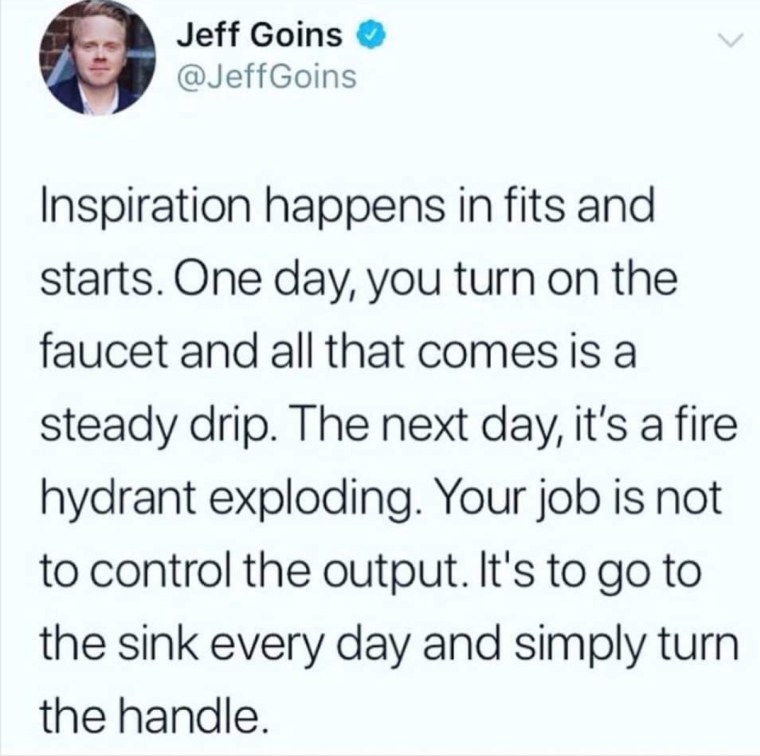
66 days –

That is what a new study says it takes to form new habits.  The study participants reported a range from 2 to 254, with 66 being an average.

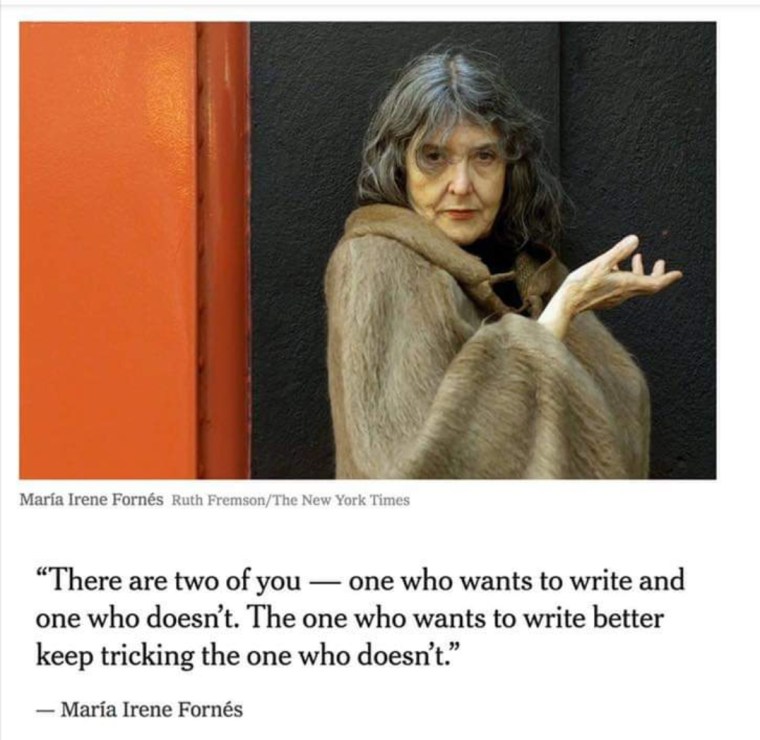
writing+ritual+It depends on the person. With me, it takes 3 to 4 weeks for me to stick to my commitment. And every year my teaching schedule changes, so there’s two to three months a year for me to recommit.

The holidays, however, throws many people off.

However, once the commitment is made and the habit is in place, it’s much easier to get back into the mind space. The secret is to jump right back into the habit after a holiday or change.  writing

Also, I think you have to make an effort to guard that commitment. Don’t be tempted to make lunch plans on a writing hour, make it for later or for a different day.

Life too easily distracts us and, without habits firmly in place, we are easily swayed.

A Tribute to Poe on his Birthday

January 19th, is the 210th anniversary of Poe’s Birth.

poe4Although many people are content with the reason of Poe’s continued relevance in our society is the stereotypical tortured artist.  There is no doubt he was tortured, and for reasons of which we are all familiar; he was an orphan who lost every women he ever loved.
His battles with alcohol, I believe, are highly exaggerated. But it makes for a good story. I’m not saying he never drank – he drank to excess plenty of times, he may have officially been an alcoholic as we understand the word today; however, it was not a constant. There were many years through his marriage to Virginia that he did not drink or drink to excess. Before his death in 1849, he’d joined the Sons of Temperance Movement – to get people to stop drinking.

The reason Poe has remained relevant throughout the years is his work touchespoe our deepest fears and deepest desires. He has continued to inspire other writers


poe2and artists of all types.


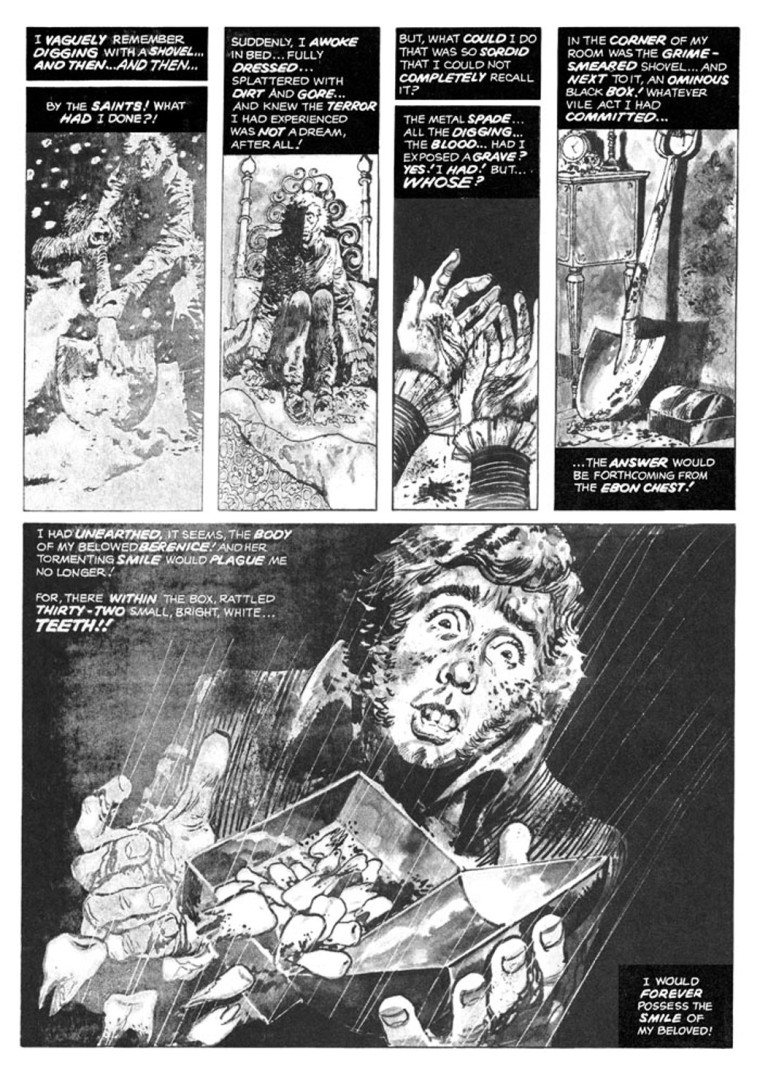
He wrote far more than what we, today, consider horror. He wrote essays, literary analysis, investigative pieces. He wrote about street paving, Stonehenge, and he was inspired by what he read in newspapers.  Berenice and others were inspired by stories of grave robbers in local papers.

poe3

The famed portrait of Edgar Allan Poe was taken three days after his suicide attempt in 1848.

Edgar_Allan_Poe_daguerreotype_crop.png

And, Eddy, my imaginative fiction, was inspired by that suicide attempt. He bought two bottles of laudanum on a cold winter night meaning to do himself in. He’d lost Virginia and felt he had no one. (Laudanum contained opium and derivatives of morphine and codeine.)

eddyfinalredonefromtresized


For Poe’s Birthday, I offer an excerpt from the novella:

   He stumbles from the pub, slips, and falls on the iced over bricks of Boston’s November streets. Save for the muddled voices beyond the closed door, the street is quiet as his body thuds to the ground. His breath billows in front of him as he gasps and grumbles and struggles to his knees, then his feet, to regain his drunken balance.

   The gaslamp on the corner offers a wavering yellow glow for the struggling figure on the lonely winter night. Thin strands of hair blow in the chilled breeze; he runs his hands over his head, straightens himself before he pulls at the sagging overcoat and tugs it closed.

     Remembering the tinctures of laudanum pried from the chary pharmacist, he hurriedly shoves his hands in his pockets, retrieves the bottles.

   His heavy breath mounds in front of him and, for a moment, he can’t see; then the luminous cloud of brandy scented air dissipates. The medicines are intact. Relieved, he stuffs them back in his pocket and buttons his jacket.

   “Edgar,” someone calls from the corner; the noise from the pub trails the swarthy figure out until the door slams to a close behind him. “You alright?”

   Edgar waves him off without turning around.

   The thick shadow chuckles as he staggers in the opposite direction.

   The winter is freezing cold, but the snow hasn’t endured. Small white crystals pile in corners and fill the air. The icy rain soaks him before he reaches his chamber on the second floor of the boarding house. The room is small, impersonal, but warmer than the street. An unlit lantern shimmies on the desk as he unsteadily seats himself, glances out the window.

   A barely discernable outline disquiets the otherwise muted darkness on the corner of the street below. He knows it’s the black dog that’s stalked him his whole life. Suddenly angered, he shoves himself forward, pushes the unlit lamp aside and topples the ink jar.

   “Get outta here, you wretched creature.” The incensed command lost in the night.

      Recovering the secreted bottles of opium from his coat pocket, he sets them side by side in front of him. Unsteadily he tugs the lid from one and snorts in a single gulp.

For More Posts on Poe – click this link.

To get the book at 3.99 – this weekend only – click this link.

To get the ebook at .99 – today only – click this link.


edgar_allan_poe_3.jpg


Much love and luck.


Create an Intention Board

Visualization, scientists believe, is important in achieving what it is you desire.

If you’re concerned about an interview – picture it first

Concerned about completing an assignment? – visualize it finished!

What do you want to happen in the near future?

MOODBOARD2.jpg

Sometimes these are large goals – end result goals, and that’s good. We see the big picture. What about the little picture?

  • Cut pictures out of magazines (old school) or collect images, text, videos from online and make an intention board for the next few months.

This deals with a little bit of realism. If you’re not writing and you choose a photo of you at a book signing, that’s the end result. Perhaps keep that photo, but put it on the larger board.

  • Right now, make an intention board smaller. If you’re not writing and you’d like to write more, place a photo of a person sitting at the computer or typewriter. Imagine what else you want there. You a steam cup of tea? A tray of snacks? Your cat purring at your side? Make this an enjoyable experience. What needs to be there to make this as enjoyable as possible.

I’d love for you to share your results in our newly formed group: Writing 365. Join us!