Guest Author: Paul White and Love

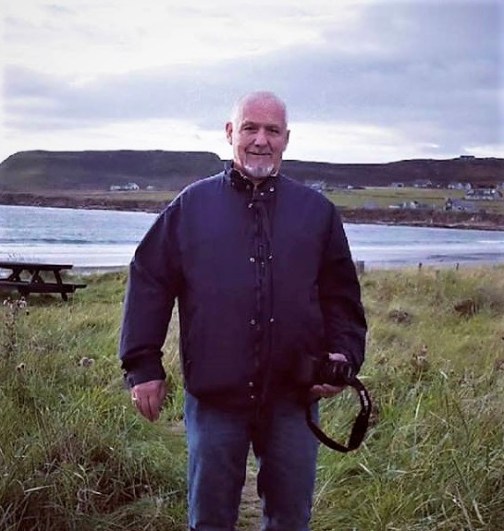
41530671_446651229159319_7854224569849085952_n - CopyWhen Noreen asked me to write a guest post for this blog, I was happy to oblige. However, I had no idea what I should write, until she suggested I write about the love, my love, of writing.

You see, Noreen picked upon a paragraph from a post from my own blog ‘Ramblings from a Writers Mind’, this is it…

In my heart of hearts, I believe the soul of the writer, the artist that lays within, is the greatest asset of all. No one can learn to write unwillingly; the writer must have love and passion above teaching and education.

A writer must want to write, above all else.

So, with the introduction over, I’ll wander through my thoughts about this subject as they come to mind.

***

Personally, I believe the passion for writing starts early in life when a child begins to compose stories, poems or simple essays.

My own first ‘published‘ work was a poem called ‘The Angel of Death’, which may seem a rather disturbing title for an eight-year-old boy to use, until you relate it to the Bible. Now, I am not a religious person, but back then, in 1966, the world was a very different place and religious studies in schools here in England were almost exclusively Christian.

At the tender age of eight, I was just beginning to understand the descriptive power of words and, even though I could not yet meld and mould them as a wordsmith, I still found their basic meanings influential.

The following is that poem, written by an eight-year-old me in 1966.

It is as basic and childish as one would expect but, looking back with the knowledge and understanding I now have, I can see what my teacher saw in the writing and why she insisted it is printed in the school’s annual magazine.

The Angle of Death

In Egypt, there was a quiet night.

But when the velvet sky turned grey,

A sword, gleaming, white,

And blood dripping.

A cry, a scream from every Egyptian house.

The sky turns back into starry velvet.

Sobs come from the Egyptian houses.

***

I think once the passion for writing gets a hold of you, once it is deeply buried under your skin, it is an affliction which stays with you for the rest of your life.

Is it an addiction?

Is it some sort of a hormone imbalance?

All types of weird answers can be found on the Internet.

Some claim the motivation is all about money. Others insist on fame and popularity. Still, others mention egotism.

All of us are different and, in all honesty, there are probably just as many reasons for writing as there are people on earth.

Some of us hope to win awards. Others want to influence people’s thinking, maybe by teaching, or to inspire or motivate.

But they all miss the point.

The passion, the love for writing in the first instance is something, I am certain, you are born with.

I do not think the individual reasons matter. The important thing is to discover the root for your own reasons, discover where your love began so you can use that strength, utilize it.

Never be frightened of revealing your passion through your writings.

***

The pursuit of the writing life through the love of the pen is nothing new.

Many people rise at the crack of dawn to write before going to their day job. Some burn the midnight oil and beyond, often watching the sunrise on a new day.

Anthony Trollope, the prolific and well-known Victorian novelist was, in the daytime, a post office clerk. As was Charles Bukowski and Franz Kafka worked for an insurance company.

These are a few authors we know of because they became famous, but there were, and still are, a thousand more writers who we will probably never know about, ones who wrote just as passionately and with just as much love for the written word.

In years to come, in the future, I may be one of those forgotten souls. But even that thought will not stop me writing because I have my own reasons, a reason I voiced once before in an old blog I used to have.


These are the words I posted on that blog.

But it’s just a dream, I guess.

I write to leave a trace of my being, however faint that may be.

I hope, or dream, at some point in the future, someone somewhere will dust off the cover of one of my books and open it. Turning the yellowing, fragile pages for the first time in a millennium.

As they read my words, they shall hear my voice echo through the centuries, be touched by my narrative. I wish them to become one with my story, lost in the world of fantasy and fiction which inhabited my mind generations before… Then, I would not have lived for nothing.

But it’s is just a dream, I guess.

***

I know I am not alone in the love of writing from the heart, from the soul, from the very epicentre of my being. Here are what some other writers express.

“My writing tools were my most precious belongings. My best quill pen was made from a raven’s feather . . . I was often so poor that I could not pay my mantua-maker, but I always invested in the best ink and parchment. I smoothed it with pumice stone till it was as white and fine as my own skin, ready to absorb the rapid scratching of my quill”

Kate Forsyth


“Writing is making love under a crescent moon: I see shadows of what’s to come, and it’s enough; I have faith in what I can’t see and it’s substantiated by a beginning, a climax, an ending. And if it’s an epic novel in hand, I watch the sunrise amid the twigs and dewing grass; the wordplay is what matters.

Simply put, I’m in love, and any inconvenience is merely an afterthought.

The sun tips the horizon; the manuscript is complete. The author, full of profound exhaustion, lays his stylus aside. His labour of love stretches before him, beautiful, content, sleeping until the next crescent moon stars the evening sky.”

Chila Woychik, On Being a Rat and Other Observations


Since I was a child, the only time I was really happy was when I was lost in the pages of a really good book. I loved everything about it. The print, the paper, the intricately designed covers. And most importantly the stories held between the covers. Books were an act of love. Nothing more. Some beautiful soul had taken time and effort to pour out their thoughts. Someone had taken the time to cultivate an entirely new experience for you to immerse in. Get lost in. Feel a sense of wonder in.

Sakshi Samtani, the writing cooperative.


I hope you enjoyed reading this post and that it has given you something in return for your efforts.

This is the link to my blog, Ramblings from a Writers Mind, https://ramblingsfromawritersmind.wordpress.com/

This one is for my website, http://bit.ly/paulswebsite  please come and visit, take your time browsing and say hello.

In the meanwhile, Keep Happy.

Paul White
head2 2.jpg

Why I Write

14563288_1399791920050130_5249056612799485051_n

The second part of the statement of poetics written many years ago included the reason I write.

Of the many reasons I write, comes the desire for order.

Life is chaotic. Many things are not only out of our control, which I can live with, but happen without explanation; the lack of reasoning is challenging for me to accept.

Sometimes I write stories to understand. Therefore, I write stories to order my universe. To put life in terms I can understand.

I read a story many years ago about a child who died from cancer. How does such a precious gift leave us so soon? I wrote a fairy tale called Seeds (never published). The story could never explain or give an answer to such a sad happening, but it did give life to a little girl I never knew.

Of all the reasons you write, can you narrow it down to one or two? Share here or one of the social media accounts.

Interviewed by Anda Stan….

Interview-Time-Guest-Author-Noreen-Lace-1280x480Hi, all.  I wanted to give you the link for the interview:  Check out AndaStan.com for almost the whole truth, a few little secrets, and some tips.


laughtIt was a very thorough interview – she poked me with a stick until I gave it all up!


Enjoy!

world-ecard-email.gif

Friday Feature: Chris Pellizzari and the Unattainable

granada 3.pngI started writing when I was a freshman in high school. My very first writing efforts were poems filled with rhymes and cliches. During my sophomore year of high school I took a creative writing class, the only creative writing class I’ve ever taken. I hated it. I especially hated the teacher. She liked this weird, semi-beatnik/hippie style of writing, poems filled with “crazy” images like “throwing batteries at dead cows” and things that tasted like “copper pastries”. She liked short stories with bizarre characters and situations, things that were weird for the sake of being weird; weird that did not move the story in any direction.

The class was a nightmare and I rebelled against it and her standards of “good writing”. I received a C+ and vowed I would never take another creative writing class again, a promise I kept. But I kept writing in my spare time and was finally rewarded my senior year of high school when a short story I wrote about my grandfather, the one person who encouraged me through my early years as a writer, was a winner in a national writing contest. I won $500, had my story published in a magazine, and was presented a plaque by former president George H W Bush at a ceremony in Chicago. My high school newspaper published an article about it and I found a level of redemption concerning the creative writing teacher from hell.granada 2

Throughout college and journalism grad school, I continued to write fiction but never tried to publish any of it. The only things I published during this time were articles for small local papers like the Elmhurst Press and Villa Park Argus as a stringer, covering board meetings and stories about preserving mansions from the 19th century and such. I also covered high school sports for the Daily Herald. I didn’t start submitting short stories to literary magazines until I was thirty, and even then, I only submitted a handful. It wasn’t until I was 35 that my first short story was accepted for publication. The story was titled “Granada”, a story about Spain that was published in The Awakenings Review. I’ve been writing and submitting short stories and novellas like crazy ever since.

granada coverI studied abroad in Granada, Spain during my junior year at the University of Illinois at Urbana-Champaign in 2003. I fell in love with the country and with a young woman in my study abroad group. Today, Spain represents the unattainable in my life. I have since developed an anxiety/claustrophobic disorder and refuse to fly. I can no longer physically travel to Spain. I can only travel to Spain through my mind, through memories. The young woman I fell in love with in Granada was also the first woman I ever truly loved. It was an experience of first-time, authentic love, love for a person and place. I know I can never recapture that kind of intensity in regards to love. One can only feel that kind of love when young. Everything after that is fine, marriage and such, but it will never be as pure or intense. And that’s what Last Night in Granada is about. It is a story about the unattainable.

Chris Pellizzari, author of Last Night In Granada 

_________________________________________________________________

Thanks, Chris. Best of Luck to you!

noreen

Food Crimes: A Lover’s Revenge

muffins2

Many years ago, in a suburb north of Los Angeles, Eat My Cupcake was in danger of becoming another victim of the gluten-free, sugar substituted society when Zin stepped in.

People wanted choices, she said. Eat my Cupcake changed to Eat My Muffin and featured exclusive, secret recipes that other bakers tried to duplicate but none succeeded; the some sweet, some savory, some healthy, some masquerading as healthy became a much sought-after experience.

Therefore, in the once nondescript neighborhood with the small bakery, lines around the corner formed beginning early each mornings, people waiting for the one and only Zin’s famous muffins.

Among one of the favorites was a Millet Muffin. The savory-sweet combination of light and fluffy grain pastry was a hit. muffins1

Zin was offered money, lured by head baker guarantees at more established places with promises of salary, health insurance, assistants.

But she liked where she was, who she was, and the freedom to create.

Rob became Zin’s lover years before she became almost-famous. Rob followed her from place to place, always a second to her baking but accepted the position. They loved each other.

But more hours meant more workers meant more people in Zin’s life. Zin had two weaknesses, fresh white flour and sweet young flesh. She slipped into an affair with one of her assistants, Rob was heartbroken and angry.

muffin3One night, crying over a tequila sour, the recipe came out in a drunken slur. Friends who sympathized turned for a single moment to make a note.

Zin begged forgiveness and agreed to work fewer hours, no assistants. Rob forgave her. He barely remembers his drunken night but thinks something may have slipped. Zin is blissfully unaware that her recipe is being shared in whispers like a friend’s quite insinuations.

What follows is the rumored recipe from a once famous bakery and a once famous baker.

Millet Muffins

½ cup of millet

1 ½ cup of flour

1 tsp baking soda

Dash of salt

½ – ¾ cup of brown sugar

1 (room temperature) egg

1/3   cup of butter (room temperature)

¾  cup of buttermilk (room temperature)

Mix the wet ingredients

Mix the dry ingredients

Oil the muffin pan/preheat the oven to 375.

Mix the wet and dry ingredients together and place the muffins in the oven.

Bake for 18-20 minutes.

muffins4


*Based on a true story. Names/places changed.

To the best of my knowledge, this is the original recipe. Although I have not baked them myself, I’ve been the beneficiary of the final product. Mmmm.

There are two lessons to this story. First – don’t cheat on your partner who may have your secret recipes. Second, don’t trust a writer with your stolen secret recipe.

Writer Wednesday: Writer and Writing is a Relationship

heartI know people say writing is a commitment, but it’s more than that. Writing isn’t “like” a relationship, it IS a relationship. A writer must be involved with the whole process of writing, must love it, need it, want to continue to work to make it better. It takes commitment, time, dedication, and the desire to move forward in life with writing.

A few years ago, I was at a conference where the main speaker (don’t remember his relat 1name) said, “You have to be selfish. You must take the time for yourself, for your writing.” He went on to say he spent every Friday at a hotel with his writing. (are you picturing him checking into a seedy, no-tell motel with an old typewriter?;-)

My friend joked, “Noreen does this thing where she actually spends time writing.” My regular action became fodder for humor because he is a writer, but he falls under the category of non-writing writers like many others.

Life happens. We have families, pets, jobs, homes, tons of responsibilities. But notice that list – I put family first. People we love comes first. This is why a writer might consider writing as a relationship – so they give it priority.

I schedule things around my writing whenever possible. I will make doctor appointments, meetings, and everything I have power to plan secondary to my writing by scheduling them before or after my planned writing time.

Once a person considers themselves in a relationship with their writing, they may relat 3naturally form relationship goals! If writing were a romantic relationship, how would you handle it differently? Would you want to go to sleep with it or wake up with it or both? What would you want to give it? Would you spend more time with it, going over the details, working it out so it was just perfect, going over it and over it again to work it out nice and smooth? What do you do for your significant other? Take it out to dinner? On vacation?

Writing, like a lover, needs constant attention and nourishment. Placing it on the back burner means we may never get to it. It’ll be there, but not as warm and flush as we’d like. Being in a relationship with writing means the needs of both are fulfilled. Writing is fresh and flowing and continually improved and the writer is happier, more productive.

We do this because we love it, we are driven to do it. Treat writing like it’s important to you.

Think of writing before you fall asleep, when you wake up in the middle of the night just to say one more thing.

relat 2

West End – the opening chapter

Hi, All.  I was feeling West End today. I wanted to share a little portion, but couldn’t decide, so I give you all the opening selection for West End.  Enjoy.

front-cover-small

BEFORE MY MOTHER drank herself to death, I knew her as a gentle creature who fed wild squirrels from her hand.  On the back patio at mid-day, she’d stand very still, calm, peanuts laced in the fingertips of her outstretched hand. The squirrel, a female, her babies came later, approached with caution, across the railing, onto the windowsill, grab the nut, run to the other side of the patio where the squirrel peeled back the shell, ate the meat, then returned for another and another. For a while, the squirrels became my mother’s greatest pleasure.

When the female squirrel stopped coming, my mother worried, but the baby squirrels continued to visit. Then, the cubs must have grown, left the nest, because one by one they disappeared until only a single squirrel came to the daily meeting.

That winter, mother’s heart sucked itself dry. Familiar faces appeared, distant relatives, long-ago friends, who talked our concerns away with assurances for tomorrow and beyond.

“Little honeys, it will be okay.”

“I brought the eggplant casserole, green dish.”

“She was a wonderful woman.”

“Call if you need anything.”

Sarah and I stood at the door where someone’s aunt told us to stand. We pointed people who carried in food to the kitchen, guided people with flowers to the dining room, pointed the rest to Daddy who sat on the couch, gaze glued to the floor. We didn’t have to say anything, and no one asked.

The familiar strangers came and went and with them, our mother, our hopeless youth, our language.

The house became quiet. I couldn’t remember the last complete sentence I spoke or heard, couldn’t remember the last partial sentence I’d said to my father or he to me. My sister and I exchanged words, hushed, sometimes soundless breaths only we knew the meanings for. We lived our lives in half-words, pale sounds that sunk into the silence, in ideas of what we had to do next: breakfast, school, homework, laundry, dinner, dishes, bed. This soundless process became our lives; a strange off-balance way to live, but we did it for some months content not to break that pattern.

One cold February morning, a descending snowstorm blocked the roads, locked us indoors, kept us from going to school, our father from his work. Our first full day alone together in the house. Sarah and I sat at the painted brown kitchen nook picking at our cold Raisin Bran; the milk just tangy enough for us to question the freshness. A tapping noise brought our eyes to each other’s. Then silence.

“Wind.” Sarah exhaled with barely enough voice to make a sound much beyond the breath itself.

“Yeah.” My voice not much stronger. We returned to the cereal.

Tap…Tap…Tap…

Her gaze followed the floor to the sink, the counter, the back door.

“The door?”

I shook my head. “Nah.” Not today, at mid-day, in this storm. “Wind.”

I slipped from the nook; she followed. We stood, somewhat unnerved when the tapping came again. We could see through the glass in the door; no one stood there. I moved to the windows to get another view of the patio, leaned over, heard shuffling, then rattling against the window. We jumped. A squirrel clattered against the window, caused us both a momentary and laughable fright. Sarah touched my arm. We each took a deep breath. Our first that winter. The squirrel, the female or one of the children, we didn’t know and could never tell anyway, gave us a quizzical look, stretched up against the window; her little paws stretched against the glass. Tears welled. Quiet, unmoving, we held our breath, each other, tried not to let out the flow of emotions the winter built up.

Father’s footsteps, heavy on the linoleum, came toward us. We straightened.

“What’s going–”

“Shhh,” we both hushed him; his rough, dry voice might drive the squirrel away.

“It’s the squirrel,” Sarah said.

He looked puzzled.

She motioned toward the window. “The squirrels Mom used to feed. She used to give them nuts.”

“Well, give it some.” He waved his hands at us.

“Where are they?” Sarah pulled open random cabinet doors.

“I don’t know.” I opened the opposite cabinet doors.

“Well, look, look. They have to be here.” Father took to the drawers.

The three of us searched for a bag of peanuts Mother bought for the squirrels, hid from us to deter our snacking.

“He must be hungry.” Father gazed out the window at the back yard covered in snow. The porch railings, the powerlines, all draped in sheets of white; the squirrel, nervous, waited at the end of the banister. “Peanut butter. Get the peanut butter.”

“Will he eat that?” Sarah reached for the jar.

“Certainly,” Father assured us. “It’s peanuts, isn’t it?”

I grabbed for the bread.

“Just spread it on,” he said, more animated than I’d ever seen him.

We did.

“Wait, he can’t eat it like that Break it up.” He put his hands in the mess with ours.

Of course, we knew, but at the moment, that strange, unsettling, yet somehow comforting moment, we all needed to take part.

Sarah set the plate on the patio just outside the backdoor. The squirrel chattered, juddered its head from her to the door, the windows, its tail jerking back and forth as if with nervous jitters, then approached the plate, took a piece, and skittered back to the railing to eat it.

Dad ordered us away from the window. The little squirrel tittered, danced delicately, tail flitting, to take more food. We backed out of the kitchen.

Something shifted inside the house. The rooms warmed. The silence faded. The house took on old noises; the refrigerator hummed; the kitchen light buzzed; switches flicked with their old sticky clicks.

Our voices returned. We spoke more than mere sounds. We’d broached full sentences. But I don’t know if we ever surpassed that. We’d never been a family of paragraphs or stories. Laughter rarely rose to the ceiling. Now, with one of the speakers forever hushed, we were destined to be something less than complete.

Winter dissolved into spring; the strawberries mother planted last summer grew green, red, wild. We left nuts out all the time. Sometimes squirrels ate them; sometimes they’d sit until the birds got them or the ants swarmed them.

Sunrise reopened in summer, but never again did we hear our names called from the front patio as we walked up the street, never again did the light intonation of words follow us through the night, “not too late,” never again, upon our return, would we be met with a drunk asleep on the table with just enough consciousness to whisper “too late” when we passed through the kitchen to go to bed.


*West End is available on Amazon, Kindle, and Audible.

It doesn’t matter…..

I loved The Munsters when I was a child. When asked to write an “artist’s statement” in graduate school – I actually said I wanted to be kicking around in the leaf-blown yard of Munster-like house.

I came across this lovely little clip recently. True wisdom for our age – for any age.

Love each other because you’re human. Understand that we all follow different paths and respect one another.


What does matter is the size of your heart and the strength of your character….

The Evolution of Writing Style

A prompt in a writing group to think about style inspired me to consider the evolution of my own writing style.

Writing evolves, grows, hopefully gets better, with all we learn and experience in life.  But style is something a little different. Style, sometimes, doesn’t change. Or, I should argue, doesn’t change that much. Maybe, it’s the small changes that only a critical reader might notice.

Last year, when I published Here in the Silence, I felt the stories earned that title. All the protagonists were struggling with finding their own voice. They felt silent or silenced, either from their own lack or from those around them.

This year, with Namas-Cray, my characters are different. Some are still struggling with being heard, (Of Strays and Exes), while some believe they are completely aware of who they are and what they want (A Perfect Day). There’s darkness, but there’s a dark ironic humor that embeds itself in their thoughts and actions: “Of Strays” begins with “When I killed my neighbors dog….” and in “A Perfect Day” a woman’s suicide is interrupted by an armed burglary.

What’s different between these two years of writing is the ironic humor. And, I’ve noticed that’s worked it’s way into most of my writing, including my poetry, “The Fly” features a fly who has “24 rose colored hours” of life, both celebrating and loathing those hours.

I’ve always handled my own life’s struggles with humor. When my daughter was a teenager, she looked at me and said, “Is everything funny to you?” Anyone who has a teenager knows – it’s got to be funny or you’ll lose your freaking mind. Therefore, to answer her question, I gave her a long, slow nod (gritting my teeth).

Does that mean my writing style will make you laugh at the dead dog or at the woman’s suicide attempt?  Absolutely not!  That’s where the irony comes in. It’s subtle and sardonic. The protagonist in “Of Strays,” offers to pay for the dog.  She doesn’t quite get the loss. But the protagonist grows to understand. And, in “A Perfect Day,” suicide is never a humorous topic, but our very serious plans being interrupted by life is something everyone can relate to. Her day is no longer so perfect when an armed robber says, “your money or your life.” And his plan, certainly, is not going as well either. Irony!

One of my students believes that “humor” should never be used in conjunction with a serious topic. In many cases, this is true. But we have to look at the irony surrounding the fiction that is how we learn and grow; introducing a topic with subtly allows the readers a way in to understand the situation, relate, empathize. The same is true of our lives. If you slam someone with truth, they are likely to back off and not engage. We introduce ourselves first, our struggles, along with the irony of moving on in our lives.

Let’s take a look at my life – what has happened in my life that might have made me feel more sardonic.  I teach a report writing class, which I run like a lesson in professionalism. How you present yourself as well as your writing says a lot about the person you are.  And then comes this Presidential campaign. How do I tell my 18-22 year old students to act like a professional when #45 acts like a spoiled child who’s had too much sugar?

Irony much?  This year, I was offered an African American Literature course. How do I stand in front of 36 students of diverse backgrounds as a white woman lecturing them on African American Lit?  Humor. Confront the irony. I asked them on the first day of class, “Does anyone want to know why a white girl is teaching an African American Lit Course?”

(According to the students, btw, I did a great job. Let me say, that I absolutely loved it! We built some iron bridges of communication in that class that I hope the students take out into the world with them. I took the course for a number of reasons, one of them was the above #45. But that’s a whole other story – We’re focusing on irony, life, writing style).

I do believe life affects writing style. Everything we learn, do, experience, and want should affect our writing style. We should grow and evolve as humans and as writers.

I was stuck once on a story. I’d been working with it, not quite able to get it to that sweet spot, when I decided on a vacay to New Orleans. I’m not much of a drinker, so it’s not the absinthe smoothies on Bourbon Street that inspired the trip, so much as the fanfare, the history, and the culture. I might have thought about the story while I was there; I don’t really remember. But, upon my return, the answer materialized. The story became what it needed to be. (It’s under consideration for an award as I write this).

That trip has stayed with me, as well as my other travels, other experiences: the homeless man at Starbucks focusing with intensity on a spiral bound notebook as if he was finishing his own novel – “$1.00 Stories” – the psychic who told me my illusion bubbles had burst “How to Throw a Psychic a Surprise Party” and so on. We must let life affect us, work its way into us, our style must evolve, or we stay stuck in life and in art.

writing life.jpg

I’m interested in hearing thoughts on this.  Do agree? Disagree? Has your style changed? How or why?

Enter to win

Ladies and gentlemen,

To celebrate my summer release of as-of-yet-unnamed book of short stories, I’m giving away books for the next few months. Enter to win a copy of West End on GoodReads!

westendposter