Be inspired; choose to make a change in your life! A guest blog by Linda K. Ford

girl-1561989_1280.jpgThe start of a New Year is a great time to re-evaluate your life, and discover a new direction!

You can start the ball rolling by simply making a choice, “I am now ready for my life to change!”

This in itself is a powerful acceptance. On making this choice you are nudging the door open, ever so slightly, to new opportunities.

The next step is to create clarity by reassessing your life. Take the time to think about how you would like your life to be? What is working for you and what is not!  Also include how you are feeling emotionally, for example are you happy, sad, feel loved or unloved, motivated? What changes would you like to make?

Formalise your conclusions by making lists, which you can refer back to, and expand on. If you are unsure of how to change your life and the steps to take, this is ok, as it will come. If the mind has clarity and guidelines from you, then anything is possible. You are basically opening your life, to new opportunities.

Take the time to put energy into your new choices, to move them into creation. From time to time go back and look at your lists – also importantly set yourself tasks with a time frame.

On accepting a new choice, opposition on the subconscious level may arise, and unknowingly you may create an obstacle in your path. At these times it is important to seek to understand what is actually happening, and let go of the negatives, and continue to affirm your positive, new choices. Keep going, be determined, hold to your dream and you will get there!

 STRENGTHENING POSITIVE CHOICES -AFFIRMATION

Life is a matter of choice. I choose to prosper, to be aware, to be strong, to be adventurous and safe. I choose to be happy, to be confident!

Visit Me Here for more Inspiration

 ~~~~~~~~~~~~~~~~~~~~~~~~~~~~~~~~~~~~~~~~~~~~~~~~~~~~~~~~~~~~

Thanks, Linda!

noreen

Interruptions…

I’m going to interrupt the flow of this blog , but windex1.jpge really should talk about how we deal with interruptions to our work.

I try not to take phone calls during my work time; however, sometimes I have to. A doctor appointment, a work call – all important, can’t wait until later. At least with those, you know you won’t be on the phone long.

The other day a friend called me. I hadn’t talked to him in over a month, so I wanted to see how he was. We live in different times zone, which makes scheduling time for a chat rather challenging. I told myself, even upon answering, that I wouldn’t talk long. But we did get carried away in catching up.

Set boundaries. I finally did tell him I needed to get back to my writing. He understands. Many people don’t, so I don’t regularly say that. I do tell them I can talk to them later or that I’m in the middle of something – both of which are true.

Phone calls and text messages are easier to put on hold – put the phone in the other room or turn it off. It really is not that hard.  Having children or spouses is a whole different topic, which I’m going to talk about during another blog.

*

Right now, as I said, I need to interrupt the flow of this the gold tooth.jpgblog with an announcement.

You can win my short story, The Gold Tooth! Click here. This is only for a limited time.

Long lost sisters are reunited at the reading of their mother’s will. Celeste who has cared for their mother in her declining years is awarded a small, broken music box. The force of nature, Nancy, who hasn’t been seen they were teenagers, is awarded the entire estate. Before they leave the office, Nancy is given the option to exchange the estate for the box. Nancy laughs off the incredible offer and moves into the estate. What’s discovered in the music box could cost one sister her freedom and the other her life.

Approaching Authenticity – Creativity, Psychology, and Christian Faith by Bozena Zawisz

bozenaSomething I often hear as a counselor is clients speaking about the weight of expectations they feel they’re carrying on their shoulders; and the frustration, guilt, or resentment they feel in relation to them.

Many of these expectations are often tied to a particular role they “fall into,” that contains within it: unexamined assumptions relating to some action(s) they feel they should be doing, rules for communicating (what they feel they should be saying, and how), pressures to take on board “shared” viewpoints…

Often they express feeling as if they lost their center or connection with themselves.

Some roles are consciously/purposefully chosen. I choose to relate to clients within the boundaries of a counselors’ role. At other times, individuals can fall into an interaction where there is an expectation/pressure to engage in a “role-play”… mindlessly… pulled by some emotional pathway, deeply engraved by a lifetime’s worth of conditioning… For example, many adults continue to feel strongly affected by their parents’ perceived expectations of them…

Sometimes individuals’ roles within relationships include assumptions about hierarchy (in some cultures more than others), expectations relating to distributions of privileges, expectations relating to the division of weight that is placed on the inner experience of each individual. Often, the language which does not fit an expected role-script is unwelcome, discouraged…

One of my favorite historical examples of a figure who modeled the importance of rising beyond roles and cultural expectations, and embodied authenticity and inner strength, was Jesus. I admire the way he kept right away from describing himself via popular roles or politically loaded terms of the time, which he perceived as a poor fit with his life’s journey and purpose.

I love the way Jesus preferred to describe his inner experience and communion with God using creative metaphors-that beautifully made use of people’s familiar associations (e.g. used imagery such as harvests, laborers, etc.) yet transcended the language of the well established familiar social and political roles, traditions, expectations, and their underlying beliefs and perceptions.

Jesus had a hard time with the Pharisees. Perhaps they perceived his non-compliance with the established roles that reinforced their power and privileges-most unsettling. Jesus smacked too much of personal power, disregard for the authority of political/social pecking order…

Possibly to connect with a sense of inner peace, he was documented to withdraw into solitude oftentimes, perhaps in this way he restored his strength by nurturing his connection with God. Just as in his case, I believe that it is a helpful first step in our journey towards authenticity to find ways to connect with a loving place of self-care and strength within ourselves.

Given the powerful focus our society (and at times other people) have on trying to hijack strong within_frontour attention and encourage us to look to the outside of ourselves for fulfillment–creative expression of, and reflection on, our inner experience allows us to re-center and reconnect with our inner journey of transformation.

And, support us in reclaiming control over reconstructing our experience so that it resonates with our values, faith, the direction of our journey, and more closely aligns with our truth.

Bozena Zawisz

Website

Neither Innocent or Guilty


~~~~~~~~~~~~~~~~~~~~~~~~~~~~~~~~~~~~~~~~~~~~~~~~~~~~~~~

Many Thanks for sharing!

noreen

I Am Not Necessarily Me

me.png

I use first person narrator in many of my stories.  I find the level of intimacy I can connect with in the character makes the experience feel more authentic.

I also enjoy the unreliability of the first person narrator. Although I don’t intend to make my main characters questionable, all first person accounts must be met with skepticism.

There’s one possible downside to the first person narrator and I’m certain many writers have experienced the fan who believes they understand the author based on a story which utilized the “I”.

dadshiningOne reader contacted me convinced Dad Shining was about me. “This is a true story, I bet!” He wrote.

This is complimentary in the fact that the story must have been realistic enough for this reader to believe and enjoy it.

However, Dad Shining (originally published in The Chicago Tribune’s Printers Row Journal) is written from a male point of view experiencing a life event incomparable to what a woman could experience.

There’s not much a writer can do about being mistaken for their narrator except to gently correct the reader without offending them or merely thank them. I said, “thank you for reading.”

My main character in West End is a young woman, and I did use an area close to where I grew up. A number of readers have attempted to call me out on that. One reader wrote, “I know most of this is you, except for the part of leaving the boy.” Another reader, convinced it was me believed I’d been married before and left them to change my name and start a new life incognito.

This did bother me to some extent; the woman in West End is in some ways stuck in west end coverlife, and while that might be my fear, it is not me.

Still others found the first person narrator unreliable enough to question her sanity and ask me if she was seeing spirits. These questions I rather enjoyed. One character I had intended to be questionable, but when asked about another – I don’t want to say as I don’t want to ruin it for anyone! – I was blown away!

And that is the benefit and, perhaps, curse of first person narrator. The connection is so authentically intimate that you might convince readers it’s you; And you might just convince them the narrator is a little off her rocker!

Fear of …?

istock_000012625357xsmall1There’s a theory that we don’t fear failure, we fear success.
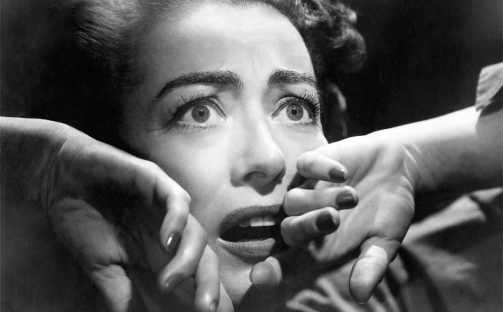

A researcher gave graduating students an impromptu essay prompt: “After finding out Joe/Jane aced their medical exams for graduation, he/she …..”

It’s reported that the vast majority of students set up a scenario in which Joe or Jane went out and partied, got in some sort of trouble, an accident, arrested, or in some cases just gave up and “decided to do something else with their lives.”

The researchers decided this was not an indication of the fear of failure, because they’d set up a scenario in which the person(Joe/Jane) had already succeeded, yet the students then wrecked the plan. Therefore, they surmised it a fear of success.fear

This possible fear of success comes from anxiety, which is rampant in society today. People stay where they are comfortable, where they are familiar, and their habits serve them. Moving on to the next level, success, will bring about different challenges, and the fear of the unknown wins out.

It occurs to me that this happens to writers. People write, and write, and write, but then don’t submit. Is it really the rejection they fear? or is it the success?  Think of all the anxiety that comes with the next level of publishing. You’ll be expected to do well, to do it again. And, what else might change?

What do you think? What do you fear?

images


The Mystery of Semicolons

indexMany people are confused by semicolons; some people just hate them.

Kurt Vonnegut hated them. Even Malcom Gladwell seems adverse to them. He said, he doesn’t see their point. So, Mr. Gladwell, this blog is dedicated to you.

I, personally, LOVE semicolons; it’s like I don’t have to stop my thought! LARGE-HEARTbeat.jpgHowever, some of my editors have asked me to cut them down. One editor-friend said, “they do not appear in popular fiction.”

BUT THEY SHOULD!

Whether you like, hate, are confused, or don’t give a damn about them, every writer should know how to use them correctly.

The secret to the semicolon is simple. Two complete sentences which are closely related in thought or idea. Other writers believe a comma and conjunction (fanboys) or a period is just as good, but I think of it this way:

blog.png

Did this help anyone?

61qc-fijuml._uy395_


Writing Exercise

malcolm-gladwell.jpgI’m a big fan of Malcom Gladwell, writer for the New Yorker and author of The Turning Point, Outliers, and many others.

A writing exercise from Malcom Gladwell:

Begin a correspondence with another writer. Each of you take turns sending and responding – and respond immediately with something interesting or intriguing.

It’s a good way to practice intelligent conversations so you can learn to chat with just about anyone.


A Habit of Success

66 days –

That is what a new study says it takes to form new habits.  The study participants reported a range from 2 to 254, with 66 being an average.

writing+ritual+It depends on the person. With me, it takes 3 to 4 weeks for me to stick to my commitment. And every year my teaching schedule changes, so there’s two to three months a year for me to recommit.

The holidays, however, throws many people off.

However, once the commitment is made and the habit is in place, it’s much easier to get back into the mind space. The secret is to jump right back into the habit after a holiday or change.  writing

Also, I think you have to make an effort to guard that commitment. Don’t be tempted to make lunch plans on a writing hour, make it for later or for a different day.

Life too easily distracts us and, without habits firmly in place, we are easily swayed.

The Journey…..

journey.jpgWriting a novel is not a destination; it’s a journey. It’s the hardest journey you will take with unclear signs, narrow paths, tricky u-turns, treacherous cliffs, an occasional dead end, and a steep road toward the end.

You will come out of this ragged, weary, exhausted, and wondering what it was all for. But then, your newborn book materializes before your eyes and you see it was all worth it.

Author to Author Interview – Welcome to Ann Harrison-Barnes

Tell the readers a little about yourself:

My name is Ann Harrison-Barnes, I am the proud single mother of a beautiful little girl. I’ve been blind from birth. I love spending time with my family and playing with my nieces and nephew, when I’m not reading, listening to podcasts, writing or crocheting.

Tell us a little about your writing – genre, publications, etc.

I write Christian fiction with a bit of mystery and suspense. I guess you could call my first full-length novel a Christian mystery. I have also written a children’s book and I’m working on a few others. I’ve not only published my own books through Amazon KDP, two of which are licensed under the Electric Eclectic Books brand, but I have been featured in four anthologies. Three of which are online, and one I’m figuring out how to offer as a giveaway. One of my books is a small short story collection that has a bit of everything. I am currently working on revisions for a how to book for aspiring authors who want to self-publish their own books through KDP

Do you have a favorite character, story, setting that you’ve created?

My favorite novelette is called Inner Vision, an Electric Eclectic book. I loved adding a bit of mystery, intrigue and a bit of romance to this Christian fiction story.

How long have you been writing?

Well, that’s a hard question to answer, because I started when I was in fourth grade, then I dabbled in it when I was in high school, but to be honest with you, I have been writing professionally for over eight years now.

What was and is your motivation for writing?

After I suffered emotional abuse from my first husband, I had dreams of climbing. And I turned to music. Those dreams gave me the inspiration and motivation to write A Journey of Faith: a Stepping Stones Mystery. Since then, I have been compelled to write stories and novels to share the message of God’s love through entertainment.

What do you hope readers walk away with after they’ve read something you’ve written?

Each book has its own special message, for example, I hope that people get the message that they shouldn’t give up on their life long dreams. I hope they learn to face their fears and not let fear hold them back from doing the things they love, when they read A Journey of Faith.

What is the biggest challenge your blindness has presented in your writing?

Adding photos to blog posts, formatting my books, creating covers, and sometimes having the necessary funds to seek the services of an editor. As for marketing, transportation to events can be a challenge.

What do you believe or hope your writing future holds?

I hope that I can at least touch the life of one person through my writing. If I can  bring them closer to God or give them a brief moment to allow their inner child to be fondly remembered through my Children’s books, then I’ve done my job. If I take on professional clients, I hope to give them high-quality work. However, I also want to find writing jobs that I know I’ll enjoy.

Please visit my website for more about me and my books. While you’re there, be sure to hop on over to my blog.

https://annwritesinspiration.com

Thank you, Ann! Best of luck to you!