Fiction = Lies / Writers = Liars?

gaiman.jpgNeil Gaiman says lies are what fiction is made of. Well, yes, but….

He says, we make up people and places and put them in circumstances which aren’t true. Yes, well, but…

But we tell some sort of universal truth with these lies and that’s what makes it good fiction.

Gaiman is all about honesty, so I’m surprised he calls what we do lies. I don’t consider fiction lies. But I can see how people think it is. But then, do we call writers liars? I would hope not.

There’s a difference, isn’t there?  I, personally, keep my life honest. I appreciate honesty from everyone in my circle and will not continue to be around people who are known to have lied.

Plato believed fiction was dangerous to society. He wrote in “dialogues” to teach philosophy or what he believed philosophical truths.

He was fictionalizing these dialogues. And if fictions, like philosophy, seek truth and honesty, aren’t they important?plato.jpg

Gaiman says the magic of fiction is the big, important truth.

I guess, if the fiction doesn’t tell us a truth, it has been a waste of our time, of our words, and is, therefore, a lie.


Critique Partners

critiqueisnotscary.jpgThere’s nothing more helpful than having someone read your work and give you the fresh perspective needed to improve.

Recently, my writing partner found a tiny mistake, despite having others read it, reading it aloud, and checking, rechecking, and re-editing it a thousand times. So helpful! I would have been embarrassed had it gone out with that small spelling errors that even spellcheck didn’t catch.

HOWEVER, there’s one thing that’s troublesome about critique groups or partners. The one who does not actually want the advice. I’ve worked with people who, every time I commented on their work, responded by explaining what they’d planned, meant, thought they wrote. They felt they accomplished what they wanted to do and didn’t plan on changing a thing. In other words, they’re weren’t listening. Why they even brought the story to the group, I have no idea. Perhaps they thought the story would be endlessly praised.

Ladies and gentlemen, some praise is necessary and warranted. You may have heard the sandwich method of response. First, say something positive about the work. Next, suggest and improvement. Finally, end with a positive.

In my classes, I actually students to say at least three positive things about any piece of work before we launch into the “room for improvement.”

Showing others their work is exceptionally hard for some people.And there are always good things to be said about any attempt.

But a good critique is learning to be open to hearing what is being said. Respond not with denial and deflection, but consideration of the comments received.

When I’m reading or editing, I ask the writer’s purpose and hopes for the piece. This helps me focus the response a little better. I also discuss the critique so I can be more specific with their desired outcome. Therefore, I do try hard to take into consideration the writer’s ideas.

After the last group with the writer who spent the whole time denying and explaining rather than listening, I avoided responding to that writer. A good critique is work. Not listing to other’s ideas will not win you friends and improve your work.


Defeat Creative Block

wolf.pngGive it physicality.

Give it a personality.

Describe it. Face it. Challenge it. And beat it down.

The Watcher at the Gate by Gail Godwin talks about creative block. One of the assignments I give my class is to draw a picture of what stops them from writing. Some of them draw a picture of an old english professor and some draw pictures of wild beasts. They report, that after giving their block a presence, they are better able to handle it.


Photo Credit

Women’s History – Women Writers

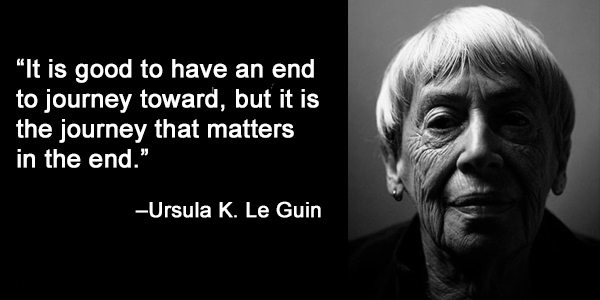
le-guin-1

Read

We’ve heard that we should read aloud to ourselves. And we absolutely know this works. We are able to hear our mistakes, rewrite and hear it a different way to see if it sounds better.

Man Writing WEB

But how many of us actually do it?

Back in the day (as my students say), copy-editors and writers read the work aloud with one another or within a group to catch mistakes before publications. Some critique groups do this as well.

When I read aloud, it sounds the way I think I want it to sound. It helps me to have someone else read it to me while I’m reading it on the screen.

This is what I suggest. Microsoft word has a setting that will read the text to you. I’ve found this incredibly helpful.

There are a number of programs if you don’t have microsoft or can’t stand the monotone.

Some writers record themselves reading the story, then listen to it while they reread in order to catch mistakes.

Let’s be honest – we all make mistakes. And to be more honest – it doesn’t look good in publication. Unfortunately, I’ve sent things out with mistakes. Fortunately, I’ve had some great editors (and publishers) who called my attention to these errors.


Memoir is Not Revenge – The legality of using real names.

memoir


When I started writing memoir, someone said they had no desire for revenge and so they would never write memoir.

But memoir is not about revenge. And you shouldn’t write memoir to get revenge.

Basically, it is believed, a writer can use an actual name of a real person because we all have our points of view and, if they disagree with yours, they can write your own.


HOWEVER, consider these things:

  1. Why do you feel the need to use that person’s full name? Is it for revenge?
  2. Don’t give enough information so any reader might contact them. All you need these days is a name, city, and google.
  3. Do you feel so strongly about using their real name that you want to face a possible lawsuit; whether or not they will win, they may be granted a day in court.

In the memoir pieces I’ve written, I’ve made minor changes to names. This gives anyone in the piece deniability if they’re ever asked whether or not they are the person in my writing; as well, it doesn’t necessarily point to them, and I am able to defend myself should anyone be looking to sue me. Or, in other words, I have deniability.

How is a Writer like a Peanut?

How are you like a peanut?

I gave this prompt to my students. Even as I was assigning this prompt, I saw the looks on their faces. They were not the first class to question my sanity; that happens regularly. So, my answer, must be “I’m a little nutty.”

Some of my students came up with amazing responses.

peanut

  • Like a peanut, I have a hard shell. But once I open up, I’m quite pleasant to know.
  • Like a peanut, I’m coming out of my shell.
  • Like a peanut, I’m a little rough around the edges, but smooth on the inside.
  • Like a peanut, I am versatile.
  • Like a peanut in a shell, I am not alone.
  • Like a peanut, I’m caramel colored.

This is challenging and, as writers, we must challenge ourselves. When we challenge ourselves, new parts of us open and allow us to grow and see life from a different point of view.

Choose an item from your refrigerator or snack drawer and compare it to yourself.
(Or choose an item and compare it to your main character.)

If you’d like to share it in our group, please do. peanut2


Hours Vs Pages – Writer’s Choice?

timeIn writing groups, the question often floats around the room, do you do hours or pages? Then there’s always some friendly disagreement over which is better.

I, personally, do hours. I get up and sit at my computer and write for a certain amount of time.

I’ve heard arguments that if I force myself to write at least a page or a certain number of words, I would be more motivated. But, see, I don’t have a problem with motivation. Many days, I get up with an idea ready to flesh out. Other days, I struggle. Like all writers.

One writer told me to do pages or word count, so when I’m done I’ll know I’ve accomplished something.

However, I recently heard an argument that made complete sense to me and might to you as well.

The writer said – do hours. That way, if you have a bad day, you know you can get up and Yellowed pages from a dictionaryleave when your work day is over. If you have a bad day when you’re doing pages – then you’ve struggled with a single page for however many hours and you’re less likely to want to come back the next day, and when you do come back, you’ll realize the page you struggled with has to be deleted anyway.

I imagine some people who chose pages to rush through on some days so they can get on to other things or give up when the page doesn’t come. One woman shared she writes pages so she can get on to other things.

I guess, I feel, I’m not in a hurry to “get on with other things.” Whereas it she sounded happy to get up and get on with her life, I’d sometimes like to sit and write longer than I’m normally free to do.

Perhaps the best choice for each individual is based on their personality. But I vote for hours. I still know I’ve accomplished something – stuck with my commitment and ritual – whether I have a page or a finished short story.

A Writer’s Space

2018_09_30+Scientific+writing2Do you feel the need to have a certain, special place to write? Maybe you have little items you feel inspire you sitting around your desk, computer, in the same room, maybe there is a stone of carnelian or citrine to spark creativity, or even big dark shades to hide you from the world.

My writing space is usually the dining room table, two windows, a bird feeder on one so my cat, usually sitting beside me can be entertained. But I also write on the couch in the living room with a lap desk, and sometimes in my bed.

Dan Brown (author of the Da Vinci code and many others) believes writing space isn’t important. It’s the ritual and the commitment, not the space. He relates a story in which he was visiting his parents and he wrote in the laundry room, lap top on the ironing board while sitting on milk crates with the washer running – because he needed an undisturbed space.

I’d say that space would disturb me – and talk about holes in a story. My apologies, Mr. 0 v7CyD5RM41-JF6Kk.jpgBrown. However, if he gets up at 4 a.m. to write (as he states), who is doing laundry at that time? And, if the laundry was put in later, then obviously someone came in to disturb you. And, by that time, he couldn’t move to another room?  Okay, sorry, sorry. Back to the point.

We do need a space to write. Ideally, we want to have certain creature comforts around us; for me, it’s a cup of tea. However, I have written on concrete benches, lying across the hotel bed, in a tiny corner that had a table and chair, in coffee shops with noise, and alone in my house at 4 a.m.

The point is our desire for the ideal space should not limit our writing time or commitment (and I think this was Mr. Brown’s point as well). If we limit our writing to the ideal, we’ll have an excuse to not write when any little thing is out of place.

Brown states he writes 365 days a year. That’s what this blog is about, right? 365. It’s about commitment. It is my challenge and my commitment to write 365. I’m doing okay, regardless of the space I’m writing in.

Use it or Lose it – for writers?

muscle-armWhen we think of “use it or lose it”, many of us think of the physical body. And, I have to admit that I was reading something about the physical aspect of our beings when I thought of applying this to writing.

When I don’t write for a day, a week, or a month, then I start again, it’s difficult and frustrating; the writing comes out scratchy, not making much sense. But, then, as I sit there forcing out the words, pushing the bad stuff out of the way, it might take me another week or month to get it moving again, but it does move and the flow is active once again.

Think of writing as a muscle – it needs regular exercise in order to flow smoothly. keepwir

If muscles aren’t exercised regularly, they lose mass. However, once they begin to work and move again, they regain the mass rather quickly. But the movement must be continual to see progress.

The same goes for writing. We need to write regularly in order to keep the flow of ideas as well as the flow of the story moving and our skills steady. Any disruption over a period of time will make the first times back difficult and challenging.

As always, the advice is – Keep Writing. Your skills will improve with practice and time. Your flow of ideas will improve and grow as long as you keep exercising those creative muscles.


Think of it like this:

Actually what the brain is doing is changing its local wiring, changing the details of how the machinery controlling your behavior is connected. It’s also changing itself in other physical, chemical, and functional ways. Collectively, those changes account for the improvement or acquisition of any human ability.