
My novella, “I, Polyphemus,” is now available on Amazon.com. Writing this book has been a labor of love for me, involving a couple of years of rewrites and research. With its publication I thought I would blog an introduction into the book’s genesis.
I became fascinated with Greek mythology when I was eleven after I nearly died from a serious illness. It was also at this same time that I began to write.
The tales of gods, heroes and fantastic creatures were somehow palliative, and drew me away from my focus on my illness. Of the many tales that captured my imagination, Homer’s Odyssey was my favorite, and Odysseus was my favorite hero. He was not the strongest or greatest warrior among the Greeks, but throughout the story he is referred to with the sobriquet “Wily” Odysseus. Reluctant to go to war against the Trojans, he acquiesces, angering Poseidon, who makes his journey home after the fall of Troy a long and tormented one
In book IX of the Odyssey, the cyclops Polyphemus is introduced. Odysseus and a number of his men take harbor on Cyclops Island on their way home to Ithaca. Nearly starving, they discover a cave stocked with milk and cheeses and glut themselves, when the cave’s occupant, Polyphemus, arrives home, and, after perfunctory introductions, begins to devour the Greeks.
In the Odyssey, of all of the characters Odysseus encounters, whether it be Circe, the Sirens, Calypso or the Lotus Eaters, seemed knowable. But Polyphemus was a brute riddle. For me he represented the existential absurd, as it seemed he was put on Earth for the sole purpose of encountering Odysseus and eating his men. He is a one dimensional enigma.
 As a writer, the challenge to flesh him out and make him a sympathetic character was akin to the alchemist’s feat of turning base metal into gold. But what if in my story he is a loving shepherd who feels his sheep are his children? What if in my tale, Odysseus and his men instead of eating his cheese, murder his children? And what if the violation unleashes the dormant poet within the brute?
Through the years, as I would revisit the Odyssey, and as my political world view evolved, my perception of Odysseus evolved as well. He became more nuanced and less sympathetic. His wiles now seemed deceitful and duplicitous. He was complicit in the murder of civilians in the villages surrounding the walled fortress of Troy, he was an active agent in a war of aggression and the architect of the wooden horse that brought down Troy. He could now be recast as an imperialist, sociopath and war criminal. In my story he is the antagonist provoking Polyphemus into violence and madness.
This is a novella, but stylistically it has elements of Homer’s Iliad and Odyssey as an epic narrative poem. The narrative is almost exclusively in the voice and point of view of Polyphemus. In portions of the story the narration weaves in and out of dreams, and enters the realms of Magical Realism and Surrealism. As in Homer’s works, the characters exist in a duplicitous world where intervention from the gods and Fates is constant.
The most central character next to Polyphemus is the centaur Chiron, who represents reason and denies the gods’ existence, and becomes a benevolent father figure to Polyphemus. Incorporating numerous characters from Greek mythology into the story was at first a challenge, but ultimately I felt I chose the right ones as my vision of Polyphemus began to take form.
As a character grows and begins to take shape, it is almost as if at some point the writer passes the torch to the character; the writing almost seems co-authored. For me, this happened when Polyphemus goes mad. It was as if I had become an observer merely chronicling what I saw as Polyphemus came to full, complex fruition- a mad poet, a vengeful father and a killer who kills with dark, sarcastic humor and a flamboyant joie de vivre. The complicated anti-hero Homer would never recognize was born.
I put everything I’ve learned and everything I had into this book, and my reinvented protagonist has become like a brother.
With that, let me introduce you to my one eyed friend- the cyclops Polyphemus.
~~~~~~~~~~~~~~~~~~~~~~~~~~~~~~~~~~~~~~~~~~~~~~~~~~~~~~~~~~~~~~~~
Thanks, Ron!


 Writing is somewhere between a mystical experience and an un-tameable superpower.
 strays, acknowledge it (close your browser), and come back to your breathing (which for a writer is writing).
 Hi, all. I wanted to give you the link for the interview: Check out
  It was a very thorough interview – she poked me with a stick until I gave it all up!


 My Name is Vicky Mclellan, since I was young I have always wanted to be an author.


 When you meet the one, it all falls into place. You no longer have to carry the burden alone. The workload is shared, you encourage each other through the tough times and celebrate successes together. With the right partner, co-authoring can be an incredible experience that fuses the synergy and talents of two writers into creating one cohesive book.
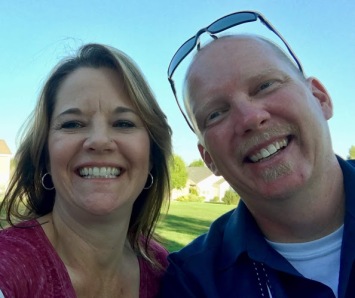 idea together, which is a fun, creative part of the process. Chuck then creates a detailed outline of the story that we then go over together to make sure everything is there. He then takes off and starts writing. After he gets a few chapters completed, he begins sending them to me. I then go through to add more emotion, fill in any holes in the storyline and tighten the writing. Once he has sent me everything, I send the edited chapters back to him so he can make final adjustments and we talk through any areas that need more work. We both read it through one more time before sending the finished manuscript to a copy editor.
 When you are working with a co-author, you have to let go of your ego. The whole goal is to create a book you are both proud of and you are happy to have your name (or pen name) associated with it. Chuck and I have different writing styles, but with our co-authored books, our writing melds together to create a new, unique voice. It is not about, “this is mine” and “that is yours,” it is seeing it as “ours.” If we got caught up in claiming different parts as our own or not being willing to work as a team to create the best book possible, we wouldn’t get anything finished.

 When people ask where I’m from, I give my prepared answer. ‘Not really from anywhere. Seems like I’ve lived everywhere.’
 weren’t for triple-digit summer heat, certain sections would be indistinguishable from the desolate wilds of North Dakota. It’s so non-scenic that literature has more or less left it out, too. Need proof? A Goodreads count of books set in California is nearly 600. But books set in Fresno? Three. One by William Saroyan, better remembered here as ‘That Famous Guy Who Used to Ride His Bike Through Fresno’s Tower District.’ The second is ‘The Abortion’ by Brautigan, destined thanks to the area’s politics to be a non-seller. The third is by a guy who teaches journalism at Fresno State.
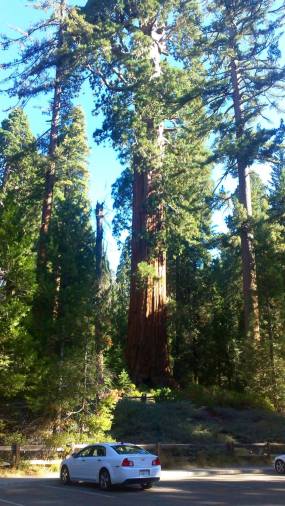 But I suppose I’m grateful that living here encourages travel, even if it does so in a backhanded, better-off-getting-outta-here sort of way. That urge to hop in a car and see something else, that desire to book a plane ticket and go even farther, is not only great for the soul, it’s great for my writing.
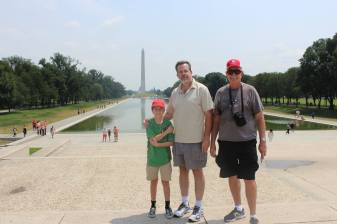
 with the DSLR strapped around his neck, taking shots of everything from the loo signs to the historical plaques set across monuments managed by the National Trust? Yep, me. Those photos come in handy during the writing process, too. Need the feeling of ‘being there’ recreated? Go visit the photo album. Need to check a historical detail? Dig out the plaque pics and read the answer. Need to remember exactly what order the Roman gods appeared on a bas-relief at the Adler Planetarium? It’s right there in the photo.
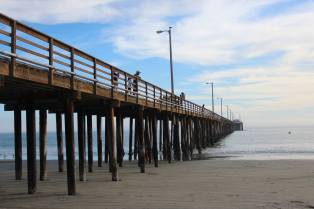
 As a writer I carry those places with me, and whether I want them to or not, they find their ways into my writing. My Nebraska origins find a home in my writing as Kolej, a small town with a big dark secret in my coming book ‘Lillie Augustine.’ Minnesota and Providence figure prominently in my memoir about full-time fatherhood, titled ‘One Ugly Mother.’ That memorable Chicago trip finds itself in another draft titled ‘Fortunate Consolation,’ where a father leads his special-needs son on a journey to escape the trickster Goddess of Fate. Two very special places — West and East Hills in Hastings, East Sussex — will soon find themselves adapted as different worlds entirely in a collaborative science-fiction epic. That Pacific hamlet of Avila Beach was the setting for my published novel ‘Davey’s Savior,’ an intimate story set next to the pier on a very small stretch of an epic beach. And Fresno? While the city itself may make me want to be elsewhere, its agrarian nature still found its way into a draft my editor promises will be a moneymaker: the saga of ‘Lifeboat.’

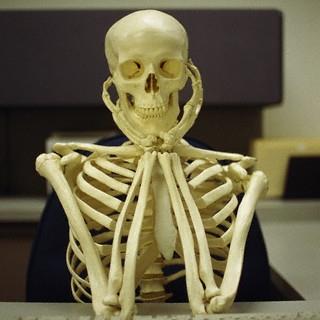 Waiting is the easy part.
 I consider it is not a fear of failure – because, by not trying, aren’t they failures already? Or maybe that’s it – they can claim they never “got their chance,” when, in fact, they never actually took a chance. That’s the true failure.
 What comes to mind? Are there images of magnificent places you’ve been, impressive people you’ve met, or extravagant stories that stimulates your soul, sparks your imagination and almost brings you to tears? These everyday inspirations lead me to be the best version of myself, however, this is not a source of inspiration for my writing.
 I like to explore the darker sides of life, which is interesting to me because I am naturally a good humoured optimistic individual. There are an unbounding instances of inspirational dualities in life, the play between light and dark, life and death, vice and virtue, and I realize as a writer I am one of them.

 I started writing when I was a freshman in high school. My very first writing efforts were poems filled with rhymes and cliches. During my sophomore year of high school I took a creative writing class, the only creative writing class I’ve ever taken. I hated it. I especially hated the teacher. She liked this weird, semi-beatnik/hippie style of writing, poems filled with “crazy” images like “throwing batteries at dead cows” and things that tasted like “copper pastries”. She liked short stories with bizarre characters and situations, things that were weird for the sake of being weird; weird that did not move the story in any direction.
 I studied abroad in Granada, Spain during my junior year at the University of Illinois at Urbana-Champaign in 2003. I fell in love with the country and with a young woman in my study abroad group. Today, Spain represents the unattainable in my life. I have since developed an anxiety/claustrophobic disorder and refuse to fly. I can no longer physically travel to Spain. I can only travel to Spain through my mind, through memories. The young woman I fell in love with in Granada was also the first woman I ever truly loved. It was an experience of first-time, authentic love, love for a person and place. I know I can never recapture that kind of intensity in regards to love. One can only feel that kind of love when young. Everything after that is fine, marriage and such, but it will never be as pure or intense. And that’s what Last Night in Granada is about. It is a story about the unattainable.

 Noreen Lace
You must be logged in to post a comment.