
The Path….
 Many people are confused by semicolons; some people just hate them.
Kurt Vonnegut hated them. Even Malcom Gladwell seems adverse to them. He said, he doesn’t see their point. So, Mr. Gladwell, this blog is dedicated to you.
I, personally, LOVE semicolons; it’s like I don’t have to stop my thought!  However, some of my editors have asked me to cut them down. One editor-friend said, “they do not appear in popular fiction.”
BUT THEY SHOULD!
Whether you like, hate, are confused, or don’t give a damn about them, every writer should know how to use them correctly.
The secret to the semicolon is simple. Two complete sentences which are closely related in thought or idea. Other writers believe a comma and conjunction (fanboys) or a period is just as good, but I think of it this way:

Did this help anyone?

Do you go into a coma when someone starts talking about commas?
Don’t get bit by the deadly comma coma bug! Figure out how to make the comma work for you, not against you!
The purpose of all punctuation is to clarify your thoughts and ideas so readers can enjoy and understand the book!
Did you have a teacher that told you, “whenever you feel the need to pause, insert a comma”?
WORST ADVICE EVER!
When we are writing, we naturally pause to think. That is not necessarily where a  comma needs to be.
Commas have a number of rules. My favorite site to use – and to introduce to my students – is the Owl at Purdue. Their comma usage explanations are clear and detailed.
One of my editor-friends believes the comma used for introductory words, phrases, and clauses is “going the way of the dinosaur.” While I agree that some people and publications seem to think so, I think it’s still a valid and needed use. [I’ve used introductory commas in this blog – one was in the previous sentence, “While I agree…]
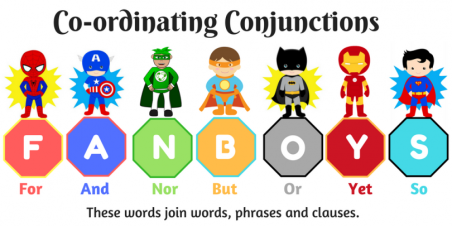
The Fanboys rules is the easiest to remember; however, because of the number of teachers giving the pause advice, I get sentences that look like this:
The Rams won but, not everyone was happy.
We sometimes punctuate our speech this way for emphasis, but you can’t hear tone in these words, and it’s just wrong. < this sentence contains correct use of the fanboys rule.
My students often ask me to explain the whole “Oxford Comma” disagreement. Well, it goes like this: There are people who use the oxford comma and then there are monsters!
Example:
Commas are confusing, but they’re not impossible to learn. Any editor is going to appreciate the correct use of commas regardless of how much they appreciate or introductory comma. 🙂
 Does your character like her/his marshmallows burned and why?
I love this – but it’s not mine.
I got this from Writer to Agent advice video from The AWP and Folio Literary Management.
Watch this video for tons of good information!
Rejections are the worst…..
or they used to be.
Once, a long while ago, I received a letter (snail mail) from a publisher. I let it lay on the table, unable to take what I thought would be yet another rejection.
When I did finally open it – I was quite pleasantly surprised by an acceptance!
And then…. a little annoyed with myself…. I needed to sign the contract and return it and I’d almost missed the deadline. That taught me – open immediately.
These days, most of these things are done through email or digital submissions. So, now, on a regular basis, we get rejected by just opening our email.
However, rejection, in all forms, tells us something. We are doing our jobs! That job is writing and submitting.
All editors have their own values. It may not mean that our work is bad, but that it did not fit the needs of the publisher or the values of the editor.
Rejections are nothing to be ashamed about, not to be feared, and not to be avoided. We should rush in with open arms.
I read the rejection, see if there is any valuable information. I’ve received some very nice rejections with some editors telling me to resubmit or offering advice.
If I have a piece which gets rejected too often, I go back and take another look at it before I send it out again. But it will go out again. And I will keep submitting.
Don’t let rejections get you down, don’t let it stop you. Publishers can not take everything they receive, but one day they will say yes to you – if you’ve actually submitted something!
Some authors are unhappy when readers see something in their story, novel, or poem that was not intended.
I subscribe to the theory of reader response. Our work is going to touch different people in different ways; readers are going to get out of it something related to what they bring to it, so if they don’t see what we originally intended, they are not wrong, nor did they read it wrong, they are merely giving the writer an insight.
I, personally, am thrilled when readers see something I hadn’t intended. For my novella, West End, one reader said the melancholy of the main character haunted her. Other readers believed some of the characters might have actually been spirits or ghosts. One of the characters, I left open. His questionable appearances deepened the story and the effects on the main character who is dealing with depression.
However, when another reader felt that the son might have been a ghost – it made me go back and reread my own work!
Once the story, novel, or poem is out there, readers are going to take away or put into it whatever is in their own toolbox and we can not control it. We may not like it – I had one person mistake me for one of my characters – but we do have to accept it. I usually thank the reader for their insights, regardless of what I feel about the response.
All readings are good readings!
If you’re interested in reading West End – it’ll be on sale Saturday and Sunday. And – then let me know what you think!
 I’ve met a number of people from all different walks of life; the one trait I admire most across the board is humility.
I was at a writer’s conference signing. I happened to be waiting at the front desk when another writer walked up and took me for someone who worked there. He didn’t look at my name tag; he didn’t look at me at all. He said something to the effect, “I’m in a hurry, get my tag for me.”
I smiled and said, “let me get you someone who can help you.”
He huffed out a breath.
I found it rather humorous. He would run into me once or twice during the event and didn’t remember the front desk incident. But, moreso, I found he treated most people as if they were there to serve him. I’d never heard of him before, and I haven’t bothered to read any of his books. Had he been the least bit human to anyone, I probably would have bought his book then and there.
We don’t have to act like asshats to get what we want. Self-importance rarely serves anyone and doesn’t win any awards. It may get you knocked off the invite list.
Humility is not a denial of our skills or our sense of self-respect. Humility is being modest about the skills, talent, and dreams we are working to achieve. And it takes nothing away from us or from those around us.

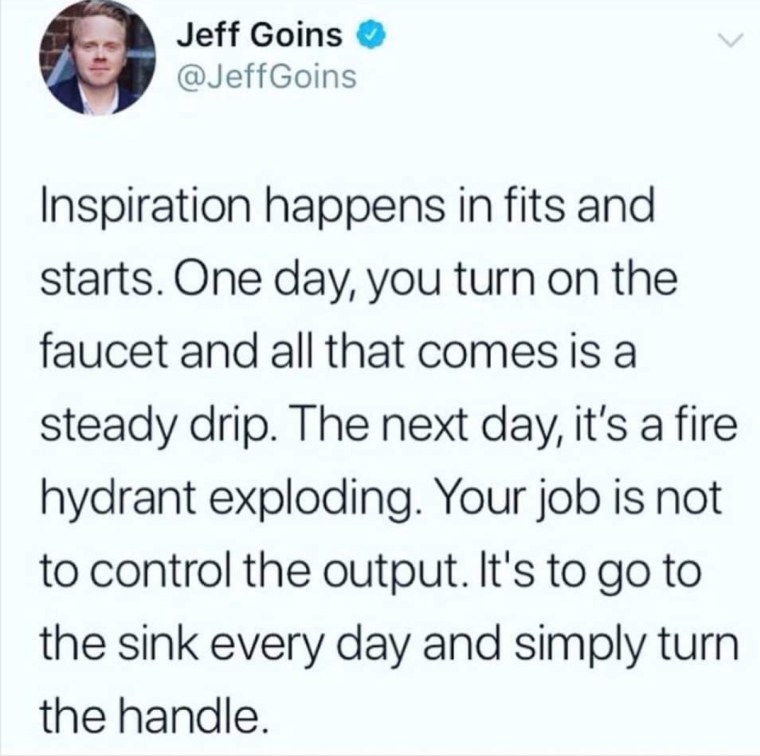
No matter how good you are, how much experience you have, there is always something more to learn.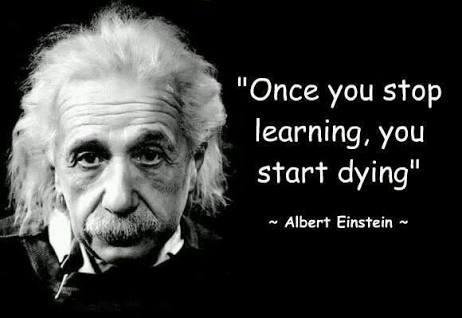
I have known writers who say they won’t attend another workshop or listen to a speaker or take another class because they’ve “been there, done that.”
While that is understandable in some cases, it’s always good to keep up with what’s new in the industry.
Beyond that, by being open to learning and to new experiences, we might pick up something new or be reminded of something we learned some time ago.
As one becomes a more experienced writer, one can be choosier and make wiser choices of who to see or what to attend – but we should all carry the idea to never stop learning.
 I’m a big fan of Malcom Gladwell, writer for the New Yorker and author of The Turning Point, Outliers, and many others.
A writing exercise from Malcom Gladwell:
Begin a correspondence with another writer. Each of you take turns sending and responding – and respond immediately with something interesting or intriguing.
It’s a good way to practice intelligent conversations so you can learn to chat with just about anyone.


 Noreen Lace
You must be logged in to post a comment.