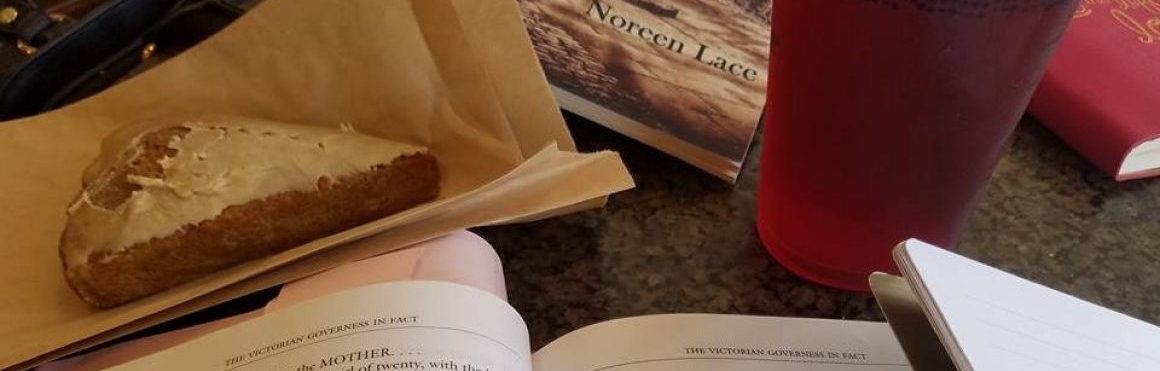

“Most of what writers write about their work is ill-informed bullshit.”
You gotta love Stephen King, if not for his fiction, for the way he sets things straight and to the point.
This is the line that begins King’s rewrite for his novel The Gunslinger , originally released in 1970, rewritten and rereleased in 2003.
He rewrote and released the novel – only Stephen King could do that.
In any case, I found his forward notably valuable. His words are not only ever for his readers, but for writers as well.
His approach to revision he says, “hasn’t changed much,” and it is “to plunge in and go as fast as I can, keeping the edge of my narrative blade as sharp as possible through constant use…. Looking back,” he says, “prompts too many questions.”
I agree. I’m one to power through and not consider edits until I’m completely finished. This way I don’t get hung up wondering if this is right, if that flows, should I change this word here? Nothing is finished until the end is on paper, then comes the time for change; however, King puts his work away for a time. I, personally, give it an edit or two or ten. I give it to my friends, I reread, fawn over every word, sentence and…. it still has errors I don’t catch for six months or a year.
 For the original writing of The Gunslinger, King has this to say about his younger self, “too many writing seminars, and had grown used to the idea those writing seminars promulgate: that one is writing for other people rather than oneself; that language is more important than story; that ambiguity is preferred over clarity and simplicity…”
I was once in one of those very seminars when someone brought up Stephen King, “don’t worry,” the professor announced, “he’ll never be remembered in the annals of history.”
The same professor, the same class, a few sessions later, eyed me after my story had been workshopped and discussed. “I’m still trying to figure out the reason for writing the story.”
“I think,” braved another student, “she wrote it for pleasure, for publication.”
The Professor’s eyes narrowed, her lips thinned, and she sat forward in the old wooden desk, “we don’t do that in this class,” she hissed.
My nervous smile slipped away as silence rose from our feet up. No one moved. No one breathed. One girl had already run out crying, perhaps they were waiting for me. I didn’t want to cry, nor run out, but I’d felt everything I’d done up til that point undeniably wrong.
I learned to write, over the next few year, the way of the MFA, ambiguous, language  heavy, story slipping under the covers of darkness of words and rhythm.
Stephen King, I thought then and now, by sheer volume and honesty of craft, will not be forgotten. And I’m not sure he cares one way or the other.
I think we can all learn a thing or two from Professor King.


 Set a timer or an alarm on your watch or cell phone for five or six minutes and write whatever comes to mind. If you can’t think of anything, then use one work to start. The word I use in my classes is “movies.” Perhaps you could use “love”, “news”, “dog.” Any word will actually do. Don’t worry about what you’re writing or where it’s actually going – just write and if at the end of five minutes all you have is a freewrite about rover doing his business on the neighbor’s lawn, then you haven’t wasted that much time. Do it again.

 we reach for a pillow and poof – a story occurs to us. Some of us continue to snuggle tight to that pillow and tell ourselves we’ll remember it in the morning …zzzzz… and it’s gone; others of us roll back over, grab that notebook and make notes.
 There’s something magical happening in our brains at certain moments during the night. We’re transitioning from deep rem sleep back to stage one, nrem sleep, where we are most likely to be awakened; this is also about the time, along with other times, that hypnagogic sleep is taking place. This is a transitional state for our minds and bodies, and the best time for “stories” to happen.


 Of the four writers, none had been published and I became the only one who expressed specific goals. In one session, a women writer spent the whole time helping another writer without responding to the rest of us. It sometimes happened, so we weren’t offended; but the following week, the same woman spent two minutes on mine and said something to the effect, “I don’t even know what to tell you with this…” before moving to another person. I realized I was wasting my time there.
 We’d meet once a week or once every other week to read and review each other’s work. Timing and responses began bumpy but smoothed out rather quickly. We were near the same writing level, although I give her credit for being better than I. As we got to know one another, we understood what the other was attempting to accomplish in their own fiction. This helped us read one another’s work more productively.
 authentic and detailed critiques with increased confidence, which lead me to more submissions, and ultimately more publications.

 Auden, Hugo, and others woke at 4am
 rest of my day. I’d have to change my thinking first – about sleep and the lack thereof. I value a good night’s sleep.


 Every beach is just a little different. Just as the light is, depending where on the planet you stand. Being there helps.

 Ideas come easily to some writers, not so smoothly to others.



 for many writers. Besides the littlest distractions causing problems for many writers, any stress weighing on a writer can keep them from being productive. One of the elements of stress is the inability to focus on anything else – it is the most distracting distraction a writer can face. Stress causes us to avoid things – things like writing!
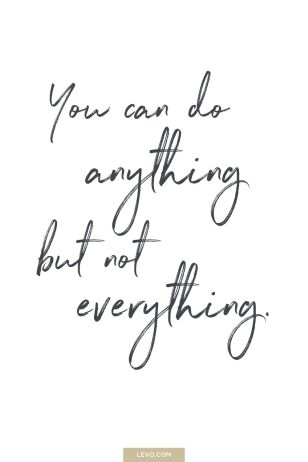 Let it go! If it is a stress we have no power over that is the only answer. It will pass. Focus on the writing, that you can control!

 It would be foolhardy and, even, unprofessional for me to say no without hearing them out.

 Noreen Lace
You must be logged in to post a comment.