Friday Feature: Building a Community of Writers – Rebecca Clark

Hi, All.  Today, I asked Rebecca Clark to tell us about The Writer’s Point.

~~~~~~~~~~~~~~~~~~~~~~~~~~~~~~~~~~~~~~~~~~~~~~~~~

fridayfeature


My name is Rebecca Clark. I am the founder of The Write Point, a free social networking community for writers, editors, publishers, beta readers, and literary agents.

Here’s my story.

For the past 15 years I’ve been writing fiction stories. Mainly for myself. It wasn’t until about 7 years ago that I thought maybe I could actually publish something! I wanted to share my make-believe worlds with others. So, I dug deep into the Internet to see what I could find about agents, publishing, the editing process, and what ever else a successful book entailed. I found several forums full of knowledgeable authors.

Forums are messy, in my opinion. I was a brand new writer lost in a world of writers who knew everything I needed to know, but somehow I felt that I didn’t fit in. There was one forum website in particular that made me feel like I shouldn’t be a writer at all. Every question I asked was answered with “google it”.

So, I googled it. I learned so much on my own, but I really just wanted to be a part of a community, some place where I felt at home with people just like me.

Last year, I decided that if I couldn’t find a place to call “home”, I’d create one. So, I did! Fortunately for me, a couple of years ago, I graduated with a degree in Computer Information Systems: Website Development and Design. I could take the time to build upon the idea, and actually understand what I was doing in the process.

The Write Point is a FREE community that I hope will become a place for new writers to feel welcome, and experienced writers can share their expertise without making anyone feel like they aren’t good enough!

Noreen, thank you for allowing me to share the story of The Write Point. To learn more about us, visit https://thewritepoint.com.

The Write Point Facebook page is: https://www.facebook.com/thewritepoint

You can also find me tweeting here: https://www.twitter.com/bekkahclark and here https://www.twitter.com/twp_network

~~~~~~~~~~~~~~~~~~~~~~~~~~~~~~~~~~~~~~~~~~~~~~~~

Many thanks, Rebecca.

Writers, Enjoy!

weekend

Writer Wednesday – The Mystery of Flow

Door-Into-MindIdeas come easily to some writers, not so smoothly to others.

There’s a little door to our writing mind which must always remain open and then things will flow in and out. it’s a frame of mind, to be open and to listen, or to always have writing on your mind, like a song playing in the background.

In a supermarket, the cashier says something to me. It could be an every day comment that strikes me a little strange. That (creative) door is standing ajar and a shadow is leaning against the frame when the cashier, red hair piled 50’s high, said something about “blueberry pie.” But I heard Blue Pie. My writer mind twirls within possibilities. That idea that lingered at the door-frame to my writer mind smacked right into the blue pie and it became a dog named Blue and Grandmother’s award-winning pie at a local fair in the height of the home-making 50’s.

I’m standing in the window of my little home watering plants; the catnip falls to my feet and I remember a dream I had the night before. Catnip Dreams begins whirring.doors

Enough of the bleating sirens, says an annoyed neighbor upon hearing yet another car alarm as my dog anxiously howls at the buzz. He says sirens. I hear a howl. I see ancient mermaids sitting on a rock caterwauling.

The space between our everyday life our creative brain must not close. Between kids and to-do lists, work and school, it must become a screen which catches things and holds them, even somewhat distorted, until we race to a notebook and write.

doors.jpg

Food Crimes: A Lover’s Revenge

muffins2

Many years ago, in a suburb north of Los Angeles, Eat My Cupcake was in danger of becoming another victim of the gluten-free, sugar substituted society when Zin stepped in.

People wanted choices, she said. Eat my Cupcake changed to Eat My Muffin and featured exclusive, secret recipes that other bakers tried to duplicate but none succeeded; the some sweet, some savory, some healthy, some masquerading as healthy became a much sought-after experience.

Therefore, in the once nondescript neighborhood with the small bakery, lines around the corner formed beginning early each mornings, people waiting for the one and only Zin’s famous muffins.

Among one of the favorites was a Millet Muffin. The savory-sweet combination of light and fluffy grain pastry was a hit. muffins1

Zin was offered money, lured by head baker guarantees at more established places with promises of salary, health insurance, assistants.

But she liked where she was, who she was, and the freedom to create.

Rob became Zin’s lover years before she became almost-famous. Rob followed her from place to place, always a second to her baking but accepted the position. They loved each other.

But more hours meant more workers meant more people in Zin’s life. Zin had two weaknesses, fresh white flour and sweet young flesh. She slipped into an affair with one of her assistants, Rob was heartbroken and angry.

muffin3One night, crying over a tequila sour, the recipe came out in a drunken slur. Friends who sympathized turned for a single moment to make a note.

Zin begged forgiveness and agreed to work fewer hours, no assistants. Rob forgave her. He barely remembers his drunken night but thinks something may have slipped. Zin is blissfully unaware that her recipe is being shared in whispers like a friend’s quite insinuations.

What follows is the rumored recipe from a once famous bakery and a once famous baker.

Millet Muffins

½ cup of millet

1 ½ cup of flour

1 tsp baking soda

Dash of salt

½ – ¾ cup of brown sugar

1 (room temperature) egg

1/3   cup of butter (room temperature)

¾  cup of buttermilk (room temperature)

Mix the wet ingredients

Mix the dry ingredients

Oil the muffin pan/preheat the oven to 375.

Mix the wet and dry ingredients together and place the muffins in the oven.

Bake for 18-20 minutes.

muffins4


*Based on a true story. Names/places changed.

To the best of my knowledge, this is the original recipe. Although I have not baked them myself, I’ve been the beneficiary of the final product. Mmmm.

There are two lessons to this story. First – don’t cheat on your partner who may have your secret recipes. Second, don’t trust a writer with your stolen secret recipe.

Writer Wednesday: Napccident’s Happen

Screenshot_20180228-182712.jpg

Napccident: when a person rests their eyes

and unintentionally falls asleep. The napccident

may last anywhere from five minutes to two or more hours.


I read an article that stated mental and physical exhaustion are different and that those with mental exhaustion nap to re-energize. Writers are, sometimes, prone to mental exhaustion. We are excited by our writing, then we crash. Or, those days when writing is torturous, we want to crash.

Another article stated that naps are ways to procrastinate.nap

Both are true. I’ve rested to recover from a challenging writing day, and I’ve definitely taken advantage of interludes as a means of procrastination. However, when I’m excited about my project and it’s pouring out, I rarely pause. I even have a hard time sleeping at night because my mind is alive with story.

When I get stuck on a piece of writing, a plot point, a character, I use respites to help me overcome that difficulty. By being still and allowing my mind to wander within the story, the challenge is overcome.

Decide if your napccident is avoidance behavior and make it be productive for you.

In yoga, we set intentions. If you lie down or close your eyes to procrastinate, accept that behavior and set an intention to be more productive. It’s not the pressure of a goal or promise, but it’s an email to your unconscious to get back on track.


Happy Napccident!


nap1

Writing Wednesday – STRESS!

stress

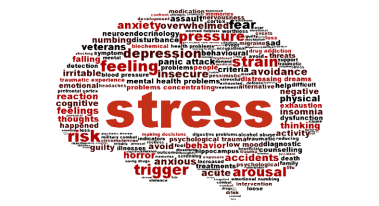
One of the worst types of writer’s block is caused by stress.

I like to roll out of bed and get straight to writing before any other distraction or activity comes up. I find that I work better and longer if I push everything else away until a manageable time. However, I find stress takes me completely out of my writing brain.

Where I can stop for breakfast, talk to friends or family, or even keep an appointment and get back to writing, when I’m stopped by a stressful event or activity I find it extremely difficult to do any work.

The good thing is that it takes a lot to get me to that level of stress; however, that’s not so Stressed-Brainfor many writers. Besides the littlest distractions causing problems for many writers, any stress weighing on a writer can keep them from being productive. One of the elements of stress is the inability to focus on anything else – it is the most distracting distraction a writer can face. Stress causes us to avoid things – things like writing!

If you’re experiencing something like this and can’t get on track with your writing, you need to ask yourself what is happening in the background of your life. It depends on each individual’s ability to handle stress, but it could be a small thing like a car problem or a large thing like a family problem. These things wreak havoc with our ability to be productive.

Again, my cure for this is to focus first on my writing and, second, on anything else. Cures for others might be similar. Block out the stress and focus on the writing – this could be a way of de-stressing. Creating a time to worry about problems is an age old recommendation. Years ago, someone told me “plan ten minutes before bedtime to worry.” I, personally, prefer before sleep and after waking to be the least stressful times. But it could still work – schedule your worry time like we all should schedule our writing time. Or, give yourself time to solve that problem, and realize if it’s something you can not solve and let it go.

stress2Let it go! If it is a stress we have no power over that is the only answer. It will pass. Focus on the writing, that you can control!

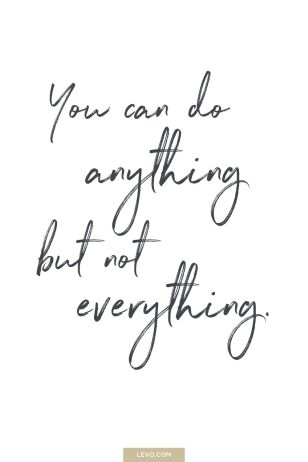
I like the quote “you can do anything, but you can’t do everything.” That’s what we have to remember. We can choose to stress about problems that we can’t immediately solve, or we can choose to use our writing as a distraction from that stress.

If you’ve found anything that’s worked for you, please post it in the comments!


Next week – decision making and writing.

Writer Wednesday: Say Yes to the Edit….

When I’ve mentioned, within a writer’s group, an editor asked for changes the room heats with disagreement.

writerblog2


“You’re not going to do it, are you?”

“Why would you sell yourself like that?”

“How dare they?!”


They dare because they are willing to publish my work; and while it does matter what they ask, I’m willing to listen and consider their ideas and advice. Usually, it is merely for clarifications or changes in simple sentence structure or the like.

My story, $1.00 Stories, was originally published by the Chicano Tribune’s Printers Row Journal. When that editor called me and hesitantly said, “we’re requesting changes;” I think he was quite surprised with my, “certainly.” The only requested was a few clarifications between the character’s name, Chris, and his nickname, C.C.

writerblog3It would be foolhardy and, even, unprofessional for me to say no without hearing them out.

While I suppose many writers believe the editor might ask for major changes in ideas or plot, I haven’t had any ask me for such things. As writers, we need to be open to consider what is said.

By request, I critiqued another writer’s work. I offered my point of view, and they became offended, tried to explain what they meant in this scene or that narration. My response, “there are all great ideas, but they are not in there.” The young person huffed off, I believe, without hearing me. Writers, we cannot be that sensitive.

We are not perfect human beings. We make errors. Some things are clear to us, but not to others. We can improve our work for the better by listening to others’ opinions. Of course, not all are worth considering. But an editor’s opinion, one who is willing to publish your work, is valuable.


writerblog1

Friday Feature: Guest Author Margie Harding.

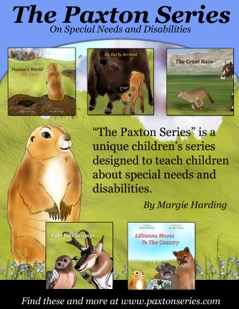
I wanted to start something new and feature other opinions, ideas, and authors on Fridays. Today, I’d like to introduce you to Margie Harding, author of The Paxton Series.

~~~~~~~~~~~~~~~~~~~~~~~~~~~~~~~~~~~~~~~

Writing is a passion I’ve been developing for many years.  While I blog, have written devotionals for teen girls, a novel about my experience of attending college as a non-traditional student thirty years after high school graduation (receiving an AA degree in Elementary Education), and more; I have been provided yet another challenge that warms my heart.

For years I have said, “It takes a special person to be a special education teacher and it isn’t me!”  I have five children and sixteen grandchildren and still a special education interest alluded me!  It was never my heart’s desire.  God has a sense of humor, I think.  After all these years of avoiding special needs and disabilities, I have begun a new children’s book series on this particular subject!

We call the series, “The Paxton Series” with our setting in the Black Hills of South Dakota, paxtonusing the wild animals of the area as our characters.  (Paxton the Prairie Dog shows up in every book, if nothing more than in a cameo appearance!)  The books are written for the child with the disability or special need….and for the child that asks, “What is wrong with my friend?” —and there are amazing illustrations, thankfully from someone who is able to acclimate the disability to the particular animal!

When the series started, I had no intention of a “disability series,” yet it morphed into this before I’d realized the need for this kind of material or impact it could make.  I attended a church organized disability conference two years ago and for the first time heard the term “disability people group” and learned much about these special people for whom I was writing!  The statistics astounded me!  I knew this was to be my life’s mission.

I am delighted to say this series is being well received –and will continue indefinitely! (The list is up to 60+).  Doors have opened I never imagined as schools, colleges (using them to teach students to be special needs educators) and other groups have found the merit of sharing these books with children, parents, educators, medical staff and others!

Invitations to share about the books from a “special needs” perspective, have also arisen and I am delighted to be an advocate for these children (and adults) who are often neglected in a variety of areas, (even if unintentionally) including written stories they can relate to.

There is very little actual reading material for children who have special needs; and paxton2certainly not for those young ones introduced to special needs children, as integration into mainstream classrooms continue.  Their peers are often confused by what they see as “different” and perhaps even “wrong” when it can’t be defined by the “normal classroom rules.”  My books attempt to bridge that gap, and are a great starting place for teachers.  They are written to aid in understanding, inclusion, and acceptance of those behaviors that are different from the traditional “norm.”

There are ten books in the series currently.

Paxton’s World on Fire                                                          Introduction

An Early Arrival                                                                     Preemie

The Great Race                                                                       Asthma

Ears Like Gramps                                                                   Hearing

Lillianna Moves to the Country                                              Down’s Syndrome

Micah Mink Goes to the Concert                                           Autism

Mixed Up Words                                                                    Dyslexia

Special Goalie                                                                        MD

Opal’s New Dream                                                                 Arthritis

The Camping Trip                                                                 ADHD


Coming soon:

The Spelling Bee                                                                    Diabetes   (September)

Madison’s Sad Christmas                                                       Depression (November)

Bristol Goes To School                                                          Cancer      (2019)

Harbinger Village                                                                   Cerebral Palsy     (2019)

Fabian’s Smile                                                                        Cleft Palate            (2019)

Our children face an amazing list of challenges.  God has placed me in a position to be able to do something fundamentally good.  I am humbled to be able to place words on paper that can help children understand what is going on in their bodies, as well as, a resource parents and teachers can use to help other children understand what is happening with their friends who seem different than themselves. If you are interested in any of these books or those to be released in the coming months and years, contact me, authormargieharding@gmail.com or visit http://www.paxtonseries.com or amazon.com.

**An added note — All 10 books are both in softcover and hardback….and we are just beginning to add a toddler version of the current K-3rd grade books (although the books are used for older students in special education classes, as well), and I am working on a chapter book!  The first toddler book, The Big Fire, should be available in just a couple weeks.


~~~~~~~~~~~~~~~~~~~~~~~~~~~~~~~

Margie – thank you for guesting. I’m grateful I could host your blog and further the word about these important books.  NL


Writer Wednesday: Writer and Writing is a Relationship

heartI know people say writing is a commitment, but it’s more than that. Writing isn’t “like” a relationship, it IS a relationship. A writer must be involved with the whole process of writing, must love it, need it, want to continue to work to make it better. It takes commitment, time, dedication, and the desire to move forward in life with writing.

A few years ago, I was at a conference where the main speaker (don’t remember his relat 1name) said, “You have to be selfish. You must take the time for yourself, for your writing.” He went on to say he spent every Friday at a hotel with his writing. (are you picturing him checking into a seedy, no-tell motel with an old typewriter?;-)

My friend joked, “Noreen does this thing where she actually spends time writing.” My regular action became fodder for humor because he is a writer, but he falls under the category of non-writing writers like many others.

Life happens. We have families, pets, jobs, homes, tons of responsibilities. But notice that list – I put family first. People we love comes first. This is why a writer might consider writing as a relationship – so they give it priority.

I schedule things around my writing whenever possible. I will make doctor appointments, meetings, and everything I have power to plan secondary to my writing by scheduling them before or after my planned writing time.

Once a person considers themselves in a relationship with their writing, they may relat 3naturally form relationship goals! If writing were a romantic relationship, how would you handle it differently? Would you want to go to sleep with it or wake up with it or both? What would you want to give it? Would you spend more time with it, going over the details, working it out so it was just perfect, going over it and over it again to work it out nice and smooth? What do you do for your significant other? Take it out to dinner? On vacation?

Writing, like a lover, needs constant attention and nourishment. Placing it on the back burner means we may never get to it. It’ll be there, but not as warm and flush as we’d like. Being in a relationship with writing means the needs of both are fulfilled. Writing is fresh and flowing and continually improved and the writer is happier, more productive.

We do this because we love it, we are driven to do it. Treat writing like it’s important to you.

Think of writing before you fall asleep, when you wake up in the middle of the night just to say one more thing.

relat 2

What’s New With You?

I’ve been remiss in my posting – which is a social media no-no.  icecreamCan I tell you a secret? I’m really just an introverted writer and I really want to do is:


Write!


Edgar_Allan_Poe_3


I had a fantastic time at the Poe Museum reading Eddy. They live streamed it (I didn’t know they were doing that!) and I’ve been invited back, hope to go soon!


27982653_1680480425366915_8840169907577678606_o

In the meantime, I’ll be at AWP.


But the real news today: my short stories – loving the covers! – are available for .99 cents on smashwords and kindle.


So – whenever you need something to do – click the link, read a story, let me know what you think!

Be Joyful!

The Evolution of Writing Style

A prompt in a writing group to think about style inspired me to consider the evolution of my own writing style.

Writing evolves, grows, hopefully gets better, with all we learn and experience in life.  But style is something a little different. Style, sometimes, doesn’t change. Or, I should argue, doesn’t change that much. Maybe, it’s the small changes that only a critical reader might notice.

Last year, when I published Here in the Silence, I felt the stories earned that title. All the protagonists were struggling with finding their own voice. They felt silent or silenced, either from their own lack or from those around them.

This year, with Namas-Cray, my characters are different. Some are still struggling with being heard, (Of Strays and Exes), while some believe they are completely aware of who they are and what they want (A Perfect Day). There’s darkness, but there’s a dark ironic humor that embeds itself in their thoughts and actions: “Of Strays” begins with “When I killed my neighbors dog….” and in “A Perfect Day” a woman’s suicide is interrupted by an armed burglary.

What’s different between these two years of writing is the ironic humor. And, I’ve noticed that’s worked it’s way into most of my writing, including my poetry, “The Fly” features a fly who has “24 rose colored hours” of life, both celebrating and loathing those hours.

I’ve always handled my own life’s struggles with humor. When my daughter was a teenager, she looked at me and said, “Is everything funny to you?” Anyone who has a teenager knows – it’s got to be funny or you’ll lose your freaking mind. Therefore, to answer her question, I gave her a long, slow nod (gritting my teeth).

Does that mean my writing style will make you laugh at the dead dog or at the woman’s suicide attempt?  Absolutely not!  That’s where the irony comes in. It’s subtle and sardonic. The protagonist in “Of Strays,” offers to pay for the dog.  She doesn’t quite get the loss. But the protagonist grows to understand. And, in “A Perfect Day,” suicide is never a humorous topic, but our very serious plans being interrupted by life is something everyone can relate to. Her day is no longer so perfect when an armed robber says, “your money or your life.” And his plan, certainly, is not going as well either. Irony!

One of my students believes that “humor” should never be used in conjunction with a serious topic. In many cases, this is true. But we have to look at the irony surrounding the fiction that is how we learn and grow; introducing a topic with subtly allows the readers a way in to understand the situation, relate, empathize. The same is true of our lives. If you slam someone with truth, they are likely to back off and not engage. We introduce ourselves first, our struggles, along with the irony of moving on in our lives.

Let’s take a look at my life – what has happened in my life that might have made me feel more sardonic.  I teach a report writing class, which I run like a lesson in professionalism. How you present yourself as well as your writing says a lot about the person you are.  And then comes this Presidential campaign. How do I tell my 18-22 year old students to act like a professional when #45 acts like a spoiled child who’s had too much sugar?

Irony much?  This year, I was offered an African American Literature course. How do I stand in front of 36 students of diverse backgrounds as a white woman lecturing them on African American Lit?  Humor. Confront the irony. I asked them on the first day of class, “Does anyone want to know why a white girl is teaching an African American Lit Course?”

(According to the students, btw, I did a great job. Let me say, that I absolutely loved it! We built some iron bridges of communication in that class that I hope the students take out into the world with them. I took the course for a number of reasons, one of them was the above #45. But that’s a whole other story – We’re focusing on irony, life, writing style).

I do believe life affects writing style. Everything we learn, do, experience, and want should affect our writing style. We should grow and evolve as humans and as writers.

I was stuck once on a story. I’d been working with it, not quite able to get it to that sweet spot, when I decided on a vacay to New Orleans. I’m not much of a drinker, so it’s not the absinthe smoothies on Bourbon Street that inspired the trip, so much as the fanfare, the history, and the culture. I might have thought about the story while I was there; I don’t really remember. But, upon my return, the answer materialized. The story became what it needed to be. (It’s under consideration for an award as I write this).

That trip has stayed with me, as well as my other travels, other experiences: the homeless man at Starbucks focusing with intensity on a spiral bound notebook as if he was finishing his own novel – “$1.00 Stories” – the psychic who told me my illusion bubbles had burst “How to Throw a Psychic a Surprise Party” and so on. We must let life affect us, work its way into us, our style must evolve, or we stay stuck in life and in art.

writing life.jpg

I’m interested in hearing thoughts on this.  Do agree? Disagree? Has your style changed? How or why?