Friday Feature: Writing as Courtship – Timothy Savage

When Timothy Savage speaks of Davey’s Savior, his novel about a father and son, it’s with a passion which encourages the reader to pick it up. He uses that same passion in almost everything he does from caring for his own son to detailing the journey of Davy and his father.

I knew when I asked Timothy to write something, he’d present something marvelous…. and so he has.

~~~~~~~~

Revision as Courtship

courtshipCourtship is romance taken form. It’s where those thoughts and fantasies translate into actions, from the ordinary chocolates and flowers to those thoughtful gestures, everything from a caress of the hand to simple time spent in conversation, all taking place behind a barrier of uncertainty. You spend time with that special someone, you share meals and thoughts and feelings, you enjoy those little tingles that come from being in their presence, but you don’t yet cross into intimacy. Perhaps you’re old-fashioned, or imagine yourself as gentlemanly or ladylike; you save something for later. In any case, you’re not quite at that point of leaping into their arms with wild abandon.

That’s okay. Sometimes saving something for later is a good thing, even as you relish those moments together without quite sharing everything. It’s all driven by a simple truth: Courtship is a time for getting to know each other, and to be blunt, for sizing each other up.

In a long-term romance meant to last, you need to see them — and they need to see you — exactly as you both are. You need to see them happy, angry, confounded, upset, blissful. courtship2To see into their soul. To see whether it’s safe to make yourself vulnerable before blending your soul with theirs. To see your own flaws and those of your partner in clear focus, to get beneath the layers of what someone might project, and instead look for and grab onto those glimpses of truth beneath the veneer of attraction…

Wait a minute. If this is a column about writing for writers, why do I have romance on the mind? Easy. For writers, it’s like this when you’re about to embark on the process of revision. Many writers – myself included – feel a kind of anxiety, a hesitation, before diving into the process of editing and revision. You stare at your draft without moving, afraid to press a key or redline that sentence for fear of screwing everything up. It’s the same anxiety one feels before dialing that special someone for the very first time.

Writing — especially the art of crafting a book — can be thought of as a long-term romance with your story. And that sizing-up process, the very beginning of courtship, is an important first step in editing and revisions, too.

As an author, you need to make yourself vulnerable to your manuscript, to see it exactly as it is. To seek out those “warts and all” glimpses of its true nature. It’s the moment and author and manuscript test each other through presence, seeing whether they enjoy each other’s company after spending long periods of time together, or seeing whether they’d rather hide in the washroom and phone a friend for rescue.

But if you enjoy the experience together, if you enjoy spending that time and look forward to the next conversation, maybe it’s time to dig back in and read that manuscript as a reader would, as someone who’s not quite made themselves vulnerable to possibility of intimacy.

Personally, I’ve made a practice of revising “big to small.” What I mean by that is the act of seeing my story as a whole, of taking in the work-in-progress with all its flaws and foibles, sizing up its true essence, and determining what changes are necessary in a structural way to bring that story I’d envisioned into reality. Eventually I focus on smaller and smaller details; not story structure or overall plots, but the little touches that keep the reader enthralled. It’s a little like going from that first casual dinner to the first moment “alone together”; reach that level and it’s just the two of you in a dance, in the hopes of making it all work.

Revising “big to small” meant courting my other characters all over again. Looking at each of those peripheral stories in my manuscript with a critical eye, deciding whether they added to the central relationship in my book or distracted from it. Deciding which of those scenes were necessary, what worked and what did not. Deciding what should remain, and what could be safely relegated to a “cuts” folder for later consideration or swipe-left deletion.

courtship2In the end, after many dates with my manuscript that ranged through blind and awkward, rushed and too quick, exciting and anticipatory, intimate and ecstatic, the story evolved into better forms than ever taken before. I saw it for what it was, working through the small details, caressing each sentence and nuance until the story as envisioned came across as “meant to be.”

Revision is courtship. And courtship, despite the nerves and uncertainties and awkward moments, is fun. So don’t be afraid to dive right in. Swipe right on that revision. Hold that car door open, and bring along the flowers and candy for both of you. In the end, whether your revision succeeds or fails — whether the relationship with your manuscript lasts or fizzles during the courtship of revision — you’ll be a better author for having the courage to experience it.

*

Noreen, thank you for the invitation to contribute to your ‘Friday Feature!’ Dashing off a blog post about writing is always great fun, and if it helps to inspire another writer or two, excellent!

Speaking of inspiration, I want to give a little credit where credit is due. The idea of ‘Revision as Courtship’ came out of discussions and collaborations with my dear, dear friend, writing partner across the pond, editor, and author of the 17th Century Midwives series of historical fiction novels, Annelisa Christensen. Her insights helped me to view revisions with something other than anxiety, and for that I am forever grateful.

tws

~~~~~~~~~~~

Thank you, Timothy.

You can find Davey’s Savior on Amazon

Tim’s Website – where you might find a little inspiration or even some help!

courtship1


Writer Wednesday: 4am Success

No, not me. I don’t get up at 4am, but some successful writers have.

earlyriser2Auden, Hugo, and others woke at 4am

Vonnegut and Angelou woke around 5am.

Milton and others at 6.

Sadly, I’m more along the lines of Stephen King, I like to be in my writing chair by 8 with a cup of tea; however, if I wake up earlier or later, it doesn’t mean I waste time. I get my rear in that chair – inspiration or no inspiration. Sometimes I start writing and don’t stop until hunger threatens; sometimes I stare at a blank page forcing words to lay down.

Occasionally, I consider attempting this 4am lifestyle. But I wonder how effective I’d be for the earlierriser3rest of my day. I’d have to change my thinking first – about sleep and the lack thereof. I value a good night’s sleep.

However, it’s true – 4am – no disruptions, no appointments, no phones ringing, no neighbors knocking on your door. 4am does have it’s benefits.

It’s not imperative to get up early (although studies show earlier risers are generally happier!); it is paramount to have a routine. Mine works best when I roll out of bed, make tea, shove open the curtains, and start writing.

What works best for you?

early-riser-810x455

Friday Feature: Submissions

This week for the friday feature, I thought I’d offer tips on Submitting.

Last year, I had 17 or 18 publications. This year so far, I’ve had maybe 9 or 10 acceptances. I must be doing something right.  submissions-photo-01

I think it should go without saying your work should be free of grammar and punctuation errors. I heard from one writer who was offended by an editor; her response: “I know I had errors, but they weren’t that bad.” – No excuses. Edit that work before you send it out.

First: Make a regular time to sit down to submit. This takes HOURS. It’s not going to be just a fifteen minute or thirty minute venture. You must read what the lit mags are looking for as well as how they want it submitted. Then compare it to what you might have already written, or what you’re willing to write.

Second: Keep track of your submissions. submissions1

Third: Accept rejection. (It tells me that I’m doing my job by submitting.)

Fourth: Accept criticism. You are going to get opinions. Just today, I received a rejection that said I repeated a word. That was the whole of their rejection. The word in question was repeated twice in the whole story, but I guess they didn’t like it. I moved on.

Fifth: If they ask for changes – agree (maybe). I’ve met many writers who take issue withsubmission this. They wonder if I don’t care about my work. They think I’m mad for even considering it. There are some things I won’t change. But, so far, the editors who have asked for changes have asked for simple things like rewrite this sentence, change this punctuation. No one has asked me to make major changes to any piece I love.


And Finally: Be considerate to writers, editors, and publishers in emails, on public sites, and anywhere you may meet them. When you act inappropriately, word can get around.

Publications Page

Amazon Page

submit

Writer Wednesday: Experience Vs. Research

Someone asked me if I write what I know. For many, that would be limiting. We write what we know in some intuitive way, like people, emotions, relationships, and some places. But that’s not all we write.catacombs

Nothing adds to a story like those little details that you’ve experienced, like the slick, moist, near sickly feel of your skin on a humid day in Paris after emerging from the chilled underground of the catacombs.

The difference in squeezing the smooth texture of black sand from Punaluʻu Beach in Hawaii between your toes and walking on fine, compacted white sand of the Whitsunday Islands in Australia.

blacksandEvery beach is just a little different. Just as the light is, depending where on the planet you stand. Being there helps.

But, research is also necessary. Maybe not to describe the sand between your toes, but other important details about place. Incorporating the general details or impressions as well as the smaller, more personal elements creates a more vibrant and more relatable to readers.

Stephen King thanked his research assistant and stated he met a lot of nice people in Oklahoma where his new book, The Outsider, is set. Experience and research.

Many of us can’t fly to Darrien, Washington and spend a week or longer researching a small town setting in the pacific northwest, but we are able to view maps, read the newspaper, follow the instagram sites, ask travel groups and even call the travel bureau in any given state.wander.jpg

I love experiences – Traveling and getting lost in a new place, picking up those sensual memories to infuse into writing and future!

Experience is a great thing, but it’s not the only thing. Research back ups and fills out details we may have missed.

Where have you been that you’ve written about?

Happy Writing!

Friday Feature: Building a Community of Writers – Rebecca Clark

Hi, All.  Today, I asked Rebecca Clark to tell us about The Writer’s Point.

~~~~~~~~~~~~~~~~~~~~~~~~~~~~~~~~~~~~~~~~~~~~~~~~~

fridayfeature


My name is Rebecca Clark. I am the founder of The Write Point, a free social networking community for writers, editors, publishers, beta readers, and literary agents.

Here’s my story.

For the past 15 years I’ve been writing fiction stories. Mainly for myself. It wasn’t until about 7 years ago that I thought maybe I could actually publish something! I wanted to share my make-believe worlds with others. So, I dug deep into the Internet to see what I could find about agents, publishing, the editing process, and what ever else a successful book entailed. I found several forums full of knowledgeable authors.

Forums are messy, in my opinion. I was a brand new writer lost in a world of writers who knew everything I needed to know, but somehow I felt that I didn’t fit in. There was one forum website in particular that made me feel like I shouldn’t be a writer at all. Every question I asked was answered with “google it”.

So, I googled it. I learned so much on my own, but I really just wanted to be a part of a community, some place where I felt at home with people just like me.

Last year, I decided that if I couldn’t find a place to call “home”, I’d create one. So, I did! Fortunately for me, a couple of years ago, I graduated with a degree in Computer Information Systems: Website Development and Design. I could take the time to build upon the idea, and actually understand what I was doing in the process.

The Write Point is a FREE community that I hope will become a place for new writers to feel welcome, and experienced writers can share their expertise without making anyone feel like they aren’t good enough!

Noreen, thank you for allowing me to share the story of The Write Point. To learn more about us, visit https://thewritepoint.com.

The Write Point Facebook page is: https://www.facebook.com/thewritepoint

You can also find me tweeting here: https://www.twitter.com/bekkahclark and here https://www.twitter.com/twp_network

~~~~~~~~~~~~~~~~~~~~~~~~~~~~~~~~~~~~~~~~~~~~~~~~

Many thanks, Rebecca.

Writers, Enjoy!

weekend

Writer Wednesday – The Mystery of Flow

Door-Into-MindIdeas come easily to some writers, not so smoothly to others.

There’s a little door to our writing mind which must always remain open and then things will flow in and out. it’s a frame of mind, to be open and to listen, or to always have writing on your mind, like a song playing in the background.

In a supermarket, the cashier says something to me. It could be an every day comment that strikes me a little strange. That (creative) door is standing ajar and a shadow is leaning against the frame when the cashier, red hair piled 50’s high, said something about “blueberry pie.” But I heard Blue Pie. My writer mind twirls within possibilities. That idea that lingered at the door-frame to my writer mind smacked right into the blue pie and it became a dog named Blue and Grandmother’s award-winning pie at a local fair in the height of the home-making 50’s.

I’m standing in the window of my little home watering plants; the catnip falls to my feet and I remember a dream I had the night before. Catnip Dreams begins whirring.doors

Enough of the bleating sirens, says an annoyed neighbor upon hearing yet another car alarm as my dog anxiously howls at the buzz. He says sirens. I hear a howl. I see ancient mermaids sitting on a rock caterwauling.

The space between our everyday life our creative brain must not close. Between kids and to-do lists, work and school, it must become a screen which catches things and holds them, even somewhat distorted, until we race to a notebook and write.

doors.jpg

Friday Feature – Fantasy for Mental Health by Lara Lee


Today, I’ve asked Lara Lee, fantasy author to write something for us.

~~~~~~~~~~~~~~~~~~~~~~~~~~~~

fantasy2In brainstorming ideas for one of my novels, I decided to research the question: Can a person be immune to brainwashing? We have all seen on television or in movies or even old books the trope of someone being brainwashed to do horrendous crimes against their will. It is overused, so I often stay away from it. My villain just seemed the kind of person to try and brainwash my hero, but I was curious how this worked in reality. Other books have their protagonist resist by the strength of their will. Was that how it is done?

No!

I was absolutely shocked by the research I came across. Strong-willed people were not immune to brainwashing, daydreamers were. Often, those resistant to brainwashing were people no one would expect, average looking people with little to brag about. Why is this?

First, we have to deal with what brainwashing is. Many people over the recent years have argued that true brainwashing doesn’t exist. Just like hypnosis, a person cannot be forced to do something against their foundation beliefs. The term and identification of the phenomenon of brainwashing came from around the time of the Korean War. Prisoners of war were “brainwashed” and then released to their home countries as spies for the Koreans. The same phenomenon was also seen in cults in the US and other organizations. These people did change. They did act in a way that they previously thought was wrong. Something happened to them that changed them.fantasy1

Brainwashing, like the movies, doesn’t happen. People’s thoughts are not wiped clean and then planted with new thoughts, but what does happen is that a person is put in such restrictive environment that denies all basic needs until the point that the person either is on the brink of a nervous breakdown or experiences one. Then the captor offers “kindness” such as water or food and slowly breaks down the victim’s foundational beliefs to those that the captor wants. They are convinced and persuaded under pressure to adopt new ideas. Sometimes these new thoughts stick for a lifetime. Sometimes they only last until a healthy lifestyle is restored. It again depends on the person.

As I read this description, I realized that sometimes life events bring people to the point of breaking, even without a captor. We have all heard of people who suffered emotional breakdowns just from trauma in ordinary living. Deaths, illness, financial struggles, relationship problems produce extraordinary strain. Life can be hard, and at times people break. Depression, anxiety, and PTSD are common. Some people endure a lot in life and stay strong. Some people crumble relatively quickly. So I continued my research wondering how one would fight this mental breakdown. It stopped being about brainwashing and more about mental health. How do we endure high stress without falling apart?

The secret is dissociation.

It turns out, that people who can disassociate from the circumstance that they are in do well. This practice is often taught to soldiers in the military to help in case they are captured and tortured. Dissociation is the process of mentally removing yourself from reality and separating your emotions from your circumstances. If not done intentionally, it can be a psychological disorder, but, when done intentionally, it provides a brief relief from the pain of reality.

To me, this sounds like escapism literature, my favorite being fantasy. We all either have said or heard someone say that they read or go to the movies to “get away” from life. This act of “getting away” is to remove yourself from reality for a time into a fake world. Escapism is often about ignoring the pain of reality to have a little fun, or just to “veg” for a while. Sounds a little like disassociation right?

Not all entertainment is escapism. Some highlight the painful realities of life, but the popularity of the superhero movies, Harry Potter, Twilight, Game of Thrones, and The Hunger Games show that escapism is alive and well. I personally remember in some of the darkest times of my life escaping into books to bring relief to my emotions. I read nearly the entire Dresden file series that had been written up to at that point when a loved one was dying. I was often asked how I survived some of what I went through without shutting down, getting a divorce, or turning to substance abuse. I do have a Christian faith that I depend on, but I think I was also provided a way of emotion disassociation through fantasy fiction that helped me bare the emotions. God is not against fantasy; he told parables himself.fantasy

From the beginning of human history, we have had folklore, myths, legends, and fairy tales. These are the precursor to our modern fantasy fiction. The ancient world knew they needed an escape from the harsh realities of life. The human mind can only handle so much before breaking and caving in. Some seek relief in substance abuse or unhealthy relationships. Fantasy is a place in which you can be the hero and in control for 300 pages. Perhaps you will never endure the type of stress used in brainwashing, but I think we all can benefit from a bit of fantasy.


Lara Lee

The Shadow of the Gryphon

~~~~~~~~~~~~~~~~~~~~~~~~~~~~~~~


Thank you, Lara!


Writer Wednesday: Napccident’s Happen

Screenshot_20180228-182712.jpg

Napccident: when a person rests their eyes

and unintentionally falls asleep. The napccident

may last anywhere from five minutes to two or more hours.


I read an article that stated mental and physical exhaustion are different and that those with mental exhaustion nap to re-energize. Writers are, sometimes, prone to mental exhaustion. We are excited by our writing, then we crash. Or, those days when writing is torturous, we want to crash.

Another article stated that naps are ways to procrastinate.nap

Both are true. I’ve rested to recover from a challenging writing day, and I’ve definitely taken advantage of interludes as a means of procrastination. However, when I’m excited about my project and it’s pouring out, I rarely pause. I even have a hard time sleeping at night because my mind is alive with story.

When I get stuck on a piece of writing, a plot point, a character, I use respites to help me overcome that difficulty. By being still and allowing my mind to wander within the story, the challenge is overcome.

Decide if your napccident is avoidance behavior and make it be productive for you.

In yoga, we set intentions. If you lie down or close your eyes to procrastinate, accept that behavior and set an intention to be more productive. It’s not the pressure of a goal or promise, but it’s an email to your unconscious to get back on track.


Happy Napccident!


nap1

Writing Wednesday – STRESS!

stress

One of the worst types of writer’s block is caused by stress.

I like to roll out of bed and get straight to writing before any other distraction or activity comes up. I find that I work better and longer if I push everything else away until a manageable time. However, I find stress takes me completely out of my writing brain.

Where I can stop for breakfast, talk to friends or family, or even keep an appointment and get back to writing, when I’m stopped by a stressful event or activity I find it extremely difficult to do any work.

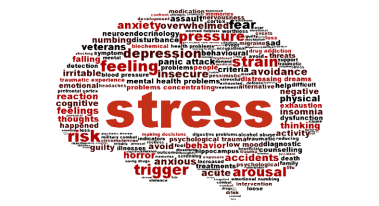
The good thing is that it takes a lot to get me to that level of stress; however, that’s not so Stressed-Brainfor many writers. Besides the littlest distractions causing problems for many writers, any stress weighing on a writer can keep them from being productive. One of the elements of stress is the inability to focus on anything else – it is the most distracting distraction a writer can face. Stress causes us to avoid things – things like writing!
If you’re experiencing something like this and can’t get on track with your writing, you need to ask yourself what is happening in the background of your life. It depends on each individual’s ability to handle stress, but it could be a small thing like a car problem or a large thing like a family problem. These things wreak havoc with our ability to be productive.

Again, my cure for this is to focus first on my writing and, second, on anything else. Cures for others might be similar. Block out the stress and focus on the writing – this could be a way of de-stressing. Creating a time to worry about problems is an age old recommendation. Years ago, someone told me “plan ten minutes before bedtime to worry.” I, personally, prefer before sleep and after waking to be the least stressful times. But it could still work – schedule your worry time like we all should schedule our writing time. Or, give yourself time to solve that problem, and realize if it’s something you can not solve and let it go.

stress2Let it go! If it is a stress we have no power over that is the only answer. It will pass. Focus on the writing, that you can control!

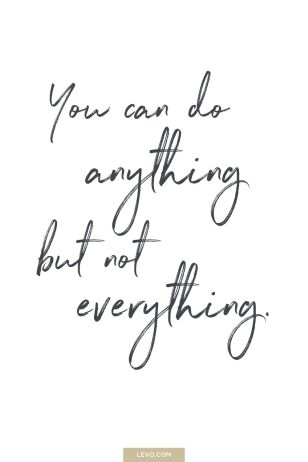
I like the quote “you can do anything, but you can’t do everything.” That’s what we have to remember. We can choose to stress about problems that we can’t immediately solve, or we can choose to use our writing as a distraction from that stress.

If you’ve found anything that’s worked for you, please post it in the comments!


Next week – decision making and writing.

Friday Feature: Second Chance – Iuliana Foos

The second indulgence of our Friday Feature is Author Iuliana Foos’ personal story- Enjoy.

~~~~~~~~~~~~~~~~~~~~~~~~~~~~~~~~~~~~~~~~~~~~~~~~

iuliana

Thank you so much for hosting me today.

Born and raised in Bucharest, Romania, I had a childhood and upbringing different from what most people outside the country are accustomed to. Since an early age, I loved to read. Growing up in a communist country, where all information was closely supervised, I soon ran out of book to read.

I had to start of course with the literature mandatory in school, all Romanian authors, but soon, I started to borrow books from my parents’ collection. When most people hear ‘Black Market’ they think of illegal merchandise. For us, was also books. Coming across translated international authors, wasn’t easy, but not impossible either.

It was when I fell in love with ‘The Three Musketeers’ by Alexander Dumas, the first romance book I ever read. I was only in my early to teens, so extremely impressionable. Until today I still believe everyone should have at least one sword, even if only for decorative purposes.

When I attempted to read ‘War and Peace’ by Fyodor Dostoyevsky, I failed miserably, falling asleep before finishing a whole page. I still didn’t get the courage to go back and try to read what at that time, for me, was the most boring book, so I never made it past the first chapter. It served as a good paperweight, and many times I used it to hide underneath another book, usually something frowned upon, like ‘Gone with the Wind’ by Margaret Mitchell.

Around the same time, I managed to put my greedy hands on translated adaptations of Shakespeare’s plays, whose themes are still successfully rehashed today.

One of my best finds has to be Greek Mythology Adaptations. Those gods are still inspiring.

By the time I was sixteen, I ran out of books to devour, and started to make my own stories. In school and at home, I was busy creating worlds and characters in my head. The visit at Dracula’s Castle uncovered infinite possibilities. Our ordinary world had become that day less important than my fantasy one. You can only imagine the new level of commotion in my mind. It was the first time I knew what I wanted to do in my life: be an author.

With my first job, life started to interfere with my dreams of writing. Living though the revolution that ended the communism in Romania, brought hope. Unfortunately, the bitter taste of disappointment with the new life, convinced me to leave behind everything I knew. Only months before my twenty-ninth birthday I emigrated to Canada, in a search of a better life.

As an immigrant, I had an allowance of two large travel bags, each no heavier than forty kilograms (or eighty pounds), so I packed my life in those and started new. I still have my fifteen large notebooks, handwritten in Romanian with my first stories. They took half of one of my allowed bags, my most precious possessions.

Year after year, I drifted further and further from my dreams. With bills to pay and life in general happening every minute of the day, I had to stay focused on my sales/marketing career.

When I thought life couldn’t surprise me anymore, it did. I divorced and years later, remarried. Following my husband meant yet another big move, this time to the United States of America, my new home. He encouraged me to revisit my dream, give writing a second chance, and so I did.

New challenges rose, but I was determined not to let anything stand between me and my dream this time. Not even writing in a language that is not my native couldn’t stop me. It took me seventeen years to even dare consider it. English is not even my second language, but my fourth. I was fluent in Spanish at nineteen, and in French at thirty. With time I lost the ability to speak any of the two, but I still can understand some.

If you ever look for a challenge to test your courage and drive, try it. Pick the best language you speak, other than your first, and write a novel. Let me know how that works out. No, really, let me know. If you think having an accent is bad, wait until you have to figure out grammar. Thank God, the accent doesn’t come through in writing.

Many people start new chapters at some point in their lives. For some, the change is major, for others not so much. For me, it was monumental. All three times.

So here I stand today, humbled and grateful for everything I went through. I carry the scars of my battles, and the sweet memories of my victories. Every adventure and step I took brought me where I am today.

I’ve learned to never lose hope. It took me over thirty years to live the dream I had as a teenager. It is never too late to reach that dream you have. Hold on to it. Foster it’s growth, and above all else, never give up. Second chances happen when you least expect it.

iulianna


Facebook

Amazon

Twitter

Bloodline Origins


~~~~~~~~~~~~~~~~~~~~~~~~~~~~~~~~~~~~~~~~~~~~~


Iuliana – thank you for sharing your story. It’s always heartwarming to hear a story of challenges overcome!  Much luck on your book.