A Writer’s Space

2018_09_30+Scientific+writing2Do you feel the need to have a certain, special place to write? Maybe you have little items you feel inspire you sitting around your desk, computer, in the same room, maybe there is a stone of carnelian or citrine to spark creativity, or even big dark shades to hide you from the world.

My writing space is usually the dining room table, two windows, a bird feeder on one so my cat, usually sitting beside me can be entertained. But I also write on the couch in the living room with a lap desk, and sometimes in my bed.

Dan Brown (author of the Da Vinci code and many others) believes writing space isn’t important. It’s the ritual and the commitment, not the space. He relates a story in which he was visiting his parents and he wrote in the laundry room, lap top on the ironing board while sitting on milk crates with the washer running – because he needed an undisturbed space.

I’d say that space would disturb me – and talk about holes in a story. My apologies, Mr. 0 v7CyD5RM41-JF6Kk.jpgBrown. However, if he gets up at 4 a.m. to write (as he states), who is doing laundry at that time? And, if the laundry was put in later, then obviously someone came in to disturb you. And, by that time, he couldn’t move to another room?  Okay, sorry, sorry. Back to the point.

We do need a space to write. Ideally, we want to have certain creature comforts around us; for me, it’s a cup of tea. However, I have written on concrete benches, lying across the hotel bed, in a tiny corner that had a table and chair, in coffee shops with noise, and alone in my house at 4 a.m.

The point is our desire for the ideal space should not limit our writing time or commitment (and I think this was Mr. Brown’s point as well). If we limit our writing to the ideal, we’ll have an excuse to not write when any little thing is out of place.

Brown states he writes 365 days a year. That’s what this blog is about, right? 365. It’s about commitment. It is my challenge and my commitment to write 365. I’m doing okay, regardless of the space I’m writing in.


Far and Wide and Every Lost Minute.

Stack-of-books-great-education-1000x520

I was doing an exercise in a seminar I was taking. I was given an article; a long, seemingly rambling, however, well executed nonfiction piece on the downfall of certain companies. Just writing that sentence feels painful. Why did I waste my time?

But, see, it turned out not to be a waste of time. In a lecture, recently, a similar topic came up and I was able to give a reasonable discussion about how this downfall relates to the business of writing.

Wow – I did not see that coming.

That is something I’ve always done, however. I’ve actively added to my body of knowledge by reading far and wide, not limiting myself just to my genre or even just to fiction.

What I’ve found is that this adds depth to my characters, validity to my narrative, realism to my stories. I’m don’t limit myself, therefore, my characters seem more authentic.

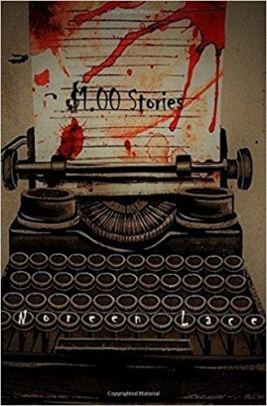
In 51WOVy2yYkL._SX326_BO1,204,203,200_$I.00 Stories, I developed the homeless man from articles I’d read about mental illness and the homeless. In West End, I was able to add more depth to my character having read psychological texts on motherless daughters.

My advice is always – read far and wide and don’t limit yourself. Read when you’re waiting in line at starbucks, read before bed, read when you wake up, or you’re waiting to pick up your kids, or meet your friends. Get off of facebook and twitter or stay on those sites and subscribe to the digital magazines.

I hear people say – I don’t have time to read. Yes. You. Do. Find where you’re losing time and capture it.


The Writer’s Support System

52097701_1351830314971980_5220375913262219264_o

Maybe it’s me, but I doubt I’m alone in this: A writer’s support system sometimes seems a shaky and insecure. Some people do not understand, others say ridiculous things, and some are even jealous of our steps forward.

Finding a support system is an active and ongoing endeavor. People move on, they step back, and we need to keep moving forward, be unwilling to let negative people and comments to hold us back.

Don’t be afraid to move on. It doesn’t mean you have to cut contact with everyone or even anyone, but you certainly want to keep those who are positive supporters of your in the forefront of your mind and heart.

Sometimes, we feel very alone. Writing is a solitary act, but we don’t have to live in a bubble. Make contact through writer’s groups, online and in person. Meet other writers at conferences or critique groups and stay in contact with them. Join a book group, we need friends.

14563288_1399791920050130_5249056612799485051_n

Photo Credit: Noreen Lace / Here in the Silence


The Comma Coma – a deadly disease

Do you go into a coma when someone starts talking about commas?

Don’t get bit by the deadly comma coma bug! Figure out how to make the comma work for you, not against you!

tumblr_static_comma

The purpose of all punctuation is to clarify your thoughts and ideas so readers can enjoy and understand the book!

Did you have a teacher that told you, “whenever you feel the need to pause, insert a comma”?

WORST ADVICE EVER!

When we are writing, we naturally pause to think. That is not necessarily where a legal-grammar-rules-keep-calm-and-use-commas-e1490740001283comma needs to be.

Commas have a number of rules. My favorite site to use – and to introduce to my students – is the Owl at Purdue. Their comma usage explanations are clear and detailed.

One of my editor-friends believes the comma used for introductory words, phrases, and clauses is “going the way of the dinosaur.” While I agree that some people and publications seem to think so, I think it’s still a valid and needed use. [I’ve used introductory commas in this blog – one was in the previous sentence, “While I agree…]

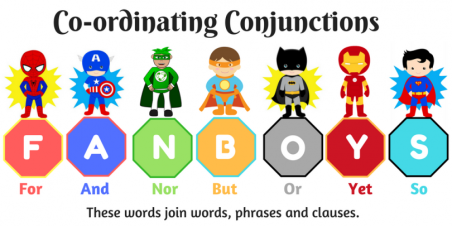
The Fanboys rules is the easiest to remember; however, because of the number of teachers giving the pause advice, I get sentences that look like this:

The Rams won but, not everyone was happy.

We sometimes punctuate our speech this way for emphasis, but you can’t hear tone in these words, and it’s just wrong.  < this sentence contains correct use of the fanboys rule.

co-ordinating-conjuctions-banner-810x405

My students often ask me to explain the whole “Oxford Comma” disagreement. Well, it goes like this: There are people who use the oxford comma and then there are monsters!

Example:Oxford-comma-explained.png

Commas are confusing, but they’re not impossible to learn. Any editor is going to appreciate the correct use of commas regardless of how much they appreciate or introductory comma. 🙂


Rejections – how not to punch someone!

Screen-Shot-2018-01-29-at-11.09.19-AM-1024x678.png

Rejections are the worst…..

or they used to be.

Once, a long while ago, I received a letter (snail mail) from a publisher. I let it lay on the table, unable to take what I thought would be yet another rejection.

When I did finally open it – I was quite pleasantly surprised by an acceptance!

And then…. a little annoyed with myself…. I needed to sign the contract and return it and I’d almost missed the deadline.  That taught me – open immediately.

These days, most of these things are done through email or digital submissions. So, now, on a regular basis, we get rejected by just opening our email.

However, rejection, in all forms, tells us something.  We are doing our jobs!  That job is writing and submitting.

All editors have their own values. It may not mean that our work is bad, but that it did not fit the needs of the publisher or the values of the editor.

Rejections are nothing to be ashamed about, not to be feared, and not to be avoided. We should rush in with open arms.

I read the rejection, see if there is any valuable information. I’ve received some very nice rejections with some editors telling me to resubmit or offering advice.

If I have a piece which gets rejected too often, I go back and take another look at it before I send it out again. But it will go out again. And I will keep submitting.

Don’t let rejections get you down, don’t let it stop you. Publishers can not take everything they receive, but one day they will say yes to you – if you’ve actually submitted something!

A Habit of Success

66 days –

That is what a new study says it takes to form new habits.  The study participants reported a range from 2 to 254, with 66 being an average.

writing+ritual+It depends on the person. With me, it takes 3 to 4 weeks for me to stick to my commitment. And every year my teaching schedule changes, so there’s two to three months a year for me to recommit.

The holidays, however, throws many people off.

However, once the commitment is made and the habit is in place, it’s much easier to get back into the mind space. The secret is to jump right back into the habit after a holiday or change.  writing

Also, I think you have to make an effort to guard that commitment. Don’t be tempted to make lunch plans on a writing hour, make it for later or for a different day.

Life too easily distracts us and, without habits firmly in place, we are easily swayed.

A Tribute to Poe on his Birthday

January 19th, is the 210th anniversary of Poe’s Birth.

poe4Although many people are content with the reason of Poe’s continued relevance in our society is the stereotypical tortured artist.  There is no doubt he was tortured, and for reasons of which we are all familiar; he was an orphan who lost every women he ever loved.
His battles with alcohol, I believe, are highly exaggerated. But it makes for a good story. I’m not saying he never drank – he drank to excess plenty of times, he may have officially been an alcoholic as we understand the word today; however, it was not a constant. There were many years through his marriage to Virginia that he did not drink or drink to excess. Before his death in 1849, he’d joined the Sons of Temperance Movement – to get people to stop drinking.

The reason Poe has remained relevant throughout the years is his work touchespoe our deepest fears and deepest desires. He has continued to inspire other writers


poe2and artists of all types.


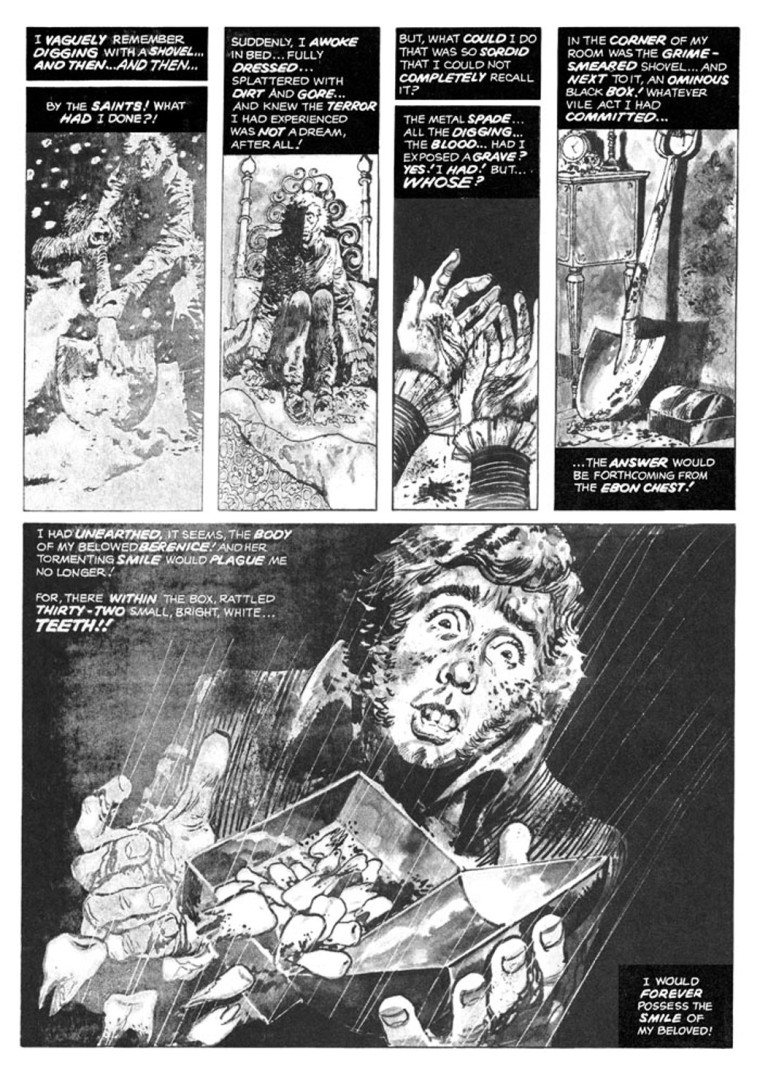
He wrote far more than what we, today, consider horror. He wrote essays, literary analysis, investigative pieces. He wrote about street paving, Stonehenge, and he was inspired by what he read in newspapers.  Berenice and others were inspired by stories of grave robbers in local papers.

poe3

The famed portrait of Edgar Allan Poe was taken three days after his suicide attempt in 1848.

Edgar_Allan_Poe_daguerreotype_crop.png

And, Eddy, my imaginative fiction, was inspired by that suicide attempt. He bought two bottles of laudanum on a cold winter night meaning to do himself in. He’d lost Virginia and felt he had no one. (Laudanum contained opium and derivatives of morphine and codeine.)

eddyfinalredonefromtresized


For Poe’s Birthday, I offer an excerpt from the novella:

   He stumbles from the pub, slips, and falls on the iced over bricks of Boston’s November streets. Save for the muddled voices beyond the closed door, the street is quiet as his body thuds to the ground. His breath billows in front of him as he gasps and grumbles and struggles to his knees, then his feet, to regain his drunken balance.

   The gaslamp on the corner offers a wavering yellow glow for the struggling figure on the lonely winter night. Thin strands of hair blow in the chilled breeze; he runs his hands over his head, straightens himself before he pulls at the sagging overcoat and tugs it closed.

     Remembering the tinctures of laudanum pried from the chary pharmacist, he hurriedly shoves his hands in his pockets, retrieves the bottles.

   His heavy breath mounds in front of him and, for a moment, he can’t see; then the luminous cloud of brandy scented air dissipates. The medicines are intact. Relieved, he stuffs them back in his pocket and buttons his jacket.

   “Edgar,” someone calls from the corner; the noise from the pub trails the swarthy figure out until the door slams to a close behind him. “You alright?”

   Edgar waves him off without turning around.

   The thick shadow chuckles as he staggers in the opposite direction.

   The winter is freezing cold, but the snow hasn’t endured. Small white crystals pile in corners and fill the air. The icy rain soaks him before he reaches his chamber on the second floor of the boarding house. The room is small, impersonal, but warmer than the street. An unlit lantern shimmies on the desk as he unsteadily seats himself, glances out the window.

   A barely discernable outline disquiets the otherwise muted darkness on the corner of the street below. He knows it’s the black dog that’s stalked him his whole life. Suddenly angered, he shoves himself forward, pushes the unlit lamp aside and topples the ink jar.

   “Get outta here, you wretched creature.” The incensed command lost in the night.

      Recovering the secreted bottles of opium from his coat pocket, he sets them side by side in front of him. Unsteadily he tugs the lid from one and snorts in a single gulp.

For More Posts on Poe – click this link.

To get the book at 3.99 – this weekend only – click this link.

To get the ebook at .99 – today only – click this link.


edgar_allan_poe_3.jpg


Much love and luck.


Professionalism

prof

Some people do not understand the basic rules of professionalism. Speaking to, writing, or responding to an editor or publisher should be undertaken with care. These people are our colleagues in the best sense of the word.

I’ve worked with a few literary journals and have talked to editors at others. The things authors say and do completely surprised me.

I’ve only had a single editor be so completely unprofessional I became embarrassed for her (and forwarded her email to her boss). On the other hand, I’ve dealt with a number of writers who have taken pride in their unprofessional behaviors.

One writer posted a snarky response (he supposedly emailed) to an editor. Whether he actually wrote that to an editor is one thing, it’s quite another message to post it on social media for all to see. He may have felt he had won the battle, so to speak, but what he actually did was show how unprofessional he behaved with a colleague, and what a risk other editors or publishers might find him to work with.

We can disagree with editors, publishers, other writers, but there’s no reason to verbally attack or otherwise be rude to anyone in the industry. Taking your private issues with public companies to social media is a mistake on any number of levels. Just like employers look at social media sites, so do publishers.

I had one publisher ask me for all my Promote-Your-Brand-On-Social-Media.jpgsocial media links. While some writers told me not to hand it over, I felt it was part of my job to have these available to people in the industry. I maintain social media sites for this reason. Publishers don’t want to just know if writers have a following, but how they’re interacting with readers, writers, and others on those social media sites.

Being rude in an email, speaking arrogantly on a call, and posting disagreements publicly will not further a career.

I do understand it’s quite popular in our society of late to act like an arse and expect to be treated like a king/queen; however, it gives a poor impression and people will not want to work with a person who acts like a spoiled child.

Say Yes to the ReDress

Editor Definition in English Dictionary.In some writers’ groups, when I’ve mentioned that I’d been contacted by an editor who requested changes, there came about a rise of instantaneous resistance.

  • You didn’t say yes, did you?
  • Why are you letting them change your work?
  • You’re not going to let them change your words, are you?
  • Sounds like you’re selling out!

So far, whenever an editor has contacted me about changes, the changes were minor: a comma here, a synonym there, once a nick-name which they ended up leaving in.

One of the these editors worked for The Chicago Tribune’s Printers Row Journal ($1.00 Stories). I believe him to be more experienced editoand credentialed in the requirements of publishable writing.

I willingly listened.

So before your writer hackles rise – listen, consider, then decide. Be polite and professional.