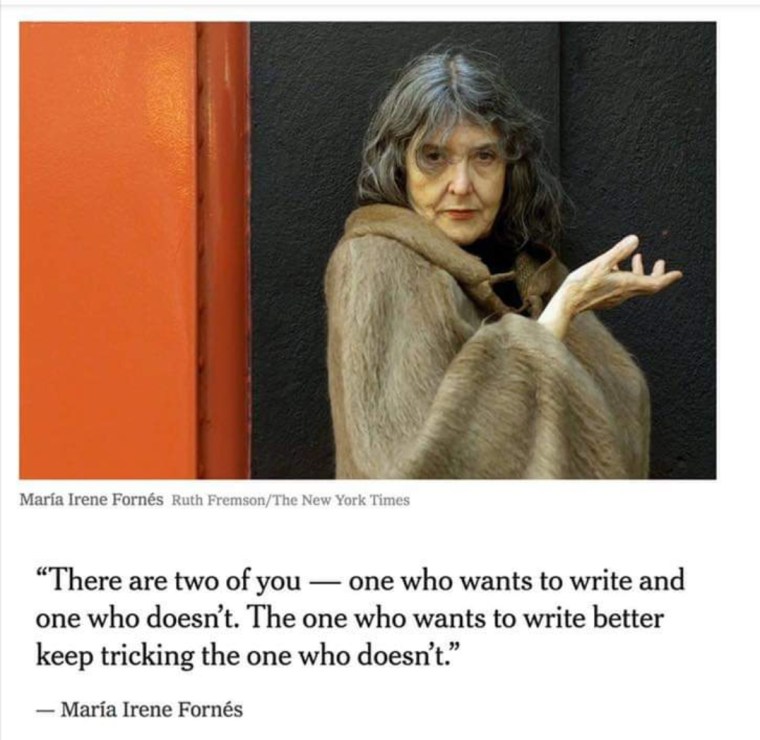
The Writer’s Support System

52097701_1351830314971980_5220375913262219264_o

Maybe it’s me, but I doubt I’m alone in this: A writer’s support system sometimes seems a shaky and insecure. Some people do not understand, others say ridiculous things, and some are even jealous of our steps forward.

Finding a support system is an active and ongoing endeavor. People move on, they step back, and we need to keep moving forward, be unwilling to let negative people and comments to hold us back.

Don’t be afraid to move on. It doesn’t mean you have to cut contact with everyone or even anyone, but you certainly want to keep those who are positive supporters of your in the forefront of your mind and heart.

Sometimes, we feel very alone. Writing is a solitary act, but we don’t have to live in a bubble. Make contact through writer’s groups, online and in person. Meet other writers at conferences or critique groups and stay in contact with them. Join a book group, we need friends.

14563288_1399791920050130_5249056612799485051_n

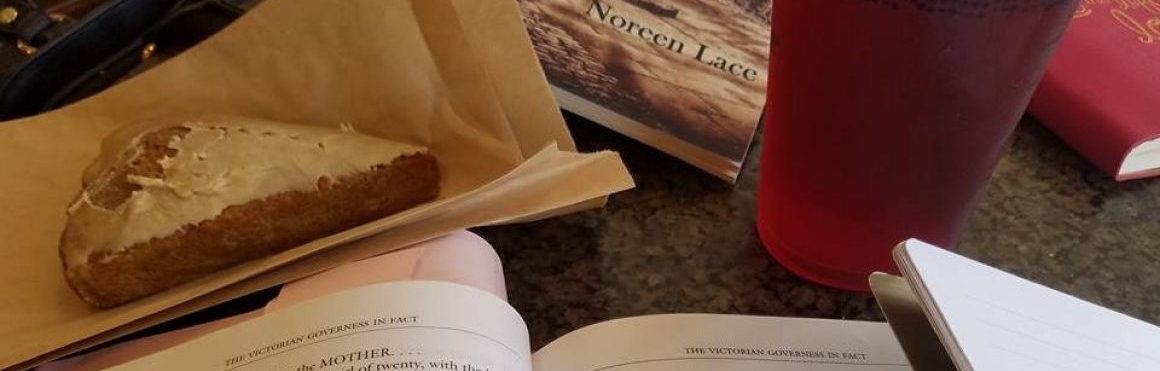
Photo Credit: Noreen Lace / Here in the Silence


Descending into Madness…

logo1-the-descent-into-madnessSometimes, that’s what writing feels like.

I recently finished a particularly difficult story. I’d written it over the summer. Then life happened, and while I wrote here and there and started new things, finished other things, submitted, and even came back to this story repeatedly, it refused to be finished.

This story became the terrible twos who kept throwing a spoon down on the floor and crying for me to pick it up only to throw it down again.

When my real children did this – I left the spoon on the floor and shrugged, “guess you’re using your fingers now,” but you can’t do that with a story, huh?

But what you can do with the story – as with all writing – is keep showing up. That’s what I did. I kept putting that story in front of me and trying to work out of the kinks. We can’t give up the story when it gets hard.

One of my favorite stories is one Stephen King tells about Carrie. I’m paraphrasing here: His wife found Carrie in the trash and brought it back to him, saying something to the effect, you can’t stop just because it got hard.

(of course these are the days when we used typewriters or notebooks and were able to physically put those in the trash and not just click delete, which, by the way, don’t ever do!  Ignore the story, put it elsewhere, but don’t delete it!)

And I’ve read/heard the above King/Carrie story a few different ways, so it may not be exact; however, the point is – You can’t give up a story because it’s hard.

Even if the story never gets published – I learned something by writing it, by sticking it out.

The new term in student success is “Grit.”  (I know, it’s also an old John Wayne movie). It alludes to the idea that the students who struggle and push through who will become a successful student and graduate. It applies across the board – school, life, and definitely writing! (Not surprisingly, to that movie as well).

I recall another story I’d had a particularly challenging time with. And just when I thought it was finished – the dreaded blue screen!  It was gone. Memory wiped. I gave it a few weeks (and a long weekend in New Orleans) and came back at it.  “Psychic Surprise Party” was published six months later in The Oleander Review. (It will be republished in May online).

Even if this one is never published, I learned something by doing it. I’ve learned something in all of these not-yet-published stories and poems. We are writers. We are driven to write. It is our little corner of the puzzle-solving-world in which we exist.

The next one might be easier. And maybe it’s smilethis challenging one that will push something out of the way for the next one. Maybe the next one will be difficult too, but we’re going somewhere, learning something – keep pushing through.

That’s what makes us writers.

And we’re all a little mad here…..


The one who writes…..

Screenshot_20181229-102037_Chrome

Writer Services – Required or Rip-off?

ripoffMany companies (and writers) offer services to writers. Having someone edit your story is a good idea. Having an agent or company help you with setting up a strong structure might be helpful.

However, what is there to protect writers from poor service, someone setting up shop without valid prior experience? I’ve heard many, many stories of poor editors, promised services left undelivered, etc.

I don’t think writers should have to pay for interviews or reviews – yet some writers have found themselves suckered into these “services” with the promise of sales.

The writer needs to do some background research, ask for credentials and satisfied (perhaps even unsatisfied) customers to chat with before purchasing services. Don’t go by the reviews the company or person promotes on their own website, unless you can reach out to those people personally. Too bad there’s not a yelp for writer’s service.

Recently, I did my own research on a few companies. I googled the “authors” they’d used as their positive reviews. The first author/service reviewer I couldn’t find at all – not on amazon, no website. It well could be she uses a pseudonym, but why would she not use a name people could find? Another reviewer claimed to have gone from no sales to 100,000 sales in a month’s time span. When I googled this author, they had one ebook available for purchase. It did not rank very high according to the sales figures I have access too; I found the claim to be overstated. While he may have doubled or tripled his sales, I don’t see any evidence that he has become a best seller on any available websites or lists. Consider the reason authors might make these claims: to be featured on the website in order to garner more readers and sales.

Do your research, writers. If a writer or service, company, or agent won’t or can’t supply you with references or a tax id # or a business license #, what’s your evidence they can do the promised job?

How much time should it take?

Don’t focus on the time, the weeks, or the future. Focus on the now.

Meaning: Don’t focus on the end of your story or the concerns about editing, about rewriting, publishing, stay with the here and now. Work on your story one page at a time, one day at a time, and go at your own pace.

The tortoise actually wins the race, kids!

Feed Your Creativity

According to science, exercise can feed creativity. Before you turn away, click the blog.gifunfollow button or run off screaming – oh no, she’s telling us to exercise, I knew it! – they say just getting out of the chair, walking for twenty minutes, or even (gasp) cleaning, just moving our bodies can get some juices flowing and give us a fresh outlook to come back to our writing.

So, no, you don’t have to go to the gym, learn kickboxing, or twist yourself into a pretzel, just take a deep breath and walk around in a circle for a few moments.  Who knows, dizziness of the circling might give you some great ideas!

Food for Flow

5-Foods-That-Will-Make-Your-Hair-Healthier-020717

Scientists have discovered some foods are better for creativity than others. Some of those foods, Avocados, Coconuts, and Almonds have a high fat content but with what is often referred to “healthy fats”, which creates feelings of happiness and the desire to act.

I do notice that my flow is much better when I keep a healthier diet, and I do eat these types of foods pretty regularly.

Do you notice any difference in your creative juices depending on what you eat? If you never paid attention before, try it. Let me know if you sense a difference.

Writer Wednesday: Sharing is….?

climbing helping  team work , success conceptIn a writer’s group, I asked a specific person how one would use a certain program. They responded with, “I’d be glad to show you; my rates are very reasonable.”
I was shocked into silence. I asked a simple question, and they wanted to charge me for their answer?

But, then again, they have the right to earn a living by selling their knowledge.

How often have I given my knowledge for free? I could charge, I thought, for all the information and skills I’ve accumulated over the years.

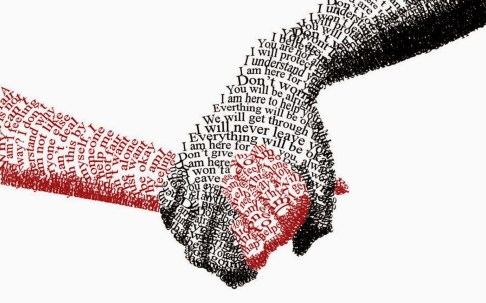
But – wait a minute – writers really don’t make that much money, and we’re all strugglingshare3 in the same boat of trying to get our books, articles, short stories, or other out there to larger audiences.

Think of being on a life-raft and you are the one who has the clean water, or maybe the secret to cleaning the water, would you really sell it to another passenger? Some people would.

There’s a story from a Gladwell book about how post-its came about. (To simplify:) One worker in the paper department bumped into someone from their glue department, they both talked about what they were working on and the problems there were having. If only we could….   and boom – two collaborators came up with an idea worked together to bring that to fruition by sharing their expertise and invented something we all use (and made billions for 3M!).  Companies like 3M, Apple, Google, and others now use that theory to come up with new ideas, products, and solutions for every day problems!

shareWhen we all work together, we all become better humans. I want to share my ideas and experiences and share other writer’s with you, other ideas with everyone who desires to listen.

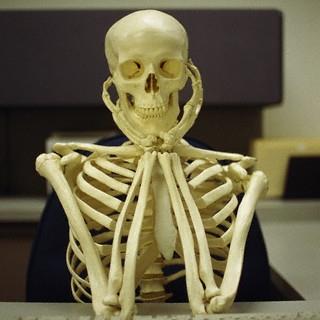
I have a job; I have many jobs. I’m not about to take advantage of others who are students in life or in writing and try to make a buck from them. I’d rather share my knowledge. I’d rather help my fellow passengers on this journey.

Thanks to all who have shared their knowledge with me. Thank you to those writers who give of themselves and their resources to make a better writing community.

When we work together, we can all benefit.

share1

Friday Feature: Waiting is NOT the hardest part….

I’d hate to disagree with our dearly departed master musician, Tom Petty, but the waiting is not the hardest part – That’s a myth.

waiting2Waiting is the easy part.

If I haven’t lost you yet, let me explain.

Some people spend their lives waiting. They dream of doing more, but they create excuses of why they can’t or why they haven’t yet. They’re waiting for…. fill in the blank…. the right time, the right place, until they finish this, until that happens.  It’s an excuse.

When you’ve moved forward and accomplished something, the waiting becomes the easy part.


The hardest part is jumping over every damn hurdle that life puts in front of you.

The hardest part is avoiding those people who want to limit you.

The hardest part is not buying into the self doubt that holds many people back.

The hardest part is doing the work. And then doing more work.

The hardest party is putting yourself out there and face the possible criticism.

The hardest part is never giving up.

Magnifying Glass - Action


Rejection is not the hardest part – it’s just part of the whole. The whole world is not going to love everything we do.

Waiting for the results is not the hardest part – that’s part of the whole.

Motivation or inspiration is not the hardest part – not even sure that’s part of the whole, but it helps.


Action is what is required to be successful.

Sometimes, action makes others around you uncomfortable. They’ll try to criticize your forward movement as wrong action. I can’t tell you how many times people have harped on something I’ve done as if I’ve ruined my chances at success, when in fact it was a step in the right direction.

I’m unclear if it’s a fear of rejection or the fear of success itself that keeps people stagnated in excuses. If they become successful, their lives will have to change. They’d have to continue to work, to duplicate their success.

waiting5I consider it is not a fear of failure – because, by not trying, aren’t they failures already? Or maybe that’s it – they can claim they never “got their chance,” when, in fact, they never actually took a chance. That’s the true failure.

Success follows action. Action takes work. As long as their is forward movement, there is no failure. As long as one doesn’t quit, doesn’t give up, there is no failure.

Don’t wait. Move forward. Slowly. Consistently. Misstep and get up again. Keep moving forward.


Friday Feature: The Overlooked, The Forgotten, The Displaced: Unbridled Inspirations – By Dianna Brown


Close your eyes for a few seconds and think of the word ‘inspiration.’ inspirationWhat comes to mind? Are there images of magnificent places you’ve been, impressive people you’ve met, or extravagant stories that stimulates your soul, sparks your imagination and almost brings you to tears? These everyday inspirations lead me to be the best version of myself, however, this is not a source of inspiration for my writing.

What if I told you my writing inspiration is in the overlooked, the forgotten and the displaced? I see potential in the bleakness of a shadow. I take interest in peculiar sights. I notice the unnoticed. My desire to write stems from the stories that are cut short. Not just unrequited love stories, but stories attached to the abandoned—whether objects, people or places. I am intrigued by ghost towns, and the remnants of memories left behind.

Sometimes inspiration comes from one word. I have a fascination and love of words. Maybe it’s a name, a word I overhear in conversation, or one that stands out while I’m reading. To me, words hold weight and are springboards for the fine details of characters, setting and, sometimes, plot. I call these words, triggers. One word triggers a plethora of infinite possibilities. Couple this with an innate curiosity about the little things in life and inspiration calls out from every direction.

Inspiration also comes from pain. Writing is a resiliency of spirit. It provides an avenue to unleash hurt by navigating emotions through an alignment of fictitious stories. I also believe the act of writing is an acute desire to heal. This is true for reading as well, as there is nothing more enjoyable than being whisked away in the transfixation of a book.

I wonder sometimes if writing is a window into the subconscious. Much of what I write is not intentionally thought about, but comes out in a stream of consciousness that can surprise me. In dreams, I hear the music of the most haunting melodies and poetic lyrics. In the middle of the night you can find me scribbling what I remember by the light of my phone, blurry-eyed. Unfortunately, in the morning the indecipherable lines can never match the beauty of my dreams. Words that enter my mind are often ones I’ve never heard of before, and after I’ve written my word count goal, I will look up the definition of the word, to find it fits perfectly with the meaning of the sentence. Although it’s likely words stored in my subconscious, that I’ve encountered somewhere along the way, it shocks me nonetheless.

When I wrote the novel ‘Saltwater Joys’ I had inspirations from childhood memories of oral Newfoundland folktales and ghost stories—ones I still love to hear again and again. I explored these memories and extended the stories into what might have been, had the story taken a different turn. It is like a scavenger hunt in my mind. One idea gives me a clue to where I might go with the story or character next. Other inspirations for this literary fiction novel came from the works of Edgar Allan Poe, as well as many classic tales and poems that made me see the unimaginably intricate, and sometimes horrific, connections in life.

inspiration2I like to explore the darker sides of life, which is interesting to me because I am naturally a good humoured optimistic individual. There are an unbounding instances of inspirational dualities in life, the play between light and dark, life and death, vice and virtue, and I realize as a writer I am one of them.

Dianna Brown’s Website


~~~~~~~~~~~~~~~~~~~~~~~~~~~~~~~~~~~~~~~~~~~~~~~

Thanks, Dianna.

noreen