On my bookshelf

I’ve finished my Tana French detective series and didn’t want to go to bed without another book in hand. (Nevermind there are three on my bedside table).
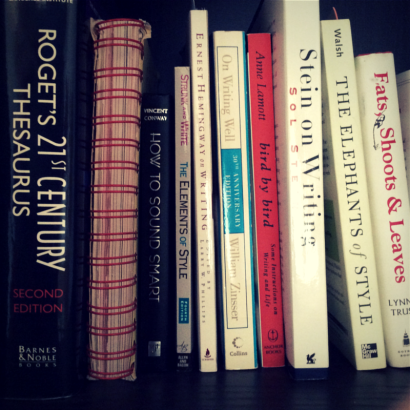
bookshelf.pngI began browsing my bookshelf, which is semi-organized: books I’ve read and loved. Books I want to read. School books. Writing books. and, of course, Poe books

I also have something mixed in that would seem, at first glance, not to belong. Books on psychology, the law, philosophy. I assume many writer’s bookshelves are this way.

A writer needs a wide variety of knowledge.

I know we have google at our disposal; however, I find reading books about, for example, the Psychology of Marketing allows me to get an in depth look that a wikipage or a few short articles are not going to give me. This allows me to create a more realistic character or more thorough background to make the story more believable.

For West End, I needed to understand two things, the idea of an absent or unloving mother, and the different forms depression can take. Anxiety runs throughout my work from Of Strays and Exes to Life of Clouds – which features children affected in different ways by the disappearance of their father.

I’ve heard handymen say they are the jack of all trades. I think writers are akin to that. We need to learn many things in order to live many lives.


Blocked? How to shake it loose.

wall-art-2852231_960_720

Creative blocks are brought on by various reasons.

Writers, poets, artists, musicians need to express themselves. Sometimes, something plugs our flow of creativity.

My friend and I have found release in other creative outlets. She took a watercolor painting class. She feared, at first, that she was taking away from her writing; however, what she found is that it opened her flow and she felt even more creative and was able to add even more to her usual creativity.

I take art and other classes on a regular basis. Most of the time their directly related to writing, but sometimes they are not – but they still feed my imagination and add depth to my writing.

The Healer’s Daughter will be released on May 15th in The Ear. This story came pouring out after a six week drawing class I took at a local museum/gallery. And… I feel like it’s one of my best, filled with color and meaning.

Shake something loose by trying another outlet. You may come back stronger and more creative than before.

Not writing scares me….

ghostly.pngWrite what scares you…..

This is a poetry prompt given to me in one of my graduate level classes.

I don’t think it has to be just for poetry.

Experts tell us we should do something that scares us every day. I don’t know. I’ve done quite a lot of things that scare me – crossing the highest bridge in North America, swimming with sharks, – but those are kinds of scary that gives you a rush. Still valid to write about.

But in that assignment and poem, I wrote about a missing girl. Because those are the types of things that do scare me – when children go missing.

I wrote:

Have you seen her pass this way?

Shoe found, white.

Blood on the laces….


Write about what scares you….


Feel free to share!


The enemy…..

sylvia-plath-quote-1

Plath was one of the original “confessional poets,” and her poetry, at first, was not well received. Her poetry, however, spoke to many. Much love for the Plath!

Inspire

joyce carol oats

Great Writers Say…..

women wr

Love Toni Morrison!

The Writer’s Support System

52097701_1351830314971980_5220375913262219264_o

Maybe it’s me, but I doubt I’m alone in this: A writer’s support system sometimes seems a shaky and insecure. Some people do not understand, others say ridiculous things, and some are even jealous of our steps forward.

Finding a support system is an active and ongoing endeavor. People move on, they step back, and we need to keep moving forward, be unwilling to let negative people and comments to hold us back.

Don’t be afraid to move on. It doesn’t mean you have to cut contact with everyone or even anyone, but you certainly want to keep those who are positive supporters of your in the forefront of your mind and heart.

Sometimes, we feel very alone. Writing is a solitary act, but we don’t have to live in a bubble. Make contact through writer’s groups, online and in person. Meet other writers at conferences or critique groups and stay in contact with them. Join a book group, we need friends.

14563288_1399791920050130_5249056612799485051_n

Photo Credit: Noreen Lace / Here in the Silence


It Hurts!

yogaWriting hurts – no, seriously, sitting for long periods of time makes my back ache.
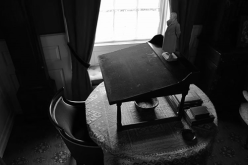
Now, we have standing desks, but studies show that’s only moving the pain around, not really as good for you as first thought.

My trainer recommends getting up every fifteen minutes to stretch and walk around. But, when I’m in the flow, three or four hours have gone by and I’ve even forgotten to eat!

Longfellow may have been the first yoga3to use a standing desk; he alternated between sitting and standing, which I think is a good idea.
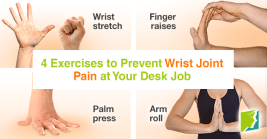
Charles Dickens described his writing as “prowling rooms, sitting down, getting up….”; It’s purported he owned “all manner of comfortable easy chairs.”

It’s more about the way we sit and stand that is hurting us. Our shoulders coming forward and our heads hung puts far too much pressure on the back of our necks and can cause permanent damage.

Laptops don’t help. When we hadyoga4 our desktop computers, it was all about raising the screen to eye level, sitting in an ergonomic chair, with our arms at a comfortable angle. With laptops, either our head is tilted down or our forearms at a strange angle.
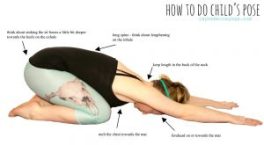

ChildsPoseNoBackground-300x165Yoga to the rescue! In order to keep our backs and legs healthy, there’s a few simple yoga poses (you could even do some of them at your desk!).

Spinx pose will help with those rounded shoulders and neck pressure.

Child’s pose and/or downward dog will also relieve some of the yoga2pressure.

Thread the Needle Pose is one of the best.

These are the easiest, but writers can benefit from a regular yoga class or a yoga routine.


Toni Morrison….

morrison

I Am Not Necessarily Me

me.png

I use first person narrator in many of my stories.  I find the level of intimacy I can connect with in the character makes the experience feel more authentic.

I also enjoy the unreliability of the first person narrator. Although I don’t intend to make my main characters questionable, all first person accounts must be met with skepticism.

There’s one possible downside to the first person narrator and I’m certain many writers have experienced the fan who believes they understand the author based on a story which utilized the “I”.

dadshiningOne reader contacted me convinced Dad Shining was about me. “This is a true story, I bet!” He wrote.

This is complimentary in the fact that the story must have been realistic enough for this reader to believe and enjoy it.

However, Dad Shining (originally published in The Chicago Tribune’s Printers Row Journal) is written from a male point of view experiencing a life event incomparable to what a woman could experience.

There’s not much a writer can do about being mistaken for their narrator except to gently correct the reader without offending them or merely thank them. I said, “thank you for reading.”

My main character in West End is a young woman, and I did use an area close to where I grew up. A number of readers have attempted to call me out on that. One reader wrote, “I know most of this is you, except for the part of leaving the boy.” Another reader, convinced it was me believed I’d been married before and left them to change my name and start a new life incognito.

This did bother me to some extent; the woman in West End is in some ways stuck in west end coverlife, and while that might be my fear, it is not me.

Still others found the first person narrator unreliable enough to question her sanity and ask me if she was seeing spirits. These questions I rather enjoyed. One character I had intended to be questionable, but when asked about another – I don’t want to say as I don’t want to ruin it for anyone! – I was blown away!

And that is the benefit and, perhaps, curse of first person narrator. The connection is so authentically intimate that you might convince readers it’s you; And you might just convince them the narrator is a little off her rocker!