How is a Writer like a Peanut?

How are you like a peanut?

I gave this prompt to my students. Even as I was assigning this prompt, I saw the looks on their faces. They were not the first class to question my sanity; that happens regularly. So, my answer, must be “I’m a little nutty.”

Some of my students came up with amazing responses.

peanut

  • Like a peanut, I have a hard shell. But once I open up, I’m quite pleasant to know.
  • Like a peanut, I’m coming out of my shell.
  • Like a peanut, I’m a little rough around the edges, but smooth on the inside.
  • Like a peanut, I am versatile.
  • Like a peanut in a shell, I am not alone.
  • Like a peanut, I’m caramel colored.

This is challenging and, as writers, we must challenge ourselves. When we challenge ourselves, new parts of us open and allow us to grow and see life from a different point of view.

Choose an item from your refrigerator or snack drawer and compare it to yourself.
(Or choose an item and compare it to your main character.)

If you’d like to share it in our group, please do. peanut2


A Writer’s Space

2018_09_30+Scientific+writing2Do you feel the need to have a certain, special place to write? Maybe you have little items you feel inspire you sitting around your desk, computer, in the same room, maybe there is a stone of carnelian or citrine to spark creativity, or even big dark shades to hide you from the world.

My writing space is usually the dining room table, two windows, a bird feeder on one so my cat, usually sitting beside me can be entertained. But I also write on the couch in the living room with a lap desk, and sometimes in my bed.

Dan Brown (author of the Da Vinci code and many others) believes writing space isn’t important. It’s the ritual and the commitment, not the space. He relates a story in which he was visiting his parents and he wrote in the laundry room, lap top on the ironing board while sitting on milk crates with the washer running – because he needed an undisturbed space.

I’d say that space would disturb me – and talk about holes in a story. My apologies, Mr. 0 v7CyD5RM41-JF6Kk.jpgBrown. However, if he gets up at 4 a.m. to write (as he states), who is doing laundry at that time? And, if the laundry was put in later, then obviously someone came in to disturb you. And, by that time, he couldn’t move to another room?  Okay, sorry, sorry. Back to the point.

We do need a space to write. Ideally, we want to have certain creature comforts around us; for me, it’s a cup of tea. However, I have written on concrete benches, lying across the hotel bed, in a tiny corner that had a table and chair, in coffee shops with noise, and alone in my house at 4 a.m.

The point is our desire for the ideal space should not limit our writing time or commitment (and I think this was Mr. Brown’s point as well). If we limit our writing to the ideal, we’ll have an excuse to not write when any little thing is out of place.

Brown states he writes 365 days a year. That’s what this blog is about, right? 365. It’s about commitment. It is my challenge and my commitment to write 365. I’m doing okay, regardless of the space I’m writing in.

Use it or Lose it – for writers?

muscle-armWhen we think of “use it or lose it”, many of us think of the physical body. And, I have to admit that I was reading something about the physical aspect of our beings when I thought of applying this to writing.

When I don’t write for a day, a week, or a month, then I start again, it’s difficult and frustrating; the writing comes out scratchy, not making much sense. But, then, as I sit there forcing out the words, pushing the bad stuff out of the way, it might take me another week or month to get it moving again, but it does move and the flow is active once again.

Think of writing as a muscle – it needs regular exercise in order to flow smoothly. keepwir

If muscles aren’t exercised regularly, they lose mass. However, once they begin to work and move again, they regain the mass rather quickly. But the movement must be continual to see progress.

The same goes for writing. We need to write regularly in order to keep the flow of ideas as well as the flow of the story moving and our skills steady. Any disruption over a period of time will make the first times back difficult and challenging.

As always, the advice is – Keep Writing. Your skills will improve with practice and time. Your flow of ideas will improve and grow as long as you keep exercising those creative muscles.


Think of it like this:

Actually what the brain is doing is changing its local wiring, changing the details of how the machinery controlling your behavior is connected. It’s also changing itself in other physical, chemical, and functional ways. Collectively, those changes account for the improvement or acquisition of any human ability.

Great Writers Say…..

women wr

Love Toni Morrison!

The Writer’s Support System

52097701_1351830314971980_5220375913262219264_o

Maybe it’s me, but I doubt I’m alone in this: A writer’s support system sometimes seems a shaky and insecure. Some people do not understand, others say ridiculous things, and some are even jealous of our steps forward.

Finding a support system is an active and ongoing endeavor. People move on, they step back, and we need to keep moving forward, be unwilling to let negative people and comments to hold us back.

Don’t be afraid to move on. It doesn’t mean you have to cut contact with everyone or even anyone, but you certainly want to keep those who are positive supporters of your in the forefront of your mind and heart.

Sometimes, we feel very alone. Writing is a solitary act, but we don’t have to live in a bubble. Make contact through writer’s groups, online and in person. Meet other writers at conferences or critique groups and stay in contact with them. Join a book group, we need friends.

14563288_1399791920050130_5249056612799485051_n

Photo Credit: Noreen Lace / Here in the Silence


Descending into Madness…

logo1-the-descent-into-madnessSometimes, that’s what writing feels like.

I recently finished a particularly difficult story. I’d written it over the summer. Then life happened, and while I wrote here and there and started new things, finished other things, submitted, and even came back to this story repeatedly, it refused to be finished.

This story became the terrible twos who kept throwing a spoon down on the floor and crying for me to pick it up only to throw it down again.

When my real children did this – I left the spoon on the floor and shrugged, “guess you’re using your fingers now,” but you can’t do that with a story, huh?

But what you can do with the story – as with all writing – is keep showing up. That’s what I did. I kept putting that story in front of me and trying to work out of the kinks. We can’t give up the story when it gets hard.

One of my favorite stories is one Stephen King tells about Carrie. I’m paraphrasing here: His wife found Carrie in the trash and brought it back to him, saying something to the effect, you can’t stop just because it got hard.

(of course these are the days when we used typewriters or notebooks and were able to physically put those in the trash and not just click delete, which, by the way, don’t ever do!  Ignore the story, put it elsewhere, but don’t delete it!)

And I’ve read/heard the above King/Carrie story a few different ways, so it may not be exact; however, the point is – You can’t give up a story because it’s hard.

Even if the story never gets published – I learned something by writing it, by sticking it out.

The new term in student success is “Grit.”  (I know, it’s also an old John Wayne movie). It alludes to the idea that the students who struggle and push through who will become a successful student and graduate. It applies across the board – school, life, and definitely writing! (Not surprisingly, to that movie as well).

I recall another story I’d had a particularly challenging time with. And just when I thought it was finished – the dreaded blue screen!  It was gone. Memory wiped. I gave it a few weeks (and a long weekend in New Orleans) and came back at it.  “Psychic Surprise Party” was published six months later in The Oleander Review. (It will be republished in May online).

Even if this one is never published, I learned something by doing it. I’ve learned something in all of these not-yet-published stories and poems. We are writers. We are driven to write. It is our little corner of the puzzle-solving-world in which we exist.

The next one might be easier. And maybe it’s smilethis challenging one that will push something out of the way for the next one. Maybe the next one will be difficult too, but we’re going somewhere, learning something – keep pushing through.

That’s what makes us writers.

And we’re all a little mad here…..


Fly….

feb

It Hurts!

yogaWriting hurts – no, seriously, sitting for long periods of time makes my back ache.
Now, we have standing desks, but studies show that’s only moving the pain around, not really as good for you as first thought.

My trainer recommends getting up every fifteen minutes to stretch and walk around. But, when I’m in the flow, three or four hours have gone by and I’ve even forgotten to eat!

Longfellow may have been the first yoga3to use a standing desk; he alternated between sitting and standing, which I think is a good idea.

Charles Dickens described his writing as “prowling rooms, sitting down, getting up….”; It’s purported he owned “all manner of comfortable easy chairs.”

It’s more about the way we sit and stand that is hurting us. Our shoulders coming forward and our heads hung puts far too much pressure on the back of our necks and can cause permanent damage.

Laptops don’t help. When we hadyoga4 our desktop computers, it was all about raising the screen to eye level, sitting in an ergonomic chair, with our arms at a comfortable angle. With laptops, either our head is tilted down or our forearms at a strange angle.
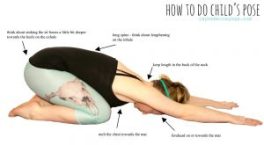

ChildsPoseNoBackground-300x165Yoga to the rescue! In order to keep our backs and legs healthy, there’s a few simple yoga poses (you could even do some of them at your desk!).

Spinx pose will help with those rounded shoulders and neck pressure.

Child’s pose and/or downward dog will also relieve some of the yoga2pressure.

Thread the Needle Pose is one of the best.

These are the easiest, but writers can benefit from a regular yoga class or a yoga routine.


Toni Morrison….

morrison

I Am Not Necessarily Me

me.png

I use first person narrator in many of my stories.  I find the level of intimacy I can connect with in the character makes the experience feel more authentic.

I also enjoy the unreliability of the first person narrator. Although I don’t intend to make my main characters questionable, all first person accounts must be met with skepticism.

There’s one possible downside to the first person narrator and I’m certain many writers have experienced the fan who believes they understand the author based on a story which utilized the “I”.

dadshiningOne reader contacted me convinced Dad Shining was about me. “This is a true story, I bet!” He wrote.

This is complimentary in the fact that the story must have been realistic enough for this reader to believe and enjoy it.

However, Dad Shining (originally published in The Chicago Tribune’s Printers Row Journal) is written from a male point of view experiencing a life event incomparable to what a woman could experience.

There’s not much a writer can do about being mistaken for their narrator except to gently correct the reader without offending them or merely thank them. I said, “thank you for reading.”

My main character in West End is a young woman, and I did use an area close to where I grew up. A number of readers have attempted to call me out on that. One reader wrote, “I know most of this is you, except for the part of leaving the boy.” Another reader, convinced it was me believed I’d been married before and left them to change my name and start a new life incognito.

This did bother me to some extent; the woman in West End is in some ways stuck in west end coverlife, and while that might be my fear, it is not me.

Still others found the first person narrator unreliable enough to question her sanity and ask me if she was seeing spirits. These questions I rather enjoyed. One character I had intended to be questionable, but when asked about another – I don’t want to say as I don’t want to ruin it for anyone! – I was blown away!

And that is the benefit and, perhaps, curse of first person narrator. The connection is so authentically intimate that you might convince readers it’s you; And you might just convince them the narrator is a little off her rocker!