Writer Wednesday – The Mystery of Flow

Door-Into-MindIdeas come easily to some writers, not so smoothly to others.

There’s a little door to our writing mind which must always remain open and then things will flow in and out. it’s a frame of mind, to be open and to listen, or to always have writing on your mind, like a song playing in the background.

In a supermarket, the cashier says something to me. It could be an every day comment that strikes me a little strange. That (creative) door is standing ajar and a shadow is leaning against the frame when the cashier, red hair piled 50’s high, said something about “blueberry pie.” But I heard Blue Pie. My writer mind twirls within possibilities. That idea that lingered at the door-frame to my writer mind smacked right into the blue pie and it became a dog named Blue and Grandmother’s award-winning pie at a local fair in the height of the home-making 50’s.

I’m standing in the window of my little home watering plants; the catnip falls to my feet and I remember a dream I had the night before. Catnip Dreams begins whirring.doors

Enough of the bleating sirens, says an annoyed neighbor upon hearing yet another car alarm as my dog anxiously howls at the buzz. He says sirens. I hear a howl. I see ancient mermaids sitting on a rock caterwauling.

The space between our everyday life our creative brain must not close. Between kids and to-do lists, work and school, it must become a screen which catches things and holds them, even somewhat distorted, until we race to a notebook and write.

doors.jpg

Food Crimes: A Lover’s Revenge

muffins2

Many years ago, in a suburb north of Los Angeles, Eat My Cupcake was in danger of becoming another victim of the gluten-free, sugar substituted society when Zin stepped in.

People wanted choices, she said. Eat my Cupcake changed to Eat My Muffin and featured exclusive, secret recipes that other bakers tried to duplicate but none succeeded; the some sweet, some savory, some healthy, some masquerading as healthy became a much sought-after experience.

Therefore, in the once nondescript neighborhood with the small bakery, lines around the corner formed beginning early each mornings, people waiting for the one and only Zin’s famous muffins.

Among one of the favorites was a Millet Muffin. The savory-sweet combination of light and fluffy grain pastry was a hit. muffins1

Zin was offered money, lured by head baker guarantees at more established places with promises of salary, health insurance, assistants.

But she liked where she was, who she was, and the freedom to create.

Rob became Zin’s lover years before she became almost-famous. Rob followed her from place to place, always a second to her baking but accepted the position. They loved each other.

But more hours meant more workers meant more people in Zin’s life. Zin had two weaknesses, fresh white flour and sweet young flesh. She slipped into an affair with one of her assistants, Rob was heartbroken and angry.

muffin3One night, crying over a tequila sour, the recipe came out in a drunken slur. Friends who sympathized turned for a single moment to make a note.

Zin begged forgiveness and agreed to work fewer hours, no assistants. Rob forgave her. He barely remembers his drunken night but thinks something may have slipped. Zin is blissfully unaware that her recipe is being shared in whispers like a friend’s quite insinuations.

What follows is the rumored recipe from a once famous bakery and a once famous baker.

Millet Muffins

½ cup of millet

1 ½ cup of flour

1 tsp baking soda

Dash of salt

½ – ¾ cup of brown sugar

1 (room temperature) egg

1/3   cup of butter (room temperature)

¾  cup of buttermilk (room temperature)

Mix the wet ingredients

Mix the dry ingredients

Oil the muffin pan/preheat the oven to 375.

Mix the wet and dry ingredients together and place the muffins in the oven.

Bake for 18-20 minutes.

muffins4


*Based on a true story. Names/places changed.

To the best of my knowledge, this is the original recipe. Although I have not baked them myself, I’ve been the beneficiary of the final product. Mmmm.

There are two lessons to this story. First – don’t cheat on your partner who may have your secret recipes. Second, don’t trust a writer with your stolen secret recipe.

Friday Feature – Fantasy for Mental Health by Lara Lee


Today, I’ve asked Lara Lee, fantasy author to write something for us.

~~~~~~~~~~~~~~~~~~~~~~~~~~~~

fantasy2In brainstorming ideas for one of my novels, I decided to research the question: Can a person be immune to brainwashing? We have all seen on television or in movies or even old books the trope of someone being brainwashed to do horrendous crimes against their will. It is overused, so I often stay away from it. My villain just seemed the kind of person to try and brainwash my hero, but I was curious how this worked in reality. Other books have their protagonist resist by the strength of their will. Was that how it is done?

No!

I was absolutely shocked by the research I came across. Strong-willed people were not immune to brainwashing, daydreamers were. Often, those resistant to brainwashing were people no one would expect, average looking people with little to brag about. Why is this?

First, we have to deal with what brainwashing is. Many people over the recent years have argued that true brainwashing doesn’t exist. Just like hypnosis, a person cannot be forced to do something against their foundation beliefs. The term and identification of the phenomenon of brainwashing came from around the time of the Korean War. Prisoners of war were “brainwashed” and then released to their home countries as spies for the Koreans. The same phenomenon was also seen in cults in the US and other organizations. These people did change. They did act in a way that they previously thought was wrong. Something happened to them that changed them.fantasy1

Brainwashing, like the movies, doesn’t happen. People’s thoughts are not wiped clean and then planted with new thoughts, but what does happen is that a person is put in such restrictive environment that denies all basic needs until the point that the person either is on the brink of a nervous breakdown or experiences one. Then the captor offers “kindness” such as water or food and slowly breaks down the victim’s foundational beliefs to those that the captor wants. They are convinced and persuaded under pressure to adopt new ideas. Sometimes these new thoughts stick for a lifetime. Sometimes they only last until a healthy lifestyle is restored. It again depends on the person.

As I read this description, I realized that sometimes life events bring people to the point of breaking, even without a captor. We have all heard of people who suffered emotional breakdowns just from trauma in ordinary living. Deaths, illness, financial struggles, relationship problems produce extraordinary strain. Life can be hard, and at times people break. Depression, anxiety, and PTSD are common. Some people endure a lot in life and stay strong. Some people crumble relatively quickly. So I continued my research wondering how one would fight this mental breakdown. It stopped being about brainwashing and more about mental health. How do we endure high stress without falling apart?

The secret is dissociation.

It turns out, that people who can disassociate from the circumstance that they are in do well. This practice is often taught to soldiers in the military to help in case they are captured and tortured. Dissociation is the process of mentally removing yourself from reality and separating your emotions from your circumstances. If not done intentionally, it can be a psychological disorder, but, when done intentionally, it provides a brief relief from the pain of reality.

To me, this sounds like escapism literature, my favorite being fantasy. We all either have said or heard someone say that they read or go to the movies to “get away” from life. This act of “getting away” is to remove yourself from reality for a time into a fake world. Escapism is often about ignoring the pain of reality to have a little fun, or just to “veg” for a while. Sounds a little like disassociation right?

Not all entertainment is escapism. Some highlight the painful realities of life, but the popularity of the superhero movies, Harry Potter, Twilight, Game of Thrones, and The Hunger Games show that escapism is alive and well. I personally remember in some of the darkest times of my life escaping into books to bring relief to my emotions. I read nearly the entire Dresden file series that had been written up to at that point when a loved one was dying. I was often asked how I survived some of what I went through without shutting down, getting a divorce, or turning to substance abuse. I do have a Christian faith that I depend on, but I think I was also provided a way of emotion disassociation through fantasy fiction that helped me bare the emotions. God is not against fantasy; he told parables himself.fantasy

From the beginning of human history, we have had folklore, myths, legends, and fairy tales. These are the precursor to our modern fantasy fiction. The ancient world knew they needed an escape from the harsh realities of life. The human mind can only handle so much before breaking and caving in. Some seek relief in substance abuse or unhealthy relationships. Fantasy is a place in which you can be the hero and in control for 300 pages. Perhaps you will never endure the type of stress used in brainwashing, but I think we all can benefit from a bit of fantasy.


Lara Lee

The Shadow of the Gryphon

~~~~~~~~~~~~~~~~~~~~~~~~~~~~~~~


Thank you, Lara!


Writer Wednesday: Napccident’s Happen

Screenshot_20180228-182712.jpg

Napccident: when a person rests their eyes

and unintentionally falls asleep. The napccident

may last anywhere from five minutes to two or more hours.


I read an article that stated mental and physical exhaustion are different and that those with mental exhaustion nap to re-energize. Writers are, sometimes, prone to mental exhaustion. We are excited by our writing, then we crash. Or, those days when writing is torturous, we want to crash.

Another article stated that naps are ways to procrastinate.nap

Both are true. I’ve rested to recover from a challenging writing day, and I’ve definitely taken advantage of interludes as a means of procrastination. However, when I’m excited about my project and it’s pouring out, I rarely pause. I even have a hard time sleeping at night because my mind is alive with story.

When I get stuck on a piece of writing, a plot point, a character, I use respites to help me overcome that difficulty. By being still and allowing my mind to wander within the story, the challenge is overcome.

Decide if your napccident is avoidance behavior and make it be productive for you.

In yoga, we set intentions. If you lie down or close your eyes to procrastinate, accept that behavior and set an intention to be more productive. It’s not the pressure of a goal or promise, but it’s an email to your unconscious to get back on track.


Happy Napccident!


nap1

Friday Feature: Guest Author P.S. Malcom

I’m happy to have P.S. Malcom’s writing advice to offer today. Enjoy!

~~~~~~~~~~~~~~~~~~~~~~~~~~~~~~~~~~~~~~~~~~

Three Ways To Come Up With A New Book Idea

I’m so excited to be here on the blog today, and I wanted to chat about writing.

Us writers sometimes get the urge to write something—anything—but often find book1ourselves with a lack of ideas or inspiration. This is a really tough position to be in because you have the motivation to create and write, but nothing to work with. *Cue frustration*
Of course, this is worse when you have deadlines to meet or depend on a good portion of your book sales to pay the bills. You gotta keep those books coming! So today, I’m going to share three tips to help you come up with a new book idea:


1) Get inspired

I know, best advice of the year right?

book1It sounds simple and blunt, if you’re not giving yourself space to get inspired, you can chase all the inspiration in the world and still end up with nothing. Stress from work, family life, responsibilities and pressure can all contribute to a block in your creative energy, and if you don’t make time to relax, unwind, and just chill, you won’t be able to imagine and envision your next story idea.

So my advice?

Do something different, whether it means going for a walk or a drive, spending an hour reading at a quiet café, heading to the beach for the day, painting or playing a musical instrument for an hour, or sitting in a hammock with your earbuds in. Whatever it is, make sure it’s an hour of distraction free time, and don’t force yourself to think up ideas. Let them come to you in the flow of the music, or the visuals of the painting, or the concepts of the book you’re reading.

It might take a couple of tries, but if you stay consistent in giving yourself space, you’ll find your inspiration again. I always get my best ideas (such as the inspiration for my Ryan Rupert Series) while away on vacation or immersing myself in something new.


2) Ask yourself questions

I’m not telling you to sit there like a lunatic and talk to yourself. What I mean is ask yourself questions about your current WIPs, or journal your thoughts, and ask yourself what you don’t know about your budding story idea yet.

Quite often, we come up with a simple, small concept but fail to expand on this idea enough to turn it into a feasible, book-length story. This results in us sitting down to write with our amazing new story idea and being stuck on where to begin because we have no clue what the story is about yet or who’s involved and why.
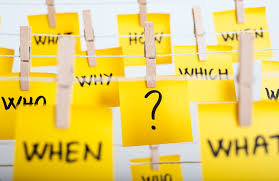
book1.jpgWhile this is all a process undertaken as we write, it’s a good idea to get clarity on the bare basics before you begin putting pen to paper, so ask yourself what you don’t know, answer what you can come up with, and go from there. I use this method all the time for my own books, and it’s also something I teach my writing students too.


3) Pick a topic and expand on it

If you’ve got nothing—not even a concept to work with—this is where you pick something you’re interested in and expand on it.

If you love mythology, you might browse through some of your favourite stories until you find an idea or concept that interests you, and find a way to put your own unique twist on it.

Or, if you love a particular country, you might immerse yourself in it’s culture and think about how you can tell a story from the perspective of somebody living that lifestyle.

There are so many possibilities to choose from, and you can turn any personal passion into a story. Just try it! You might not end up with a book-length story, but even the practise can help you get back into the swing of writing and help you conjure a new idea for a full-length book.


I hope these tips help anyone struggling to write!

Also, thank you for having me on your blog Noreen.

P.S. Malcom (Webpage) (Facebook)

Ryan Rupert Series

Starlight Chronicles

~~~~~~~~~~~~~~~~~~~~~~~~~~~~~~~~~~~~~~~~~~~~~~~


You’re welcome. And, Thank you. Simple reminders are the best.


Monday – a new food section on food on this blog. Who does not love food?
book1


Writing Wednesday – STRESS!

stress

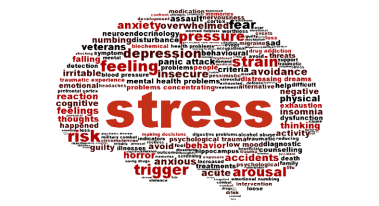
One of the worst types of writer’s block is caused by stress.

I like to roll out of bed and get straight to writing before any other distraction or activity comes up. I find that I work better and longer if I push everything else away until a manageable time. However, I find stress takes me completely out of my writing brain.

Where I can stop for breakfast, talk to friends or family, or even keep an appointment and get back to writing, when I’m stopped by a stressful event or activity I find it extremely difficult to do any work.

The good thing is that it takes a lot to get me to that level of stress; however, that’s not so Stressed-Brainfor many writers. Besides the littlest distractions causing problems for many writers, any stress weighing on a writer can keep them from being productive. One of the elements of stress is the inability to focus on anything else – it is the most distracting distraction a writer can face. Stress causes us to avoid things – things like writing!
If you’re experiencing something like this and can’t get on track with your writing, you need to ask yourself what is happening in the background of your life. It depends on each individual’s ability to handle stress, but it could be a small thing like a car problem or a large thing like a family problem. These things wreak havoc with our ability to be productive.

Again, my cure for this is to focus first on my writing and, second, on anything else. Cures for others might be similar. Block out the stress and focus on the writing – this could be a way of de-stressing. Creating a time to worry about problems is an age old recommendation. Years ago, someone told me “plan ten minutes before bedtime to worry.” I, personally, prefer before sleep and after waking to be the least stressful times. But it could still work – schedule your worry time like we all should schedule our writing time. Or, give yourself time to solve that problem, and realize if it’s something you can not solve and let it go.

stress2Let it go! If it is a stress we have no power over that is the only answer. It will pass. Focus on the writing, that you can control!
I like the quote “you can do anything, but you can’t do everything.” That’s what we have to remember. We can choose to stress about problems that we can’t immediately solve, or we can choose to use our writing as a distraction from that stress.

If you’ve found anything that’s worked for you, please post it in the comments!


Next week – decision making and writing.

Friday Feature: Guest Author Margie Harding.

I wanted to start something new and feature other opinions, ideas, and authors on Fridays. Today, I’d like to introduce you to Margie Harding, author of The Paxton Series.

~~~~~~~~~~~~~~~~~~~~~~~~~~~~~~~~~~~~~~~

Writing is a passion I’ve been developing for many years.  While I blog, have written devotionals for teen girls, a novel about my experience of attending college as a non-traditional student thirty years after high school graduation (receiving an AA degree in Elementary Education), and more; I have been provided yet another challenge that warms my heart.

For years I have said, “It takes a special person to be a special education teacher and it isn’t me!”  I have five children and sixteen grandchildren and still a special education interest alluded me!  It was never my heart’s desire.  God has a sense of humor, I think.  After all these years of avoiding special needs and disabilities, I have begun a new children’s book series on this particular subject!

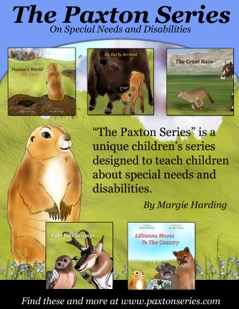
We call the series, “The Paxton Series” with our setting in the Black Hills of South Dakota, paxtonusing the wild animals of the area as our characters.  (Paxton the Prairie Dog shows up in every book, if nothing more than in a cameo appearance!)  The books are written for the child with the disability or special need….and for the child that asks, “What is wrong with my friend?” —and there are amazing illustrations, thankfully from someone who is able to acclimate the disability to the particular animal!
When the series started, I had no intention of a “disability series,” yet it morphed into this before I’d realized the need for this kind of material or impact it could make.  I attended a church organized disability conference two years ago and for the first time heard the term “disability people group” and learned much about these special people for whom I was writing!  The statistics astounded me!  I knew this was to be my life’s mission.

I am delighted to say this series is being well received –and will continue indefinitely! (The list is up to 60+).  Doors have opened I never imagined as schools, colleges (using them to teach students to be special needs educators) and other groups have found the merit of sharing these books with children, parents, educators, medical staff and others!

Invitations to share about the books from a “special needs” perspective, have also arisen and I am delighted to be an advocate for these children (and adults) who are often neglected in a variety of areas, (even if unintentionally) including written stories they can relate to.

There is very little actual reading material for children who have special needs; and paxton2certainly not for those young ones introduced to special needs children, as integration into mainstream classrooms continue.  Their peers are often confused by what they see as “different” and perhaps even “wrong” when it can’t be defined by the “normal classroom rules.”  My books attempt to bridge that gap, and are a great starting place for teachers.  They are written to aid in understanding, inclusion, and acceptance of those behaviors that are different from the traditional “norm.”

There are ten books in the series currently.

Paxton’s World on Fire                                                          Introduction

An Early Arrival                                                                     Preemie

The Great Race                                                                       Asthma

Ears Like Gramps                                                                   Hearing

Lillianna Moves to the Country                                              Down’s Syndrome

Micah Mink Goes to the Concert                                           Autism

Mixed Up Words                                                                    Dyslexia

Special Goalie                                                                        MD

Opal’s New Dream                                                                 Arthritis

The Camping Trip                                                                 ADHD


Coming soon:

The Spelling Bee                                                                    Diabetes   (September)

Madison’s Sad Christmas                                                       Depression (November)

Bristol Goes To School                                                          Cancer      (2019)

Harbinger Village                                                                   Cerebral Palsy     (2019)

Fabian’s Smile                                                                        Cleft Palate            (2019)

Our children face an amazing list of challenges.  God has placed me in a position to be able to do something fundamentally good.  I am humbled to be able to place words on paper that can help children understand what is going on in their bodies, as well as, a resource parents and teachers can use to help other children understand what is happening with their friends who seem different than themselves. If you are interested in any of these books or those to be released in the coming months and years, contact me, authormargieharding@gmail.com or visit http://www.paxtonseries.com or amazon.com.

**An added note — All 10 books are both in softcover and hardback….and we are just beginning to add a toddler version of the current K-3rd grade books (although the books are used for older students in special education classes, as well), and I am working on a chapter book!  The first toddler book, The Big Fire, should be available in just a couple weeks.


~~~~~~~~~~~~~~~~~~~~~~~~~~~~~~~

Margie – thank you for guesting. I’m grateful I could host your blog and further the word about these important books.  NL


Writer Wednesday: Writer and Writing is a Relationship

heartI know people say writing is a commitment, but it’s more than that. Writing isn’t “like” a relationship, it IS a relationship. A writer must be involved with the whole process of writing, must love it, need it, want to continue to work to make it better. It takes commitment, time, dedication, and the desire to move forward in life with writing.

A few years ago, I was at a conference where the main speaker (don’t remember his relat 1name) said, “You have to be selfish. You must take the time for yourself, for your writing.” He went on to say he spent every Friday at a hotel with his writing. (are you picturing him checking into a seedy, no-tell motel with an old typewriter?;-)

My friend joked, “Noreen does this thing where she actually spends time writing.” My regular action became fodder for humor because he is a writer, but he falls under the category of non-writing writers like many others.

Life happens. We have families, pets, jobs, homes, tons of responsibilities. But notice that list – I put family first. People we love comes first. This is why a writer might consider writing as a relationship – so they give it priority.

I schedule things around my writing whenever possible. I will make doctor appointments, meetings, and everything I have power to plan secondary to my writing by scheduling them before or after my planned writing time.

Once a person considers themselves in a relationship with their writing, they may relat 3naturally form relationship goals! If writing were a romantic relationship, how would you handle it differently? Would you want to go to sleep with it or wake up with it or both? What would you want to give it? Would you spend more time with it, going over the details, working it out so it was just perfect, going over it and over it again to work it out nice and smooth? What do you do for your significant other? Take it out to dinner? On vacation?

Writing, like a lover, needs constant attention and nourishment. Placing it on the back burner means we may never get to it. It’ll be there, but not as warm and flush as we’d like. Being in a relationship with writing means the needs of both are fulfilled. Writing is fresh and flowing and continually improved and the writer is happier, more productive.

We do this because we love it, we are driven to do it. Treat writing like it’s important to you.

Think of writing before you fall asleep, when you wake up in the middle of the night just to say one more thing.

relat 2

Happy Birthday, Eddy!

edgar_allan_poe_3

The celebration of Poe’s birth date does not go unrecognized.  The Poe Museum in Virginia, as well as many others, will be throwing an Edgar Allan Poe Birthday Bash.

And, rightfully so, Poe is an important figure in American literature.  For my friend who said the other day, “like, what’s the big deal?!”  LET ME TELL YOU THE IMPORTANCE OF POE.

In the early 1800s, the American government called on writers to create a true American Literature to differentiate and separate ourselves from all things Great Britain. Remember, America had just gained it’s official independence from the mother land. By the time Edgar and his contemporaries were born, we were only a generation out from under British rule. There were still loyalists, still people very attached to the “old ways”.

Literature affects society just as society affects literature. By creating a true and distinct American Literature, we could become a true and distinct nation. And while Hawthorne, Emerson, and Thoreau were definitely refining our style, Poe made waves. The stories he published made people sit up and take notice. His style was not always taken seriously here in the states, but authors and critics abroad were giving him credit.

Sometimes it takes someone to shake up the status quo, to capture the deeper, darker parts of our soul individually and collectively to make us look at ourselves and see us for who we are. I think Poe did that. He had a lasting effect that artists, authors, musicians, and readers are still inspired by.

The Poe Museum will be celebrating his birthday on Saturday, January 20th.

20180114_121459


If you can’t be there, you can still take part in the birthday bash.  Buy yourself a cupcake, throw your own Poe party, join an online group and celebrate with the members.


You might notice a familiar name on the list!


I’ve attended before. The first time, I did my own Poe Tour.


I’m looking forward to attending the event, talking Eddy with Poe fans, and CAKE!!!

eddycoverfinal


I’ll be reading, discussing, and signing my new book, Eddy.

The inspiration, the facts, the conjecture.

The reviews for Eddy are kind and generous! Thank you. Thank you.

Described as:

“Poignant and piercing!”

“Creative and very Poe-like.”

“Equally as enthralling as it is tragic”

“Edgar would be proud!”


Have a lovely new year! Be kind to one another.


Best advice for new writers?

READ!

read1

Seems pretty commonsense, right?  I don’t understand when students or writers say they don’t read.

I think it’s common knowledge that reading helps you gain knowledge. Some of the most intelligent and sensitive people I know are not (or not only) college graduates, but are readers.

One faculty member said, how do writers who don’t read know what came before them. If you’re a writer, you should know who and what came before you. Whether or not you agree with them, like them, admire them, writers needs to be aware of the talent, the styles, the accepted and the outcasts who made literature what it is today.

One writer said – it ruins her style to read other writers.  What is her style and how did she come up with idea of style if she hasn’t read other writers?

Numerous articles and books cite findings and research that state readers are more empathetic, understand human motivations, reactions, and emotions, than non-readers. How do you write an authentic character not having an understanding of these basic things?

Intelligence – so many people like to cite those people who didn’t finish college. (I did another blog about this.) But they read! They worked! They learned their craft prior to becoming successful.

We read not only for these things, but to form our own opinions, to be able to think critically about the world around us, to continue to grow and understand the world around us.

I mean, yeah, definitely, you can stay stuck in your little narrow world. Good luck with that. With the world of self-publishing, you can still publish something and call yourself a writer, too.

BUT – what have you learned? what can you pass on?

Our purpose lies in more than publishing and calling ourselves writers. Our purpose is to spread knowledge, add to the conversation of literature, to become better people than we are so we can positively affect others.

Have you heard that old saying, “Hard work won’t kill you, but why take chances”?

Well, a good book won’t kill ya, take the plunge.

BTW – Author Interview – Leonard Foster took time to interview me for his blog. Thanks, Leonard!