Pain Between the Lines

As I mentioned previously, I was cleaning when a pile of my old journals fell on me. As I’ve been working on memoir, it seems that my journals were screaming, open me, open me! I thought – yes, there’s probably plenty of hidden stories just waiting for me to bring the to life again.

Yet, I haven’t opened one.
There’s a lot of pain between the lines of those journals. It’s hidden now, stored away, somewhere deep inside of me and inside of a box at the bottom of the closet – lest they jump out and attempt to injure me again.

I still think there’s a reason that they fell on me that day. It was, perhaps, a message, a sign for me to open and suck out the pain of the past, use it for my stories, for my memoirs.

I’ve written a number of short memoir pieces and they’ve been published nearly immediately. Good, short memoir, I suppose, it difficult to find for literary journals.

Memoir is important as it is healing – I’ve written about that point a lot; however, it is not only healing to the author, but to the reader. A memoir helps the reader understand they are not alone in their pain and that someone out there survived and thrived.

So – yes – I know, I have to go back into those books. I have to push myself to open them. I have to make sense of them now, as an adult, or even some years away from whatever I might read, and perhaps I can heal little pieces of my chipped soul. And others may understand that they are not alone.

Smacked in the Head by the Past

As I was cleaning, I reached up to put something on the top shelf of the closet when a number of journals tumbled down upon me. Then, this poster floated down on top of all of them.

West End was my first published novella. This was a promotional poster from my book signings. I didn’t realize I still had one.

I have to admit, I am still sincerely proud of West End. I’d worked so hard and so long on it. Some of the lines and images stick with me.

The story takes place on the West Side of Cleveland – although I think it’s only ever referred to as the West End. I grew up in Cleveland, Collinwood, East Side, North, West Side, and some things left an impression.

While West End is a story about an unnamed narrator, the setting is nearly a character in itself. There’s so much imagery and a strong sense of place.

I remember working and reworking sentences, the images, sitting for hours and days and weeks making certain the rhythm and language was beautiful.

I framed this poster and it hangs on my wall now.

West End is actually – as I check the link – is on sale at Amazon right now!

Journals and Journaling

What do Marie Curie, Albert Einstein, Jennifer Aniston, Matthew McConaughey, and Warren Buffet have in common?

Did you guess journaling? I mean – since it’s the title of the piece. But, yes, they all kept journals, along with Oprah, Darwin, Khalo – and so many more.

Oprah uses it to outline goals. Buffet uses much of his journaling as inspiration for his business – “Writing will make you a better investor.” Jennifer Aniston says she uses it to keep control of her emotions (me, too, girlie!).

Journaling also helps me work out things that are vexing me. It helps me think more critically by getting the emotional stuff out of the way.

Carly Long has journaled her whole life. She credits it with getting her out of bad circumstances and growing as a person. “You know what’s funny about journaling? Sometimes I go back and read things. And it’s obvious I was upset with someone and wondering what I should do next. I didn’t write the name down, but I wrote down what I could do. I remember doing those things and I continue to do them – but I can’t remember for the life of me who I was upset with!”

The healing process became part of her being!

I love this!

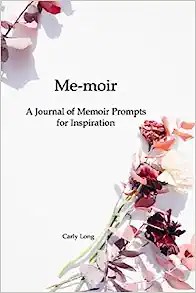
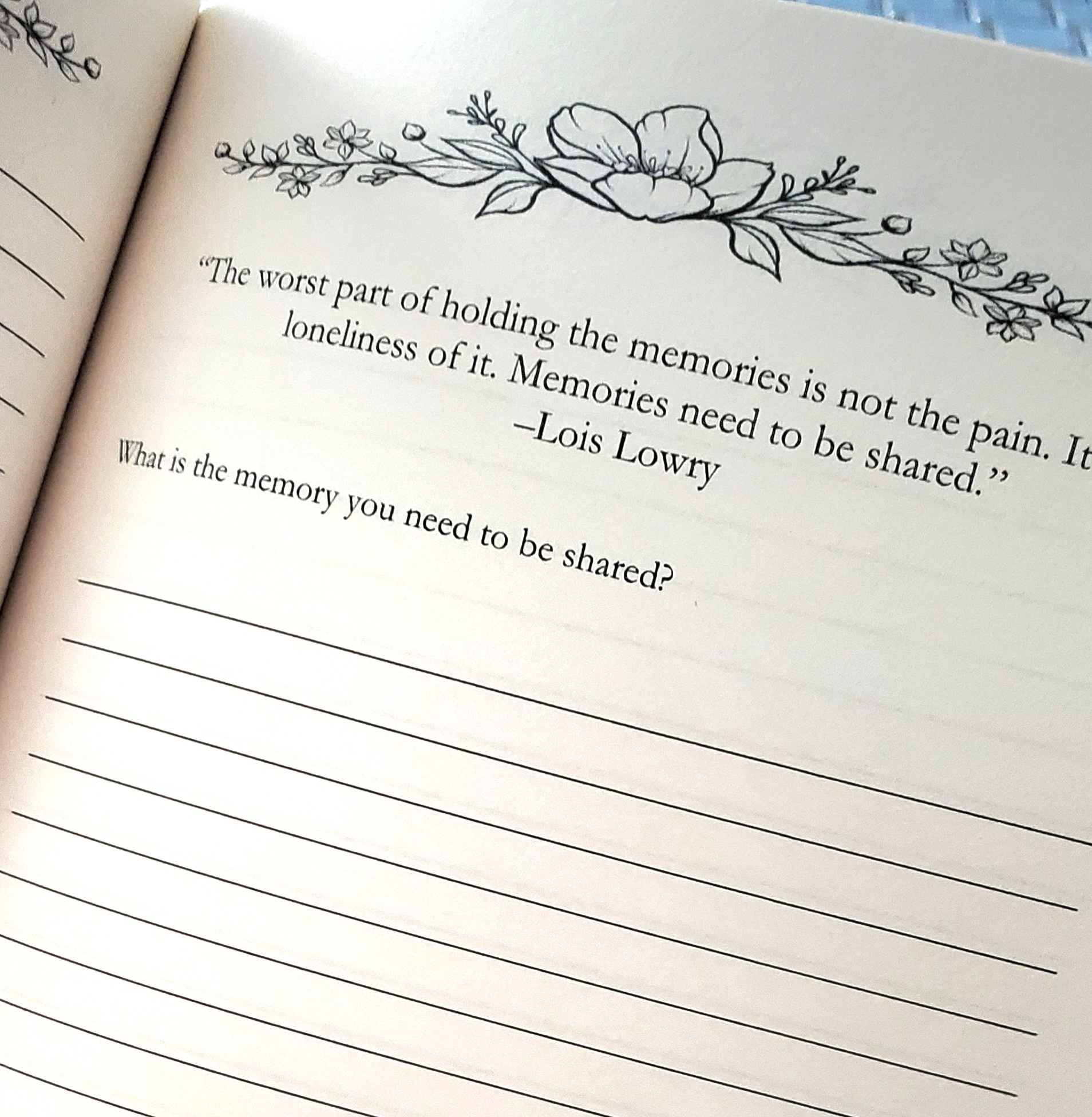
Carly has taken her digital media, writing, and healing skills and brought them together to begin creating beautiful journals. A few of them are available on Amazon. She’s giving away, Me-moir: A Journal of Memoir Prompts for Inspiration. (Inspired by one of my blogs!) to one of her followers on July 1st. To be eligible – follow her on IG. July 1st, she’ll chose a name live! You’ll receive a free copy! Follow Carly Long at 2carly4u for a chance to win a free journal!

The Fine Art of Journaling

I’ve written about the healing power of writing, but haven’t mentioned it in the same sentence with journaling. Any type of writing will help, bullet points, brainstorming, I most often start with freewriting as that is what works best for me.

Freewriting is the act of writing without stopping. Many people begin with a set time, like 5 minutes, and they’ll write whatever comes to mind. If you’re unpracticed in journaling or freewriting, this might work if it seems starting might seem overwhelming.

Some people see journals as a way of recording the day’s events, certain thoughts or feelings, or even keeping track of accomplishments and to-do lists. It can be all or any of these things.

It used to be I’d read Sylvia Plath’s journals or Anais Nin’s diary excerpts and be intimidated – how did they create such lovely and thoughtful prose in their journals when what I scribble appears more like word vomit, thoughts and emotions all over the place in no particular order? and there certainly isn’t much poetry within it!

But then a friend pointed out a few things. First: some people keep a writer’s journal (as opposed to or in addition to a personal journal). This may be what I’ve been exposed to within the realm of famous author’s private thoughts. Second: These published journals have probably been edited, redacted, and only the best parts saw the light of day.

The Diary of Anne Frank, most people are unaware, was edited. Large parts of the original text were blacked out by her father who thought some entries to be inappropriate.

Hey – all the best journals have inappropriate thoughts! That’s why they are there in the secrecy of our journals.

But journals serve a number important purposes: Journal writing relieves us of our anxiety by releasing any thoughts and feelings that have been unexpressed or need to be re-expressed. Writing things down is a way to get them out of us, to say them aloud, and begins a process of working out the challenges we face.

Writing regularly helps with mental well-being, feeling more positive and hopeful. Journaling can help us heal.

Some writers do morning pages. Some people journal nightly. The best time is the time that suits you.

The fine art of journaling lies in putting the pen to the paper and doing what feels best for you without worrying what others will think. It is just for you. And we all need that – to do things for ourselves.

Time for a good book burning?

What do you do with all those old notebooks? journals? piles of notes?

How long should we keep them? forever?

I guess, there’s different things here. My old notes and notebooks full of ideas are floating in various places, saved for that some day I might mine them for good ideas.

Yet, there are other types of journals and notebooks – our personal ones. Does anyone every throw those away? burn them?

One woman told me she was sorry she threw hers away. She’d like other people to see them, read them, understand they weren’t alone in their thoughts and feelings.

Certainly, that is why I write. However, that is not why I keep a journal. And those journals, over the years, have piled up. I have nightmare images of my daughters reading them after I’ve passed, wondering if they should have committed me.

There’s probably some good mining that could go on in them, but I don’t want to reread them. They are the past, dark things best left there – aren’t they? Or do I use them, dredge things up, use them to add authenticity to my writing?

There’s plenty of me in my writing, my fiction. Need I add more? Or do I destroy the evidence?

Your Journal is Important, Especially Now

journaling

Journaling allows us to process our daily lives. It helps us see patterns that we are taking part in physically and mentally, and most importantly it allows release.


Don’t hold back in journaling. These are your private thoughts and they need voicing and validation. No one ever needs to read them – or you can turn them into a creative efforts.  Some of my students have begun painting, writing, or even baking to express their creative outlets.


During this time, my writer friends and I are journaling to keep track of an important time in history. Maybe these will be records of human thoughts and feelings during a very difficult time in our society – much like The Diary of Anne Frank.


Some are doing dream journals as well.


In a few years, this will be forgotten, swept under the rug, or rebranded. Our society, our children, and our grandchildren’s grandchildren will need real life, first person examples of what was happening internally and externally.


I teach topics that deal with slavery, suffrage, native American relocation stories. We read first person accounts. These allow my students to understand critical happenings in our society not from our history books who are written by the victors or the historians recording political acts, but by the people who went through and dealt with racism, oppression, and death our history has reaped on individuals.


Journaling seems more important now than it ever has before.


It can be anything you want it to be, look like anything you want it to look like. Let it be private and burn it later. Or share it.