How is a Writer like a Peanut?

How are you like a peanut?

I gave this prompt to my students. Even as I was assigning this prompt, I saw the looks on their faces. They were not the first class to question my sanity; that happens regularly. So, my answer, must be “I’m a little nutty.”

Some of my students came up with amazing responses.

peanut

  • Like a peanut, I have a hard shell. But once I open up, I’m quite pleasant to know.
  • Like a peanut, I’m coming out of my shell.
  • Like a peanut, I’m a little rough around the edges, but smooth on the inside.
  • Like a peanut, I am versatile.
  • Like a peanut in a shell, I am not alone.
  • Like a peanut, I’m caramel colored.

This is challenging and, as writers, we must challenge ourselves. When we challenge ourselves, new parts of us open and allow us to grow and see life from a different point of view.

Choose an item from your refrigerator or snack drawer and compare it to yourself.
(Or choose an item and compare it to your main character.)

If you’d like to share it in our group, please do. peanut2


Dare to Suck

indexSteven Tyler of Aerosmith says, “Dare to Suck.”

It seems that he and his band mates have a regular meeting in which they bring the wildest, crappiest, outlandish ideas to toss them around and see if they work.

9 out of 10 of those ideas have to be trashed – but the tenth gets you something like “Dude Walks Like a Lady.”

Why not throw around ideas that seem completely outrageous?!  They can always be strays.jpgcanned later, but in the meantime you have some ideas to play with and you might, well, come up with something good.

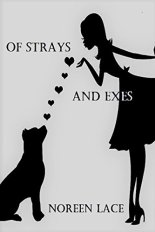
I wrote the line, “When I killed my neighbors dog…” My friends said, you can not use that. But I played with it to see where it might take me, and I wrote “Of Strays and Exes” by just playing with this strange line that came to me in a dream.

It was accepted for publication in Pilcrow and Dagger almost immediately and later made into a podcast. You can find it kindle now, or search P&G’s podcasts.

**Disclaimer: No animals were killed or injured in the writing of that story.


Use it or Lose it – for writers?

muscle-armWhen we think of “use it or lose it”, many of us think of the physical body. And, I have to admit that I was reading something about the physical aspect of our beings when I thought of applying this to writing.

When I don’t write for a day, a week, or a month, then I start again, it’s difficult and frustrating; the writing comes out scratchy, not making much sense. But, then, as I sit there forcing out the words, pushing the bad stuff out of the way, it might take me another week or month to get it moving again, but it does move and the flow is active once again.

Think of writing as a muscle – it needs regular exercise in order to flow smoothly. keepwir

If muscles aren’t exercised regularly, they lose mass. However, once they begin to work and move again, they regain the mass rather quickly. But the movement must be continual to see progress.

The same goes for writing. We need to write regularly in order to keep the flow of ideas as well as the flow of the story moving and our skills steady. Any disruption over a period of time will make the first times back difficult and challenging.

As always, the advice is – Keep Writing. Your skills will improve with practice and time. Your flow of ideas will improve and grow as long as you keep exercising those creative muscles.


Think of it like this:

Actually what the brain is doing is changing its local wiring, changing the details of how the machinery controlling your behavior is connected. It’s also changing itself in other physical, chemical, and functional ways. Collectively, those changes account for the improvement or acquisition of any human ability.

Monday Motivation


fork

Writing exercise:

Take a very common thing from your kitchen and write a poem about it.

It will most likely become a poem about something else.

Share in our Facebook group!

I think I’m going to try a spoon.  (There’s actually a pretty famous poem about a spoon – by Billy Collins)


To Publish or not to Publish – is that really a question?

To some people it is.

I have a friend who picks and chooses where he wants to be published so carefully that he submits maybe once or twice a year at most. He hasn’t been published in maybe 6 or 8 years.

He’s an extremely good writer. Better than I.  colllins

He says, he wants to only be published where his name will be seen, where it will matter.

I took this to mean he didn’t approve of my many publications with small presses, some of which no one has ever heard.

What do you value and why? Ask yourself.

Billy Collins, btw, began publishing in what he refers to as fly by night or small presses of which no one ever heard.


It Hurts!

yogaWriting hurts – no, seriously, sitting for long periods of time makes my back ache.

Now, we have standing desks, but studies show that’s only moving the pain around, not really as good for you as first thought.

My trainer recommends getting up every fifteen minutes to stretch and walk around. But, when I’m in the flow, three or four hours have gone by and I’ve even forgotten to eat!

Longfellow may have been the first yoga3to use a standing desk; he alternated between sitting and standing, which I think is a good idea.

Charles Dickens described his writing as “prowling rooms, sitting down, getting up….”; It’s purported he owned “all manner of comfortable easy chairs.”

It’s more about the way we sit and stand that is hurting us. Our shoulders coming forward and our heads hung puts far too much pressure on the back of our necks and can cause permanent damage.

Laptops don’t help. When we hadyoga4 our desktop computers, it was all about raising the screen to eye level, sitting in an ergonomic chair, with our arms at a comfortable angle. With laptops, either our head is tilted down or our forearms at a strange angle.

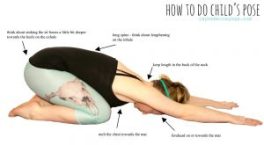
ChildsPoseNoBackground-300x165Yoga to the rescue! In order to keep our backs and legs healthy, there’s a few simple yoga poses (you could even do some of them at your desk!).

Spinx pose will help with those rounded shoulders and neck pressure.

Child’s pose and/or downward dog will also relieve some of the yoga2pressure.

Thread the Needle Pose is one of the best.

These are the easiest, but writers can benefit from a regular yoga class or a yoga routine.


Approaching Authenticity – Creativity, Psychology, and Christian Faith by Bozena Zawisz

bozenaSomething I often hear as a counselor is clients speaking about the weight of expectations they feel they’re carrying on their shoulders; and the frustration, guilt, or resentment they feel in relation to them.

Many of these expectations are often tied to a particular role they “fall into,” that contains within it: unexamined assumptions relating to some action(s) they feel they should be doing, rules for communicating (what they feel they should be saying, and how), pressures to take on board “shared” viewpoints…

Often they express feeling as if they lost their center or connection with themselves.

Some roles are consciously/purposefully chosen. I choose to relate to clients within the boundaries of a counselors’ role. At other times, individuals can fall into an interaction where there is an expectation/pressure to engage in a “role-play”… mindlessly… pulled by some emotional pathway, deeply engraved by a lifetime’s worth of conditioning… For example, many adults continue to feel strongly affected by their parents’ perceived expectations of them…

Sometimes individuals’ roles within relationships include assumptions about hierarchy (in some cultures more than others), expectations relating to distributions of privileges, expectations relating to the division of weight that is placed on the inner experience of each individual. Often, the language which does not fit an expected role-script is unwelcome, discouraged…

One of my favorite historical examples of a figure who modeled the importance of rising beyond roles and cultural expectations, and embodied authenticity and inner strength, was Jesus. I admire the way he kept right away from describing himself via popular roles or politically loaded terms of the time, which he perceived as a poor fit with his life’s journey and purpose.

I love the way Jesus preferred to describe his inner experience and communion with God using creative metaphors-that beautifully made use of people’s familiar associations (e.g. used imagery such as harvests, laborers, etc.) yet transcended the language of the well established familiar social and political roles, traditions, expectations, and their underlying beliefs and perceptions.

Jesus had a hard time with the Pharisees. Perhaps they perceived his non-compliance with the established roles that reinforced their power and privileges-most unsettling. Jesus smacked too much of personal power, disregard for the authority of political/social pecking order…

Possibly to connect with a sense of inner peace, he was documented to withdraw into solitude oftentimes, perhaps in this way he restored his strength by nurturing his connection with God. Just as in his case, I believe that it is a helpful first step in our journey towards authenticity to find ways to connect with a loving place of self-care and strength within ourselves.

Given the powerful focus our society (and at times other people) have on trying to hijack strong within_frontour attention and encourage us to look to the outside of ourselves for fulfillment–creative expression of, and reflection on, our inner experience allows us to re-center and reconnect with our inner journey of transformation.

And, support us in reclaiming control over reconstructing our experience so that it resonates with our values, faith, the direction of our journey, and more closely aligns with our truth.

Bozena Zawisz

Website

Neither Innocent or Guilty


~~~~~~~~~~~~~~~~~~~~~~~~~~~~~~~~~~~~~~~~~~~~~~~~~~~~~~~

Many Thanks for sharing!

noreen

I Am Not Necessarily Me

me.png

I use first person narrator in many of my stories.  I find the level of intimacy I can connect with in the character makes the experience feel more authentic.

I also enjoy the unreliability of the first person narrator. Although I don’t intend to make my main characters questionable, all first person accounts must be met with skepticism.

There’s one possible downside to the first person narrator and I’m certain many writers have experienced the fan who believes they understand the author based on a story which utilized the “I”.

dadshiningOne reader contacted me convinced Dad Shining was about me. “This is a true story, I bet!” He wrote.

This is complimentary in the fact that the story must have been realistic enough for this reader to believe and enjoy it.

However, Dad Shining (originally published in The Chicago Tribune’s Printers Row Journal) is written from a male point of view experiencing a life event incomparable to what a woman could experience.

There’s not much a writer can do about being mistaken for their narrator except to gently correct the reader without offending them or merely thank them. I said, “thank you for reading.”

My main character in West End is a young woman, and I did use an area close to where I grew up. A number of readers have attempted to call me out on that. One reader wrote, “I know most of this is you, except for the part of leaving the boy.” Another reader, convinced it was me believed I’d been married before and left them to change my name and start a new life incognito.

This did bother me to some extent; the woman in West End is in some ways stuck in west end coverlife, and while that might be my fear, it is not me.

Still others found the first person narrator unreliable enough to question her sanity and ask me if she was seeing spirits. These questions I rather enjoyed. One character I had intended to be questionable, but when asked about another – I don’t want to say as I don’t want to ruin it for anyone! – I was blown away!

And that is the benefit and, perhaps, curse of first person narrator. The connection is so authentically intimate that you might convince readers it’s you; And you might just convince them the narrator is a little off her rocker!

The Mystery of Semicolons

indexMany people are confused by semicolons; some people just hate them.

Kurt Vonnegut hated them. Even Malcom Gladwell seems adverse to them. He said, he doesn’t see their point. So, Mr. Gladwell, this blog is dedicated to you.

I, personally, LOVE semicolons; it’s like I don’t have to stop my thought! LARGE-HEARTbeat.jpgHowever, some of my editors have asked me to cut them down. One editor-friend said, “they do not appear in popular fiction.”

BUT THEY SHOULD!

Whether you like, hate, are confused, or don’t give a damn about them, every writer should know how to use them correctly.

The secret to the semicolon is simple. Two complete sentences which are closely related in thought or idea. Other writers believe a comma and conjunction (fanboys) or a period is just as good, but I think of it this way:

blog.png

Did this help anyone?

61qc-fijuml._uy395_


Interview your character

interviewDoes your character like her/his marshmallows burned and why?

I love this – but it’s not mine.

I got this from Writer to Agent advice video from The AWP and Folio Literary Management.

Watch this video for tons of good information!