How did the three blind mice meet?
Why were they chasing the farmer’s wife?
Go – Write it!

How did the three blind mice meet?
Why were they chasing the farmer’s wife?
Go – Write it!
 The start of a New Year is a great time to re-evaluate your life, and discover a new direction!
You can start the ball rolling by simply making a choice, “I am now ready for my life to change!”
This in itself is a powerful acceptance. On making this choice you are nudging the door open, ever so slightly, to new opportunities.
The next step is to create clarity by reassessing your life. Take the time to think about how you would like your life to be? What is working for you and what is not! Also include how you are feeling emotionally, for example are you happy, sad, feel loved or unloved, motivated? What changes would you like to make?
Formalise your conclusions by making lists, which you can refer back to, and expand on. If you are unsure of how to change your life and the steps to take, this is ok, as it will come. If the mind has clarity and guidelines from you, then anything is possible. You are basically opening your life, to new opportunities.
Take the time to put energy into your new choices, to move them into creation. From time to time go back and look at your lists – also importantly set yourself tasks with a time frame.
On accepting a new choice, opposition on the subconscious level may arise, and unknowingly you may create an obstacle in your path. At these times it is important to seek to understand what is actually happening, and let go of the negatives, and continue to affirm your positive, new choices. Keep going, be determined, hold to your dream and you will get there!
STRENGTHENING POSITIVE CHOICES -AFFIRMATION
Life is a matter of choice. I choose to prosper, to be aware, to be strong, to be adventurous and safe. I choose to be happy, to be confident!
Visit Me Here for more Inspiration
~~~~~~~~~~~~~~~~~~~~~~~~~~~~~~~~~~~~~~~~~~~~~~~~~~~~~~~~~~~~
Thanks, Linda!

I’m going to interrupt the flow of this blog , but w e really should talk about how we deal with interruptions to our work.
I try not to take phone calls during my work time; however, sometimes I have to. A doctor appointment, a work call – all important, can’t wait until later. At least with those, you know you won’t be on the phone long.
The other day a friend called me. I hadn’t talked to him in over a month, so I wanted to see how he was. We live in different times zone, which makes scheduling time for a chat rather challenging. I told myself, even upon answering, that I wouldn’t talk long. But we did get carried away in catching up.
Set boundaries. I finally did tell him I needed to get back to my writing. He understands. Many people don’t, so I don’t regularly say that. I do tell them I can talk to them later or that I’m in the middle of something – both of which are true.
Phone calls and text messages are easier to put on hold – put the phone in the other room or turn it off. It really is not that hard. Having children or spouses is a whole different topic, which I’m going to talk about during another blog.
*
Right now, as I said, I need to interrupt the flow of this  blog with an announcement.
You can win my short story, The Gold Tooth! Click here. This is only for a limited time.
Long lost sisters are reunited at the reading of their mother’s will. Celeste who has cared for their mother in her declining years is awarded a small, broken music box. The force of nature, Nancy, who hasn’t been seen they were teenagers, is awarded the entire estate. Before they leave the office, Nancy is given the option to exchange the estate for the box. Nancy laughs off the incredible offer and moves into the estate. What’s discovered in the music box could cost one sister her freedom and the other her life.
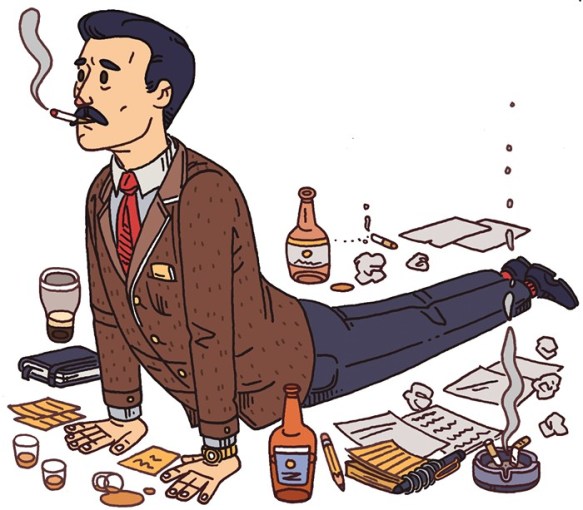 Writing hurts – no, seriously, sitting for long periods of time makes my back ache.
Now, we have standing desks, but studies show that’s only moving the pain around, not really as good for you as first thought.
My trainer recommends getting up every fifteen minutes to stretch and walk around. But, when I’m in the flow, three or four hours have gone by and I’ve even forgotten to eat!
Longfellow may have been the first 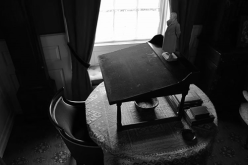 to use a standing desk; he alternated between sitting and standing, which I think is a good idea.
Charles Dickens described his writing as “prowling rooms, sitting down, getting up….”; It’s purported he owned “all manner of comfortable easy chairs.”
It’s more about the way we sit and stand that is hurting us. Our shoulders coming forward and our heads hung puts far too much pressure on the back of our necks and can cause permanent damage.
Laptops don’t help. When we had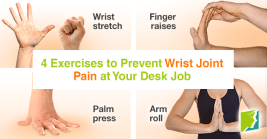 our desktop computers, it was all about raising the screen to eye level, sitting in an ergonomic chair, with our arms at a comfortable angle. With laptops, either our head is tilted down or our forearms at a strange angle.
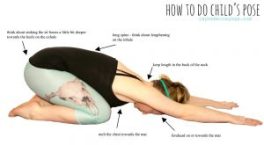 Yoga to the rescue! In order to keep our backs and legs healthy, there’s a few simple yoga poses (you could even do some of them at your desk!).
Spinx pose will help with those rounded shoulders and neck pressure.
Child’s pose and/or downward dog will also relieve some of the  pressure.
Thread the Needle Pose is one of the best.
These are the easiest, but writers can benefit from a regular yoga class or a yoga routine.

Poe’s secret for inspiration is used by many writers today.
Poe scanned headlines, read newspaper stories, and gleaned ideas from the oddities. His  story Berenice is about a man who digs up his dead wife and takes her teeth. This is reportedly inspired by newstories of grave robbers, some of which left the body and took the teeth. Another story reportedly inspired by a news report was the Facts in the Case of Valdemar. At the time, there were reports of people who could speak to the dead; there were other stories of ways to prolong life. Poe, it seems, blended these and created a story in which Valdemar “survives” and “speaks” beyond his natural life. This short fiction was thought to be real. People believed it!
Inspiration, for me, has come from the odd news story. A human interest story in which a homeless man was selling stories on a New York street, inspired me to write $1.00 Stories.
Another story flickered to life when someone posted a handful of gold teeth and said she’d inherited them. How does someone come into the possession of teeth, not their own, and why would they will them to a family member? Hence, The Gold Tooth springs to life from my suspicious mind!
Scan the newspaper, and let your mind wander. We’re writers; we have the desire to understand, explain, and create.
Happy Writing! 

I use first person narrator in many of my stories. I find the level of intimacy I can connect with in the character makes the experience feel more authentic.
I also enjoy the unreliability of the first person narrator. Although I don’t intend to make my main characters questionable, all first person accounts must be met with skepticism.
There’s one possible downside to the first person narrator and I’m certain many writers have experienced the fan who believes they understand the author based on a story which utilized the “I”.
 One reader contacted me convinced Dad Shining was about me. “This is a true story, I bet!” He wrote.
This is complimentary in the fact that the story must have been realistic enough for this reader to believe and enjoy it.
However, Dad Shining (originally published in The Chicago Tribune’s Printers Row Journal) is written from a male point of view experiencing a life event incomparable to what a woman could experience.
There’s not much a writer can do about being mistaken for their narrator except to gently correct the reader without offending them or merely thank them. I said, “thank you for reading.”
My main character in West End is a young woman, and I did use an area close to where I grew up. A number of readers have attempted to call me out on that. One reader wrote, “I know most of this is you, except for the part of leaving the boy.” Another reader, convinced it was me believed I’d been married before and left them to change my name and start a new life incognito.
This did bother me to some extent; the woman in West End is in some ways stuck in  life, and while that might be my fear, it is not me.
Still others found the first person narrator unreliable enough to question her sanity and ask me if she was seeing spirits. These questions I rather enjoyed. One character I had intended to be questionable, but when asked about another – I don’t want to say as I don’t want to ruin it for anyone! – I was blown away!
And that is the benefit and, perhaps, curse of first person narrator. The connection is so authentically intimate that you might convince readers it’s you; And you might just convince them the narrator is a little off her rocker!
A writing exercise to get your rusty writing pipes lubricated.
Write the same scene from three different points of view. I know this doesn’t sound new and groundbreaking, but when is the last time you did it? And what types of characters did you choose?
Let’s lighten it up for you – stretch your skills. If you’ve never written from the opposite gender point of view – try it. This is an exercise I did with Dad Shining. This story could not have been narrated by a woman, it had to be chronicled by a man. And that man, it turns out, had to be the son. Dad Shining was published by Chicago Tribune’s Printers Row Journal – so I must have done something right.
But don’t stop there – go further. Write it from a pet’s point of view. The Art of Racing in the Rain is an adult novel narrated in total by the dog. And it is a GREAT novel! Imagine a story from outside of the human point of view.
Or write it from a child’s point of view. Because my children are older, and I’m presently writing a story which involves a nine year old girl, I’ve had to call my friends. I was fortunate enough to spend time with a delightful little girl and found the time and the young woman inspiring. I have even more ideas than I can handle.
Let me know how it goes – share in our Writing 365 Group.
 One writer wrote recently that they’d received some really nice reviews, but one reader sent an email blasting him for some part of his novel. He took this to heart and let it destroy his mood and his confidence in his writing.
One bad apple don’t spoil the whole bunch of readers.
The cold, hard fact is – writers need reviews. But I’m not sold that a bad one is actually a bad thing to have. It shows that people, other than family, friends, and hardcore fans have taken the chance. Critical readers will look at the review closely to see what the person took issue with. Reviews that just say, “terrible,” just like reviews that say, “it was great,” doesn’t tell the readers anything and they’re likely to overlook these. If the reviewer said something more specific, “weak characters,” yet others have said the opposite, they’re likely to judge for themselves.
There’s another cold, hard fact – most readers don’t leave reviews. I know I’ve sold far  more books than the few reviews that I have. It’s not write, or even ethical, to pay for reviews, although such services exist.
So – readers – review the novel, book, ebook, story, etc in an honest and fair way. If you didn’t enjoy it, but it wasn’t terrible, be gentle in your criticism. The writers behind these books are human and did put a lot of work into them.
Writers – don’t get upset by a bad review. Not everyone is going to like your work. That’s the value of diversity in our society. Everyone has different tastes. Focus on the good reviews, but do read the not so favorable ones.
Do you go into a coma when someone starts talking about commas?
Don’t get bit by the deadly comma coma bug! Figure out how to make the comma work for you, not against you!
The purpose of all punctuation is to clarify your thoughts and ideas so readers can enjoy and understand the book!
Did you have a teacher that told you, “whenever you feel the need to pause, insert a comma”?
WORST ADVICE EVER!
When we are writing, we naturally pause to think. That is not necessarily where a  comma needs to be.
Commas have a number of rules. My favorite site to use – and to introduce to my students – is the Owl at Purdue. Their comma usage explanations are clear and detailed.
One of my editor-friends believes the comma used for introductory words, phrases, and clauses is “going the way of the dinosaur.” While I agree that some people and publications seem to think so, I think it’s still a valid and needed use. [I’ve used introductory commas in this blog – one was in the previous sentence, “While I agree…]
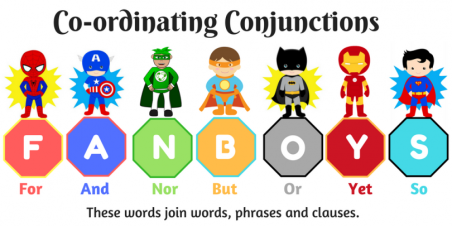
The Fanboys rules is the easiest to remember; however, because of the number of teachers giving the pause advice, I get sentences that look like this:
The Rams won but, not everyone was happy.
We sometimes punctuate our speech this way for emphasis, but you can’t hear tone in these words, and it’s just wrong. < this sentence contains correct use of the fanboys rule.
My students often ask me to explain the whole “Oxford Comma” disagreement. Well, it goes like this: There are people who use the oxford comma and then there are monsters!
Example:
Commas are confusing, but they’re not impossible to learn. Any editor is going to appreciate the correct use of commas regardless of how much they appreciate or introductory comma. 🙂


 Noreen Lace
You must be logged in to post a comment.