The Myth of Writer’s Block

Writer’s block is a myth perpetuated by people who don’t really want to write.

write

And I really don’t like when people ask me if I ever “get it,” as if it’s contagious. In some ways, I think it is. People talk about it too much and infect others with their ideas of this mysterious and loathsome “writer’s block.”

Maybe I’m thinking of the block all wrong. I’m not sure at all what it means. Does it mean the person can’t sit in a chair and write? Are their hands broken? Is their brain injured? Or does it mean they can’t write as well as they want? Does it mean that writing’s not easy?

Hey – wait – let’s hold on to that one: Writing is not easy?!

Of course, at times, it’s not easy! Sometimes the scene isn’t quite right or the dialogue is inauthentic or the words aren’t laying out as smooth and beautiful as we’d like. Does that mean we lay down the ivory pipe, get up from our Italian baroque seventeenth century carved desk, retire our gray wool writing jacket with the patches on the elbows, and lounge for the rest of the day waiting for this “block” to pass?

None of it’s real!Writers-Block-is-a-Lie

The desk, the jacket, or the block – these are images people use to perpetuate the myth that writing is some magical gift that is laid down upon us and is taken away just as easily.

I’m not saying the ability to ribbon words rhythmically and meaningfully isn’t a gift – but it is work.

Now there’s the word we need to use. The only thing, perhaps, people are being blocked from is WORK.

A writer needs time. The lack of time can inhibit starting or finishing – but we make time. Many writers (Vonnegut, Angelou) woke up early.  I used to be one of those people who said – oh, no, I need my sleep. But then I decided I wanted to write more than I needed extra sleep. Writers, for centuries, have had no choice but to get up early or stay up late in order to produce.

And there’s that word again. Work. Let’s get to it, ladies and gentlemen, no matter how gifted you are, writing is work, writing is commitment. And there’s the other word so many people are afraid of: commitment.

If you want to be a writer it takes work and it takes commitment. The real work of writing is to commit yourself to it, to sit your ass in that chair, at that desk, or dining table, or in the corner closet, and write. Sometimes nothing is going to come out right. And that’s when you keep working, or you take a break, go grab a cuppa and get back to it. Writer’s commit themselves to time and action, whether it’s one hour a day or eight hours a day. And sometimes things come out well and sometimes they’re a struggle.

plumbers block


Imagine writing as a job. If you want to be successful, can you give up the moment it gets challenging?  Can you imagine your plumber calling you and saying, “I just can’t come today, I have plumber’s block”?


If something you’ve started has stunted, write something else, take it in a different direction, write an angry letter to one of the characters insisting they do what you want them to, then let them write one to you.

poe2


Let’s be honest about what writer’s block really is –

  • it’s procrastination;
  • it’s distraction; 
  • it’s fear of rejection.


I do believe people go through periods where they’re not as productive, or they have some psychological issues blocking them from releasing their ideas. These problems can be solved – therapy.

beautiful journalist looks typewriterIf you want to take part in the myth – “oh I can’t write today!”

If you want to perpetuate the myth – “What do you do when you get blocked?”

That’s fine. However, Do not bring your kind of negativity to me – “Do you ever get blocked?” Because I don’t want to hear it; I don’t want to be a part of it; and I certainly don’t want you attempting to infect me with your dis-ease.


read


Now – sit that ass in that chair and WRITE something. 😉 Good luck. 


Delphinium – with care, blooms twice

Sticking to their word, Delphinium blooms again. The lovely editors at REaDLips have promised to give some of the proceeds of Delphinium’s Summer Issue 2017 (and going into the future) to literacy programs.  I’m beginning to appreciate Delphinium and those at REaDLips more than ever. They are showing themselves to have a heart, to care about our society. I am more than proud to be affiliated with this journal, proud to be published a long side amazing award winning authors as well as my own students. That’s right! Lynn Johnson was a student in my African – American Literature class. Her poem, published in Delphinium, was one she wrote in response to one of our readings and shared in class as part of her creative project.

I hope you’ll give Delphinium a read, and not because I’m published in it (well, not JUST because), the journal features authors and artists of diverse cultures and it will benefit art and literacy programs.

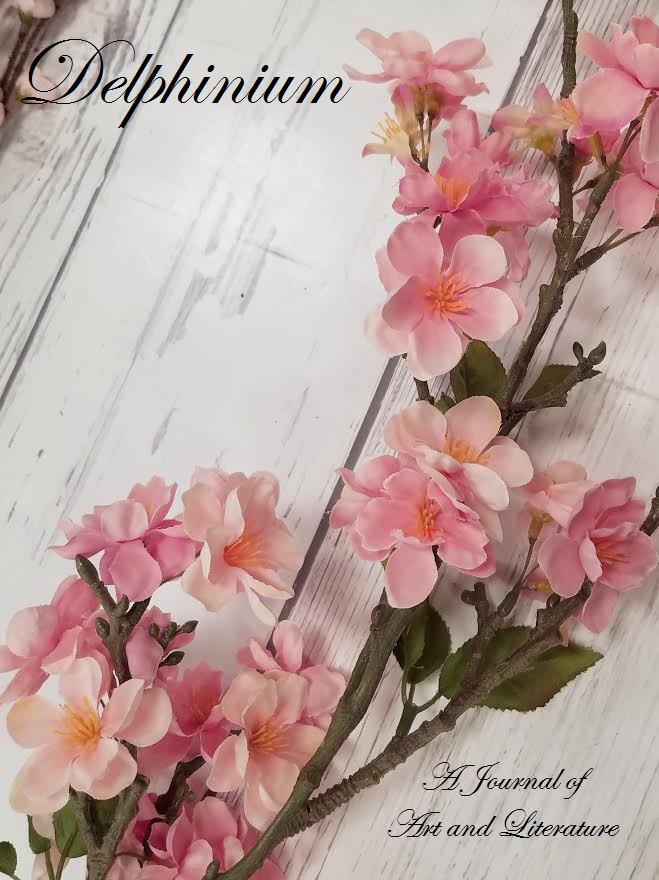
delphin cover3

Namas-Cray

My friend Laura LaBrie from Lovely Lattitudes, first said this word to me.  It describes life, don’t you think?  My new book was all set to go, it just needed a title.  I felt like this word, “Namas- Cray” accurately described the stories involved.

In everyone of these stories, the characters are, shall we say, a little off. One woman is planning her “Perfect Day,” when she’s interrupted by a young couple about to rob her. Did  I mention her perfect day involves suicide?

In “Harvey Levin Can’t Die,” the narrator is just going about her life, working at a coffee shop down on Ventura Blvd, when the whole world seems to get serious. Her b/f leaves her to go back to college. Customers want to talk about serious stuff, not reality tv. WTH? But she finds the underground – and accidentally – I mean, it was probably an accident – mows down Harvey Levin with her car.  She tried to report it! The police didn’t want to hear it!

Talk about having a cray day –

So this title fit PERFECTLY.  I think whether you are an avid reader or someone who picks up a book to make it look like you’re an avid reader, you will love this book.  (Humble, right?)namascraycoverwithfilter

You can win a copy on GoodReads!


The Evolution of Writing Style

A prompt in a writing group to think about style inspired me to consider the evolution of my own writing style.

Writing evolves, grows, hopefully gets better, with all we learn and experience in life.  But style is something a little different. Style, sometimes, doesn’t change. Or, I should argue, doesn’t change that much. Maybe, it’s the small changes that only a critical reader might notice.

Last year, when I published Here in the Silence, I felt the stories earned that title. All the protagonists were struggling with finding their own voice. They felt silent or silenced, either from their own lack or from those around them.

This year, with Namas-Cray, my characters are different. Some are still struggling with being heard, (Of Strays and Exes), while some believe they are completely aware of who they are and what they want (A Perfect Day). There’s darkness, but there’s a dark ironic humor that embeds itself in their thoughts and actions: “Of Strays” begins with “When I killed my neighbors dog….” and in “A Perfect Day” a woman’s suicide is interrupted by an armed burglary.

What’s different between these two years of writing is the ironic humor. And, I’ve noticed that’s worked it’s way into most of my writing, including my poetry, “The Fly” features a fly who has “24 rose colored hours” of life, both celebrating and loathing those hours.

I’ve always handled my own life’s struggles with humor. When my daughter was a teenager, she looked at me and said, “Is everything funny to you?” Anyone who has a teenager knows – it’s got to be funny or you’ll lose your freaking mind. Therefore, to answer her question, I gave her a long, slow nod (gritting my teeth).

Does that mean my writing style will make you laugh at the dead dog or at the woman’s suicide attempt?  Absolutely not!  That’s where the irony comes in. It’s subtle and sardonic. The protagonist in “Of Strays,” offers to pay for the dog.  She doesn’t quite get the loss. But the protagonist grows to understand. And, in “A Perfect Day,” suicide is never a humorous topic, but our very serious plans being interrupted by life is something everyone can relate to. Her day is no longer so perfect when an armed robber says, “your money or your life.” And his plan, certainly, is not going as well either. Irony!

One of my students believes that “humor” should never be used in conjunction with a serious topic. In many cases, this is true. But we have to look at the irony surrounding the fiction that is how we learn and grow; introducing a topic with subtly allows the readers a way in to understand the situation, relate, empathize. The same is true of our lives. If you slam someone with truth, they are likely to back off and not engage. We introduce ourselves first, our struggles, along with the irony of moving on in our lives.

Let’s take a look at my life – what has happened in my life that might have made me feel more sardonic.  I teach a report writing class, which I run like a lesson in professionalism. How you present yourself as well as your writing says a lot about the person you are.  And then comes this Presidential campaign. How do I tell my 18-22 year old students to act like a professional when #45 acts like a spoiled child who’s had too much sugar?

Irony much?  This year, I was offered an African American Literature course. How do I stand in front of 36 students of diverse backgrounds as a white woman lecturing them on African American Lit?  Humor. Confront the irony. I asked them on the first day of class, “Does anyone want to know why a white girl is teaching an African American Lit Course?”

(According to the students, btw, I did a great job. Let me say, that I absolutely loved it! We built some iron bridges of communication in that class that I hope the students take out into the world with them. I took the course for a number of reasons, one of them was the above #45. But that’s a whole other story – We’re focusing on irony, life, writing style).

I do believe life affects writing style. Everything we learn, do, experience, and want should affect our writing style. We should grow and evolve as humans and as writers.

I was stuck once on a story. I’d been working with it, not quite able to get it to that sweet spot, when I decided on a vacay to New Orleans. I’m not much of a drinker, so it’s not the absinthe smoothies on Bourbon Street that inspired the trip, so much as the fanfare, the history, and the culture. I might have thought about the story while I was there; I don’t really remember. But, upon my return, the answer materialized. The story became what it needed to be. (It’s under consideration for an award as I write this).

That trip has stayed with me, as well as my other travels, other experiences: the homeless man at Starbucks focusing with intensity on a spiral bound notebook as if he was finishing his own novel – “$1.00 Stories” – the psychic who told me my illusion bubbles had burst “How to Throw a Psychic a Surprise Party” and so on. We must let life affect us, work its way into us, our style must evolve, or we stay stuck in life and in art.

writing life.jpg

I’m interested in hearing thoughts on this.  Do agree? Disagree? Has your style changed? How or why?

A Cray Giveaway

namascraycoverwithfilter

In celebration of my upcoming release of Namas-Cray in July, I’m giving books away for the next few months. You can enter to win a signed copy of my book, Here in the Silence, by entering this GoodReads Giveaway.

Namas-Cray features a number of short stories in which either the character is or reader will be questioning their sanity.


here in silence


Here in the Silence is a collection of short stories which reveal characters stuck in their own type of reticence. Some are unable to articulate their desires, others choose not to. A resentful son needs to come to terms with his father’s unsavory past. A young woman finds herself in trouble and doesn’t know how to help herself. A successful writer has difficulty responding to the girl of his dreams. What can their silences tell us about the world, the people around us, and ourselves? This collection brings together some previously published short stories as well as new fiction. Some of the previously published stories are no longer in print and this is the only place to read them.


Grandma’s Secret Revealed!

When Grandma asks you to do something –

255 and 356

You do it!

So when Grandma asked Katie to “take care of something” and “don’t tell anyone,” she barely hesitated. She had to get on a plane in the middle of the night and go to a storage unit……

What had Grandma kept hidden for 60 some years?

April-Final-1-768x1002

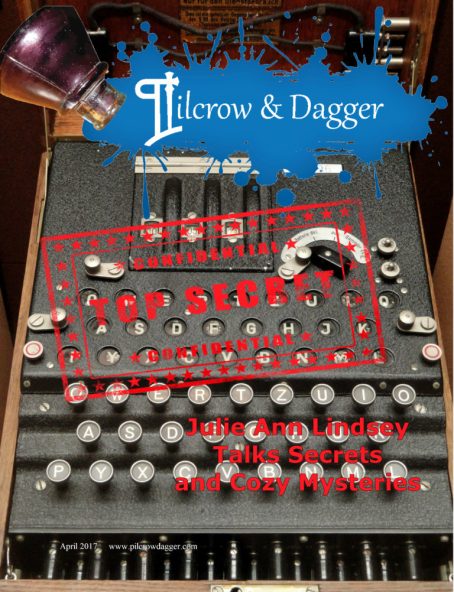
If you’d like to know… You’ll have to open this Top Secret File at Pilcrow & Dagger.

Enter to win

Ladies and gentlemen,

To celebrate my summer release of as-of-yet-unnamed book of short stories, I’m giving away books for the next few months. Enter to win a copy of West End on GoodReads!

westendposter

Nano’d

My poem, “All at Once,” which was a finalist in Medusa’s Laugh Nano Text contest, has been published in Nano Text form. 😂 . They sent me two Leather bound, hand stitched copies.


17545132_1604225282940125_246124145456059667_o

Random facts stalkers don’t know…

12342690_1164373420258649_3435683081103125993_n

I grew up in a tough neighborhood. (don’t stereotype me)

I was in a band. (for about 5 minutes)

I was in a few movies. (another 5 minutes)

I wrote my first “novel”at the age of 11. (an angst ridden piece about a girl who is kidnapped because she witnessed a crime)

I was actually kidnapped. (not at 11/that story is waiting for publication)

I always have wanted to own a Munster-like house.

I’ve gotten lost in every major city I’ve ever been (including abroad. Trust me when I say every country/every city has neighborhoods you don’t want to be lost in at dusk)

I keep a lot of random facts as well as insignificant details in my brain. (jokes don’t stick tho)

now the stalkers know – don’t be a stalker….

When your back’s against the wall…

17358809_1593683070661013_1056498107982738675_o