Writer Wednesday: 4am Success

No, not me. I don’t get up at 4am, but some successful writers have.

earlyriser2Auden, Hugo, and others woke at 4am

Vonnegut and Angelou woke around 5am.

Milton and others at 6.

Sadly, I’m more along the lines of Stephen King, I like to be in my writing chair by 8 with a cup of tea; however, if I wake up earlier or later, it doesn’t mean I waste time. I get my rear in that chair – inspiration or no inspiration. Sometimes I start writing and don’t stop until hunger threatens; sometimes I stare at a blank page forcing words to lay down.

Occasionally, I consider attempting this 4am lifestyle. But I wonder how effective I’d be for the earlierriser3rest of my day. I’d have to change my thinking first – about sleep and the lack thereof. I value a good night’s sleep.

However, it’s true – 4am – no disruptions, no appointments, no phones ringing, no neighbors knocking on your door. 4am does have it’s benefits.

It’s not imperative to get up early (although studies show earlier risers are generally happier!); it is paramount to have a routine. Mine works best when I roll out of bed, make tea, shove open the curtains, and start writing.

What works best for you?

early-riser-810x455

Nice Feature of West End –

Thanks, Darrell!

Check out SnowFlakes in a Blizzard

front-cover-small

If anyone would like a free audible copy – let me know by commenting below. First two people only!

Friday Feature: Submissions

This week for the friday feature, I thought I’d offer tips on Submitting.

Last year, I had 17 or 18 publications. This year so far, I’ve had maybe 9 or 10 acceptances. I must be doing something right.  submissions-photo-01

I think it should go without saying your work should be free of grammar and punctuation errors. I heard from one writer who was offended by an editor; her response: “I know I had errors, but they weren’t that bad.” – No excuses. Edit that work before you send it out.

First: Make a regular time to sit down to submit. This takes HOURS. It’s not going to be just a fifteen minute or thirty minute venture. You must read what the lit mags are looking for as well as how they want it submitted. Then compare it to what you might have already written, or what you’re willing to write.

Second: Keep track of your submissions. submissions1

Third: Accept rejection. (It tells me that I’m doing my job by submitting.)

Fourth: Accept criticism. You are going to get opinions. Just today, I received a rejection that said I repeated a word. That was the whole of their rejection. The word in question was repeated twice in the whole story, but I guess they didn’t like it. I moved on.

Fifth: If they ask for changes – agree (maybe). I’ve met many writers who take issue withsubmission this. They wonder if I don’t care about my work. They think I’m mad for even considering it. There are some things I won’t change. But, so far, the editors who have asked for changes have asked for simple things like rewrite this sentence, change this punctuation. No one has asked me to make major changes to any piece I love.

And Finally: Be considerate to writers, editors, and publishers in emails, on public sites, and anywhere you may meet them. When you act inappropriately, word can get around.

Publications Page

Amazon Page

submit

Writer Wednesday: Experience Vs. Research

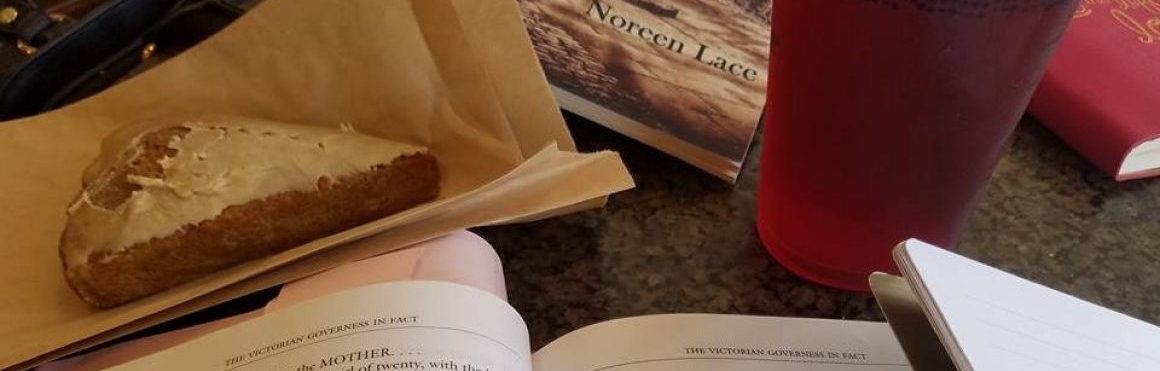
Someone asked me if I write what I know. For many, that would be limiting. We write what we know in some intuitive way, like people, emotions, relationships, and some places. But that’s not all we write.catacombs

Nothing adds to a story like those little details that you’ve experienced, like the slick, moist, near sickly feel of your skin on a humid day in Paris after emerging from the chilled underground of the catacombs.

The difference in squeezing the smooth texture of black sand from Punaluʻu Beach in Hawaii between your toes and walking on fine, compacted white sand of the Whitsunday Islands in Australia.

blacksandEvery beach is just a little different. Just as the light is, depending where on the planet you stand. Being there helps.

But, research is also necessary. Maybe not to describe the sand between your toes, but other important details about place. Incorporating the general details or impressions as well as the smaller, more personal elements creates a more vibrant and more relatable to readers.

Stephen King thanked his research assistant and stated he met a lot of nice people in Oklahoma where his new book, The Outsider, is set. Experience and research.

Many of us can’t fly to Darrien, Washington and spend a week or longer researching a small town setting in the pacific northwest, but we are able to view maps, read the newspaper, follow the instagram sites, ask travel groups and even call the travel bureau in any given state.wander.jpg

I love experiences – Traveling and getting lost in a new place, picking up those sensual memories to infuse into writing and future!

Experience is a great thing, but it’s not the only thing. Research back ups and fills out details we may have missed.

Where have you been that you’ve written about?

Happy Writing!

Friday Feature: Building a Community of Writers – Rebecca Clark

Hi, All.  Today, I asked Rebecca Clark to tell us about The Writer’s Point.

~~~~~~~~~~~~~~~~~~~~~~~~~~~~~~~~~~~~~~~~~~~~~~~~~

fridayfeature


My name is Rebecca Clark. I am the founder of The Write Point, a free social networking community for writers, editors, publishers, beta readers, and literary agents.

Here’s my story.

For the past 15 years I’ve been writing fiction stories. Mainly for myself. It wasn’t until about 7 years ago that I thought maybe I could actually publish something! I wanted to share my make-believe worlds with others. So, I dug deep into the Internet to see what I could find about agents, publishing, the editing process, and what ever else a successful book entailed. I found several forums full of knowledgeable authors.

Forums are messy, in my opinion. I was a brand new writer lost in a world of writers who knew everything I needed to know, but somehow I felt that I didn’t fit in. There was one forum website in particular that made me feel like I shouldn’t be a writer at all. Every question I asked was answered with “google it”.

So, I googled it. I learned so much on my own, but I really just wanted to be a part of a community, some place where I felt at home with people just like me.

Last year, I decided that if I couldn’t find a place to call “home”, I’d create one. So, I did! Fortunately for me, a couple of years ago, I graduated with a degree in Computer Information Systems: Website Development and Design. I could take the time to build upon the idea, and actually understand what I was doing in the process.

The Write Point is a FREE community that I hope will become a place for new writers to feel welcome, and experienced writers can share their expertise without making anyone feel like they aren’t good enough!

Noreen, thank you for allowing me to share the story of The Write Point. To learn more about us, visit https://thewritepoint.com.

The Write Point Facebook page is: https://www.facebook.com/thewritepoint

You can also find me tweeting here: https://www.twitter.com/bekkahclark and here https://www.twitter.com/twp_network

~~~~~~~~~~~~~~~~~~~~~~~~~~~~~~~~~~~~~~~~~~~~~~~~

Many thanks, Rebecca.

Writers, Enjoy!

weekend

Writer Wednesday – The Mystery of Flow

Door-Into-MindIdeas come easily to some writers, not so smoothly to others.

There’s a little door to our writing mind which must always remain open and then things will flow in and out. it’s a frame of mind, to be open and to listen, or to always have writing on your mind, like a song playing in the background.

In a supermarket, the cashier says something to me. It could be an every day comment that strikes me a little strange. That (creative) door is standing ajar and a shadow is leaning against the frame when the cashier, red hair piled 50’s high, said something about “blueberry pie.” But I heard Blue Pie. My writer mind twirls within possibilities. That idea that lingered at the door-frame to my writer mind smacked right into the blue pie and it became a dog named Blue and Grandmother’s award-winning pie at a local fair in the height of the home-making 50’s.

I’m standing in the window of my little home watering plants; the catnip falls to my feet and I remember a dream I had the night before. Catnip Dreams begins whirring.doors

Enough of the bleating sirens, says an annoyed neighbor upon hearing yet another car alarm as my dog anxiously howls at the buzz. He says sirens. I hear a howl. I see ancient mermaids sitting on a rock caterwauling.

The space between our everyday life our creative brain must not close. Between kids and to-do lists, work and school, it must become a screen which catches things and holds them, even somewhat distorted, until we race to a notebook and write.

doors.jpg

Writer Wednesday: Napccident’s Happen

Screenshot_20180228-182712.jpg

Napccident: when a person rests their eyes

and unintentionally falls asleep. The napccident

may last anywhere from five minutes to two or more hours.


I read an article that stated mental and physical exhaustion are different and that those with mental exhaustion nap to re-energize. Writers are, sometimes, prone to mental exhaustion. We are excited by our writing, then we crash. Or, those days when writing is torturous, we want to crash.

Another article stated that naps are ways to procrastinate.nap

Both are true. I’ve rested to recover from a challenging writing day, and I’ve definitely taken advantage of interludes as a means of procrastination. However, when I’m excited about my project and it’s pouring out, I rarely pause. I even have a hard time sleeping at night because my mind is alive with story.

When I get stuck on a piece of writing, a plot point, a character, I use respites to help me overcome that difficulty. By being still and allowing my mind to wander within the story, the challenge is overcome.

Decide if your napccident is avoidance behavior and make it be productive for you.

In yoga, we set intentions. If you lie down or close your eyes to procrastinate, accept that behavior and set an intention to be more productive. It’s not the pressure of a goal or promise, but it’s an email to your unconscious to get back on track.


Happy Napccident!


nap1

Writing Wednesday – STRESS!

stress

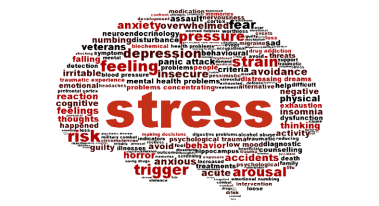
One of the worst types of writer’s block is caused by stress.

I like to roll out of bed and get straight to writing before any other distraction or activity comes up. I find that I work better and longer if I push everything else away until a manageable time. However, I find stress takes me completely out of my writing brain.

Where I can stop for breakfast, talk to friends or family, or even keep an appointment and get back to writing, when I’m stopped by a stressful event or activity I find it extremely difficult to do any work.

The good thing is that it takes a lot to get me to that level of stress; however, that’s not so Stressed-Brainfor many writers. Besides the littlest distractions causing problems for many writers, any stress weighing on a writer can keep them from being productive. One of the elements of stress is the inability to focus on anything else – it is the most distracting distraction a writer can face. Stress causes us to avoid things – things like writing!

If you’re experiencing something like this and can’t get on track with your writing, you need to ask yourself what is happening in the background of your life. It depends on each individual’s ability to handle stress, but it could be a small thing like a car problem or a large thing like a family problem. These things wreak havoc with our ability to be productive.

Again, my cure for this is to focus first on my writing and, second, on anything else. Cures for others might be similar. Block out the stress and focus on the writing – this could be a way of de-stressing. Creating a time to worry about problems is an age old recommendation. Years ago, someone told me “plan ten minutes before bedtime to worry.” I, personally, prefer before sleep and after waking to be the least stressful times. But it could still work – schedule your worry time like we all should schedule our writing time. Or, give yourself time to solve that problem, and realize if it’s something you can not solve and let it go.

stress2Let it go! If it is a stress we have no power over that is the only answer. It will pass. Focus on the writing, that you can control!

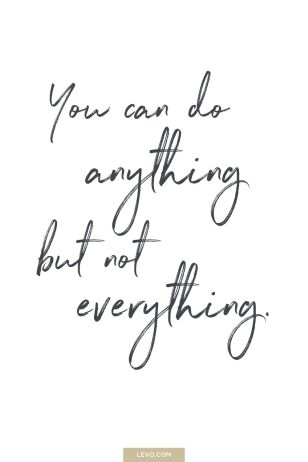
I like the quote “you can do anything, but you can’t do everything.” That’s what we have to remember. We can choose to stress about problems that we can’t immediately solve, or we can choose to use our writing as a distraction from that stress.

If you’ve found anything that’s worked for you, please post it in the comments!


Next week – decision making and writing.

Writer Wednesday: Say Yes to the Edit….

When I’ve mentioned, within a writer’s group, an editor asked for changes the room heats with disagreement.

writerblog2


“You’re not going to do it, are you?”

“Why would you sell yourself like that?”

“How dare they?!”


They dare because they are willing to publish my work; and while it does matter what they ask, I’m willing to listen and consider their ideas and advice. Usually, it is merely for clarifications or changes in simple sentence structure or the like.

My story, $1.00 Stories, was originally published by the Chicano Tribune’s Printers Row Journal. When that editor called me and hesitantly said, “we’re requesting changes;” I think he was quite surprised with my, “certainly.” The only requested was a few clarifications between the character’s name, Chris, and his nickname, C.C.

writerblog3It would be foolhardy and, even, unprofessional for me to say no without hearing them out.

While I suppose many writers believe the editor might ask for major changes in ideas or plot, I haven’t had any ask me for such things. As writers, we need to be open to consider what is said.

By request, I critiqued another writer’s work. I offered my point of view, and they became offended, tried to explain what they meant in this scene or that narration. My response, “there are all great ideas, but they are not in there.” The young person huffed off, I believe, without hearing me. Writers, we cannot be that sensitive.

We are not perfect human beings. We make errors. Some things are clear to us, but not to others. We can improve our work for the better by listening to others’ opinions. Of course, not all are worth considering. But an editor’s opinion, one who is willing to publish your work, is valuable.


writerblog1

West End – the opening chapter

Hi, All.  I was feeling West End today. I wanted to share a little portion, but couldn’t decide, so I give you all the opening selection for West End.  Enjoy.

front-cover-small

BEFORE MY MOTHER drank herself to death, I knew her as a gentle creature who fed wild squirrels from her hand.  On the back patio at mid-day, she’d stand very still, calm, peanuts laced in the fingertips of her outstretched hand. The squirrel, a female, her babies came later, approached with caution, across the railing, onto the windowsill, grab the nut, run to the other side of the patio where the squirrel peeled back the shell, ate the meat, then returned for another and another. For a while, the squirrels became my mother’s greatest pleasure.

When the female squirrel stopped coming, my mother worried, but the baby squirrels continued to visit. Then, the cubs must have grown, left the nest, because one by one they disappeared until only a single squirrel came to the daily meeting.

That winter, mother’s heart sucked itself dry. Familiar faces appeared, distant relatives, long-ago friends, who talked our concerns away with assurances for tomorrow and beyond.

“Little honeys, it will be okay.”

“I brought the eggplant casserole, green dish.”

“She was a wonderful woman.”

“Call if you need anything.”

Sarah and I stood at the door where someone’s aunt told us to stand. We pointed people who carried in food to the kitchen, guided people with flowers to the dining room, pointed the rest to Daddy who sat on the couch, gaze glued to the floor. We didn’t have to say anything, and no one asked.

The familiar strangers came and went and with them, our mother, our hopeless youth, our language.

The house became quiet. I couldn’t remember the last complete sentence I spoke or heard, couldn’t remember the last partial sentence I’d said to my father or he to me. My sister and I exchanged words, hushed, sometimes soundless breaths only we knew the meanings for. We lived our lives in half-words, pale sounds that sunk into the silence, in ideas of what we had to do next: breakfast, school, homework, laundry, dinner, dishes, bed. This soundless process became our lives; a strange off-balance way to live, but we did it for some months content not to break that pattern.

One cold February morning, a descending snowstorm blocked the roads, locked us indoors, kept us from going to school, our father from his work. Our first full day alone together in the house. Sarah and I sat at the painted brown kitchen nook picking at our cold Raisin Bran; the milk just tangy enough for us to question the freshness. A tapping noise brought our eyes to each other’s. Then silence.

“Wind.” Sarah exhaled with barely enough voice to make a sound much beyond the breath itself.

“Yeah.” My voice not much stronger. We returned to the cereal.

Tap…Tap…Tap…

Her gaze followed the floor to the sink, the counter, the back door.

“The door?”

I shook my head. “Nah.” Not today, at mid-day, in this storm. “Wind.”

I slipped from the nook; she followed. We stood, somewhat unnerved when the tapping came again. We could see through the glass in the door; no one stood there. I moved to the windows to get another view of the patio, leaned over, heard shuffling, then rattling against the window. We jumped. A squirrel clattered against the window, caused us both a momentary and laughable fright. Sarah touched my arm. We each took a deep breath. Our first that winter. The squirrel, the female or one of the children, we didn’t know and could never tell anyway, gave us a quizzical look, stretched up against the window; her little paws stretched against the glass. Tears welled. Quiet, unmoving, we held our breath, each other, tried not to let out the flow of emotions the winter built up.

Father’s footsteps, heavy on the linoleum, came toward us. We straightened.

“What’s going–”

“Shhh,” we both hushed him; his rough, dry voice might drive the squirrel away.

“It’s the squirrel,” Sarah said.

He looked puzzled.

She motioned toward the window. “The squirrels Mom used to feed. She used to give them nuts.”

“Well, give it some.” He waved his hands at us.

“Where are they?” Sarah pulled open random cabinet doors.

“I don’t know.” I opened the opposite cabinet doors.

“Well, look, look. They have to be here.” Father took to the drawers.

The three of us searched for a bag of peanuts Mother bought for the squirrels, hid from us to deter our snacking.

“He must be hungry.” Father gazed out the window at the back yard covered in snow. The porch railings, the powerlines, all draped in sheets of white; the squirrel, nervous, waited at the end of the banister. “Peanut butter. Get the peanut butter.”

“Will he eat that?” Sarah reached for the jar.

“Certainly,” Father assured us. “It’s peanuts, isn’t it?”

I grabbed for the bread.

“Just spread it on,” he said, more animated than I’d ever seen him.

We did.

“Wait, he can’t eat it like that Break it up.” He put his hands in the mess with ours.

Of course, we knew, but at the moment, that strange, unsettling, yet somehow comforting moment, we all needed to take part.

Sarah set the plate on the patio just outside the backdoor. The squirrel chattered, juddered its head from her to the door, the windows, its tail jerking back and forth as if with nervous jitters, then approached the plate, took a piece, and skittered back to the railing to eat it.

Dad ordered us away from the window. The little squirrel tittered, danced delicately, tail flitting, to take more food. We backed out of the kitchen.

Something shifted inside the house. The rooms warmed. The silence faded. The house took on old noises; the refrigerator hummed; the kitchen light buzzed; switches flicked with their old sticky clicks.

Our voices returned. We spoke more than mere sounds. We’d broached full sentences. But I don’t know if we ever surpassed that. We’d never been a family of paragraphs or stories. Laughter rarely rose to the ceiling. Now, with one of the speakers forever hushed, we were destined to be something less than complete.

Winter dissolved into spring; the strawberries mother planted last summer grew green, red, wild. We left nuts out all the time. Sometimes squirrels ate them; sometimes they’d sit until the birds got them or the ants swarmed them.

Sunrise reopened in summer, but never again did we hear our names called from the front patio as we walked up the street, never again did the light intonation of words follow us through the night, “not too late,” never again, upon our return, would we be met with a drunk asleep on the table with just enough consciousness to whisper “too late” when we passed through the kitchen to go to bed.


*West End is available on Amazon, Kindle, and Audible.