Readers make the best….

518680-book-1362931097-972-640x480Readers make the best writers….   I think almost every professional writer I know, heard, and read has repeated this.

People who read understand voice because they’ve heard a number of different writers use it.

Readers internalize pacing. The pacing of a story or poem is of the utmost importance.

People who read know more vocabulary. The thesaurus helps, but there’s nothing like knowing the perfect word in the necessary place.

Readers are not affected by others’ style but can recognize a need for individual style.

It’s important to read extensively in your own genre. In academia, we refer to it by “adding our voice to the conversation.” One must know what is being done in order to respond, in any number of ways, to it.

People who read are aware of the benefits that serve their writing.

Fear of …?

istock_000012625357xsmall1There’s a theory that we don’t fear failure, we fear success.

A researcher gave graduating students an impromptu essay prompt: “After finding out Joe/Jane aced their medical exams for graduation, he/she …..”

It’s reported that the vast majority of students set up a scenario in which Joe or Jane went out and partied, got in some sort of trouble, an accident, arrested, or in some cases just gave up and “decided to do something else with their lives.”

The researchers decided this was not an indication of the fear of failure, because they’d set up a scenario in which the person(Joe/Jane) had already succeeded, yet the students then wrecked the plan. Therefore, they surmised it a fear of success.fear

This possible fear of success comes from anxiety, which is rampant in society today. People stay where they are comfortable, where they are familiar, and their habits serve them. Moving on to the next level, success, will bring about different challenges, and the fear of the unknown wins out.

It occurs to me that this happens to writers. People write, and write, and write, but then don’t submit. Is it really the rejection they fear? or is it the success?  Think of all the anxiety that comes with the next level of publishing. You’ll be expected to do well, to do it again. And, what else might change?

What do you think? What do you fear?

images


The Mystery of Semicolons

indexMany people are confused by semicolons; some people just hate them.

Kurt Vonnegut hated them. Even Malcom Gladwell seems adverse to them. He said, he doesn’t see their point. So, Mr. Gladwell, this blog is dedicated to you.

I, personally, LOVE semicolons; it’s like I don’t have to stop my thought! LARGE-HEARTbeat.jpgHowever, some of my editors have asked me to cut them down. One editor-friend said, “they do not appear in popular fiction.”

BUT THEY SHOULD!

Whether you like, hate, are confused, or don’t give a damn about them, every writer should know how to use them correctly.

The secret to the semicolon is simple. Two complete sentences which are closely related in thought or idea. Other writers believe a comma and conjunction (fanboys) or a period is just as good, but I think of it this way:

blog.png

Did this help anyone?

61qc-fijuml._uy395_


The Comma Coma – a deadly disease

Do you go into a coma when someone starts talking about commas?

Don’t get bit by the deadly comma coma bug! Figure out how to make the comma work for you, not against you!
tumblr_static_comma

The purpose of all punctuation is to clarify your thoughts and ideas so readers can enjoy and understand the book!

Did you have a teacher that told you, “whenever you feel the need to pause, insert a comma”?

WORST ADVICE EVER!

When we are writing, we naturally pause to think. That is not necessarily where a legal-grammar-rules-keep-calm-and-use-commas-e1490740001283comma needs to be.

Commas have a number of rules. My favorite site to use – and to introduce to my students – is the Owl at Purdue. Their comma usage explanations are clear and detailed.

One of my editor-friends believes the comma used for introductory words, phrases, and clauses is “going the way of the dinosaur.” While I agree that some people and publications seem to think so, I think it’s still a valid and needed use. [I’ve used introductory commas in this blog – one was in the previous sentence, “While I agree…]

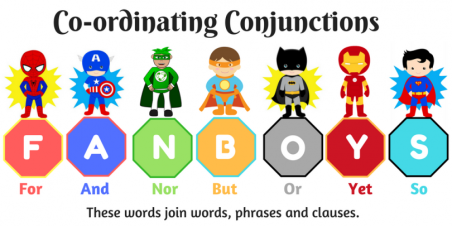
The Fanboys rules is the easiest to remember; however, because of the number of teachers giving the pause advice, I get sentences that look like this:

The Rams won but, not everyone was happy.

We sometimes punctuate our speech this way for emphasis, but you can’t hear tone in these words, and it’s just wrong.  < this sentence contains correct use of the fanboys rule.
co-ordinating-conjuctions-banner-810x405

My students often ask me to explain the whole “Oxford Comma” disagreement. Well, it goes like this: There are people who use the oxford comma and then there are monsters!

Example:Oxford-comma-explained.png

Commas are confusing, but they’re not impossible to learn. Any editor is going to appreciate the correct use of commas regardless of how much they appreciate or introductory comma. 🙂



Interview your character

interviewDoes your character like her/his marshmallows burned and why?

I love this – but it’s not mine.

I got this from Writer to Agent advice video from The AWP and Folio Literary Management.

Watch this video for tons of good information!


Reader Response

Some authors are unhappy when readers see something in their story, novel, or poem that was not intended.

I subscribe to the theory of reader response. Our work is going to touch different people in different ways; readers are going to get out of it something related to what they bring to it, so if they don’t see what we originally intended, they are not wrong, nor did they read it wrong, they are merely giving the writer an insight.front-cover-small

I, personally, am thrilled when readers see something I hadn’t intended. For my novella, West End, one reader said the melancholy of the main character haunted her. Other readers believed some of the characters might have actually been spirits or ghosts. One of the characters, I left open. His questionable appearances deepened the story and the effects on the main character who is dealing with depression.

However, when another reader felt that the son might have been a ghost – it made me go back and reread my own work!

Once the story, novel, or poem is out there, readers are going to take away or put into it whatever is in their own toolbox and we can not control it. We may not like it – I had one person mistake me for one of my characters – but we do have to accept it. I usually thank the reader for their insights, regardless of what I feel about the response.

All readings are good readings!

If you’re interested in reading West End – it’ll be on sale Saturday and Sunday. And – then let me know what you think!

Humility is Success

spiritual-principle-humilityI’ve met a number of people from all different walks of life; the one trait I admire most across the board is humility.

I was at a writer’s conference signing. I happened to be waiting at the front desk when another writer walked up and took me for someone who worked there. He didn’t look at my name tag; he didn’t look at me at all. He said something to the effect, “I’m in a hurry, get my tag for me.”

I smiled and said, “let me get you someone who can help you.”

He huffed out a breath.

I found it rather humorous. He would run into me once or twice during the event and didn’t remember the front desk incident. But, moreso, I found he treated most people as if they were there to serve him.  I’d never heard of him before, and I haven’t bothered to read any of his books. Had he been the least bit human to anyone, I probably would have bought his book then and there.

We don’t have to act like asshats to get what we want. Self-importance rarely serves anyone and doesn’t  win any awards. It may get you knocked off the invite list.

Humility is not a denial of our skills or our sense of self-respect. Humility is being modest about the skills, talent, and dreams we are working to achieve. And it takes nothing away from us or from those around us.

index

Never Stop Learning….

No matter how good you are, how much experience you have, there is always something more to learn.einstein.jpg

I have known writers who say they won’t attend another workshop or listen to a speaker or take another class because they’ve “been there, done that.”

While that is understandable in some cases, it’s always good to keep up with what’s new in the industry.

Beyond that, by being open to learning and to new experiences, we might pick up something new or be reminded of something we learned some time ago.

As one becomes a more experienced writer, one can be choosier and make wiser choices of who to see or what to attend – but we should all carry the idea to never stop learning.


Writing Exercise

malcolm-gladwell.jpgI’m a big fan of Malcom Gladwell, writer for the New Yorker and author of The Turning Point, Outliers, and many others.

A writing exercise from Malcom Gladwell:

Begin a correspondence with another writer. Each of you take turns sending and responding – and respond immediately with something interesting or intriguing.

It’s a good way to practice intelligent conversations so you can learn to chat with just about anyone.


A Habit of Success

66 days –

That is what a new study says it takes to form new habits.  The study participants reported a range from 2 to 254, with 66 being an average.

writing+ritual+It depends on the person. With me, it takes 3 to 4 weeks for me to stick to my commitment. And every year my teaching schedule changes, so there’s two to three months a year for me to recommit.

The holidays, however, throws many people off.

However, once the commitment is made and the habit is in place, it’s much easier to get back into the mind space. The secret is to jump right back into the habit after a holiday or change.  writing

Also, I think you have to make an effort to guard that commitment. Don’t be tempted to make lunch plans on a writing hour, make it for later or for a different day.

Life too easily distracts us and, without habits firmly in place, we are easily swayed.