 I both love and hate the Farmers’ Markets.
I like the samples or, at least, I used to. Some time ago, I witnessed a man reach his fleshy hand in a bowl, dig out some cut up apricots with his fingers, and put the chunks of fruit in his mouth along with his fingers. Then he reached his slobbery hand into another bowl for the pluots.
Disgusting! I no longer partake of the cut up sample bowls.
THERE ARE TOOTHPICKS OFFERED FOR A REASON!
I saw one woman holding her dog while she squeezed peaches. She readjusted the dog,  putting her hands under his belly, then turned him over like a baby in her arms, and reached down to handle more peaches.
Kids regularly reach their little hands up onto tables, into bins, fingers in the sample bowls.
But, in all honesty, I have not been turned off from farmers’ markets – until possibly this weekend.
I picked up a lovely, healthy looking bunch of kale and put it in my sack. When I got home, I started to put it away and got a whiff of it. It stunk. It smelled like a dirty sponge. I washed it and let it dry. I tried again – mildewed sponge smell stuck to it. I washed it again and laid it to dry. This time the aroma of old bleach wafted from it’s thick leaves.
 Unwilling to take a chance and eat something that might make me sick (that’s what happen last week after my farmer’s market visit, I got sick. I didn’t then chalk it up to my farmers’ market finds, but now I’m wondering), I tossed it.
I’m not bothered by the loss of my few dollars, but more feeling betrayed by the farmer who tried to pass this off as fresh. I’m not sure what happened to turn the lovely kale into a dirty dishpan scented germ haven, but I do have the feeling the person on the other side of those leafy greens knew what he was selling.
It occurred to me that the farmers’ market is much like a buffet in a restaurant, minus the sneeze-guard. Yes, we’re going to be responsible and wash the food before we eat it, but is that going to be enough?
Beyond the numerous hands touching the produce, the unclean fingers lingering on the individual items, what about those – like I witnessed this weekend – who cough and actually sneeze near the food?
There’s no one checking on these open air food markets.
I’m certain many of the farmers are proud of their produce and wouldn’t allow infested products to line their tables; however, how many can afford to lose money by tossing away bins of forgotten water-logged or other problematic food?
I’m unclear how these farmers and their sales people can keep people from coughing, sneezing, molesting their fruits and veggies – I mean we are, in some sense, avoiding the supermarket system and trying to buy local – but how do we do this safely?
I imagine I could go back and talk to the guy who sold me that wretched kale, but what would that do? I have every faith he’d offer me a refund or replacement. But that’s not what I want. I want to feel this food is of a higher and safer quality than what I buy in the grocery store. I want to support the local farmers.
But I don’t want to get a staph infection from an avocado skin or the flu from a persimmon nor do I want to pick fleas off my peaches.


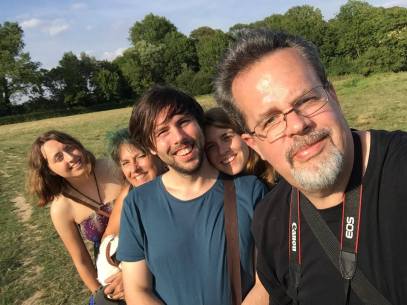 When people ask where I’m from, I give my prepared answer. ‘Not really from anywhere. Seems like I’ve lived everywhere.’
 weren’t for triple-digit summer heat, certain sections would be indistinguishable from the desolate wilds of North Dakota. It’s so non-scenic that literature has more or less left it out, too. Need proof? A Goodreads count of books set in California is nearly 600. But books set in Fresno? Three. One by William Saroyan, better remembered here as ‘That Famous Guy Who Used to Ride His Bike Through Fresno’s Tower District.’ The second is ‘The Abortion’ by Brautigan, destined thanks to the area’s politics to be a non-seller. The third is by a guy who teaches journalism at Fresno State.
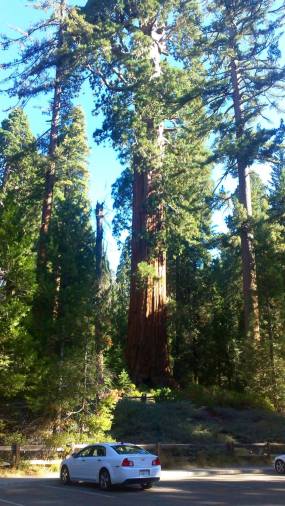 But I suppose I’m grateful that living here encourages travel, even if it does so in a backhanded, better-off-getting-outta-here sort of way. That urge to hop in a car and see something else, that desire to book a plane ticket and go even farther, is not only great for the soul, it’s great for my writing.
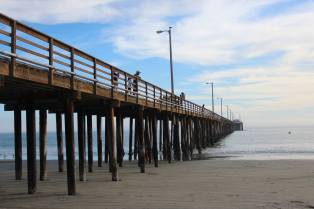 with the DSLR strapped around his neck, taking shots of everything from the loo signs to the historical plaques set across monuments managed by the National Trust? Yep, me. Those photos come in handy during the writing process, too. Need the feeling of ‘being there’ recreated? Go visit the photo album. Need to check a historical detail? Dig out the plaque pics and read the answer. Need to remember exactly what order the Roman gods appeared on a bas-relief at the Adler Planetarium? It’s right there in the photo.
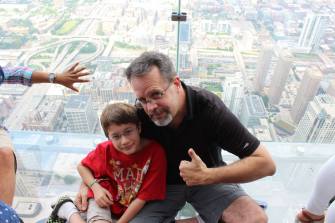
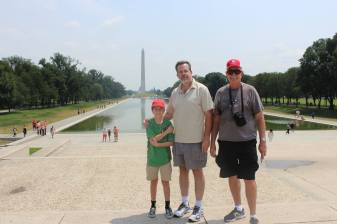 As a writer I carry those places with me, and whether I want them to or not, they find their ways into my writing. My Nebraska origins find a home in my writing as Kolej, a small town with a big dark secret in my coming book ‘Lillie Augustine.’ Minnesota and Providence figure prominently in my memoir about full-time fatherhood, titled ‘One Ugly Mother.’ That memorable Chicago trip finds itself in another draft titled ‘Fortunate Consolation,’ where a father leads his special-needs son on a journey to escape the trickster Goddess of Fate. Two very special places — West and East Hills in Hastings, East Sussex — will soon find themselves adapted as different worlds entirely in a collaborative science-fiction epic. That Pacific hamlet of Avila Beach was the setting for my published novel ‘Davey’s Savior,’ an intimate story set next to the pier on a very small stretch of an epic beach. And Fresno? While the city itself may make me want to be elsewhere, its agrarian nature still found its way into a draft my editor promises will be a moneymaker: the saga of ‘Lifeboat.’

 Chatting with my students, I reminded them I didn’t have google nor a cell phone and, if I needed to look up information, I had to walk to the library and figure out the card catalogue. (Of course, I added the obligatory “walk ten miles in the snow up hill both ways”).
 I think I would be, like many people today, too distracted to focus on creating other worlds and investigating the motivations of people/characters.
 I guess I’m saying, boredom can be good for you. Daydreaming, thinking, and spending an afternoon lounging without distraction can be helpful to a writer. We need to allow our minds wander sometimes, see where they go; keep your mind from distraction, turn off the tele, the cell, the computer, and be inhibited by the lack – your mind will rebel and it will begin to create.
![20181028_133526[1]](https://noreenlace.com/wp-content/uploads/2018/10/20181028_1335261.jpg?w=196&h=261) I was inspired the other night while watching netflix; a character mentioned Mexican Hot Chocolate Cookies. I put the show on pause and sought recipes.
I was inspired the other night while watching netflix; a character mentioned Mexican Hot Chocolate Cookies. I put the show on pause and sought recipes.![20181028_133637[1]](https://noreenlace.com/wp-content/uploads/2018/10/20181028_1336371.jpg?w=90&h=120)
![20181028_133641[1]](https://noreenlace.com/wp-content/uploads/2018/10/20181028_1336411.jpg?w=92&h=123) a less-sweet chocolate lover with a desire to live a long healthy life, try it as recommended on the blog.
a less-sweet chocolate lover with a desire to live a long healthy life, try it as recommended on the blog.![20181028_134140[1]](https://i0.wp.com/noreenlace.com/wp-content/uploads/2018/10/20181028_1341401.jpg?w=376&h=501&ssl=1 "20181028_134140[1]")
![20181028_135008[1]](https://i0.wp.com/noreenlace.com/wp-content/uploads/2018/10/20181028_1350081.jpg?w=376&h=501&ssl=1 "20181028_135008[1]")
![20181028_193604[1]](https://noreenlace.com/wp-content/uploads/2018/10/20181028_1936041.jpg?w=760)

 In a writer’s group, I asked a specific person how one would use a certain program. They responded with, “I’d be glad to show you; my rates are very reasonable.”
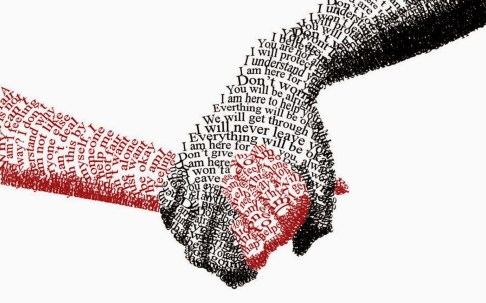 in the same boat of trying to get our books, articles, short stories, or other out there to larger audiences.
 When we all work together, we all become better humans. I want to share my ideas and experiences and share other writer’s with you, other ideas with everyone who desires to listen.

 I tried a new drink; the front label boasted a vitamin drink. I didn’t take the time to read the ingredients. I was thirsting, it was cool and promised refreshing goodness. But, after drinking half the bottle, my stomach began to ache. I put it aside.
 Previously, some of these artificial sweeteners had been linked to cancerous tumors in rats.

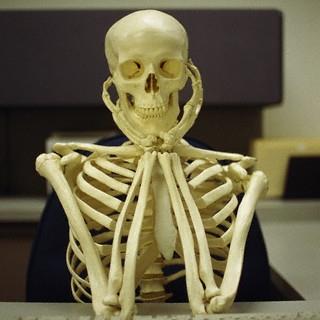 Waiting is the easy part.
 I consider it is not a fear of failure – because, by not trying, aren’t they failures already? Or maybe that’s it – they can claim they never “got their chance,” when, in fact, they never actually took a chance. That’s the true failure.
 What comes to mind? Are there images of magnificent places you’ve been, impressive people you’ve met, or extravagant stories that stimulates your soul, sparks your imagination and almost brings you to tears? These everyday inspirations lead me to be the best version of myself, however, this is not a source of inspiration for my writing.
 I like to explore the darker sides of life, which is interesting to me because I am naturally a good humoured optimistic individual. There are an unbounding instances of inspirational dualities in life, the play between light and dark, life and death, vice and virtue, and I realize as a writer I am one of them.

 Sometimes, I wish I was the driver of the Karma truck. But, I suppose, being a writer is better. Still have the problem of sitting too long, but we get to exact revenge too. The best kind of revenge – in print.
 But, first, I had to roll my eyes and throw back my head. I just wanted some sympathy, some empathy. But she gave me more than that – she gave me purpose, building from ashes, and a way for me to transmit sympathy to another by relating to a scenario which many of us have experienced. (I know, still too vague.)
 They are more like pastries, tarts, danishes, if you will.
 occasionally a few currents or raisins. But the point of a good scone is to have a choice of cream, lemon curd, or jam, not a mystery filled fun fest for which consumers risk diabetes.

 Noreen Lace
You must be logged in to post a comment.