For most writers, getting a contract from a traditional publishing house is the golden biscuit, the grand reward after a struggle with run-on sentences, superfluous commas, and tired clichés. Many people will then spend years looking for an agent, and then have an agent try to place their work with a publishers, big or small.
But here’s reality: unless you’re J.K. Rowling or Stephen King, you’re almost certainly not going to receive the red carpet treatment you’re no doubt envisioning. Once upon a time, not a long time ago, self-publishing was considered the literary outback, the place for hacks. Now, in an ironic twist, we just may be witnessing the reversal of fortune. The Bix Six seem to be wallowing in their formulas. Meanwhile, much fresh thinking is coming from self-published authors who build their followings online. So rather than wait for your genius to be appreciated, here are six reasons you should consider being self-published:
- You are your own editorial voice. While every self-published work should go past the eyes and red pen of an experienced editor, ultimately you can write and publish what you want. You don’t have to deal with an editor or agent who wants a happier ending, a younger protagonist, or the locale moved from Pittsburgh to Paris.
Your hired editor may suggest changes, and you should listen. But ultimately you stand or fall on the product. You won’t have to deal with the agent who refuses to read a manuscript because she never looks at anything that begins with dialogue, or one who says she won’t consider a novel written in the first person, or one who says the work cannot have a “Prologue” or an “Afterward.” Ask yourself if a reader ever put a book back on the bookstore shelf for any of those reasons and you’ll begin to see how silly and random the process can be.
- You set pricing and distribution. Ever wonder why some really great book has not been reissued, forcing you to buy a beat-up second hand copy? The publisher decides distribution, pricing, and how long the title will be in the catalog. If they don’t want to keep it in their catalog, there’s nothing the author can do.
With self-publishing, your works can live on forever. Or, if later on your freshman effort embarrasses you, you can make it disappear with the click of a mouse.
- You control the book’s cover design and artwork. This may be intimidating for some but it’s liberating to me. While some professional cover designs are great, others are simply terrible: a stock photo, the title centered above it, the author’s name beneath it. Not surprisingly, artwork like that tends to go to the lesser-known and novice authors.
If you’re unsure how to design a cover (and it involves a lot more than putting your title over a picture and your name on the bottom), google some freelance artists who do it. Study their work and contact the ones you like. If you don’t want to shell out the cash, and you have access to some design tools yourself, find covers of comparable works and study what you like, then try to imitate it as best you can.
- You can fix mistakes. Even some very big, very famous novels have typos in them. Or formatting errors. When it’s your own work you can go back and fix the mistake, then re-upload the file. With traditional publishers, your mistakes remain, oftentimes even in second and subsequent editions.
- You promote your work the way you want. Don’t think being published by a big house means jaunts to NPR interviews and author events at prestigious venues. Most houses do nothing to promote the majority of their authors. You have to do your own marketing and PR (an art in itself), so you might as well own and control what you’re working so hard to promote.
- You can write the next novel you want. The curse of traditional publishing these days is even if you are a smash hit, they will want more of the same. If your goal is to write a second novel that’s different from your first, you may find doors shut to you. Despite claims on websites that agents and editors are looking for “fresh,” “new” voices, most are really chasing trends; that’s how they keep their jobs. Self-publishing is a wonderful opportunity for you to be you, and today’s self-published books look every bit as good as the product of the Big Boys. Rather than write your one-hundredth query letter, why not consider a faster, more streamlined way to reach readers?
John Grabowski worked in advertising, television news and public relations before daring to write his first novel. Entertaining Welsey Shaw was praised by Kirkus Reviews for being witty, fast-paced, and “filled with flirtatious banter.” A collection of his shorter fiction, Violet Rothko & Other Stories, will be published in September 2019. authorjohngrabowski.com
____________________________________________________________________________________
Thanks, John!

 I guess it’s a threat to make people not want to cross a writer, make them afraid they’ll be named. An odd thing is sometimes people think I put them in a book or poem even though they hadn’t occurred to me at all during the writing. Then there are those who want to be in a story.
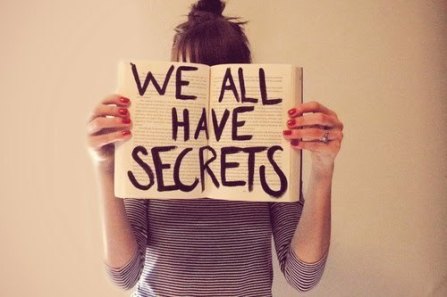 All families have secrets. I think that’s why some of us become fiction writers. Maybe, much to our family’s horror.
 different people whispered to me at times, laughed about at other times, assumptions from other people – all mixed up in a writer’s brain to spurt out under the pressure of a story.

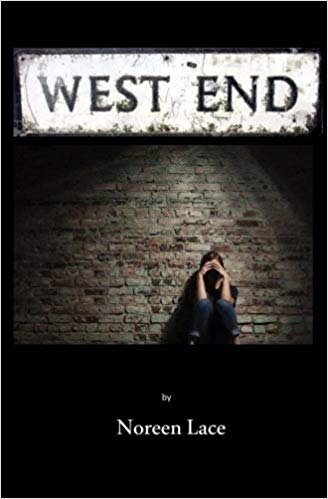 I’ve written so many stories from first person point of view. At first, I was nervous because people did ask – is that real? is that you? and even contacted me and said – I know that’s about you.
 from someone who believed they knew me thought it wasn’t a realistic portrayal of me. I had to tell him because the character was not me! While the same story convinced another person that I’d led a secret life prior to moving to California.

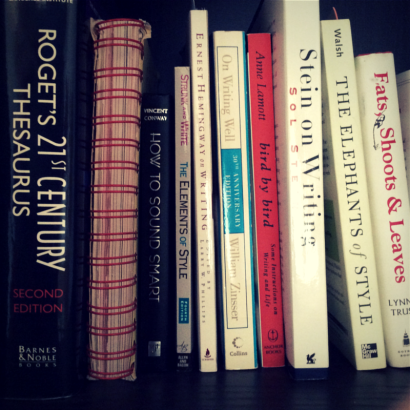 I began browsing my bookshelf, which is semi-organized: books I’ve read and loved. Books I want to read. School books. Writing books. and, of course, Poe books


 Judy Blume recounts a story in which she took a writing for children class and they set out the rules involved in writing for young children, then she went and broke all of them.



 Noreen Lace
You must be logged in to post a comment.